Up next in 10



Andy Burnham has vowed to "be honest with people" about social care in the UK.
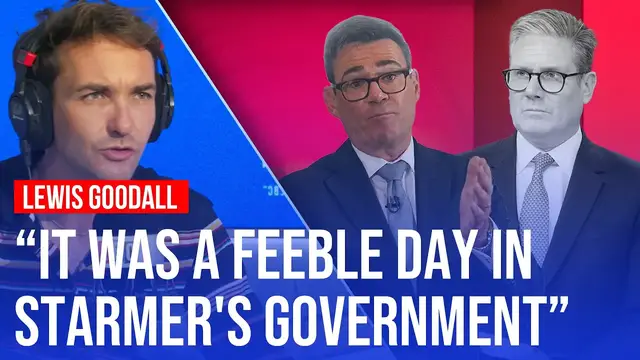
Lewis Goodall considers if Mr Burnham is the 'only man' who can fix the 'Victorian system'.
Setting out his initial plans from a care home in Enfield, the Prime Minister said that "in an ideal world" he "would not want anybody to have to sell their home to pay for care", branding it a "horrendous" experience.
It comes as Burnham insisted that social care in England had become "as unfair as American healthcare".
Listen to the full show on the all-new LBC App: https://app.af.lbc.co.uk/btnc/thenewlbcapp
#lewisgoodall #andyburnham #socialcare #ukpolitics #LBC
LBC is the home of live debate around news and current affairs in the UK.
Join in the conversation and listen at https://www.lbc.co.uk/
Sign up to LBC's weekly newsletter here: https://l-bc.co/signup
Show More Show Less View Video Transcript
0:00
I have to say, and it's always nice, that the majority of people getting in touch, the majority of them seem to be very hopeful
0:07
and they think, actually, that this time around, it could be different. Do you think it could
0:12
Well, I think what is undoubtedly true, Asma, is that we now have a Prime Minister who has got a very long-standing interest in this
0:20
both personal and political. You know, whatever one thinks about Andy Byrne, and whatever you think about his proposed solutions
0:25
whatever they may happen to be. There's no doubt that his pedigree on the subject is substantial
0:30
He's been talking about it for the best part of 20 years. He did try and do something about it
0:34
an ill-starred, ill-fated attempt back at the tail end of the last Labour government
0:39
So I think you can tell it's personal to him. And in a way, and people might sort of scoff at this
0:43
but I don't mean it in a sort of wider political sense. I just mean in terms of his political position
0:48
When he talked about today that he felt that social care, that very arresting line
0:52
he felt that social care in England was as unfair as the American healthcare system
0:57
And when he's talked about that he is willing to spend whatever political capital he has to try and fix it
1:04
it did remind me a little bit of the situation, political situation
1:08
that President Obama was in in 2008, 2009, 2010, when he himself used to speak in very similar language about the American healthcare system
1:17
which remains balefully imperfect in all sorts of ways. but he said he himself then was willing to spend a huge amount of political capital which he did
1:25
to pass what became the affordable care act which did ameliorate some of the problems of uh the
1:32
american health care system in its inadequacies and he now talks about as one of his proudest
1:36
achievements and i think it is true and i think burnham knows this he is doing this sort of come
1:40
by our routine at the moment he's doing the let's all hold hands and come together and find a solution
1:44
i think he knows in his bones we've even seen the way that nigel farage has responded to this today
1:49
He knows in his bones that, to be honest, fixing social care, because it is so expensive and someone has to pay, is so political and so contested that it is unlikely to be a cross-party solution
2:02
And he is going to have to spend, whenever it comes, serious political capital to do it
2:06
But I do think that given Burnham intent and the way he talks about it and how much it clearly means to him I do think if any prime minister is at the very least going to drive at it it will be him What about the idea of taking the public with him So you know let fast forward a year
2:25
recommendations come out, you know, the proposals to put whatever it is into law
2:31
he goes to some kind of, not an election, but a referendum. Do you think that's, is that likely
2:36
No, I don't think he would put it to a referendum. I think it's likely. Look, there's a spectrum of options here, isn't there
2:41
I mean, everything through simply pumping and channeling more money into the existing system
2:48
which could improve some outcomes, but it doesn't address the fundamental unfairnesses or inadequacies of it
2:54
right through to something he's talked about before, which is a kind of national care service incorporating it into the NHS
3:00
Obviously, there is a spectrum of cost involved in that. And I think if you were looking at something at the far end of that, actually real root and branch reform
3:09
It feels unlikely to me that that could possibly come either just in terms of time before the next election, but also it would have to be funded
3:15
And he himself sort of hinted at this. It feels unlikely you would be able to do so without some more fundamental transformation of the tax base and tax system or unpicking those manifesto promises on income tax, national insurance and VAT
3:30
And therefore, it feels to me, whatever he says now, that he is preparing the way for this to be a central plank of a general election campaign
3:38
whenever it comes. All of that is going to take a long time
3:46
But maybe that doesn't matter. Maybe if you can actually get some solid proposals on paper
3:52
and say, this is it, this is our chance, even people who perhaps would have balked at those suggestions
4:00
10 years ago, whenever it was, might change their mind. Well, look, in fairness, I mean, you know
4:06
what has Burnham actually announced today? The main thing that he's announced today is bringing forward
4:09
Louise Casey's review. And we should just say, Asma, in parenthesis here, I have to say, I do think it was a pretty feeble day
4:16
of the Starmer government. The day after coming to office saying they were going to do something about it
4:20
the latest in a long list of prime ministers and governments who said they were going to do something about it
4:24
and then they come forward and say, right, we're going to ask Louise Casey to look into it, do yet another review, even though all the options are well known
4:31
and have been well rehearsed for many years, and she not going to report towards the back end of the parliament like what like what and we should remember whatever you think about burnham proposals he has is right about one thing and i think most of the listeners and viewers would agree this is a 30 profound failure of parliament and of of
4:49
generations of of successive governments and politicians just look at the stats as to where
4:54
we are now access is completely collapsed 20 years ago nearly nine percent of over 65s received local
5:00
authority funded long-term social care today it's less than 3.6 percent that is despite the fact of
5:04
Of course, we've got a rapidly rising ageing population. We've got 4% demand higher in 2023-24 than just the previous year
5:13
Demand from working age adults has risen even faster. This is working age adults for social care, 14%
5:19
And we've got 400,000 people just waiting for an assessment. 96,000 vacancies within the sector
5:25
And as we know, the deleterious impact it has on the NHS with sometimes one in five beds being taken up
5:31
by people who ought to be discharged into social care. I mean, this is a profound failure of statecraft, political failure of the highest order
5:38
So he is absolutely right to run at it. The question is exactly whether he can and has the political chops to do something about it
5:46
When you said about reasons to be hopeful, here's one more reason to be hopeful
5:50
When you're doing something that is as politically contested and as difficult as this
5:54
a third rail of British politics, you don't touch it because you get burnt or you get electrocuted
5:58
what you need when you're trying to channel through fundamental reform is someone with
6:03
consummate political skill to explain to the public why they're doing and what they're doing
6:08
and with the best will in the world we've had a series of prime ministers who've tried to touch
6:12
this now whether it's Theresa May or of Keir Starmer who probably didn't have that political
6:16
skill and so what that enables your opponents to do is mischaracterize your proposals whether it's
6:22
a death tax or a dementia tax or whatever if someone has got the skill political skill and
6:27
communication ability to try and shepherd this through, of all the prime ministers we've had
6:31
recently, I'd say he has probably the best bet. Can I just go back to what you said a minute ago
6:35
which you said it's 30 years of political failure. Explain what makes that up? What makes
6:42
that up? Because that's on a number of levels. That is, you know, people who perhaps it's being
6:48
spun to them in the wrong way. And they say, well, I'm not giving, I'm not paying that. Why I worked hard on my life I not going to pay that Why should I Death tax etc there is the media certain sections of whom will spin it in those kind of terms And then there are the politicians who for whatever reason
7:08
don't want to be the people delivering the bad news I suppose. So is it just a combination
7:14
of all of those things or do you lay the blame at one particular door
7:18
Look what you've got, fundamentally what you've got is a system, a social care system which
7:24
which is Victorian. You know, it's basically been unreformed for better or, you know
7:28
in substantial terms. And what you've got next to it, and this is what makes the juxtaposition so glaring and difficult
7:37
you've got next to it in NHS, which is completely different, where you have free access at the point of need and of care
7:44
something you don't have with social care. And as more and more people have got older
7:49
that gulf in care type has become even more substantial it's become even more obvious over
7:56
time and so what you've basically got is a completely unreformed system which has got worse
8:02
and worse and worse as demand has gone up and up and up which basically leaves a central political
8:08
question it's expensive who pays for it and how do they pay and as that problem has become more
8:15
substantial the political problem alongside it has become worse and what you've basically had is a
8:21
series of different proposals from different governments over time some of which have sort
8:25
of stressed the fairness aspect of it the equity aspect of it which is to sort of say well let's
8:30
make it a little bit more like the nhs and everybody gots it free at the point the print point of need problem is with that you need loads of taxation in order to pay for it so we all pay
8:38
how does that happen or different governments have sometimes said well we'll provide some free at the
8:43
point uh for care at the point of need but also you may have to use some of your assets in order
8:49
to pay for it as well which reduces the overall cost but then people say on an equity point well
8:54
hang on a minute why should i have to sell my home to fund my relatives dementia or whatever
8:59
whereas if they got cancer or heart disease it would be completely free so basically what you've
9:03
got asthma is one of a political question which is basically almost always the oldest but most
9:09
potent political question. Who pays and how do they pay for it
9:13
And that is just a central question which is not going to go away and which Burnham
9:17
is saying that he's going to answer
#news