Up next in 10



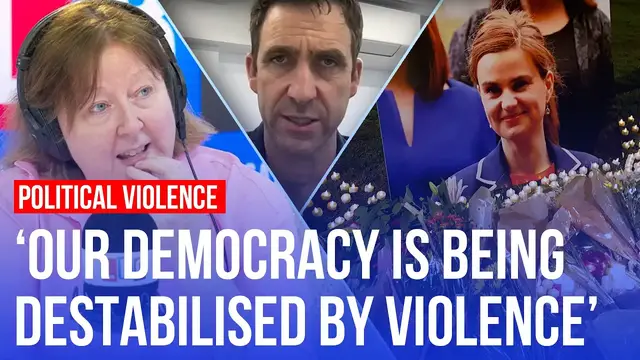
Shelagh Fogarty is joined by the husband of murdered MP Jo Cox, Brendan Cox, and security expert Philip Grindell to talk about political violence in the wake of Ann Widdecombe’s murder. Police believe the former minister was attacked and killed on Wednesday, July 8, at about 12.30pm, nearly 24 hours before she was found. A 28-year-old white British man who was arrested on suspicion of her murder on Saturday has since been rearrested on suspicion of the commission, preparation or instigation of acts of terrorism. Brendan Cox, whose wife Jo was killed back in 2016, tells Shelagh that our 'democracy is being destabilised by violence.' Phillip Grinnell admits that we are continually having 'the same conversations', but 'nothing ever changes'. Listen to the full show on the all-new LBC App: https://app.af.lbc.co.uk/btnc/thenewlbcapp #shelaghfogarty #ukpolitics #annwiddecombe #politicalviolence #jocox #LBC LBC is the home of live debate around news and current affairs in the UK. Join in the conversation and listen at https://www.lbc.co.uk/ Sign up to LBC’s weekly newsletter here: https://l-bc.co/signup
Show More Show Less View Video Transcript
0:00
What in the last few days has been on your mind
0:04
I think, you know, this, the horror of this has sort of emerged slowly, hasn't it
0:09
It was first a sort of sadness that we thought somebody had died probably from natural causes
0:14
who was such a big figure in public life. And then the realisation that it was a murder, I think, was a shock to lots of us
0:26
and now of course having been uh initially thought that there wasn't a sort of political
0:32
motive to it being told there might be we still don't know um i think that that uh adds a degree
0:41
of you know takes it from the personal to the political it is a a statement of the health of our
0:47
democracy and i think that it is an absolute disgrace that we live in a country whatever
0:56
the details of what ends up coming out over this specific case that we live in a country where our
1:03
democracy is being destabilized by violence whether that is the murder of joe of david amiss
1:09
but also just the more day-to-day intimidation of everything from local councillors through to
1:14
members of parliament to people that campaign for political parties that violence does none of
1:21
our country does none of our causes any good all it does is damages our our democracy and i think
1:31
the the conversation is clearly sort of two-pronged so of course there is a set of things that has to
1:37
happen to improve the security blanket around particularly those targets where there's
1:42
intelligence that people are likely to be uh targeted that needs to improve it needs to be
1:47
done without fear and favour uh fear or favour i think that is key however no amount of uh
1:55
protective security can deal with this problem because you know as in ann's case for example
2:01
uh she wasn't a serving member of parliament but you know you can't put security around everybody
2:06
who has been a former mp or been a thought about becoming an mp or being a campaigner to become an
2:11
So what we have to change is the culture, our political culture
2:17
And I think that is partly about, you know, politicians and politicians leading the way
2:21
But I think the much bigger component of it is how do we deal with an online ecosystem that not only platforms calls for violence
2:30
but actively promotes and boosts those through its algorithm. them. I think until we address that information environment, I think we are going to be living in
2:41
a political system where violence becomes a common occurrence rather than the atrocity that it has
2:50
been up until now. And I don't need to tell you, obviously, because of your own family's experience
2:55
of losing Joe the way you did, that obviously there is something very particular about a
3:00
politically motivated and targeted attack and murder. But isn the truth as well when we look at this as it relates to MPs that the truth of violence whether it about politics or just to destabilise in the case of terrorism which can be about politics it can just be about destabilising
3:20
any one of us can be a victim of that, can't we? And so it behoves all of us to try to contribute
3:26
to an improvement in the backdrop. That's exactly right. We can all be victims of it
3:33
most terrorism i run an organization called survivors against terror and most terrorism
3:39
affects random people going about their business on a bus on a tube in the street um so this is
3:45
something that affects us all can affect us all directly but certainly affects us all indirectly
3:51
i think the other thing to remember of course is that political violence isn't just violence that
3:56
targets politicians it's violence that is used to make a political point and we're seeing more and
4:02
more of that you know the aftermath of the horrific um stabbing in belfast where people
4:08
went from house to house and used violence to kick out people whose skin color they didn't like
4:13
there was the attack up in scotland a couple of weeks back uh with a guy running around at night
4:18
trying to stab um and he's stabbing muslims there was attacking golders green um uh where jewish
4:25
people were uh were stabbed the the the targeting particularly of minoritized uh communities in the
4:31
UK is something that we are seeing more regularly and again it comes from a particularly online
4:38
culture but from a political culture which is accepting that violence is an okay way to respond
4:45
it's normalizing it and where in the past the number of people normalizing accepting the number
4:50
of people that you know that you'd speak to in the street and say you know I'm thinking about stabbing somebody in the face because I don't like them or I don't like the color of their skin
4:57
And most people would act in revulsion to that. However, because of the way that the online ecosystem is working
5:03
it's giving people that social feedback mechanism that actually that's not a mad thing to do
5:08
Lots of us are, you know, putting our thumbs up. And we've all seen it. We've all seen it, haven't we
5:13
And so I think we also, we don't have to choose the kind of political violence we don't like
5:18
We shouldn't allow any political violence. We should have a strong and consistent view of it
5:25
He here to that. Thank you very much indeed for joining me today, Brendan Cox, who is co-founder, as he said just there, of Survivors Against Terror
5:33
Philip Grindel was listening to all of that, former Scotland Yard detective, who, as I mentioned earlier, was brought in as part of the parliamentary liaison and investigation team, also founder of Diffuse Global
5:42
Philip, thanks for joining me. You have done a great deal of work, not least for MPs in Parliament
5:47
on how to protect more effectively those who may be or are likely to be targeted in a very specific way
5:55
Can you give me a sense of how you went about working that out
6:01
Yes, good afternoon. We first arrived, obviously, in Parliament just after the very sad death of Joe Cox
6:08
And obviously, Brendan's been on here discussing that and other issues. and we what was apparent at the time was there was a huge vacuum of knowledge around the subject
6:16
and around the the level of of threat and violence we kind of implemented a whole lot of processes and improved and increased the reporting by about 400 percent very quickly But what we have to really establish here is there
6:30
are two very separate areas. There is the online and what you might call communicated threat
6:37
environment and then there is the targeted attacks on public figures and others. And we talk very
6:44
much and politics talks very much about social media as a mechanism to target MPs. Interestingly
6:51
when I was in Parliament which was the kind of post-Joe Cox time up until the Brexit election
6:57
period so it was quite a hostile period. When we ysed all of the communicated threats that were
7:03
coming into members of Parliament actually less than 15% came in via social media. The vast majority
7:10
of it was coming in direct to mps via phone calls via letters and via emails and so we we need to
7:18
understand that that it isn't just social media it's podcasts it's mainstream media it's all
7:24
different uh areas of communication that various people will create echo chambers within and you
7:32
know following the the murder of ann this week i've been you know on linkedin quite a bit and
7:37
again the misinformation and echo chambers that have that have sprung up on linkedin a site where
7:43
you might think there is a um more articulate person and certainly some of the people that
7:49
i've listened i've watched come up with all sorts of nonsense are very successful very intelligent
7:54
people but they again create echo chambers spreading misinformation so what we had to do
8:00
was really get to grips with the difference between those people who are making the noise
8:03
and causing fear and intimidation, because that's what their intent is, that's what they want to do
8:09
And those people that are trying to actually physically attack an MP. Yeah, if you contribute to the atmosphere
8:16
you need to look at yourself, don't you? Whether it's on social media or any other way that you communicate
8:21
You said earlier about increasing reporting. Has the work that you've done with MPs and around processes
8:28
connected to parliamentarians, has that given them new structures via which they can a communicate and perhaps themselves
8:39
take a bit more seriously the threats that they're getting and the communication that they're getting that's problematic we certainly did when i was there so so we had some really good processes
8:47
there we had great relationships with the social media companies so that what would happen is if an mp contacted us to say there is something online that i i feel very strongly about we could
8:56
go direct into named contacts at the various social media companies and very often we would
9:03
get those taken down or preserved sometimes you want to preserve them for investigative purposes
9:08
and for evidential purposes other times you want them taken down straight away other times there
9:12
were real challenges where sometimes the the the wording used wasn't considered by the social media
9:20
company based on u.s policies to actually be something that they were concerned about and we
9:25
to sometimes explain the cultural reasons why that particular comment was so vile in the UK
9:31
That system went Oh did it And that the problem is that you know we had the same system with the CPS We had a system with the CPS where the Crime Prosecution Service Why did it go Why did it go Well I mean within social media companies it went because more recently
9:45
you saw the social media companies very much change their processes because of the Trump government
9:51
And so they, you know, if you look at Meta, Meta got rid of an awful lot of their staff around fact-checking and other pieces
9:57
Clearly, Twitter became X and was taken over by a different individual. and a lot of the personnel that were involved in doing the work there
10:04
which, you know, was very helpful. I had people from both of those organisations coming into Parliament
10:10
sitting down with groups that were targeted. So we had a Labour female group, for instance, who we had
10:16
Those all came in to have a kind of discussion around what are you experiencing and what we can do
10:22
So that was working quite well. Unfortunately, I think all that is gone
10:26
The relationship with the Crown Prosecution Service, again where we could challenge with a senior lawyer very quickly over the telephone some of
10:33
the decisions that they would be making that was scrapped because a new uh dpp came in who didn't
10:39
consider that was a worthy thing to do so some of it is is politics some of it is different different
10:45
focuses for those organizations um but we need to get to grip with because we have the same
10:50
conversation and i've got no doubt brendan's you know is as frustrated as i am of every time
10:56
something happens we end up having the same conversations again yeah and nothing really
11:00
changes am i right in saying that the systems that you helped to design for parliamentarians
11:05
did in fact prove absolutely critical in essentially the saving of rosie cooper the
11:12
mp who had a neo-nazi plot active plot against her to murder her so what happened there actually
11:19
was i was uh as a late comer to to the intellectual world doing a master's degree in security
11:25
management and i flipped my dissertation to look at well how are public fingers targeted and within
11:30
that i came across the research that the u.s secret service had done some years previously
11:34
and had the good fortune to go and actually be taught by the very people that created that process
11:39
exactly what to look for in terms of what are the indicators of an individual who's escalating
11:45
towards violence because there are patterns aren't there there are often patterns that you can very
11:50
much patterns and this is why we need to separate the kind of noise from those individuals that
11:55
target others and that's what we really specialise in. And so what happened one day was
11:58
Ruth Smith, another MP, walked into our office and said look I've had this come into me and it
12:04
was six lines on a bit of paper and I was able to look at those six lines and say that is a genuine
12:10
threat. So I was then able to make a direct phone call to the head of domestic counter-terrorism to
12:15
say you know we think we've got another a live job for you, a real threat for you against Rosie
12:19
Cooper and these are the reasons why we think it's real. You have to understand we were getting
12:23
hundreds of these at the time. And it was properly investigated and then... Absolutely and that was
12:27
the demise of national action, the conviction and sentencing of the individual concerned
12:31
you've got a life sentence. So when you implement the right processes and you focus in the right
12:38
places, there's a real tendency that we focus and shift everything towards the noise and there's a
12:43
good reason why people do that because that's where the fear comes from. But if you're not careful
12:47
you then miss the real threat
news