Up next in 10


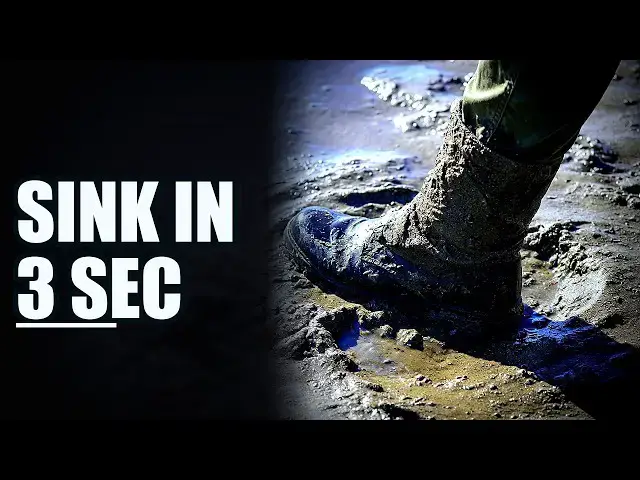
What if you were swallowed by quicksand? The physics is slower, heavier, and more specific than the movies. We walk a real 2024 beach incident, the density numbers, why your legs lock, and what does not happen tomorrow.
0:00 The First Step
1:20 Twice Your Density
2:40 How You Sink
4:00 The Vacuum Lock
5:20 And It Gets Worse
6:40 The Tide Clock
8:10 How Rescue Works
9:40 What Does Not Happen
10:50 The Part That Matters
#quicksand #whatif #science #survival #physics #density #rescue #nature
This is a thought experiment based on public science and reported incidents. Estimates use "about." Not medical or rescue advice.
Tags: quicksand, what if, science, survival, physics, density, rescue, nature
Visuals are original AI-generated stills. Narration is synthetic. Not medical, legal, or financial advice.
Show More Show Less View Video Transcript
0:00
On June the 1st, 2024, Jamie Akward was
0:03
walking the waterline at Popham Beach
0:05
State Park in Maine when the sand under
0:07
one boot stopped being sand. In about 3
0:10
seconds, she dropped 2 and 1/2 ft to the
0:12
hips and could not feel a bottom. The
0:15
turn nobody puts in the cartoon is this,
0:17
the hole closed behind her, her husband
0:19
pulled her out, and a standing adult
0:22
almost never goes under the head.
0:24
Quicksand does not swallow you. It holds
0:26
you.
0:27
The first step.
0:29
You are on a river bar at low water. The
0:32
surface looks dry.
0:34
Your heel punches through a crust maybe
0:36
2 cm thick, and the grain pack under it
0:38
behaves like a liquid for a few seconds.
0:41
Cold climbs the sock. There is a wet
0:43
hush, not a splash.
0:45
Quicksand is not a pit with no floor. It
0:48
is a saturated mix of sand, silt, clay,
0:51
and water, often sitting over a layer
0:54
that will not drain.
0:55
Typical bulk density sits around 2 g per
0:58
cubic centimeter. Your body, lungs full
1:01
of air, averages about 1. You are the
1:03
cork. The mixture is the bottle. You go
1:06
in because the grains have not locked
1:08
yet. You stop going in because they
1:10
will.
1:11
Twice your density.
1:14
A cubic meter of this stuff weighs about
1:16
2,000 kg. A cubic meter of you, clothes
1:19
and all, is closer to 1,000. That gap is
1:22
the whole physics problem.
1:25
In 2005, Daniel Bonn and colleagues at
1:27
the University of Amsterdam showed that
1:30
a stress change of about 1% can drop the
1:32
viscosity of salt lake quicksand by a
1:35
factor of about a million.
1:37
The ground you trusted becomes a fluid
1:39
because you stepped on it. When it is
1:41
fully liquefied, shear strength
1:43
collapses and you punch in. Then water
1:45
is squeezed out of the pore. Space is
1:48
around your legs. The grains jam.
1:50
Friction returns.
1:52
To pull a trapped foot straight up at 1
1:54
cm per second takes a force on the order
1:57
of 10,000 N, about the lift you would
2:00
need for a small car. You do not have a
2:03
winch. You have two arms, a panicked
2:06
breath, and a surface that looks like
2:08
solid ground from 5 m away.
2:11
How you sink.
2:13
The sequence is mechanical. First
2:15
contact liquefies a column under the
2:17
foot. Grain contacts break.
2:20
You drop 10 to 20 cm in a second. You
2:23
throw weight onto the other foot. That
2:25
one liquefies, too. Now, both legs are
2:28
in a slurry. You try to lift a knee. The
2:30
hole you leave behind collapses. Water
2:32
rushes into the void, and the grains
2:34
resettle tighter than they were.
2:37
Each thrash packs the mix.
2:39
After about a minute of fighting, a
2:41
typical adult is into mid-thigh.
2:43
After a few minutes of thrashing, you
2:45
can be into the waist.
2:46
Past the waist, the buoyancy of your
2:48
torso starts to work for you.
2:50
The mixture is denser than you. Your
2:52
chest wants to float. Your legs do not
2:55
get that memo, because they are already
2:56
locked in a grain matrix that has gone
2:58
from liquid back toward wet concrete.
3:01
Aluminum beads matched to human density
3:03
never went all the way under. You will
3:05
not, either. Not from density alone. The
3:08
vacuum lock. Here is the part your
3:09
muscles cannot out-argue. When you pull
3:12
a leg, you create a low-pressure zone
3:14
under the foot. Water cannot refill that
3:16
space fast enough through packed silt
3:19
with pore sizes on the order of 10
3:21
micrometers. The pressure difference
3:23
sucks the limb back. At 30 cm of depth,
3:27
a slow wiggle can still work. At 60 cm,
3:30
you're in a different regime. At hip
3:32
depth, a person pulling with both arms
3:34
on a rope may still fail to free a boot
3:37
without a second person and a board to
3:39
spread load. The lock is not a monster.
3:41
It is pore pressure and grain-to-grain
3:44
friction. You feel it as a cold clamp
3:47
around the calves, then heat in the
3:48
quads as you burn glycogen against a
3:50
wall that does not move. Straight up is
3:53
the worst vector. Sideways shears the
3:55
contacts. That is the whole escape and
3:59
instinct does the opposite. And it gets
4:01
worse and it gets worse because the sand
4:04
is not the only clock. Tidal flats
4:06
refill. A channel that was ankle deep at
4:09
2:00 in the afternoon can be chest deep
4:11
2 hours later. Water temperature in a
4:14
northern estuary in June can sit near
4:16
12° C. At that temperature,
4:18
at that temperature without a dry layer,
4:21
useful muscle output starts to fall in
4:23
tens of minutes. Your hands go stupid.
4:26
Fine motor skill leaves the fingers
4:28
first. You cannot work a buckle. You
4:30
cannot tie a loop. If the trap is a
4:32
desert wash, the opposite problem hits.
4:35
Surface air near 40° C,
4:37
wet sand conducting heat out of your
4:39
legs, dehydration climbing while you
4:41
wait.
4:42
Either way, the physics problem turns
4:44
into a logistics problem.
4:46
You are a fixed object in a moving
4:48
environment. The mixture will not eat
4:50
you to the crown of the head. The tide,
4:53
the cold, the heat, or the exhaustion
4:55
can still take the rest of the afternoon
4:57
away from you.
4:58
The tide clock.
5:00
On September 4th, 2015, a husband and
5:03
wife in their 70s walked the mud at
5:05
Humphrey Head on Morecambe Bay. They
5:08
went in. She got free. He went in to the
5:10
waist trying to help her. Morecambe RNLI
5:14
launched a hovercraft at 12:16.
5:17
Bay Search and Rescue put a hose on the
5:19
mix to dilute the sand. It took about 20
5:22
minutes of fluidizing and pulling onto a
5:24
board before he was out. Fluidizing is
5:27
the actual trick. You add water and
5:29
vibration so the grains unlock, then you
5:31
slide the limb sideways, never straight
5:33
up. A fire service hose at modest
5:36
pressure can drop the required pull by a
5:38
large fraction in a minute or two if
5:40
someone can stand on a board and aim. If
5:42
nobody comes, you do a worse version of
5:44
the same thing with your own hands.
5:46
Scoop a trench on the downhill side,
5:48
rock the knee in a small circle, rest 20
5:51
seconds, repeat. Rest is not optional.
5:54
Lactic acid in a trapped quad will shut
5:56
the muscle down if you treat this like a
5:58
sprint.
5:59
Morecambe Bay has a flood tide that can
6:01
outrun a walking adult. Sand holds you,
6:04
water finishes the job. How rescue
6:06
works.
6:07
A typical rural response on a coastal
6:09
county is not a helicopter in 90
6:11
seconds. Call time, dispatch, drive, and
6:15
a walk across a mud flat can stack to
6:17
20, 40, even 60 minutes. In that window,
6:21
you manage three numbers: airway,
6:23
temperature, and panic rate. Keep the
6:25
mouth above water. That is
6:27
non-negotiable.
6:29
Drop your center of gravity by lying
6:31
back if the mix will support your torso,
6:33
which it often will because of that
6:35
density gap. Spreading your mass across
6:38
a larger area drops the pressure your
6:40
body puts on the slurry from tens of
6:42
kilopascals under a standing foot to a
6:45
much smaller number on your back. You
6:47
become a raft. You are still stuck. You
6:50
are no longer a pile driver. If you have
6:52
a pack, you get it off one shoulder and
6:54
under your spine. If you have a stick,
6:57
it goes perpendicular to your body as a
6:59
T. None of this looks heroic. All of it
7:01
is load spreading. Wriggle slowly so
7:04
water can seep down the leg and dilate
7:06
the packed sediment. Fast yanking can
7:09
tear a person before it frees a boot.
7:11
The sand does not care about your
7:13
urgency.
7:15
What does not happen?
7:17
What does not happen tomorrow is the
7:19
cartoon. You do not vanish under a dune
7:21
in 3 seconds. A standing adult does not
7:24
get pulled to the bottom of a 10-m shaft
7:26
of liquid sand because that shaft is not
7:29
there. Most natural quicksand layers are
7:31
shallow, on the order of tens of
7:33
centimeters to a couple of meters,
7:35
sitting on firmer ground. You do not get
7:37
digested. The grains have no metabolism.
7:40
Vehicles can bog, and a hoofed animal
7:42
with four narrow points of pressure can
7:45
have a worse day than you. A human with
7:47
lungs and a wide back is a different
7:48
object. Parks do not close. Rivers do
7:52
not turn to traps overnight. The hazard
7:54
is local, specific, and usually written
7:57
on a tide table if you bother to read
7:59
one.
8:00
Jamie Accord walked away with scratched
8:02
feet and a story. The hole was gone when
8:04
she turned around. The part that
8:06
matters.
8:07
The part that actually matters is the
8:09
first 30 seconds of your own behavior.
8:12
Stop the bounce. The bounce liquefies.
8:15
Speak out loud so a partner can hear a
8:17
bearing. Note a landmark that will still
8:20
be visible when the light drops. If you
8:22
are alone, you start the sideways rock
8:25
immediately, not after you have spent
8:27
your glycogen on a vertical panic pull.
8:29
Count the rocks. 10 circles, rest, 10
8:32
circles. Watch the waterline on your
8:34
pants. If it is climbing from the
8:36
environment and not from your sinking,
8:38
you have a tide problem. And the density
8:41
math will not save you from a filling
8:42
channel. That is the sting. Quicksand is
8:45
a friction trap wearing a monster
8:47
costume. The costume is fake. The trap
8:50
is real. The clock is whatever the water
8:53
and the weather are doing while your
8:54
legs are busy being a foundation pile.
8:57
You will not be swallowed whole. You
8:58
might be held in place long enough for
9:00
the world around you to change. That is
9:03
a narrower fear and a more useful one.
9:05
If you have ever felt ground go soft
9:07
under a boot, drop it in the cup.
#News