Up next in 10


A nearby gamma-ray burst would not melt cities. It would strip the ozone, flood the sky with UV, and leave the surface looking empty. This is the physics, in order, of how a GRB would actually hit Earth.
0:00 The Burst That Already Happened
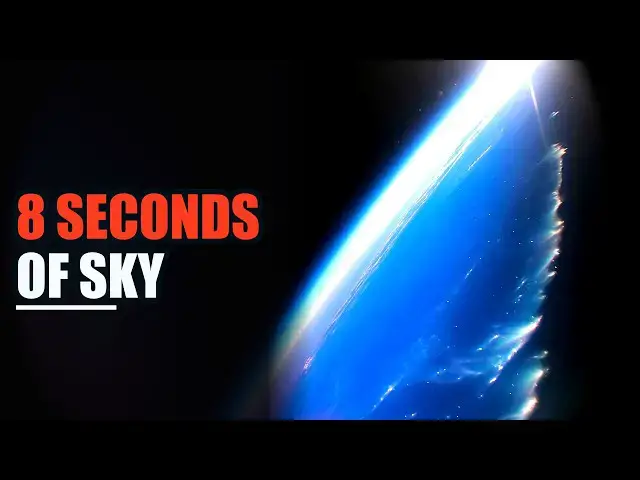
0:48 Eight Seconds of Sky
2:12 The Beam You Never See Coming
3:36 Nitrogen Becomes Poison
5:00 Ozone Goes First
6:24 And It Gets Worse
7:48 The Ordovician Case
9:12 What Does Not Happen Tomorrow
10:36 After the Light Stops
This is a science what-if, not a forecast. No nearby star is about to fire a GRB at Earth. The nearest known GRB-capable systems are far enough that this is a mechanism video, not a warning.
#gammarayburst #astronomy #whatif #earthscience #space #ozone #ordovician #lifiseasy
Not financial, medical, or spiritual advice. Public-record science only. Estimates use about where numbers are ranges.
Visuals are original AI-generated stills. Narration is synthetic. Not medical, legal, or financial advice.
Show More Show Less View Video Transcript
0:00
On December 27th, 2004, a magnetar
0:03
50,000 lighty years away dumped more
0:06
energy into Earth's upper atmosphere in
0:09
1/5th of a second than the sun puts out
0:11
in 100,000 years. Satellites blinked.
0:15
The ionosphere on the night side of the
0:17
planet lit up like day. That was not a
0:20
gamma ray burst aimed at us. That was a
0:22
sideswipe from a star that was not even
0:24
trying. A true nearby gammaray burst
0:27
would not give you a light show. It
0:29
would give you a chemistry problem you
0:31
cannot outrun. The burst that already
0:34
happened. You are standing outside at
0:36
night. There is no sound. There is no
0:38
heat on your face. The gamma rays do not
0:41
travel as a glowing beam you can point
0:43
at. They are photons with energies of
0:45
about 100,000 to several million
0:48
electron volts. And they dump that
0:50
energy into the air 20 to 50 km above
0:52
your head. On December 27th, 2004, the
0:56
Magnetar SG180620
0:59
flared. Instruments on Earth recorded a
1:01
spike that saturated detectors. The
1:04
night side ionosphere, the layer that
1:06
radio bounces off of, jumped as if the
1:09
sun had risen. That event was about
1:11
50,000 light years away in our own
1:13
galaxy, and it was a magnetar flare, not
1:16
a classic long gamma ray burst. A long
1:19
GRB is a collapsing massive star that
1:22
fires two jets of gamma rays for about 2
1:25
to 30 seconds. If one of those jets is
1:27
pointed within a few degrees of Earth
1:29
and the star is close enough, the upper
1:32
atmosphere does not get a tickle. It
1:34
gets a dose. 8 seconds of sky. A typical
1:38
long burst lasts about 8 seconds of peak
1:41
output. In those 8 seconds, a nearby GRB
1:44
can dump a fluence of about 100 kJ per
1:47
square meter into the top of the
1:49
atmosphere depending on distance. That
1:51
is not enough to cook the ground. The
1:53
air itself is the shield and the target.
1:56
Gamma photons hit nitrogen and oxygen
1:58
molecules. They knock electrons off.
2:00
They split N2 into nitrogen atoms that
2:03
then grab oxygen and make nitric oxide.
2:05
You do not feel 8 seconds. You feel the
2:07
next months. The burst is over before
2:10
you finish a sentence. The sky does not
2:12
stay bright. The chemistry stays. At
2:14
10,000 lighty years, a jet pointed at
2:16
Earth is a serious ozone event. At about
2:19
3,000 to 6,000 lighty years, models put
2:23
the ozone loss in the range that starts
2:25
killing the surface biosphere with
2:27
ultraviolet. Inside a few hundred lighty
2:30
years, you are not talking about a bad
2:32
summer. You are talking about a planet
2:34
that has lost its UV lid. The beam you
2:38
never see coming. Gamma ray bursts are
2:40
not explosions that light the whole sky
2:42
evenly. They are columnated. The jet
2:44
opening angle is often about 5 to 10°.
2:47
Most of the energy goes into two
2:49
opposite cones. If the jet is not
2:51
pointed at you, you get a supernova at a
2:53
distance and maybe a later afterlow in
2:55
other wavelengths. If it is pointed at
2:57
you, the first photons arrive at the
2:59
speed of light. There is no warning
3:01
radio. There is no gravitational wave
3:03
siren that gives you weeks. A collapsing
3:06
star in the Milky Way that is already
3:07
dying might have been cataloged. A burst
3:10
from a star you never named arrives as
3:12
the event. You are in the beam or you
3:15
are not. The Earth is a 12,742
3:18
km ball. The jet at galactic distances
3:22
is still wider than the planet. The
3:24
whole dayside and a lot of the night
3:26
side upper atmosphere get hit because
3:27
the atmosphere is a shell, not a wall
3:30
facing one way. The photons that miss
3:32
the ground still ionize the air that
3:34
wraps around the limb. You do not hide
3:36
in a basement for 8 seconds and call it
3:38
done. The basement does not have an
3:40
ozone layer. Nitrogen becomes poison.
3:44
Here is the sequence in the air. A gamma
3:46
photon ionizes a nitrogen molecule. Free
3:49
electrons and nitrogen atoms start a
3:51
chain. Nitrogen plus oxygen makes nitric
3:55
oxide. No. Nitric oxide catalyzes the
3:58
destruction of ozone. One. No molecule
4:01
can destroy many 03 molecules before it
4:04
is locked into other compounds. Models
4:06
of a galactic GRB at a few thousand
4:08
lighty years show NOx production in the
4:11
stratosphere jumping by factors of
4:13
several. Ozone in the upper stratosphere
4:16
can drop by 30 to 50% globally in the
4:19
simulations and by more than that at mid
4:22
latitudes on the facing hemisphere.
4:24
Ultraviolet B at the surface. The 280 to
4:28
315 nanometer band that DNA actually
4:31
cares about climbs. Phytolankton in the
4:34
top few meters of the ocean take the
4:37
first hit because they live in the
4:38
light. The base of a lot of marine food
4:41
webs is a few meters of water and a
4:43
pigment that UV can bleach. You are not
4:46
watching cities burn. You are watching
4:48
the chemistry of 20 km up rewrite. Who
4:51
can live in sunlight? Ozone goes first.
4:55
Earth's ozone layer is not a blanket on
4:57
the ground. Peak ozone sits around 20 to
5:00
30 kilometers up. That is exactly where
5:02
the GRB energy is absorbed. The burst
5:05
does not have to reach your skin to
5:06
change your skin's future. After the 8
5:09
seconds, ozone production and
5:10
destruction fight for months to years.
5:13
Some models keep significant ozone
5:15
suppression for 5 to 10 years. During
5:18
that window, a clear day is a UV
5:20
instrument. Fair-Skinned humans burn
5:23
faster. Amphibians with thin eggs fail.
5:26
Crops that were bred for this star
5:28
spectrum take a dose they were not
5:30
designed for. The number that matters is
5:33
not the burst energy in args. It is the
5:35
Dobson unit count over your town 6
5:37
months later. A healthy column is about
5:40
300 Dobson units. Drop that by a third
5:43
and the UV index on a March afternoon is
5:46
not a lifestyle issue. It is a logistics
5:48
problem for anyone who works outside,
5:51
for anyone who grows food, for anything
5:53
that cannot crawl under a rock at noon.
5:55
And it gets worse. And it gets worse.
5:57
The part that actually matters is not
5:59
the gamma flash. It is the nitrogen
6:01
dioxide and the haze. NO2 is brown. A
6:05
large enough Nox injection can tint the
6:07
stratosphere. Sunlight at the ground
6:10
drops a few%. That sounds small until
6:12
you put it on a growing season. Cooler
6:14
summers, weaker photosynthesis on land.
6:17
weaker phytolanton at sea, then the UV
6:20
that did get through is still higher
6:22
because ozone is down. You get a planet
6:24
that is both dimmer in visible light and
6:27
harsher in ultraviolet. Food webs take
6:30
both punches. Acid rain from nitric acid
6:33
is a secondary hit. Not a movie acid
6:36
bath, but lakes and soils that were
6:38
already marginal feel it. Radio
6:40
blackouts in the ionosphere last hours
6:42
to days after the burst, then fade. The
6:45
chemistry does not fade on that
6:47
schedule. If you were hoping the
6:49
disaster was the 8 seconds of sky, that
6:51
is the logistics problem. The physics
6:54
problem is a stratosphere that has been
6:56
turned into a factory for ozone killing
6:58
catalysts. The thing you cannot evacuate
7:01
is the air column. The orivision case
7:03
march of 2003 is when the paper that
7:06
still gets cited landed. A gamma ray
7:08
burst as a possible trigger for the late
7:11
Orivishian mass extinction about 440
7:14
million years ago. The authors,
7:16
including Adrien Mellet and Brian
7:18
Thomas, ran the ozone and UV numbers for
7:21
a burst at about 6,000 lighty years.
7:23
They were not claiming a photograph of
7:25
the burst. They were matching a kill
7:27
pattern. The late orivision took out
7:30
about 85% of marine species. It is tied
7:33
to a glaciation and a drop in sea level.
7:36
A GRB does not replace ice. A GRB can
7:39
crash plankton, cut the carbon cycle,
7:42
and help shove climate. That is the mini
7:44
case. A named hypothesis with a date on
7:47
the paper and a date on the rock. It is
7:50
not proven. It is the closest Earth has
7:52
to a receipt. If a burst like that
7:54
happened at that distance, the surface
7:56
would not look like a crater field. It
7:58
would look like a world where the top of
8:00
the ocean failed first, then the rest of
8:02
the chain followed. Then ice did the
8:04
rest of the work. You would not find a
8:06
gammaray fossil. You would find a
8:08
biosphere that lost the light it could
8:10
use and gain the light that breaks
8:12
bonds.
8:13
What does not happen tomorrow?
8:16
What does not happen tomorrow? The
8:19
ground does not melt. Your house does
8:21
not catch fire from the beam. People on
8:23
the night side do not drop dead at 8:01.
8:26
There is no mushroom cloud. There is no
8:28
EMP that kills every car on Earth like a
8:31
solar flare fanfic. Consumer electronics
8:34
at the surface are behind enough air
8:36
that the gamma dose at ground level is
8:38
not the killer. You do not get a second
8:41
sun you can stare at. You might get a
8:43
brief optical flash and a UV pulse if
8:46
you are looking up and then the sky
8:48
looks like the sky. No city-sized
8:50
crater, no tectonic trigger, no boiling
8:54
oceans. The nearest plausible long GRB
8:58
progenitors in the Milky Way are not
9:00
sitting 100 lighty years off the bow.
9:02
Wolf ray stars and the kinds of massive
9:04
stars that make long bursts are rare and
9:07
mostly far. Short bursts from neutron
9:10
star mergers are a different animal.
9:12
Closer possible, shorter and still a
9:15
geometry problem. The Fermy Gamma Ray
9:18
Space Telescope and Swift have logged
9:20
thousands of bursts almost all in other
9:23
galaxies because that is where the
9:24
volume is. Earth is not on a published
9:27
countdown. This is a mechanism, not a
9:29
weather report. After the light stops,
9:32
After the light stops, you are in a
9:34
years'sl long UV climate. Hospitals see
9:37
more skin damage. Farmers see yields
9:39
that do not match the almanac. Fisheries
9:42
see the plankton crash with a lag of
9:44
weeks to months, then the fish with a
9:46
lag after that. Governments that still
9:48
have ozone monitoring satellites watch
9:51
the Dobson maps go wrong and stay wrong.
9:54
Sunscreen and midday indoor shifts are
9:56
the human patch. They do not patch the
9:59
ocean. Recovery of ozone is a chemistry
10:01
timetable, not a vote. When NOx converts
10:04
into reservoirs and rains out, the
10:06
factory slows. 5 to 10 years is the
10:09
model window, not a promise. The burst
10:11
that hits Earth is 8 seconds of photons
10:14
and a decade [clears throat] of
10:15
atmosphere. That is the whole event. If
10:18
you want a number to keep, eight seconds
10:20
of sky, 20 kilometers up, 300 Dobson
10:23
units on the line, and a food web that
10:25
lives in the top few meters of water.
10:27
The magnetar in 2004 was a warning shot
10:30
from 50,000 lighty years. A long burst
10:33
at a few thousand would not be a
10:35
warning. It would be the day the lid
10:37
came off the sky. Would you rather live
10:39
through the 8 seconds on the dayside or
10:42
the 10 years of ultraviolet that come
10:43
after the sky
#News