0:00
The history of pizza is a large pie, half margarita and half lies
0:04
The most famous story about its origins, in which the classic tricolor pie was created to honor Queen Margarita of Savoy, is a work of fiction
0:12
U.S. soldiers did not fall in love with pizza en masse during their time fighting World War II and bringing back to the States
0:19
And the pizza in New York is not good because of the magical tap water
0:23
Hi, I'm Justin Dodd, and now that I've alienated half of the audience, I will attempt to argue that the real, verifiable history of pizza is even cooler than the Buncombe
0:31
and Boulder Dash that often passes in its place. That's right, Buncombe and Boulder Dash
0:36
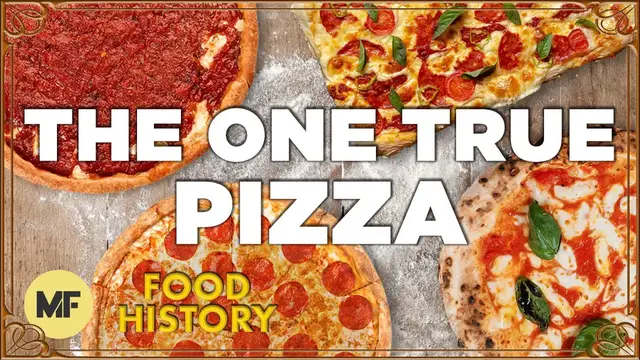
Here is an incomplete list of pizza styles we'll be covering today. Neapolitan, New York, Sicilian
0:41
St. Louis, Ohio Valley, real thing, Montanara, and Fugasa Con Queso. We'll find out why Kim Jong-il
0:47
flew a pizzaiolo into North Korea, yze why a pie is so much cheaper in Naples, Italy than
0:52
Naples, Florida, and even discuss why some people think the invention of pizza should
0:56
be credited not to the Italians, but to the Greeks. Uh-oh, uh, Nona is coming at me with a wooden spoon, and I don't think it's because she
1:03
wants me to taste the ragu. Let's just roll the intro. In 2014, newly elected New York Mayor Bill de Blasio set off a small international incident
1:17
when he was photographed eating his pizza with a knife and fork
1:20
Jon Stewart was one of many to come out against de Blasio's tidy choice, calling it the greatest sin a New Yorker can commit
1:28
And lest we be accused of pizza partisanship, please note that future President Donald Trump was convicted in the court of public opinion for the same cutlery crime back in 2011
1:37
In de Blasio's case, he defended himself with an appeal to his Italian heritage, saying
1:42
In my ancestral homeland, it's more typical to eat with a fork and knife
1:46
Sure enough, if you sit down at a pizzeria in Naples, you'll be served an uncut pie
1:50
in the silverware to eat it with. Still, according to a YouGov poll conducted in the wake of the
1:54
mostly faux outrage over de Blasio's dining habits, over 90% of Americans eat pizza with
2:00
their hands. So, was the then-mayor wrong, right? Both. And that's because pizza is at once
2:07
internationally recognizable and completely regional. That's why some people look at a
2:12
Hawaiian pie and see the greatest crime ever committed to leavened bread, and others see a
2:17
beautiful story about immigration, intercultural influence, and innovation—or at least lunch. Let's start with the Neapolitan Pie, from what is often called the birthplace of pizza
2:28
Naples, Italy. That's where the Queen Margherita story I mentioned up top comes from. It supposedly
2:33
took place in 1889 at a pizzeria that was once called Pietro e Basta Cosi, or Pietro
2:38
And that's enough. Yes. In the more dramatic version of the legend, the Saviard Queen of newly unified Italy
2:45
helped bring the country together by eating the people's humble food, a food that conveniently
2:49
shared a color scheme with the flag that had ruled different parts of the country since the
2:53
late 18th century. Sure enough, there once was a pizzeria with that name, although the establishment
2:59
still making pies today, is now called brandy. There was a Queen Margarita, too
3:03
and she might have had what we now call a margarita pie. Pizzeria Brandy certainly
3:08
has a plaque on their wall that attests to the fact—or to the fact that they knew a
3:11
plaque guy. Unfortunately, the pizza now known as margarita predates this supposedly royal birth. As Neapolitan
3:18
—human, not pizza—Giuseppe A. D'Angelo wrote for his website PizzaDixit, we can find
3:23
a pizza with tomato sauce, mozzarella, and basil in the 1853 book Customs and Habits
3:28
from Naples, described and depicted, translated into English. We've linked to D'Angelo's website down below, by the way. It is awesome
3:36
Okay, so maybe the pizza wasn't invented for the queen, but named in her honor
3:40
That may be so, but it's not clear it happened at Pizzeria Brandy. And if the name does date back to 1889, it doesn't exactly take the city by storm
3:48
Even almost 100 years after the queen was supposedly honored with the pizza shout-out
3:53
it doesn't seem like everyone knew what the margarita pie was, even in Naples
3:56
D'Angelo links to a 1967 RAI broadcast in which a TV reporter from Naples seems confused about what a margarita pie is
4:04
He thinks it has an egg in the middle. The pizzaiolo, or pizza maker, he's talking to has to clarify
4:10
there is indeed a pizza with the egg, but it is not called margarita anymore
4:14
Emphasis very much added. We'll probably never know who invented the margarita pie, or its humble sibling, the marinara
4:21
which is topped simply with tomatoes, oil, garlic, and salt, though it often has oregano and can be relatively gussied up with anchovies
4:28
The thing that makes both labels so tricky to track is that pizza names weren't necessarily a thing back in the 19th century
4:34
According to food historian Tommaso Esposito, up until the mid-20th century, pizzas were usually ordered by simply listing the ingredients you wanted on top
4:43
Esposito wrote a book all about pizza songs, which, yes, that's a thing, from the 16th century up until 1966
4:50
and found that none of the songs mentioned specific pizza types by name. It's true that the absence of proof is not the same thing as the proof of absence
4:57
but it does seem notable that there's no written record of a margarita pizza being called margarita in the late 19th or early 20th century
5:04
As evidence for their claim, Pizzeria Brandy points to a royal letter purportedly written by Gali Camillo
5:10
the head of the table of the royal household, yet another career opportunity I was unaware of when I picked college majors
5:16
That letter, though, never refers to any particular pizza's name. It certainly doesn't use the phrase pizza margarita
5:22
It also might be a forgery, according to a piece by the Umbra Institute's Zachary Novak
5:27
There's no evidence of the letter in royal records, and it doesn't seem to match other samples of Camillo's handwriting
5:32
Novak also gets into the various types of royal seals Italian monarchs were and were not known to use But at that point we getting so far into the weeds of food history that even I can go much deeper That the thing about Neapolitan pizza
5:46
though. It sort of encourages obsession. The True Neapolitan Pizza Association publishes a set of
5:52
what it calls international regulations, and they aren't what you'd call loosey-goosey. The AVPN
5:58
permits, in the dough of its accredited pizza makers, a maximum of 20% regular flour, as opposed
6:03
to their preferred 00 flour, which has an almost talcum powder-like appearance—white
6:09
fine, and completely free of bran or germ. They allow a 7% point range in dough hydration and have
6:15
thoughts about your PL, the balance between dough elasticity and plasticity, your fermentation
6:20
process, and your tomatoes, which preferably come from one of three places in Italy. They are
6:25
interested in only two types of pizza—margarita and marinara. Let's touch on that second style
6:30
briefly. There are several popular stories for its name, which is Italian for mariner
6:35
so it presumably meant something like sailor style. One explanation says that that's because
6:40
sailors could bring the ingredients on long journeys. I guess if the tomatoes were sun-dried
6:45
that makes sense. Another story says that it was due to the humble ingredients which even
6:49
low-paid sailors could afford. Whether that's true or not points to pizza's longtime role as
6:55
a highly affordable meal. Pizza in Italy likely started as an easy-to-make, cheap offering from
7:00
bakers who could quickly cook up the simple dough and then sell it on the street for pennies
7:04
Neither of those two famous Neapolitan pie varieties would have been possible without
7:09
tomatoes. They first appeared in the Italian cookbooks in the late 17th century, but were
7:13
introduced to the continent a century earlier by the Spanish. For those of you playing food history
7:18
bingo, you can now mark off both the Colombian exchange and delicious dish that started as food
7:22
for the poor. When we think of pizza today, tomatoes, a crop the Aztecs had introduced to
7:27
the Spanish often seem like an essential ingredient. The Oxford English Dictionary, in fact, defines
7:32
pizza as a dough baked with a topping of tomatoes, cheese, and any of various other ingredients
7:37
Anyone who's ever had a white pie might blanch at that definition. The OED actually acknowledges
7:42
in an addendum that some types of pizzas omit one or both of the tomatoes and cheese
7:47
That almost certainly includes the first pizzas ever called pizza. There's a written record from
7:52
Gaita, about 100 kilometers up the coast from Naples, dating back to the end of the first
7:57
millennium CE. It lays out an agreement in which someone owes a local bishop 12 pizzas
8:02
every Christmas and Easter Sunday. Remember, the closest tomatoes at that point were across
8:07
the Atlantic Ocean. We don't have any way to know exactly what that proto-pizza looked
8:11
or tasted like, but consider what the simplest version of a pre-Columbian exchange pizza
8:16
might entail, a simple Mediterranean flatbread, kind of like a pita. Plenty of sources think
8:22
this is no accident and draw a linguistic line straight from pita to pizza. That's not the only
8:27
possible etymology you'll find for the word, though. Some claim it comes from the Germanic
8:30
Lombards, related to their word bitzo or bite. A 1907 Italian etymology book ties it to pinza
8:37
which meant something like clamp. Whichever is true, there's something revealing about the pita
8:41
pizza similarity. People around the world have been making flatbreads of one type or another
8:46
for thousands of years. As we discussed in our episode about the most important foods of all time
8:51
the cultivation of grains like wheat is inextricably linked to the rise of civilization
8:57
and it doesn't take a little Caesar to put some tasty morsels on top of whatever simple bread you've
9:01
got around. If we define pizza as a flatbread with toppings, we can imagine it being invented
9:06
more or less independently by the ancient Greeks, Egyptians, and Natufians from modern-day Jordan
9:11
who were apparently making bread more than 14,000 years ago. It's difficult to say how it ended up
9:16
in Naples precisely, but I will note in a tentative nod towards the pita-pizza hypothesis
9:21
that the Italian city was originally founded by the Greeks who gave it the name Neapolis around
9:27
600 BCE. In Italy today, you can find different versions of tomato-less and or cheeseless pizza
9:33
The most famous may be the Roman pizza bianca, which looks a lot like focaccia bread. It's
9:38
prepared differently than focaccia, though, and cooked in a hotter oven. It's said to have a
9:42
lighter and crunchier crust. Pizza Bianca is often split in half and stuffed with tasty fillings like
9:47
mortadella, cheese, or vegetables. The idea of putting something delicious inside a pizza-like
9:52
bread likely dates back thousands of years. According to Francesco Duccio's La Romanesca
9:57
enslaved people in ancient Rome used figs for this purpose. Figs might seem like an odd choice
10:02
for a poverty food, but if you've ever had a neighbor with a fig tree, you'll understand how
10:07
they could grow to be abundant on Roman streets, which they reportedly were in antiquity. Even
10:11
today there's an Italian expression, mica pizza e fichi, literally, not pizza and figs, that can
10:17
be used to say something is valuable or not totally simple. Eventually, pizza with figs became popular
10:23
beyond those who ate it out of economic necessity. Wealthier eaters embellished the simple dish with
10:28
prosciutto, creating a new variation that harkens back to pizza's historical roots and remains
10:33
popular today. Its flavors are a study in contrast. The sugar in the figs counteracts the fat of the
10:39
ham, creating a delicious, salty-sweet synergy. On a completely unrelated note, Hawaiian pizza
10:45
is the worst thing that's ever happened to anybody. Okay, I'm not gonna lie. Fresh figs and delicious prosciutto does sound a little more appealing
10:52
than canned pineapples and American ham, but the similarities between the two salty-sweet
10:56
pies should, perhaps, cause culinary snobs to reconsider their pizza prejudice. The Hawaiian pie was invented in 1962, according to most accounts, by Sam Panopoulos, a restaurateur
11:07
living in Ontario. Sam was originally from Greece, and the boat he left on stopped fortuitously
11:11
in Naples where he first became acquainted with pizza Sam did not then spend years perfecting a perfectly authentic Neapolitan pie His restaurants weren pizzerias at all They served middle fare like hamburgers and pancakes Pizza especially the Hawaiian pizza was offered as a way to stand out from the crowd to bring in business
11:30
At the time, pizza didn't have much of a profile in Canada. As Panopolis said, even
11:34
Toronto didn't know anything about pizza in those days. The only place you could have
11:38
pizza was in Detroit. That has a little something to do with Gus Guerra, who is sometimes looked
11:43
at as the father of Detroit-style pizza. This is my favorite style of pizza, for the record
11:49
It's said to date back to the 1940s. A Detroit pie looks a lot like Sicilian, but, according to
11:53
tradition, is baked in a blue steel pan like the ones that used to hold nuts and bolts in auto
11:59
manufacturing plants. Whether or not Detroit-style pizzerias continue to employ that nod to the city's
12:04
automobile industry, the ideal Detroit pie has a lighter dough than its Chicago counterpart
12:09
and crispy cheese around the sides. That delicious border is the result of the cheese
12:13
often a Wisconsin brick cheese, yum, being sprinkled over the dough edge to edge. It then
12:19
caramelizes in the oven. Chicago-style pizza is usually traced back to 1943 at Pizzeria Uno
12:25
The super cheesy pies cooked for up to an hour and made use of a high-sided
12:30
buttery pastry shell crust. Additional fat is provided by the olive oil that the pizza is
12:34
generally cooked in, creating a sort of fried outer crunch. To protect the cheese, during that
12:39
long bake time, the pie is usually constructed with the sauce on top of the mozzarella
12:43
A different approach to that same long cook time may have given us Ohio Valley-style pizza. One of
12:48
its defining features is the last-minute additions of cold toppings, including the cheese. Chicago-style
12:54
pizza is sometimes called deep dish pizza, but even though it's cooked in a pan, it's not usually
12:58
called pan pizza. That distinction belongs to its thicker, crusted cousin, which generally puts the
13:04
cheese back on top of the sauce. If that sounds a little bit like something you can get at Pizza
13:08
Hut, that is no accident. The chain helped popularize what is often called pan pizzas today
13:13
Brothers Dan and Frank Carney started their chain in Wichita, Kansas, during the middle of
13:18
the previous century. All of these thicker pizzas have a connection, if not historical
13:22
then at least spiritual, with what many in the states call Sicilian pizza. That square pie seems
13:27
to descend from a Sicilian sfincione, a mozzarella-free offering that is still popular in Sicily
13:33
today. It's usually topped with tomatoes and onions and can also include anchovies
13:37
and grated caciocavolo cheese. Svinconek translates to something like thick sponge. Finally, a sponge I can eat free of judgment
13:45
The so-called Sicilian pie in places like New York seems to be the
13:49
result of immigrants from Sicily getting cheap access to mozzarella, perhaps influenced by their Neapolitan neighbors. On the opposite end of the crust
13:56
continuum, we have St. Louis-style pizza. This version uses an unleavened dough, creating a crisp, cracker-like texture. It's usually topped with provolone, a processed
14:06
cheese that combines qualities of provolone, Swiss, and cheddar. Instead of big square
14:10
slices or familiar triangles, St. Louis pies are often cut tavern-style, a ready-to-share
14:16
presentation that can be found throughout the Midwest. And, of course, the United States isn't the only place Italian immigrants have influenced
14:23
the local cuisine. In Argentina, people eat fugazzo con queso, a pizza with onion and
14:28
cheese whose name derives from a version of the word focaccia. In Italy, you can order
14:33
pizza montanara, a fried variation of Neapolitan style. Pizzaiolos drop the plain dough into
14:39
hot oil to fry up, take it out, top it, and then finish it quickly in a traditional oven
14:44
That's not to be confused with pizza fritta, which is widely available in Naples. In this
14:48
version of fried pizza, the non-dough ingredients aren't toppings but fillings. Everything gets
14:53
folded into the dough and then fried up. Many say this variation came about, or at least got
14:58
popular, during food shortages of World War II as a way to make otherwise undesirable ingredients
15:04
palatable. Those food shortages, incidentally, are why experts are dubious about the popular
15:09
folk history that says pizza became popular in America after G.I.s tried it during the war
15:15
As food historian Simone Chinotto said, there were no ingredients for making pizza
15:19
and many of the ovens were actually destroyed by the bombings. Most American servicemen never ended up on the Italian mainland and would most likely
15:26
have had to sample pizza in conflict-ravaged Naples since it wasn't popular throughout
15:31
the country. That's not an impossibility, but probably not the primary cause of pizza's worldwide
15:37
domination in the next half-century. Sure enough, in 1947, two years after the war had concluded, the New York Times lamented
15:44
that pizza could be as popular a snack as the hamburger if Americans only knew more about it
15:50
pizza fritta, the war and its attendant challenges may have contributed to the dish's spread
15:55
but it certainly wasn't the first fried dough in Italian cuisine. There are examples dating back
16:00
to the 1500s, including an early version of zeppole, which can be sweet or savory
16:05
Anyone who's been to the Feast of San Gennaro in Little Italy knows that New Yorkers happily
16:09
adopted zeppole. And of course, they put their own spin on pizza. Lombardi's is often called
16:14
the United States' first pizzeria. Gennaro Lombardi opened it in Little Italy back in 1905
16:20
according to the restaurant's website. Lombardi, like most of the first American pizzaiolos
16:24
learned his craft in Naples. So how did New York develop its own signature style
16:29
According to a piece written by Ed Levine for Serious Eats, technology played a big part
16:33
Early 20th-century New York pizza parlors used coal-fired ovens, which could reach the kind of
16:38
rip-roaring temperatures found in Naples' wood-fired ogs. They had the added benefit
16:43
of saving space and money since they burned more efficiently. The result was not an exact
16:48
replication of Neapolitan pizza, but was close enough that it was generally served in the
16:52
same fashion—in whole pies and eaten immediately. When Italian immigrant Frank Mastro developed and began successfully selling a gas pizza oven a few decades later its temperature maxed out around 550 degrees Fahrenheit as opposed to the 800 degrees or more achievable
17:08
with coal and wood. It might not have the ephemeral airiness of a great Neapolitan pie
17:13
but that drier pizza does have a longer shelf life. As pizza historian Scott Wiener said
17:18
pizza by the slices has to be where he did most of the time. So that oven is a big deal
17:23
In the ensuing decades, iconic slice shops started to proliferate throughout the five
17:28
boroughs and eventually throughout the country. Though the oven may play a big role in New York
17:32
style pizza, the water, despite what you might hear, probably doesn't. People say that New York
17:37
tap water contains the perfect amount of trace minerals to create an ideal dough. There's actually
17:42
a certain amount of logic to this claim. Relatively soft water like New York's can taste different
17:47
than hard water, and elements like calcium and magnesium can theoretically affect the gluten
17:52
structure in bread, creating a tougher final product. In practice, though, when J. Kenji
17:57
Lopez-Alt designed a semi-scientific experiment to test the effect of water hardness on the
18:02
quality of pizza dough, he found no direct relationship between total dissolved solids
18:07
in the water and final crust quality. The magical New York tap water theory also takes a hit when
18:12
you take into account the incredible pizza you can get in locations as far-flung as Naples
18:17
Italy and Phoenix, Arizona. The latter is where Chris Bianco opened his first renowned pizzeria
18:22
helping to set off a nationwide interest in Neapolitan, sometimes called Neo-Neapolitan pizza
18:28
made with high-quality ingredients and wood-fired ovens. In 2003, Bianco became the first pizzaiolo to win the James Beard Award for Best Chef Southwest
18:37
About 15 months later, BBC Radio 3 documented a very different honor bestowed upon a pizza maker
18:42
and culinary instructor named Ermano Ferlanas. He was flown from Italy to North Korea under rather opaque circumstances
18:50
to teach military officers about making pizza. It's hard to independently confirm the details
18:55
of Ferlanos' account, for obvious reasons, but it is true that North Korea's then-Supreme
18:59
Leader Kim Jong-il was known to be a gourmand. He actually opened the famine-ravaged country's
19:04
first pizzeria in 2009. Ferlanos' story includes one incident in which his attentive pupils
19:10
even asked to count the number of olives on one of his pies and measure the distance between them
19:15
It's a funny detail with potentially sinister sociopolitical undertones. But in a way, measuring all of distance isn't so far removed from the quest for authenticity
19:24
that countless cooks have put themselves through. I think today, the prevailing attitude of people in the food world towards authenticity
19:31
is one of reservation, if not outright, rejection. This series certainly speaks to how slippery the notion of authentic is
19:38
given how much food and the way we relate to it is constantly changing
19:42
But pizza, I think, speaks simultaneously to both sides of this debate
19:47
On the one hand, it took a healthy disrespect of tradition to invent delicious new creations
19:52
like deep-dish pizza or even a white pie with prosciutto and figs
19:56
But on the other hand, there's something beautiful about spending countless hours tinkering
19:59
with just the few variables to create the perfectly authentic Neapolitan pie
20:04
Even if we acknowledge that the rather strict definition of an authentic Neapolitan pie
20:08
was invented by a non-profit organization founded in 1984. No two days for a pizzaiolo are ever the
20:15
same. The yeast is alive. The fire might as well be. Temperature and humidity change. There's
20:20
something poetic about the almost Sisyphean task of trying to hit so many moving targets at once
20:26
In this context, authenticity has the potential to be more than an outdated marketing buzzword
20:31
It can refer to the meditative act of paying attention or pursuing perfection, reaching for
20:36
an ideal that might only live in your own mind. For my money, the best pizza in New York today
20:41
can be found at Lucali in Carroll Gardens, Brooklyn. And that's no small amount of money
20:46
Pies there start at $30 a pop. In Naples, meanwhile, an equally delicious offering can
20:50
be purchased for about $6. Part of that difference can be attributed to real estate
20:55
A two-bedroom apartment on the same block as Lucali sold in 2021 for almost $1.5 million
21:01
A similarly-sized place in Naples can go for a quarter of that price
21:05
Part of it comes down to cooking style. A true Neapolitan pie is made from a ball of
21:09
dough between 200 and 280 grams and topped sparingly. When a New York Times writer weighed
21:15
a single slice from Reyes of Greenwich Village, it clocked in at about 240 grams
21:20
Lucali was started by Mark Iacono, a Brooklyn-born marble worker who had never made pizza professionally
21:25
or even been to Italy before he opened his shop. It's true that the high prices at Lucali
21:29
owe a debt to effective, no-frills marketing and presumably unpaid celebrity endorsements
21:35
from the likes of Beyonce and David Beckham. But Iacono, for all his plaudits, seems caught between two worlds
21:41
His pizza is practically fine dining, and yet he once said, a good New York slice trumps
21:46
every kind of pizza. Iacono's love for the humble slice is no doubt genuine, but to achieve the kind of
21:51
pizza perfection he's still churning out requires the kind of monastic devotion great
21:56
pizzaiolos around the world have long exhibited. After he signed his lease, it took Iacono more than two years of practicing his craft
22:03
in anonymity before he felt he was ready to open up to the public. His delicious plain pie refers, indirectly, tangentially, almost mythically
22:11
to the most traditional Neapolitan pizza. But he doesn't call it a margarita because, as a 2015 profile in the New York Times said
22:18
Carol Gardens is in Naples. Neapolitan is the one true pizza. And there is no one true pizza
22:25
A plain pie should be a simple, affordable, working-class food. And it should be celebrated for its artistry and valued accordingly
22:32
Half margarita, half lies. Let us know your personal favorite pizza place in the comments below
22:38
Let's celebrate pizza's hyper-regionality, wherever you're tuning in from. Thanks for watching, and we'll see you next time