Up next in 10


We never expected this podcast to reach 100,000 people!!
Season 3 is here, and we’re celebrating a huge milestone — 100K subscribers.
What started as a simple way to share therapy concepts has grown into a space where we talk about mental health, relationships, and the resilience of being human.
This journey has been surreal, humbling, and deeply meaningful.
Watch the full episode: https://youtu.be/VvFGkvptSOc
#Season3Podcast #100KMilestone #MentalHealthEducation #BreakTheStigma #AdaptableBehaviorExplained
Show More Show Less View Video Transcript
0:00
I'm super excited to have you here for
0:02
season 3. We've got a lot of cool things
0:04
in store for you. The first of which is
0:06
our brand new set. I'm so excited and
0:09
incredibly grateful to my biggest fan,
0:12
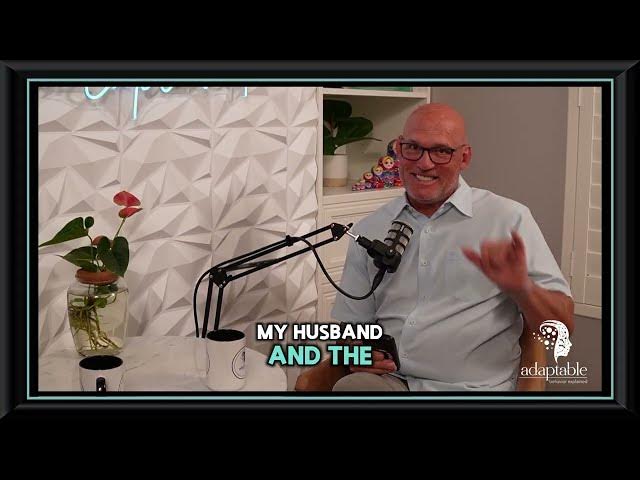
Patrick, my husband, and the builder of
0:15
studio and learner of all technology,
0:18
equipment, and cameras and sound to make
0:21
this possible so that we could have a
0:23
little bit more leisure and a little bit
0:25
more flexibility with our filming
0:27
experience. And so I'm really grateful
0:29
to you, sir. Thank you.
0:30
>> Super excited about season three and
0:33
everything that you've accomplished with
0:35
the show and really getting your message
0:36
out there. So I'm just glad to be part
0:38
of the team.
0:39
>> Yeah.
0:39
>> Usually in the background,
0:41
>> integral. You're such an important part
0:43
of the team. No question.
0:44
>> Oh, thank you. But I'd rather be a part
0:46
of the team than I'm happy to be a guest
0:48
and talk about topics every once in a
0:50
while, but uh definitely not as
0:53
ambitious with you about a public
0:55
persona and really putting yourself out
0:57
there all the time. Every week
0:59
>> you I mean we're constantly talking
1:01
about content and you're constantly
1:02
cutting new content,
1:04
>> right?
1:04
>> And uh you're just a machine and it's no
1:07
surprise to me that you've hit the
1:09
milestone you've hit. Why don't you tell
1:12
your audience about
1:14
>> where we are?
1:14
>> We are really, thank you for bringing
1:16
that up. I'm really excited and we had
1:18
no plans to end up being seen by as many
1:20
people as we are, but we hit o over
1:22
100,000 people a couple of weeks ago and
1:25
I'm just elated that that many people
1:27
are taking in what we're saying and
1:30
gaining hopefully nuggets of wisdom
1:33
related to human behavior and
1:35
relationships and the the condition of
1:37
our species and and ultimately how
1:40
amazingly resilient and adaptable that
1:42
we actually are. And I am so lucky to
1:45
sit side by side with clients all day
1:47
long and really be at the front row of
1:50
their resilience and their adaptability.
1:52
And that's that's really what prompted
1:53
me wanting to do this show is people
1:55
need to understand how amazing all of
1:57
our fantastic and creative adaptations
2:00
are that we have to do to survive our
2:03
environments, whether they are
2:04
generational or whether they are from
2:06
our family systems. And that's really
2:07
what the show started as. And it's
2:10
really exciting to me that so many of
2:11
you are benefiting from it. and have
2:14
said you want more. So, thank you for
2:16
being here.
2:17
>> Yeah.
2:18
>> Great. So, I'm just going to have a
2:19
couple questions for you today and just
2:20
talk about
2:21
>> how you got to where you are today and
2:23
where you want to go in the future. And
2:26
really on the theme of being adaptable,
2:29
you've made some adjustments from season
2:31
1 to season two now to season 3. Before
2:33
we talk about season 3, could you just
2:36
share with the audience what was your
2:38
vision when you started season 1? Why
2:40
did you even start this in the first
2:42
place? and now qualify it in that social
2:45
media is not really our bag, right? It's
2:48
not like we do this because we're
2:50
seeking likes or subscribers or
2:52
monetization. This was a side gig. So,
2:55
just talk a little bit about what you
2:56
were doing.
2:57
>> Um, well, as an EMDR therapist, for
3:00
those of you who've been following
3:01
along, one of the concepts around that
3:04
kind of therapy is that we help to
3:06
resolve memories that are maladaptively
3:08
encoded in people's trauma stories. And
3:10
in order to do that, we're basically
3:12
like plucking out a weed of bad
3:14
information and planting in a new idea
3:17
that's related to adaptive information
3:19
so that our experiences can now be
3:21
encoded with more up-to-date
3:23
information. And what I found myself
3:26
doing day over, you know, day in and day
3:28
out was explaining some of the same
3:30
concepts really repetitively. And I just
3:32
thought it would be more efficient if
3:35
everybody could just watch this video
3:37
and then come back to their next session
3:39
about codependency or about boundaries
3:41
or about attachment and then they could
3:42
come back more prepared. And I really
3:45
wanted it to be something that we could
3:48
allow people from our practice to be
3:51
better prepared and more efficient with
3:52
their therapeutic experience. And then
3:55
we got to thinking, you know, everybody
3:57
really needs to learn these concepts
3:59
because it's the life skills that our
4:01
parents, you know, taught us. And
4:03
sometimes even though it was the best
4:05
that they knew,
4:06
>> right,
4:07
>> weren't always good enough. And so we
4:09
need we need to get more accurate
4:10
information. And so that was really what
4:12
why it started and and then it just took
4:14
took off from there.
4:16
>> Did you ever imagine it growing as it
4:19
has?
4:20
>> Oh gosh, no. I remember when it hit
4:22
3,000 and I thought that is so many
4:25
people like I can't imagine I don't even
4:28
know that many people. I can't even
4:29
imagine that many people watching
4:31
something that we that I produced or
4:33
that I you know taught and it resonated
4:36
with them and and I just it was kind of
4:38
surreal and I just I couldn't I it's
4:40
just it's still very strange to me. And
4:42
what's even weirder is sometimes I'll be
4:44
out in public in places and people will
4:46
come up to me and say, you know, I've
4:48
been watching your show and you know,
4:50
things like that and I'm like, that's
4:51
such a weird feeling, you know, because
4:54
they're they're relating to me as if
4:56
they know me well and I don't know them
4:58
because I'm just looking to a camera in
5:00
a room with one person or two people
5:02
helping me film. So, it's just a strange
5:04
phenomenon alto together for sure. I
5:06
remember several years ago our youngest
5:09
son was home and he was trying to get us
5:11
to participate in these like Tik Tok
5:14
videos and you're so you two are so
5:17
competitive and I remember you telling
5:19
him like you were going to become like
5:21
online famous before him and
5:23
>> this all the parents were getting on
5:25
TikTok and like dancing and doing silly
5:27
little memes and I'm like I'll jump in
5:28
on that. That'll be fun and and you know
5:30
scratch a little bit of a creative itch.
5:32
>> Yeah. I did like no content. I did
5:35
nothing. Yeah. And now hundreds and
5:37
hundreds of videos and shorts later, all
5:39
along that same line of your mission of
5:42
uh and and one of your real values,
5:44
right, is really addressing the stigma
5:47
>> of mental wellness and mental health,
5:48
>> right?
5:49
>> Uh and sharing, right? Being being
5:51
generous and of heart and using your
5:54
time, talent, and energy for good
5:56
>> and really kind of balancing out what
5:57
you do.
5:57
>> It's like a pay it forward opportunity
5:59
because not everybody can, you know, has
6:02
access to good quality mental health
6:03
care. they don't have maybe the time or
6:06
the resources. And so for me, this was a
6:09
way that I could give back, like you
6:10
said, in a generous way and be
6:12
broad-reaching because I've been so
6:14
fortunate to be exposed to all of this
6:17
kind of stuff and went to school for it.
6:19
And then it has just really become just
6:21
part of how I operate. It's not that I
6:23
am a therapist. I'm someone who has done
6:25
so much therapy personally that it's
6:27
just kind of like the way that you
6:29
communicate. And so I I would like for
6:31
more people to have access to that kind
6:33
of information.
6:34
>> You recently shared with me how you had
6:36
a client that is in the social media
6:39
space and you know for for those that
6:42
don't know a 100,000 subscribers is is
6:45
quite a a huge milestone. Um some people
6:49
chase that.
6:50
>> Yeah. uh yours has occurred to you, I
6:53
think, through creating good content.
6:55
It's clearly resonating with people uh
6:57
and just being also a joy to watch and a
7:00
a font of information and experience.
7:02
That's great. But will you share a
7:04
little bit about uh the conversation you
7:07
had?
7:08
>> Yeah, you know, I it it starts with when
7:11
I first did this, I noticed in me the
7:14
dopamine hit. You know, when people
7:15
would like or share or comment, I was I
7:18
noticed that hit of like excitement that
7:20
happened. You're getting to people. It
7:22
motivates you to want to do more. So, I
7:25
have an episode on social media. It's by
7:26
design, right?
Mental Health
People & Society
Family & Relationships
Social Sciences