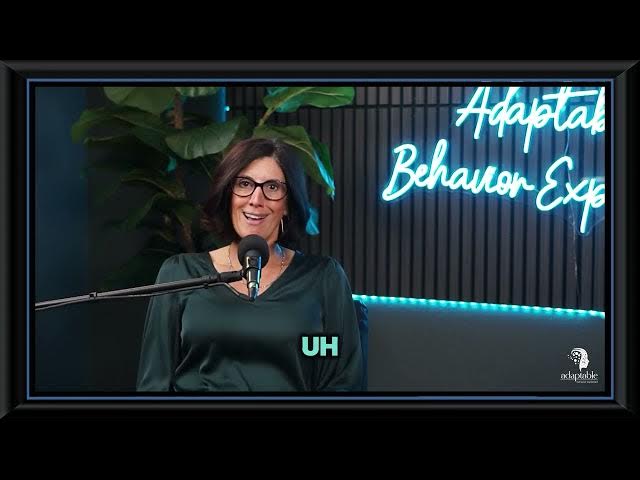
Up next in 10


Caregiving asks us to step in, hold safety and independence at the same time, and carry the emotional weight of caring for aging or declining parents.
You’re not failing. You’re navigating something hard.
Watch the full episode: https://youtu.be/er6N0VoCbes
#CaregivingJourney #DifficultDecisions #AgingParents #adaptablebehaviorexplained
Show More Show Less View Video Transcript
0:00
So, I recently saw a reel with Hassan
0:03
Minaj and uh Mel Robbins and they were
0:06
talking about the let them theory and I
0:09
loved the example that they gave because
0:12
um you know he's talking about like when
0:14
do you step in or when do you let go or
0:17
when is letting go not safe? Um and I
0:20
just it really resonated with me. So,
0:22
with the let them theory, it says that
0:24
we should let people make their own
0:25
choices even if we disagree with how
0:28
they're handling something. But when it
0:30
comes to a declining parent, letting
0:32
them can mean worse illness or
0:34
potentially even death. And so, again,
0:36
how do we find the line there? So, let's
0:39
say your parent refuses to use a walker.
0:41
They insist that they're fine and you
0:43
want to respect their autonomy, but
0:45
after a second fall and a broken hip and
0:48
and a surgery that follows, you realize
0:50
that letting them isn't loving. So
0:54
sometimes you have to step in and insist
0:56
that this is necessary even when it's
0:58
uncomfortable. And that's where we have
1:01
to recognize what are they currently
1:03
capable of and what are the the
1:04
potential outcomes of not stepping in.
1:06
you know, as as a therapist, we're
1:08
mandatory reporters and we're listening
1:10
for things like, is someone letting an
1:12
adult, an elderly adult, be neglected or
1:15
are they being harmed? And this is where
1:17
you have to kind of ask yourself, if I
1:19
don't step in, is this potentially
1:20
neglect? And this is really where grief
1:23
and guilt and resentment can creep in
1:26
because you're feel you feel like maybe
1:28
you're betraying them or you know you're
1:30
losing the parent that you knew because
1:32
that relationship has changed so
1:34
drastically and you might even resent
1:36
the burden because you're overwhelmed in
1:38
your own priorities in your own
1:40
stressors in your own life. And then
1:42
when you prioritize your own life then
1:44
you feel guilty that you want your own
1:46
life back. And so it's a really
1:48
complicated factor. And of course, you
1:50
don't want them gone, right? None of us
1:52
ever want them gone. And so, it's really
1:54
tricky. It's a it's a hard time. And so,
1:56
you've got to figure out how to navigate
1:58
the grief and the resentment and the
2:00
potential guilt. And caretaking really
2:02
brings up a storm of emotions. And
2:04
because I think a lot of times what we
2:06
forget when we're in this role is that
2:08
we matter, too. You know, we're we're
2:11
we're prioritizing the needs of the of
2:13
the person who needs our care. And
2:16
because it's more dire or it's more um
2:19
stressful or maybe even
2:21
life-threatening, we kind of table our
2:22
own priorities in our own life because
2:25
it seems like it's okay. But if we do
2:27
that for too long, we end up pouring
2:30
from an empty cup. And that is only uh
2:33
something that we can sustain for so
2:35
long. We can't pour from an empty cup.
2:36
We have to rejuvenate our own cup. We
2:38
have to have our own self-care. And so
2:41
again, back to the delegation, it's
2:43
really going to be necessary at times.
2:45
Um, use health home health aids. There's
2:48
some adult day programs that might be
2:51
useful. Uh, there's respit care. Um,
2:54
there's there's all kinds of ways that
2:56
we can in um enlist resources to help us
3:00
balance this. And then of course at the
3:02
crux of all of it is communication.
3:04
You've got to be honest with your family
3:06
about what you can do, what you can't
3:08
do, what you need help with, what
3:10
support looks like, and you've got to
3:11
communicate that. If you don't
3:13
communicate, people don't know what
3:15
you're going through. They can't be
3:17
there for you to be supportive if you
3:18
don't express what it is that you need.
3:20
And so, communication is key as in all
3:23
relationships. Um, that is the truth.
3:26
And then we have to look at planning
3:27
ahead. You want to talk about medical
3:29
power of attorney. We want to talk about
3:31
living wills and get those things in
3:33
order. uh care preferences before
3:35
there's a crisis. What do people want
3:37
done when they do pass? What are their
3:40
after um life wishes and how do we make
3:42
sure we can get those things set up so
3:44
that we're not dealing with that at the
3:46
same time as the loss. So, uh I had a
3:50
client that talked to me about hiring a
3:52
part-time caregiver so that she could
3:55
keep her job and still care for her dad.
3:57
And she felt really guilty at first, but
4:00
as soon as she realized that delegating
4:02
allowed her to just show up with more
4:04
patience and more love and more kindness
4:06
rather than the frustration and the
4:08
resentment over having to be not just
4:10
the um caretaker, but also the daughter,
4:14
um she was actually able to be more kind
4:17
when she was, you know, with with her
4:19
parent. So, um, it's important to
4:21
remember that you're doing the best you
4:24
can in an impossibly hard situation. And
4:27
perfection can't be the goal because
4:28
there's no such thing as the perfection.
4:31
Presence is really the goal. Being
4:33
present, maintaining the relationship,
4:35
protecting the relationship, protecting
4:37
the love and the compassion is really
4:40
the priority during this hard season.
4:43
And giving yourself some grace when you
4:45
get it wrong. And again, circle back and
4:47
and repair when you when you do. So,
4:50
when this is part of your life, we've
4:52
got to look at balance. We've got to
4:54
look at kind of reclaiming our joy and
4:57
and becoming uh adaptable in these
5:00
moments. And caretaking can really feel
5:02
like it just swallows your life. But
5:05
adaptability means finding moments of
5:07
joy even when they're really short, even
5:09
when they're small. Looking for
5:11
gratitude everywhere that you can. Um
5:14
because these seasons can be long to
5:16
endure. Maybe you know you and your
5:18
parents share a laugh over old photos or
5:20
you reminisce and talk about things that
5:22
you used to do. But finding quiet
5:25
moments for yourself with you know a cup
5:27
of coffee and a sunset uh or a cup of
5:30
coffee and a sunrise or or just taking
5:32
in a sunset. Really, those quiet moments
5:35
of gratitude are are so important and
5:37
and they help you to remind yourself
5:39
that you're still you and your parent is
5:42
still more than their illness. And
5:43
that's hard to remember when you're
5:46
really consumed with the caretaking
5:47
responsibilities.
5:49
Remember to celebrate small wins. Every
5:51
time that you advocate, every time that
5:53
you ask for help, every time that you
5:55
set a boundary, you're growing. You're
5:57
putting yourself first. You're you're
5:59
navigating a hard time. And it gives you
6:02
an opportunity to reconnect with
6:03
yourself. And again, finding moments
6:05
that are just yours, even if they're
6:06
brief. Remember, even when it's hard,
6:08
that you're not failing. You are loving.
6:11
This is a tremendous act of love and
6:14
compassion and kindness and oftentimes
6:16
sacrifice. And so, again, please be kind
6:19
to yourself.
#Aging & Geriatrics
#People & Society
#Family & Relationships
#Seniors & Retirement