Up next in 10


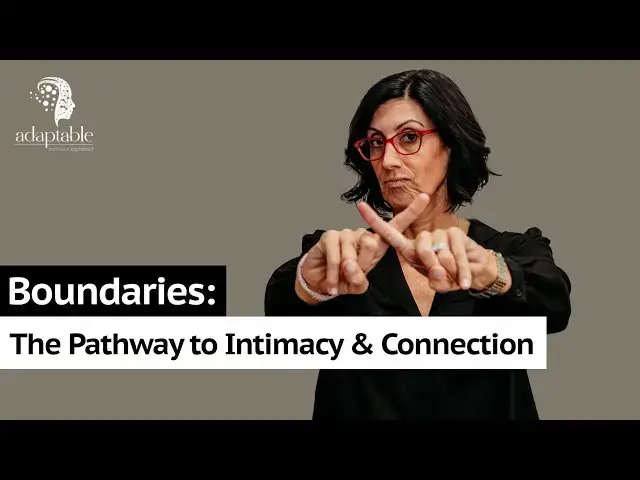
Welcome to Adaptable | Behavior Explained! Boundaries play a crucial role in maintaining healthy and balanced relationships. Boundaries help us define the limits and expectations within a relationship and help individuals understand their own needs and protect their personal well-being. There are many different levels to boundaries that effect all different aspects to our life. This episode will help you understand these boundaries and more!
I'm Kelly O'Horo, Attachment based EMDR Therapist, EMDRIA Consultant, and Advanced Trainer. I'm a mom of 5, Nonna of 5, wife, and a healer. I have the honor of spending my workdays walking along side people while they brave their healing journeys. I try to live with the generous assumption that we're all doing the best we can with what we know. Therapists are teachers for the "life stuff" and "emotional vocabulary" that may not have been learned due to gaps in our care givers capabilities. In the last 15 years I've learned that people are freaking amazing, resilient, and inspiring. Most importantly, we are hardwired for connection and for healing!
I hope to bring an authentic, compassionate, and unpolished approach while we explore a variety of topics such as parenting, marriage, relationships, dating, trauma, attachment, adoption, depression, addiction, anxiety, and love! There's a why for all behaviors and an explanation that makes perfect sense as emotion is at the root of it all.
-- Links --
https://linktr.ee/kellyohorolpc
https://youtu.be/rLnARKekvgo
https://www.emdria.org/find-an-emdr-therapist/
Register for Kelly's Boundaries 101 Class -
https://www.eventbrite.com/e/759148372217?aff=oddtdtcreator
Show More Show Less View Video Transcript
0:06
hi everyone I'm kellyo horo and this is
0:09
adaptable Behavior explained hi
0:12
everybody thanks for tuning in today I
0:14
am appreciate you being here and we're
0:16
going to talk about boundaries so what's
0:19
the buzz about boundaries quite frankly
0:22
in a Counseling Practice boundaries is
0:24
the topic that comes up on almost every
0:26
single session failure to set boundaries
0:29
failure to know what boundaries you need
0:32
failure to understand how to implement
0:34
them are typically at the root of why
0:37
people struggle with resentment why they
0:39
feel unseen why they don't know how to
0:42
express what they need and sometimes why
0:45
they end up putting everybody else
0:46
before them and so it's important to
0:49
talk about the truth of boundaries
0:51
because a lot of people are using that
0:53
word incorrectly there's been a lot of
0:56
Buzz around boundaries on social media
0:58
around uh how it's so important to set
1:01
them but when I hear people use that
1:03
word they're actually misusing it
1:06
they're talking about walls they're not
1:08
talking about boundaries so it's
1:10
important to understand that if if a
1:12
person does something that prohibits
1:16
connection it's a wall boundaries are a
1:19
pathway to intimacy and connection there
1:21
has to be a way in there has to be
1:24
access to relationship and to connection
1:27
boundaries say the way that you can be
1:29
in healthy relationship with me is by
1:31
following this set of Standards rules or
1:33
expectations for what's okay with me and
1:36
what's not okay with me boundaries are
1:38
limits or guidelines that people need to
1:40
establish to Define their personal space
1:44
protect emotional well-being and
1:46
maintain healthy balance between
1:48
themselves and others boundaries say
1:51
here's where I end and here's where you
1:53
begin and I'm clear that those are
1:55
different and that we're not connected
1:57
at this in the same space and that goes
2:00
for the whole lifespan we really need to
2:03
understand that our own uh Health
2:05
depends on the awareness of our
2:07
individual selves and our autonomy and
2:09
what we need to do in order to make sure
2:11
the space that we live in is healthy so
2:14
boundaries help people dis distinguish
2:16
their own thoughts their feelings their
2:19
desires from those of others so when we
2:22
get into relationships we tend to fall
2:25
into some patterns that help us maintain
2:27
connection and depending on our history
2:30
and our family stories we might be poor
2:32
at setting boundaries we might we might
2:35
not know how to identify what it is that
2:37
we feel or what we need and if we
2:40
struggle there there's a high likelihood
2:42
with that we also struggle with
2:44
asserting ourselves and so that means
2:46
expressing what we need oftentimes
2:48
people who've been in homes where
2:50
there's one or more controlling parent a
2:52
a child will learn how to be passive
2:54
they will learn to stay small they'll
2:57
start to develop the thoughts and
2:58
feelings that say mind needs and
3:00
feelings don't matter there's too much
3:02
chaos around me and so what I need or
3:04
want needs to stay small and so I stay
3:06
passive I don't communicate I don't
3:08
express myself and oftentimes I end up
3:11
kind of dmed and so I learn a pattern of
3:13
communication that's passive and as
3:16
opposed to assertive which is the
3:17
healthiest form of communication and as
3:19
a result boundaries kind of get dis
3:22
acknowledged they don't get discussed
3:25
people who don't learn how to set
3:26
boundaries or the failure to set
3:28
boundaries over time results in
3:30
resentment in hurt feelings and an
3:32
inability to feel important and express
3:35
that I am equally important as you are
3:38
in the world and so part of what's
3:41
important is that we learn how to
3:43
express our needs and our preferences in
3:45
our
3:46
relationships there's several categories
3:48
of boundaries the obvious ones are
3:50
physical boundaries right these
3:52
boundaries Define the personal space
3:55
that are around our individual body and
3:57
it dictates how close we're okay being
4:00
to others and how the proximity in our
4:03
space affects us you know it's funny
4:05
because the me too movement came around
4:07
and a lot of people started saying yes I
4:10
never said anything I don't know why I
4:12
never said anything you know I remember
4:15
feeling passive and quiet in moments for
4:17
example around physical boundaries in my
4:20
early years after I finished my
4:22
bachelor's degree I became a flight
4:23
attendant and I can remember being on
4:26
planes with sometimes with passengers
4:28
and sometimes with Pilots where they
4:30
would touch me as they were moving by
4:33
and I had a sense that they weren't
4:34
touching me to just acknowledge a
4:36
placement so that I would scoot there
4:38
was a sense of like I'm I'm putting my
4:40
hands on you in a way so that I can feel
4:42
your body and I was so passive in those
4:45
years because I didn't want to upset
4:47
anybody I didn't know how to say to a
4:49
person that I perceived as more powerful
4:51
like a pilot hey buddy I got you you
4:54
don't need to put your hands on me there
4:56
and and allow for the assertiveness to
4:58
say what's okay and not okay with me and
4:59
so there were many moments in my life
5:01
where I failed to set personal physical
5:04
boundaries with people and and that is
5:07
very physical and it is very personal
5:10
another example that oftentimes people
5:11
don't consider when we go through a door
5:14
and we put our hands on the small of
5:16
someone's back to say Hey you go first a
5:18
lot of times we think we're just being
5:20
polite we're just being cautious and
5:21
conscientious and and considerate but
5:24
what we're not considering is what if
5:26
someone was physically abused and when
5:28
we touch their back it triggers
5:30
something in their story and they get
5:32
Frozen and they don't know how to say
5:33
anything so as much as it seems like
5:36
it's tedious it's important that we
5:38
express what's okay and not okay for
5:41
ourselves as well as check in with
5:42
someone you know can I give you a hug
5:45
can you know when we put our hand out to
5:47
shake someone's hand that's implying
5:49
consent to shake their hand and we're
5:50
saying I'm okay if you touch my hand so
5:53
these are these are some simple things
5:55
to keep in mind about physical
5:56
boundaries and it's not to say that we
5:58
need to turn ourselves upside down and
6:00
walk on eggshells it's just about
6:01
communication because everyone's
6:03
physical boundaries and family systems
6:05
and histories would dictate what's okay
6:07
and not okay for us and we want to keep
6:09
those things in mind another kind of
6:11
boundary is an emotional boundary so
6:13
these refer to the separation of our
6:15
individual emotions from those around us
6:18
people with healthy emotional boundaries
6:20
can empathize with others without
6:22
absorbing their emotions or taking
6:24
responsibility for them often times we
6:27
get confused about how to show empathy
6:30
versus sympathy and how empathy isn't
6:34
I'm going to take on your emotional
6:36
experience but empathy is I can feel
6:38
with you in a space without making it
6:41
mine or making it about me think of a
6:44
time where you have said to somebody you
6:46
know oh I I feel so sad because I I was
6:49
late to work and I was overwhelmed and
6:51
this bad thing happened a poor emotional
6:55
boundary might be an example of someone
6:58
saying oh right I know exactly what
7:00
that's like and they're trying to
7:02
empathize But ultimately they're
7:03
sympathizing and they're making that
7:05
story about them and so it's it's really
7:07
an empathic failure on the other side of
7:10
that is someone who says you know oh I
7:12
had a miscarriage and then the listener
7:15
says oh my gosh I know that's the most
7:18
sad thing I had a miscarriage too and I
7:20
was so overwhelmed and and fraught with
7:22
with emotion that I just couldn't get
7:24
out of it and I start crying and I make
7:26
it about me so this is an example of a
7:28
poor emotional boundary and it's
7:30
important to recognize that it can go in
7:32
either direction so that sweet spot
7:34
about emotional boundaries is where I
7:36
can empathize and I can be in connection
7:38
with you when you're sharing something
7:40
with me and I don't perseverate and make
7:42
it about me but I can show up with
7:44
compassion and empathy another kind of
7:46
boundary is intellectual boundaries so
7:48
this is where we respect one another's
7:50
thoughts ideas and opinions it allows
7:53
individuals to have their own
7:54
perspective without trying to impose our
7:57
belief on another person in all
8:00
relationships the goal is to have space
8:02
for both perspectives so you might say
8:05
something that's completely in congruent
8:07
with how I see the world or what I uh
8:10
have experienced and the the lens
8:11
through which I see how things are but
8:14
if I'm a good listener and I have
8:16
healthy boundaries I can say wow I can
8:19
see that you have that perspective and
8:20
you're passionate and you're strong
8:21
about it I'm going to disagree with you
8:24
and because I share a different
8:25
perspective but we can still be mutually
8:28
respectful to one another although we
8:29
share a different opinion about
8:31
something in the world and I think it's
8:33
it's even more important right now uh
8:36
Berne Brown says it's hard to hate up
8:38
close move in and I think it's important
8:40
that we keep those things in mind
8:42
because there's so much pain in the
8:43
world right now and we need to remember
8:46
that everyone brings to the table a
8:48
different set of experiences and with
8:50
that their intellectual thought their
8:52
boundary setting in what they've learned
8:54
and so we need to have room for both
8:57
people or several people in a
8:59
conversation to have perspective without
9:01
trying to trample or dismiss or
9:04
disparage someone for not having the
9:06
same perspective that you share another
9:08
obvious one to a lot of people would be
9:10
a sexual boundary what's okay for me and
9:12
not okay for me related to intimacy to
9:15
sexual activity what I'm comfortable
9:17
with and what you're comfortable with
9:19
and this can change over time so we need
9:22
to be able to express ourselves set
9:24
limits communicate about consent and and
9:27
boundaries in in an intimate situation
9:30
so depending on where I'm at in a
9:32
relationship I might be okay holding
9:34
your hand in public but maybe I'm not
9:37
okay or maybe something happened that
9:39
activated a memory of mine that's
9:41
triggering something in me and so right
9:43
now I don't want you to come give me a
9:45
hug I have to express that and it's my
9:48
responsibility as an individual person
9:51
to know what I need and to express what
9:53
I need it's nobody's job to read my mind
9:56
and that creates so much frustration and
9:58
so many many people and in so many
10:00
clients if I could get a nickel for
10:02
every time I heard well I shouldn't have
10:04
to tell them and I say I'm sorry to tell
10:07
you but you're an adult and and you
10:09
absolutely have to tell someone what's
10:11
okay and not okay with you an example
10:13
that makes this this physical boundary
10:15
or or this wouldn't be a sexual boundary
10:17
this would be more about a physical
10:18
boundary but the example I use about our
10:21
responsibility to share with someone
10:22
what's okay and not okay would be
10:24
related to if I get a massage so I go
10:27
get a massage and let's say I worked out
10:28
really hard and I'm super sore and I
10:31
realize that if I can get someone in
10:33
there and really dig into those knots it
10:35
can release those those those muscles
10:38
and it can relax me and I can you know
10:40
drink a lot of water and be on my way to
10:42
healing but let's say I just lay there
10:44
quiet and I had an expectation or desire
10:47
that I wanted this massage to be you
10:48
know really intense and I wanted those I
10:51
wanted them to get in there and they
10:53
just did some kind of light relaxing
10:54
Swedish massage and the whole time I'm
10:56
laying there on the massage table I'm
10:57
annoyed with the person gosh I wish they
10:59
would just go harder and I say nothing
11:02
it's not their fault because everybody
11:04
has a different desire and need
11:06
depending on what's going on in their
11:07
life and their body and their what they
11:09
find uh beneficial or effective and so
11:12
that's just a small example about how we
11:14
must use our voice to set the kind of
11:16
boundaries we need to and assert
11:18
ourselves to express what we need and
11:20
what's okay and not okay with us it's
11:22
our own responsibility another kind of
11:24
boundary would be a time boundary
11:26
managing and allocating time for
11:28
ourselves for our work and our
11:30
relationships managing your personal
11:32
time and commitments to help maintain
11:35
healthy work life balance is critical
11:38
you know I I I recognize that we all
11:40
have different workplaces we all have
11:42
different boundaries around how we we
11:44
set time but we have to recognize that
11:48
how we manage time oftentimes impacts
11:50
other people and so for example like I
11:54
ask for something from my Administrative
11:56
Assistant to be done at a certain point
11:58
and she says say I'm so sorry I got
12:00
behind and I'll get it to you and so
12:03
meanwhile I'm anxious because she
12:05
managed time in a way that didn't match
12:07
what I needed and so we have a further
12:09
conversation and I expressed to her
12:11
listen if you have a whole bunch of
12:13
things on your plate related to your
12:15
time management let's touch base so I
12:17
can let you know how to allocate those
12:19
resources in in the way of time
12:21
management and let's get clear on how
12:23
you can be successful in meeting the
12:25
expectations I have related to what's
12:27
required of you from a time management
12:30
perspective this is a Time boundary this
12:32
is saying this is okay and this is not
12:34
okay with me and people don't recognize
12:36
that it's an internal bound boundary
12:38
failure when we don't recognize uh you
12:41
know I stay up till midnight working
12:44
because I didn't do it at a at an
12:45
earlier time in the day I have an
12:47
internal boundary violation related to
12:49
time because now I'm short changing
12:51
myself on sleep and all sorts of other
12:53
things that would be related to my
12:56
Wellness we have material boundaries so
12:58
so this pertains to our possessions and
13:00
our resources you know what's okay with
13:03
me I loan you a dress what's okay for me
13:06
is if I loan you a dress that you bring
13:07
it back to me in a timely fashion and
13:09
it's clean not that it's brought to me
13:11
in a bag and a he and I can't wear it
13:13
because I gave it to you in a state
13:15
where it was it was usable and so that
13:17
might be a boundary so I would say to
13:19
somebody hey I'll let you borrow this
13:20
but please get it back to me and please
13:22
make sure you get it dry cleaned before
13:23
you return it so that I can wear it the
13:25
next time I want to establishing limits
13:28
on how we share how we um how we expect
13:32
things and and again like I'll give you
13:34
an example if if someone borrows our car
13:37
my husband has an expectation that is
13:39
often unexpressed please bring it back
13:41
to me with a full tank of gas but if he
13:43
didn't say that he might be disappointed
13:45
that it gets brought back to him and
13:47
there's no fuel in the tank and now he
13:48
is burdened with going to stop and
13:50
perhaps he didn't plan for that so we
13:52
have to express our expectations around
13:55
material boundaries as well social
13:57
boundaries this this is the level in
13:59
engagement of Engagement and interaction
14:02
that we're comfortable with in variation
14:04
to social social settings so this is
14:07
often times where introversion and
14:08
extroversion get
14:10
discussed my husband's an introvert he
14:13
is really good and commands a social
14:15
presence he likes to be around people
14:17
but for him it requires a lot of energy
14:20
so he has to set boundaries around
14:22
social engagement so that he has enough
14:24
time to introvert and recharge his
14:26
batteries it takes more energy for him
14:28
to be in large groups than it does for
14:30
me it doesn't expend as much energy for
14:32
me so we have to navigate and negotiate
14:35
what's going to work for us related to
14:37
our own internal needs and and
14:39
boundaries around our engagement with
14:42
other people and that's different for
14:44
everyone and it's different for everyone
14:46
over time so these are things that
14:48
require assertive communication and
14:50
discussion especially when in
14:51
relationship but first it requires us to
14:53
look inside and decide what is it that I
14:55
need if I have overcommitted and I am
14:58
end up finding myself so exhausted
15:00
because I haven't slowed down to say man
15:02
I'm kind of out of fuel in my tank and I
15:05
need some time to just disengage from
15:07
connection and the requirements that go
15:09
into managing relationships then I might
15:12
need to re-evaluate where I'm at from an
15:14
energetic perspective so that I can
15:17
maintain my own wellness and and health
15:20
we've got digital boundaries so this is
15:22
become even more increasingly important
15:25
as Society becomes ever so dependent on
15:28
our smartphon phon and our numbing out
15:30
with our social media and our inability
15:33
to regulate our impulse control and our
15:36
constant checking our emails and our
15:39
likes and things like that on social
15:40
media and so when we talk about digital
15:43
digital boundaries this is where in your
15:46
own life you you might set boundaries
15:48
like you know putting your phone in
15:50
another room to charge giving yourself
15:52
the morning you know I think studies
15:54
show that the first 49 minutes of the
15:56
day and the last 49 minutes of the the
15:58
day should be without screens for the
16:00
best brain health and so maybe setting
16:02
digital boundaries for yourself that you
16:04
uh that you you set for yourself so that
16:07
you can have a healthier um relationship
16:10
with with the with the pull towards our
16:12
digital uh draw uh this might be
16:16
something that we set for example where
16:19
we don't want to have you know phones at
16:21
the dinner table so maybe we say phone
16:23
free dinner and everyone's asked to put
16:25
their phones in a in a table elsewhere
16:28
so that can be really present and this
16:30
is a boundary that you might need to set
16:31
in your in your home or in your
16:33
relationships because you're constantly
16:35
finding yourself resentful that
16:36
everybody around you is on their phone
16:38
when we're sitting in connection and so
16:41
I think that it's okay to say listen if
16:42
you need space to be on your phone
16:44
because you're maxed it's okay for you
16:46
to excuse yourself and go take time for
16:48
that it's all right but if you're in
16:50
this space I'd like you to put your
16:51
phones away because being present is the
16:53
present I'd like to have for our time
16:56
together and I think that's all right to
16:58
say
16:59
think about how many times you've walked
17:00
into a restaurant and everyone you see
17:02
sitting at a table is on their phone
17:05
this is an example of a poor Digital
17:06
Boundary people are on a date and
17:08
they're not present with one another or
17:11
people walk into a restaurant and they
17:12
immediately hand their 2-year-old the
17:14
phone to keep them quiet well kids are
17:17
not developing resilience around um
17:20
boredom they have very low impulse
17:23
control and and I'll talk about this in
17:25
a in an entire show about social media
17:28
and the effects and impacts that that's
17:30
having on society so it's really
17:31
important that you look at your digital
17:33
boundaries and how you're using uh
17:36
social media and and how that's
17:38
affecting your mental health so in a
17:40
nutshell boundaries are what's okay and
17:43
not okay with me bernee Brown would say
17:46
that boundaries are finding a way to be
17:48
generous towards others while continuing
17:50
to lead with integrity and staying true
17:52
to yourself so setting boundaries means
17:55
prioritizing your needs practicing self
17:58
care without feeling guilty saying what
18:00
you mean and meaning what you say
18:02
without saying it mean but ultimately
18:05
it's your responsibility to decide what
18:07
you need assert what you need and
18:10
express those to the people in your life
18:12
thank you so much for tuning in I hope
18:14
that you found this helpful it's a very
18:17
important topic to become familiar with
18:19
as it really is the Hallmark of helping
18:21
you with your mental health and for
18:24
creating a stable environment both
18:25
internally externally and in
18:27
relationship
18:29
and I encourage you to practice setting
18:31
boundaries even though it's
18:32
uncomfortable at first if you're not
18:34
used to it because it really will change
18:36
your life and you will find a sense of
18:38
freedom and relief once you become
18:40
healthier with boundaries that you
18:41
probably never have experienced before
18:44
make sure to lead with love it'll never
18:46
steer you
18:47
[Music]
18:57
wrong
19:05
you
#Mental Health
#People & Society
#Family & Relationships
#Counseling Services