Up next in 10



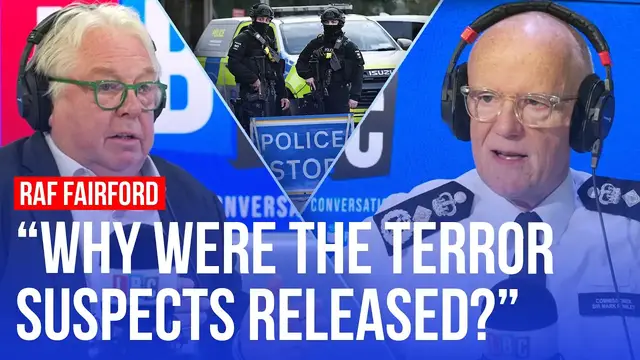
Head of the Met Police Sir Mark Rowley joined Nick Ferrari this morning to take your calls.
He said the RAF Fairford investigation is 'progressing well', and hinted that there would be more updates to come when pressed for further detail.
The Met Chief added that guidance was given to the organisers of pro-Palestine protesters about not conducting demonstrations on the Oct 7 anniversary, but says that guidance 'wasn't listened to'.
Sir Mark also admitted he was "worried" about the number of offenders being released into communities, adding that the Met is arresting two-thirds of early-release offenders a week since the start of August.
Other topics discussed included a crackdown on phone thefts around the capital, shoplifting, and dangerous dog breeding outside of the banned XL Bullies.
Listen to the full show on the all-new LBC App: https://app.af.lbc.co.uk/btnc/thenewlbcapp
#LBC #nickferrari #police #crime #israel #palestine #middleeast #protest #raffairford #ukpolitics
LBC is the home of live debate around news and current affairs in the UK.
Join in the conversation and listen at https://www.lbc.co.uk/
Sign up to LBC's weekly newsletter here: https://l-bc.co/signup
Show More Show Less View Video Transcript
0:00
Your opportunity is to call the Commissioner here on LBC. Sir Mark Raley is sitting opposite me in the studio
0:05
You and I have had some moments in the past, so let me start by offering congratulations to the men and women under your command
0:10
As regards, we played a piece earlier in the show, Sir Mark, this crackdown on phone thefts. A few words from you on that
0:16
Yeah, we're really winning. To have the lowest phone theft numbers ever over the last four years, we've all seen the surge of that
0:24
as we all walk around the streets with £1,000 phones potentially in our hands
0:28
that's become very attractive, and we've had to change policing to counter that threat
0:33
To use a sporting light, it's like a full court press. We're doing everything
0:37
It's everything from street policing, street policing that's been supercharged. We've got officers on these electric bikes
0:43
so that the thieves can't get away from us. We're using drones in some of our pursuits overhead
0:48
It's almost like land and sea and air. We will fight them on the beaches, exactly
0:51
And then we've had... That's not a very good choice, no impression, is it? I've heard better
0:57
And then we've got our organised crime teams because there's a criminal business model behind this
1:01
There's people exporting thousands of phones to China, to Algerian places. We've broken some of those gangs and that breaks the model down
1:09
The phone shops, some of them are dodgy phone shops recycling things, we've been tackling those
1:14
The Flying Squad have been working on some of the organised gangs that have been doing robberies of the mainstream phone shops
1:22
that have got thousands of Apple phones there selling like a Vodafone shop or something like that
1:26
or the Apple store. So we've been using the flying squad to take on the gangs doing that
1:30
and you add all that together and we're breaking the model and the numbers are coming down and we put
1:35
pressure on Apple as well to improve their security to make it harder for people to reboot
1:40
the phones to sell them. We're going to take a call on this in just a moment. Final question before we go
1:44
to the first caller. Commissioner, when did this initiative start and why
1:48
What drove you and your colleagues to do this? So we could see the numbers were going skyrocketing up weren't they
1:53
two, three years ago, numbers of phone tests were skyrocketing up. And we have to win on things like this because people want to feel safe in London
1:59
particularly in the centre of London where we all sort of, lots of people shot, work, etc. So this was Operation Reckoning 6
2:05
It was a month of activity, 700 arrests, multiple warrants, say, across phone shops
2:12
For the first time we've had been working with other forces across the country who they've got issues as well, not the same scale
2:17
but so that's been joined up. We've got international connections. So we've been working with Algeria, we've been working with China
2:22
working with Hong Kong. and we're doing these surges on a regular basis and it's just driving it further and further down
2:28
and I'm really proud of what our teams are doing. Well done to the men and women on the... And the videos on social media of officers chasing people down
2:34
on tour-on bikes and things, they're great fun, aren't they? Particularly that one you were showing of the guy jumping into the pond
2:38
and being hauled out, yeah. That wasn't a very good escape strategy, was it? Not with the Met behind it, no
2:43
Right, well, let's take a call on us. Commissioner, if you put your headphones on and you can take the first call us
2:47
And it's Lisa in Barnet. Lisa, you're through to the Commissioner. Go ahead. Morning, Lisa
2:51
Morning, hi. I just wanted to ask you, my son was mugged for his phone
2:58
We all know young people are being targeted for their expensive items
3:02
so what are you going to do about it? It's brought daylight
3:07
OK, well, I think we've heard a little of the initiative, but obviously this is very personal for you
3:11
and most important, is your son OK now? It was December, so he's recovered now
3:17
He has recovered now. Sir Mark? Yeah, I know, it's frightening, isn't it, for a young person
3:21
and they're so attached to their phone and it's a big part of their life and it's a frightening incident to lose it and the aftermath, I completely appreciate that
3:30
That's why we've been throwing so much resource at this and reducing the numbers
3:33
and increasingly returning stolen phones to people. Obviously, from what you say, that wasn't the case in your case
3:41
That's the way we're doing it. Also, over the last two or three years, we've put more officers in neighbours
3:45
to try and patrol areas and protect people. But I do realise for every person who loses the phone
3:51
it's a really, really big deal. Best wishes to your son. Sorry about that. Good luck to you and your son in the future
3:56
Best wishes to your son. Obviously, there's a reality. What might these people move on to next
4:01
That is obviously a concern for you and your colleagues, isn't it? If you close down the phone trade
4:06
they're going to look at something else, whatever it might be. I don't know. Bicycles. I've no idea. Sir Mark. Watches. I don't know. What
4:12
So we have had issues with watches, and we've done covert operations that we've spoken about on here before
4:16
to deal with that. I mean, I think some of the volume crime that people are going
4:20
after, there's the phone theft but there's also the shoplifting that we've spoken about
4:24
before as well. In the last couple of years, we've more than doubled the number of
4:28
people we're prosecuting for that and that's we're working closely with the industry
4:32
because they're just chasing money aren't they? They're chasing money for lifestyle reasons. Phones is an attractive
4:38
route, so is organised shoplifting so are drugs, gangs, etc. And criminals will move
4:44
across all those. Some will do more than one and we'll chase them all down. All right. Lisa, best wishes you boy
4:49
Thank you. Catherine's in Muswell Hill and you're through to the Commissioner. Go ahead, Catherine. Good morning
4:53
Good morning. Good morning. My question is about the protests yesterday and I don't envy you
4:58
the kind of decision-making that has to go into policing, something like that
5:03
And, you know, it sounds like it went really well, all things considered. Is there anything that politicians
5:08
and the Home Secretary in particular could do differently or better to make your life
5:12
and the life of your officers easier and more manageable given that this isn't going to change anytime soon, I don't think
5:19
So that's a really brilliant question and very well informed. So I'm troubled by the fact our protest legislation
5:29
is effectively a 1980s construction. It's got a couple of tweaks since then
5:35
but basically it was written in the 1980s, a very different time, very different place. Not a time when you saw these repeated protests
5:41
that have big impact on communities and some of the more sort of hard right protests..
5:48
Well, before social media, Commissioner, if I may interrupt as well. Before social media, exactly, yes. The influence of that must be enormous for your men and women
5:53
The social media fact, of course, means that a protest in central London
5:57
is seen by everyone across London, so the effect is very different. So some of these protests, which land very heavily on Jewish communities
6:04
or some of the hard right protests, which land very heavily on black and Muslim and other communities
6:11
the impact is very different. we have almost no powers to ban these events
6:20
We don't licence them, we don't permit them, we just have to police them. Banning only becomes an issue if there's going to be really extreme violence
6:26
which is a very rare issue in these things. The Home Secretary, I think she recognises these issues
6:33
She's commissioned a former Director of Public Prosecutions to do a review, and I think his report is on her desk
6:37
and she's considering it about how you might change the law to deal with it. What would you hope would come about, Krishna
6:42
I'm sort of, I'm cautious about, it's a very fine balance, isn't it
6:47
Right to protest versus right of others, and that's for Parliament to do. But I do think the law needs to change
6:53
so that we have powers to deal with the way that protests have such an impact on communities' sense of safety
6:59
And we've seen so many examples of that, whether that's about being able to manage the frequency
7:03
or push more protests towards being static events rather than big marches across London
7:09
There's different ways you might do it, but I think the impact I see on communities is really enormous
7:15
And you saw this week Adi Adilekin, part of my top team who leads on these issues
7:22
wrote publicly about encouraging and asking the students, look, there's 364 other days a year
7:27
if you want to protest and support the Palestine cause. Should they have marched yesterday
7:31
Well, so we said to them, so we think this lands so heavily on Jewish communities, can you reconsider
7:36
You've got 364 other days, you don't need to do it on the anniversary of the Hamas terrorist attack
7:40
that killed over a thousand Jews in Israel That wasn listened to And that us sort of doing everything we can but we didn have the power to stop it Were you able to contact the group behind the protest
7:53
Unless it changed very last minute, no. There was no organiser. Why was that? So there is
7:58
organisers are supposed to notify us but what groups do is avoid having a formal organisers
8:05
and telling us who they are. Well respectfully, that's an easy wrinkle to get through
8:09
It's another area of the law which is weak. is if there isn't an organiser or an organiser doesn't contact us
8:16
the law is pretty weak in what we can actually do about that. And I do think one way the law could be stronger is
8:23
if there is an organiser, then that is reassuring for us and they have responsibilities
8:30
If there's not an organiser, then potentially we ought to have greater powers because we're then effectively managing it on behalf of society
8:35
rather than an organiser trying to do something and being accountable for it. In a related conversation, some of the loudest cheers
8:41
at the Green Party conference were for a motion suggesting that Zionism is racism
8:45
You've had your moments with the Green Party leader, Zach Polanski, in the past. What do these comments make for your job
8:50
men and women serving under you? Politicians will always mess around with language
8:57
That's not my concern. Zionism, I would read from the Oxford English Dictionary definition
9:05
which is not a racist definition. Let's move to other calls. Kirsty's in Canterbury
9:09
Kirsty, you're on the radio. Your question. Hello. Good morning. Good morning
9:14
My stalker was sentenced to five years in January 25, and I received a letter to tell me he'd be released this coming January
9:21
Why are we releasing perpetrators with committed offences relating to violence against women and girls early
9:26
when we obviously clearly know that the government tell us it's a priority? We already know there are concerns about probation capacity
9:33
and electronic monitoring not working consistently, and nothing has been said about digital stalking or digital safety prevention
9:40
So what can police do to help victims feel safer? Kirsty, do you..
9:45
Take a victim to be seriously hurt or killed by the perpetrator? How do you feel personally as regards your safety now, Kirsty
9:51
before I hand over to the Commissioner? I'm really angry, for one, because government, as I said
9:57
say it's a priority when it's clearly not by their actions. But I just don't feel safe
10:02
There's nothing preventative that we have been told that's happened in prison to lessen the concerns that we had
10:08
when these arbitrators were convicted. Kirsty, stay on the line. I need to tell you that the Commissioner, I think
10:14
probably went as far as he can with his brief to say he was flabbergasted by the decision
10:18
I remind you, he doesn't make these decisions, the politicians do. And I remind you again, he has to serve under the Home Secretary
10:23
Let's send over to Sir Mark now. Kirsty, first of all, I speak to many victims of domestic violence and stalking
10:31
and it is so intrusive and it affects your life so greatly. I'm really sorry the effect this is having on you
10:36
and I can completely understand how someone released early is really sort of unnerving you
10:43
and that comes across in what you're saying. I'm sort of deeply worried about the release of people into communities
10:52
but I think there is a challenge that government is wrestling with
10:57
that this is long-term policy, very poor approach from successive governments that the national approach to sentencing offenders
11:08
and the national approach to building prisons have been completely different. So sentencing policy has not been followed
11:18
by a prison building policy that's going to match it. And eventually that came to a crash
11:23
just at the change in government from the last Conservative government to Labour
11:27
and they've had to wrestle with that challenge and they're making decisions
11:31
I'm not going to defend or criticise their decisions but they have to make those decisions
11:37
I'm worried though about the number of offenders being released into communities. At the moment we're arresting
11:43
two or three early release offenders a week who are being recalled to prison or doing further offending
11:50
That's been over the last since the start of August we've been capturing that data. We're getting increasing numbers of tag breaches
11:56
to enforce the probation of sending to us. I think it's now
12:01
it's now over 100 tag breaches a day in London we're being sent
12:06
over 100 a day tagging doesn't work commission does it tagging could work
12:11
I think if you put someone in the community you're saying Nick we're giving you a chance
12:19
we're putting you in the community but you need to behave and we're going to monitor your behaviour through tagging
12:23
I think that is a reasonable thing to do the challenge at the moment is
12:27
the number of breaches and... But your officers are busy enough already, Samart
12:33
without having to have 100-plus tagging breaches a day. Exactly. Your blokes and women are busy enough
12:38
So there's more work landing on us. And also, there needs to be jeopardy
12:43
So if you've been given that chance, Nick, and then you breach all your conditions
12:48
you should be back inside. What does happen then? So we take them to court, we're seeing 95% plus
12:54
of the tagging breaches that we arrest are simply being bailed back into the community on the same condition
12:59
so there is zero sanction. Which is a revolving door, isn't it
13:04
It is. And the other thing we're seeing more of, because fewer offenders being remanded in custody
13:12
just to help listeners, so when we charge somebody, the courts have got a choice
13:17
Do you keep them in prison before the trial, or do you have them on bail in the community
13:21
and we press for with the most dangerous and prolific individuals that they should be remanded in prison
13:28
We're seeing fewer people remanded in prison. That's leaving more prolific and volatile people in communities
13:37
The number of people failing to appear at court is now going up
13:41
So I saw some data the other day. We've gone from, so far this year, start of this year we were getting 800 arrest warrants a month
13:49
We're now getting, as part of 1,600. because more volatile people are being put back out into the community
13:55
So this is a really difficult situation. What are we going to do about it? So, Kirsty, we will do everything we can
14:02
And so as the volumes get bigger and bigger, what we're doing is trying to get sharper and sharper
14:08
at spotting the most dangerous people and going after them. And at least the system needs to be more joined up
14:14
at dealing with the most dangerous, most prolific. But I'm really concerned, and I've heard Claire Waxman
14:18
National Victim Commissioners, talk about this, about issues around those obsessive offenders
14:23
who are repeat domestic violence offenders, repeat stalkers. Some of them are very difficult, very dangerous
14:31
and this is a very difficult issue that they're now going to be released early. The Justice Secretary, when asked, said he didn't know
14:37
how many had been early released and how many were tagged. Do you know those numbers
14:41
I haven't got them for London, no. But I do know that I say we are arresting two or three a month
14:47
since the start of August. But you went as far as you... And you know I've known a lot of police commissioners
14:51
I think you went as far as you possibly could, noting your brief with this early release
14:56
and you weren't listened to. How frustrated did that make you? So we're a determined organisation
15:03
We will do everything we can. What we need from... My question was how frustrated were you
15:07
They didn't listen, Sir Mark. So the thing that... I mean, 100-plus breaches, I find that figure staggering
15:13
The thing that I recognise is that we're in a unique position in the justice system
15:18
we're the ones who are in contact with victims day in and day out because we're at the front end we
15:23
meet we meet victims um colleagues will have met um kirstie um we're supporting victims we're
15:30
dealing with these cases this is we and the officers are really concerned and frustrated that they trying to deal with danger on behalf of the public and the system is losing its strength to do it So what we want to do is to get CPS and the courts
15:44
and they're working with us, to get sharper at dealing with the most dangerous people
15:48
in a system that's overloaded. And finally on this, a case that has been dealt with in the courts
15:51
a violent criminal murdered his former partner in her own home days after being freed under the early release scheme
15:58
Robert Sabbat, if I'm saying that correctly, stabbed Dicatia nurse to death after moving into a home upon release from prison
16:04
That's what your men and women had to deal with, isn't it? That's the reality of the early release scheme
16:08
people being killed. Yeah, we, last weekend, I mean, that's at the most ghastly and horrific end
16:17
In the last few days, we've arrested somebody within a couple of days
16:20
of them being early release because they were a prolific offender, multiple shoplifting and other breaches, etc
16:26
They were released early and went straight on to do into a town centre in north-west London
16:31
committing multiple offences. My office has spent a couple of days chasing them down, got a hold of them
16:35
and they're back inside now but that's going to keep on happening
16:39
but government have inherited this big challenge. One of the things when they
16:43
announced these reforms, government, that they felt they had no choice because prisons are full
16:47
and that is a real difficult choice. We shouldn't pretend otherwise. One of the things they announced was that
16:51
the extra resource that was going to land on policing would be funded and we're still
16:55
in those conversations. Kirsty, I I know this is really difficult. If there are particular issues on your case
17:00
where you think the police could be doing more in the community, recognise that
17:04
I can't just put him straight back in prison. That's not my part. But if we can be doing more, if you could give your number, please, to Nick's team
17:10
and I'll get somebody to follow up with you. Kirsty, if you talk to my colleague now, we'll do that
17:14
So, Mark, thank you for that. And I know from past experience you will follow that through. Let's get some on the emails before I come back to the calls
17:20
Graham is in Fairford. Why were the RAF terror suspects released? You said we hold the most dangerous suspects
17:26
Please explain, Commissioner. What can you update us with, Fembroke? So we've got a live investigation
17:31
You'll have seen reported we've made several more arrests on that over subsequent days
17:37
Something that is really difficult in this space, and not just on this case but on others
17:42
when we're dealing with counter-terrorism and national security operations, so we're dealing with an increased tempo of terrorists
17:48
and also of threats that are directed by foreign states such as Iran and Russia
17:58
Iran was behind Fairford. So you've heard what the Prime Minister said on that exactly
18:02
So we can't talk about all of our intelligence that we've got behind it
18:07
and we can't give you all the operational detail on any of these cases. So just to talk generally rather than specifically
18:12
sometimes my officers, because we're working very close with secure services, we've got sensitive information maybe gathered by GCHQ
18:18
or intelligence partners internationally. We've got sensitive information from the UK and we are progressing that investigation
18:26
taking all of that into account. We can't brief people on it publicly, but I've been personally briefed on the detail of this operation
18:32
Lawrence Taylor, who leads on this work nationally for us, and him and his team are doing a tremendous job
18:36
And the investigation is progressing extremely well. What does that mean? So we're making more arrests
18:44
You've seen that we're making more arrests. And there will be further updates over..
18:48
How long can you hold the original five? So I'm not going to get into the tactics of the investigation, Nick
18:54
But there must be a period of time in which either you charge or release. So we chose to release on bail based on where we were at that point
19:02
The investigation continues. We've arrested more people. You will see further updates and further progress on this investigation
19:08
You will see more progress on this investigation. So you just... I know this is a really difficult thing in a world
19:14
where everything is so open and transparent. but please give the police time
19:20
and trust us that we are police, security services a wrap round
19:24
police and security services, a wrap round do you know whether it was a dummy run
19:28
I'm not asking you to tell you whether it was do you know if it was I know lots of detail that isn't public about
19:33
what was going on are they seeking diplomatic immunity as has been suggested
19:36
I know lots of detail what was going on, what was sought do you know, don't tell me
19:40
but do you know I do, yes so you do know the answers to the above I know you can't share them with me
19:45
but you know whether they're seeking diplomatic immunity, whether it was a dummy run, and why they called the cops
19:50
I know all of the above, and lots more. Please trust us, and you will see the investigation continue to develop
19:57
Let's take another call. You mentioned shop theft. Paul's in Harlow on that. Paul, you're through to the Commissioner. Go ahead
20:03
Good morning, Commissioner. Yes, go ahead, Paul. Yes, I'd just like to ask
20:07
Every other day I'm seeing Facebook videos, TikTok videos, of people brazenly walking into places like Greg's
20:15
and various supermarkets and clearing the shelves and just walking back out again, but no-one challenging them
20:21
What's going to happen about these kind of people? Well, interestingly enough, actually, the Commission just mentioned someone
20:26
who's been released, and I think you said in north or north-west London. Yes. He did that very sort of act, so let's turn to Sir Mark now
20:31
Sir Mark. So we're arresting sort of thousands more shoplifters, so we've more than doubled the number of cases we're prosecuting
20:39
We've got a very clever system now sharing CCTV systems from the retail sector and they're joining all that together
20:47
and then we're charging people with 30, 40, 50, even more offences
20:51
That's having a positive effect. I would suggest you're slightly cautious on believing everything you see on social media
20:58
I mean, for example, we have seen influencers getting attention, someone who goes into a shop, pays for goods
21:07
and then gets somebody to film him as if he's taking it off the shelf
21:12
and doing shoplifting to get lots of attention. And we followed him and actually, no, he paid for it
21:16
It wasn't shopped there. So this is... Like you're not busy enough. No, we're not busy
21:19
So there's some sort of like moronic stuff on social media as well
21:23
as some crime. I'm not pretending it's not there. It definitely is. So we're driving it down
21:28
We've got a really good relationship with the retail sector and we're making a difference
21:33
But this is tough. We need the most prolific offenders that are remanded in custody
21:38
and put in prison, which is a difficult battle in the current situation
21:44
I'm not talking about someone who, I know in a moment, Manless does one offence, but people who are repeatedly going in and just..
21:49
Like the bloke you nicked up in North West London. North West London. It's their lifestyle, it's their business
21:55
Eventually they have to be inside because nothing's stopping them. Thanks for that
22:00
Can I bring you to another story? I take you back to May 2017 and the so-called Putney pusher
22:05
and now the Met is told it must investigate itself over arrest of a man suspected of being the Putney pusher
22:11
This is, of course, Nicholas Branderam. Did your force put immense pressure on Mr Branderam
22:16
as his family says? That Putney incident was awful, wasn't it? Somebody was pushed in..
22:22
I mean, most people will have seen that ghastly incident. That poor person pushed in front of the bus
22:28
and it's extraordinary that the bus driver managed to avoid killing them. Just a horrific moment
22:33
And that case has been live all that time when we had some new information
22:39
and that led us to treating that man as a suspect. The family have complained
22:44
When people complained, we have a duty to think about that complaint
22:50
We asked the independent officers of police complaints if they wanted to look at it. My question was, did your officers put immense pressure on Mr Boundary
22:56
So every criminal suspect, of course they're under pressure. That is obvious
23:04
I'm not going to apologise for that. The thing that the family are saying is
23:09
they're saying, Matt, you were unreasonable, he was obviously innocent. I'm not saying I necessarily agree with that
23:15
but we've got to review and look at their complaints alongside continuing the investigation
23:20
I mean it three weeks since he died The Met still not released the DNA which the families say would prove his innocence Why is that not available the DNA I think the DNA is not as significant
23:36
as has been pretended in the media. Can you give me a little more on that
23:40
So if I was to give you a push now, Nick, we may get a bit of DNA off your jacket
23:47
but we probably wouldn't. so even the absence of it wouldn't prove it, I didn't push you
23:53
so it's not like some crime scene where there's lots of blood etc and you will get it
23:58
so that's just one line of inquiry the officers have that is not going to be the most critical line of inquiry
24:03
and the absence of DNA is not going to be the most definitive issue
24:07
Let's finish with this by my asking you could the Putney pusher still be at large
24:13
So we're investigating the case we have a suspect, he died The family have complained. We need to continue with that
24:21
So it could be? We don't know. Or it could be the person we're investigating
24:28
So let us work it through. Let's go to other calls. Emma's in Reading. Emma, you're through to the Commissioner. Go ahead
24:34
Oh, hello, Sir Mark. I just had a quick question about dangerous dogs
24:38
I wondered if the Met were pushing the government to try and stop the illegal breeding of these dogs
24:46
and all dogs, really. Right. Because the XL Bully has now been banned
24:53
but other breeds are being bred in its place. Just lastly, do you have a personal reason for this
24:59
I hope you haven't, but have you or one of your family been attacked or has your own dog been attacked? No, no
25:05
I have two rescue bully dogs that are the most wonderful dogs in the whole world
25:09
And the breeding that's going on and, you know, rescue centres at the moment
25:14
Okay. By the way, there are other dogs that are banned. And we've talked about many things down the years, Mark
25:19
I don't think we've talked about dangerous dogs before. It is a real concern for people who want to take their dogs. It is a real concern
25:22
And over the last sort of few years, we are spending millions and millions of pounds more money
25:28
kennelling dangerous dogs that we've seized. Are you? Yeah, so we're seizing a lot of them
25:32
We've got some specialist officers who are good at getting hold of them
25:35
because it's not an easy thing to get hold of one of these things if they're angry and don't want to be taken away. No
25:40
So that takes a specialist skill set. the law is rather irritating that we end up
25:46
like for one, two, three years paying for their kenneling whilst waiting for the court case
25:51
which is frustrating. There are challenges already with the legislation that it's very hard
25:58
particularly with all these different breeds and then people crossbreeding it's very hard to be definitive about
26:03
which dog is within which breed and is it part of the banned breed or isn't it
26:08
So it's a complex territory. I know the Home Office keep it under review is whether they need to add any more dogs to that list
26:14
It's a tricky, tricky area. If you've got particular cases locally that people with dangerous dogs and these follow up an investigation
26:24
of course you should report it to us. Last couple of minutes together, let's go to some of the emails and the texts
26:28
Lucio in Twickenham says, I think Harry and Meghan should have police security
26:32
Can the Commissioner deliver it? Where are we on the Sussexes' security, Sir Mark
26:36
So there is a national process which looks at the risk posed to different people
26:42
and assesses whether they need personal police protection. There are a small number of tens of individuals who justify that
26:51
Is it being reviewed currently? And for all people it's consistently... All people it's under review, obviously
27:00
We don't generally talk about people who are and aren't protected. Clearly he has said publicly he used to be protected, he isn't now
27:07
We will keep that under review. It's not my decision. There's a government committee that does it, which ourselves, security services and others sit on and feed all the information together to make that assessment about who needs that level of protection
27:18
Staying with members of the family, how surprised were you by the legal action taken by Andrew Mountbatten-Windsor earlier this week
27:24
So I saw he's taking action against Thames Valley. That's really between him and them
27:32
Finally, you're a man who likes his football, as we know. The Prime Minister suggested we should allow drinking
27:38
back at football matches, as they do at rugby and others, but it would be a bad idea, said Chief Constable Mark Roberts
27:45
who I think is the national lead. When you go and see your beloved Villa
27:49
should you be allowed a pint, Sir Mark? So, I think it's easy to think that perhaps we've moved on
27:58
from the days of football violence in the 1980s, and certainly we don't see exactly what we saw then
28:03
but there remain challenges. I think the culture... I mean, I love football
28:10
but I think the culture at football games sometimes is not great
28:15
Frankly, I don't want to have beer thrown over me when Aston Villa score yet another goal
28:20
You were sitting on the wrong end of the stand-up, which is just a moment. Go ahead. I think you bought the wrong seat, but go on
28:26
I'd be cautious about the effect of it when we see the numbers of arrests and the challenges we get at games
28:33
Prime Minister's wrong on this, isn't he? Let's be candid, football isn't rugby or cricket, is it
28:38
Fans behave differently, don't they? It's very, very different. I just have to look at it
28:45
Obviously, we have Twickenham in the Metropolitan Police area. We put a few handfuls of police officers on games at Twickenham
28:54
that we put, if you have a Spurs-Arsenal game or a Chelsea-Fulham game or a Millwall-West Ham game
29:03
the volumes are many, many, many times greater. Is it like 10, 15 times
29:08
Oh, yeah, it's sort of easy. We have hundreds and hundreds of offers on them. It's very, very different. Now, that makes me sad as a football fan
29:14
but that's the reality, and I think the reality of that means
29:18
we have to be cautious about putting more alcohol in people. So Chief Constable Roberts is right on this one, isn't he
29:23
I agree with Mark's sentiment. I must have one last word. There is a course going before the case
29:27
How safe are our politicians? Obviously we can't go into a trial
29:32
But I think the threat to people in public life in this angry, more polarised world
29:39
a combination of some of the sort of pretty extreme public debate that goes on on social media
29:44
domestically let alone international influences, it's a real challenge. Over the last decade, we and the Home Office
29:51
and the parliamentary authorities have done more and more to put support around politicians
29:56
but I know that they are sort of increasingly anxious and, of course, we're not going to talk about the case in detail
30:03
but the updates on the case to do with Anne Willicombe's murder
30:08
and the link to some threats to Nigel Farage, all of that makes people more concerned, completely understand that
30:15
We see this across the political spectrum and it's very difficult and we work hard with the parliamentary authorities and the Home Office
30:22
but it is a difficult time. We want people to be prepared to step into public life
30:28
and make their case. It's part of democracy. We don't want people to be threatened in that world
30:34
and sadly too often we're seeing that. There's a by-election obviously taking place today
30:41
in Keir Starmer's old constituency and the sort of the volatility of that public debate
30:49
has taken quite a bit of policing in the preparation to it which is really sad when
30:53
different politicians should be able to make their case and not feel intimidated
30:57
So Mark thank you for your own congratulations to the teams working under you on the phone They've done a fantastic job
31:02
Lowest in four years I'll just say that again Lowest in how many years? And may you stay dry at the next Aston Villa game
31:09
So Mark Rowley Commissioner of the Met Thanks for joining us on NBC Headlines are next
news