Up next in 10



Failing to teach history of British Empire in schools means children do not understand role in shaping UK, claims Salman Rushdie. Ben Kentish asks callers if they agree. John argues that many historical events need to be viewed in the context of their time, while Anthony says a deeper understanding of the British Empire is essential to understanding modern Britain. The conversation looks at whether we can apply modern values to events from history, or whether the past should be considered through the lens of its own era. Listen to the full show on the all-new LBC App: https://app.af.lbc.co.uk/btnc/thenewlbcapp #benkentish #lbccallers #history #salmanrushdie #britishempire #empire #uknews #education #slaveryhistory #LBC LBC is the home of live debate around news and current affairs in the UK. Join in the conversation and listen at https://www.lbc.co.uk/ Sign up to LBC’s weekly newsletter here: https://l-bc.co/signup
Show More Show Less View Video Transcript
0:00
Yeah, I think Salman Rushdie is just trying to make a statement regarding his legacy
0:06
You know, these people are getting old and they latch on to these issues, you know, like Lenny Henry and whatever
0:10
They just latch on to these issues. It's all a bit absurd because that's the way the world was back then, you know
0:18
Power, taking the resources, you know, controlling trade, everything. I mean, it's just the way the world was
0:26
There's no point in trying to go back and rewrite history about any of this or say, oh, it was really bad
0:32
That's the way the world was. It doesn't mean it wasn't really bad. Well, no, I don't think..
0:39
It's just the way the world was. You can't say it's good or bad
0:44
I think you can say that mass are incurring millions and millions of innocent people
0:48
or locking up half of West Africa and transporting them to be slaves was bad, John
0:53
I don't think... You know, that's the way the world was. You can't say that's the way people operated
0:58
So you don't think slavery is bad? That's the way the world was
1:04
You can't judge it. That's the way the world was. That's the way people operated
1:09
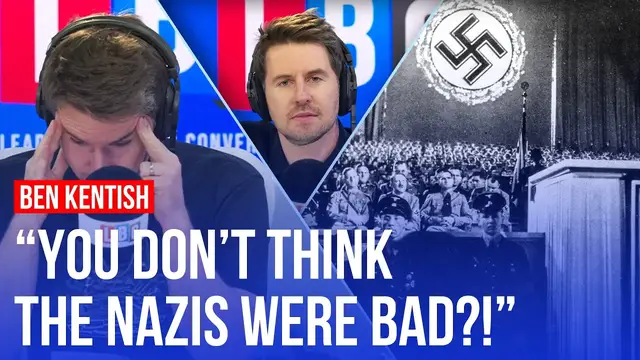
Were the Nazis bad? Were the Nazis bad? It's just the way the world was
1:15
So you're not comfortable saying a genocide of six million people is bad
1:22
um i don't i think it's just the way the world was you can't say it's good or bad you can't say
1:29
you can't say genocide is bad no you cannot say the way the world was hundreds of years ago
1:36
is that's the way it was all right so beating up your wife is that bad because that was legal in
1:41
this country until quite recently your argument is if it happened in the past it can't be bad and
1:46
I'm saying I think that's completely bonkers. For what Britain did. You know, the benefits they got out of the country
1:54
I mean, they haven't got great benefits from it. Is hanging gay people back
1:57
No, no, you're just trying to turn it, twist it around. John, I'm not twisting anything
2:02
Your point is that's just how the world is. And I'm pointing to you that, yeah, we used to live in a world where if you, you know
2:08
well, I don't want to repeat it because it's actually quite sort of, it's so horrific
2:12
But just because it happened in the past, it doesn't mean... It's just the way the world was
2:17
John, you keep saying that. Flavery was part of the way the world was
2:21
All right. You know, people getting rich. I mean, it's just the same today
2:26
People want to get advantage. It's not the same today, though, is it? Pardon Yeah well the world moved on Why do you think we can look back and make moral judgments about things just because they happened in the past
2:40
Because the world's moved on. I mean, what happened hundreds of years ago
2:44
doesn't affect anybody today directly in their day-to-day life. It does, John, that's the point
2:50
So then trying to blame slavery or colonies is absurd. That's where you're wrong, sir
2:54
That's where you're so wrong. John, let me finish. There are people in this country who are still multi-multi-millionaire landowners because they had that wealth passed down that was accrued initially because their great-grandfather, great-great-grandfathers were slave traders
3:09
There are people in this country who still are very little because they inherited nothing from their ancestors because their ancestors were slaves
3:17
So when you say it doesn't have any impact on the world today, you're wrong
3:20
The reason that, part of the reason that Britain is so much wealthier than somewhere like Ghana, to take one example, big hub of the slave trade, or parts, most of the Caribbean, all of the Caribbean, is because of the slavery
3:33
What wealth in this country? The country's in chaos. I mean, we've got Prime Ministers changing because we can't fund a lot of our services anymore
3:42
Well, go and live in the Congo. So how can you go on about our wealth? Where's the wealth gone
3:46
Go and live in the Congo and then come back and tell me. We're not talking about the..
3:51
We're talking about the UK. Yeah, it's convenient, isn't it? Go and live in part most of sub-Saharan Africa
3:56
and come back and tell me which country you think is wealthier. I mean, the world..
4:00
John, you... People look after themselves. People look after themselves. Not if they're locked up and transported across the Atlantic
4:06
on British slave ships. We can't fund our own services. We don't have a lot of wealth in this country anymore
4:11
Yes, we do, John, compared to most countries. Any people that got wealth from slavery
4:15
there's only a very few people. I mean, most people... They're not very few
4:18
Our entire economy was based around slavery. The reason we have the sixth biggest economy in the world
4:26
is in no small part because of our role as a leading slaving nation
4:31
not that long ago. That's before you get to all the wealth that we extracted
4:37
from places like India and the Caribbean because we subjugated those people and invaded their lands, John
4:46
No, that's a long time ago. We're not super wealthy. Some people are
4:51
It's half a century, man. But that's from recent wealth. I mean, people who inherited wealth from slavery are very few people
5:01
It's not. We going round in circles here The country that we live in Yeah but you latched on to this colonial nonsense that is really important Yes it is important It not
5:13
Why not? This is... Because you don't actually think it was... Ultimately, what we come back to is you don't actually think it was wrong, John
5:19
That's why you don't think it was important. Because you don't think that going and colonising and brutally repressing and murdering and pillaging
5:27
and raping our way across the world was wrong. The world has been for thousands of years
5:33
All right, John, stay on the line, if you would. I want to bring in Anthony in Haringey, who's called in, I think, to specifically disagree with you
5:38
Hi, Anthony, go ahead. How you doing, mate? Love the channel. Yeah, I think the whole point around the conversation
5:46
the premise of what you asked, was should this be more broadly spoken about
5:50
Should this be more broadly taught? I think the caller, I appreciate
5:54
potentially it may be a generational thing, but it's just an indictment and just evidence
5:58
of why we need to be doing this more and more. what john's call is proof for you of why we need more education about empire
6:05
100 i think we we live in a world where social media and the access to information over the last
6:11
few years has allowed people to look back in a way that we haven't done for for decades right
6:17
um i think the point where to be fair when i was on waiting on the line i couldn't hear most of
6:22
what was being said towards the end of that segment but one thing i did catch was him essentially
6:26
saying that the Nazis aren't bad. And the reason that he said the Nazis aren't bad
6:32
is so that he wouldn't have to accept that the British Empire was bad or that King Leopold in Congo was bad
6:38
It's just, we're just dancing around the subject trying to play ping pong with the points
6:42
that we're trying to make. Well, I think he was saying, and I don't agree for what it's worth, I think he was saying you can't apply
6:47
today's kind of moral judgments to things that happened long ago. That is a valid point
6:54
And things do change over time. But the fact of the matter, there are some objective moral truths, right
6:59
We stand by and live by objective moral truths. If you look at the United Nations, for example
7:03
if you look at all of the things that are going on in the world today and justifications that are given
7:09
because of things that happened during World War II, for example. If we talk about Dresden or we talk about other areas like that
7:15
indiscriminate bombing that we've been talking about for years in Gaza, right? And I think to try and minimize the history
7:22
is to try and hide behind uncomfortable truths. Thank you, Anthony. Let's put that back to John
7:29
John, come back on that. Anthony says you're proof that we need more education about empire
7:33
Yeah I think that a little naive History is so vast and complex you can never really teach it all in school It impossible It is massive You know it like if you want to talk about slavery or all the other histories
7:47
involved over the centuries. It is enormous. And there is limited time
7:53
in schools to teach any of these subjects. Anthony? It's impossible. It's impossible
7:59
History is history. And history, by definition, is vast. The whole point
8:05
is in the academic sector to have syllabus and various different degrees of study
8:10
for various different areas of history, right? The whole point is that within the syllabus
8:16
if there is an integration into the syllabus of a recognition, that doesn't mean that there has to be an overt telling of history
8:22
that we need to make space for. It's about making sure we're having the right conversations
8:27
when we are learning areas at different points of the syllabus. But isn't it also about, I mean
8:31
we all remember learning about Henry the X-Wives. Isn't there an argument, quite a strong one, that says empire is far more relevant for the world we live in today and tells us, you know, it's far more sort of, far bigger a determiner of life today than the Tudor monarchs or even the Romans and therefore should be more of a priority
8:50
Put that to John. John? Yeah, I mean, the problem is there's limited time in school
8:57
Yes, so prioritise empire over learning about all the Tudor monarchs and the Romans and all the rest of them
9:03
Well, yeah, you can choose your subjects for history. I mean, obviously, there's no problem with teaching issues around empire and everything
9:11
but there's very limited time, and I think it's going to have very limited effect on people
9:16
All right. John, thank you for the call. Final word on that to Anthony in Haringey. I think, listen, the background I come from, I'm half Moroccan, half Greek, Cypria
9:24
I've experienced what the impact of colonization can do in my home countries
9:30
and I live in a vibrant area of North London. There's lots of different communities
9:35
and we as second generation immigrants are very aware of our history
9:39
But I think with so much division in the country, I think there would be coming on the other side of the fence
9:44
and getting an understanding from the broader masses in this country of why we are here
9:49
And then I think by doing that, you dilute the impact of people like Nigel Farage
9:53
and reform and restore and all of this stuff. Because there's a more of an understanding
9:57
of why people want to come here in the first place. absolutely right you know the saying
10:01
we are here because you were there yep which is true I think not always true
10:05
I mean people coming from parts of the world that Britain didn't colonise you can't necessarily
10:10
make that argument but a lot of people can thank you Anthony for your call as well
10:14
John thank you as well interesting discussion interesting debate
#news