Up next in 10



'I don't know where else you're going to hear conversations like the one you've just had with me...'
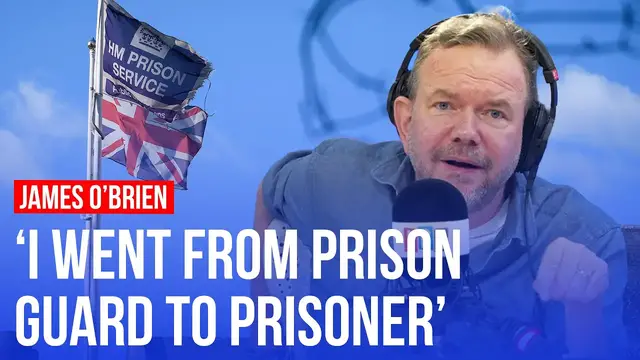
James O'Brien hears from a range of listeners that have all faced different sentences and experiences inside British prisons.
The conversation is in light of the first batch of prisoners eligible under the new early release scheme walking free on Thursday. The scheme's been introduced by Labour to free up prison spaces.
00:36 | Denise was sent to an adult prison aged 15
05:17 | Joe explains how his private school background impacted his time in prison
09:17 | Dean is 47 years old and says he's spent around 25 of those years in jail
22:44 | Catherine went from working in a prison to being a prisoner
31:46 | Jonathan worked as a prison orderly during his time and says what his release differed to other inmates
Listen to the full show on the all-new LBC App: https://app.af.lbc.co.uk/btnc/thenewlbcapp
#jamesobrien #uknews #ukpolitics #opinion #news #politics #crime #labour #LBC
LBC is the home of live debate around news and current affairs in the UK.
Join in the conversation and listen at https://www.lbc.co.uk/
Sign up to LBC's weekly newsletter here: https://l-bc.co/signup
Show More Show Less View Video Transcript
0:00
What happens in prison? What is it like to be in prison
0:02
And what happens when you leave? And the reason I ask these questions is in pursuit of an understanding
0:10
of how the numbers could be reduced in ways that didn't involve
0:14
even earlier release than we had before. Do you see what I mean
0:18
The best way to reduce prison numbers is to have less crime
0:22
So what is it about the prison system that is not addressing that point
0:26
What is it that happens in prison and upon release that is signally failing to provide or produce less crime
0:35
I'm now 44 years old, but I went to prison when I was 15 years old
0:40
There was a group of us. What I didn't mention to your producer is that I was in the care system as well
0:44
But there was a group of us and we decided to go and attack somebody and we got caught for it
0:52
and essentially got sent down for assault with intent to rob. We all went to..
1:00
We got sent to an adult prison. Did you? At 15? Yeah. Not a YLI? Not a youth offender institution
1:07
No. Adult prison. OK. An adult prison. The time was over Christmas and New Year's
1:15
so you can imagine that was absolutely awful. Not as awful as getting beaten up by a bunch of teenagers
1:20
I don't imagine, but I take your point. No, of course, of course. But in terms of rehabilitation in the prison system, there is none
1:29
It's all about personal choice, whether you decide to stay out of what's going on in there
1:35
or you get involved. What do you mean? What do you mean what's going on in there
1:41
So you've got a lot of offenders in there. Obviously, they've come from different backgrounds
1:47
and they're for different things. and you either get involved with what they're offering
1:53
in terms of like there's drugs and things like that, there's little separate gangs or you stay out of it
2:01
I mean, I had a female who had an interest in me
2:06
and I wasn't interested. So they wanted to fight me. I couldn't defend myself
2:13
I was told by the prison guards that if I defend myself, then I'm going to be given extra time
2:17
so it was just a case of I had to shut up and put up
2:22
so essentially I just kind of kept to myself and I was actually looked after one of the
2:30
there was an older woman in there that kind of took me under her wing and protected me from all the stuff that was going on in the prison
2:36
How long were you in there for? So it was a three month sentence but I'd done six weeks
2:43
I mean it's a reminder there's nothing new about early release of course although the people being released yesterday are people who are being released even earlier
2:51
than would have been expected when they were actually sentenced. Did anything change
2:55
I mean, did it work as a short, sharp shock? 100%. I've never been in trouble again
3:02
I mean, I went to university. I'm now a psychotherapist. So, yeah, that's not something I'd want to do
3:09
I don't know what the statistic is on care, but people in care who end up in prison
3:14
people from the care system who end up in prison, and I will find out sooner rather than later
3:20
but I suspect it's just as shocking and at the same time unshocking as the literacy statistic
3:26
It's so overrepresented, and that says to me that it's something that could actually be addressed
3:32
It's something that could actually be accommodated. And when you left, I mean, you're a success story
3:40
but on the day that you left, and presumably your parents were still in your life when you were that age
3:45
or not if you were in care? Had you lost them completely? What happened when you left, Denise
3:51
Yeah, there was no parents. Right, I'm sorry. That's okay. My key worker and another member of staff from the children's home
4:01
come and picked me up. Right. But I made a decision because this was not in London
4:08
this was up in the Midlands. I made a decision that I didn't want to stay in that area anymore
4:14
so I actually ran away and came to London and made a life for myself at 15
4:19
Flipping heck. I mean, I guess you're not that illustrative of the bigger picture, are you
4:25
of kind of serial criminals or serious criminals being released from jail over the last 24 hours
4:32
but in answer to the question of what prison gave you, apart from the shock of incarceration, it gave you nothing
4:40
Nothing at all, no. It's personal choice, as I say. what you do when you're in there
4:44
yeah you choose as I say you choose to either get involved with the rubbish that's going on
4:49
in there with the badness that continues to go in there or you stay
4:53
out of it and you make a change for your life and of course I mean you say that because you're
4:59
a strong woman but not everybody is I don't know whether I'd be strong
5:03
enough in those situations to hold myself together in the way that you did and a lot of
5:07
people of course are not and in a sense they're probably the ones that are most likely
5:11
to see the prison gates as a revolving door. And thankfully you didn't
5:16
What an incredible story. I went to prison in 2017 on a 28-month sentence
5:22
and came out in 2018 after doing 10 months inside. Then I came out on tag
5:30
And I went in and had to do very basic English and maths courses
5:36
just to check that I could read and write. It wasn't a course, it was just a test
5:40
and that would allow me to get a job in the prison
5:44
But when I tried to do anything, there was a thinking skills course
5:48
which I wanted to get on to make better decisions and they just said
5:52
you've not got a long enough sentence to get on that course so you can't do it
5:57
And I was only able to go and do sort of very rudimentary courses like an IT course
6:02
where you learn how to make a PowerPoint and things like that. It was kind of pointless really
6:06
For you, but it wouldn't necessarily have been pointless for everybody. No, you're absolutely right
6:13
And they all said there was prisoners that really couldn't read and write
6:17
Had you encountered people like that before? No, I don't think so
6:22
No, I don't think most of us have, you see. And so it's one of the weirdest things, isn't it, is what our normal is
6:28
You know, my normal is not somebody else's. You live in that world where illiteracy is 50%
6:37
It means it's normal for these men. It's normal to be spending time with other people who can't properly read or write
6:44
And what help did they get? Well, a lot of them would ask other people to take the tests for them
6:51
Wow. And I have to admit, I did fill in a couple of people's English and maths courses
6:57
because I didn't really want to say no a lot of the time. No
7:01
And that would allow them to just get a job and get earning money
7:05
and when I say earning money I mean I think when I was there
7:09
something like 40p a day and you're working for external companies 40p more than zero isn't it
7:17
but as you allude to it's a bit of a shock I mean you don't sound
7:21
forgive me I can't read too much into voices even as a radio phone host but you don sound like a hardened criminal I don know what a hardened criminal sounds like joe to be honest with you but you you take my point no i like to you know it be cool
7:36
to be thought of as that but not i mean i went to private school and i've got a degree and they
7:41
thought i was lying when i said i had a degree when i was in there until i had the form sent in
7:45
so i didn't have to do more tests when i went to the next prison the staff thought you were lying
7:50
Yes. Because they encounter people with degrees as often as you'd encountered people with no functional literacy
7:58
Yeah. Was it drugs? Yeah. Yeah. Buying them or intangible supply? Yeah, I bought about, can I say
8:06
Yeah, I think so. Hang on, I better chat with Eleanor. Can he say what he did? Can't see any problem with that
8:11
Yeah, carry on. Yeah, I stupidly bought some ecstasy tablets, about 50 off of the dark web
8:17
Right. and to sort out friends. And, yeah, I got caught. You got caught and you went to jail
8:24
I mean, a massive shock to the system. And a privately educated graduate
8:32
A very different experience on release compared to most of the men that we're watching
8:36
walk out of prison gates today. But just to answer the question, what happened when you left
8:41
When I left, I was lucky enough to go home to a family that had a room for me
8:46
and I was able to get a job. But, I mean, if I didn't..
8:50
I mean, there was people being released, I think, with a tent, getting given a tent when I was inside
8:57
And there was, you know, you get about £30 or £40 upon release
9:01
which is, you know, better than nothing. Only just, only just. And then we're all going to be wringing our hands
9:07
and clutching our pearls in a couple of days or a couple of weeks when we start reading reports about people
9:12
that have already been sent back or early recall, which is something else I want to talk about
9:16
Joe, that was really helpful for me. Thank you. Just before Labour was voted out of power
9:21
they brought in something, you know, level one literacy and numeracy, and you got £50 as a prisoner if you passed it
9:29
Obviously, everyone in the prison started passing it. Everyone. I know people who couldn't even spell their own name
9:36
but let me tell you, they passed that and got £50 for doing it
9:41
Really, what it meant is about five prisoners in each wing passed it
9:45
and then had to pass everyone else's either by payment or force
9:49
That's incredible. And it puts a skew on the figures. But the thing about the overcrowding
9:56
that really comes off of the back, and you might not like this, the Tories doing what the public wants
10:02
They lock people up for longer, they're much harsher to prisoners, and that's what the public wants
10:08
As much as you hate it, when the Tories can go, yep, look how much longer sentence we give them
10:14
look how harshly we treat them that's what the public wants and if you say to the public
10:19
I'll tell you what, I'll build a new prison but that hospital you're waiting for
10:24
that's going to be another three years let me tell you, the prison ain't getting built
10:29
you cannot sell that to the public So they're having their cake and eating it
10:32
they're making the situation worse every year and deliberately doing nothing to alleviate the situation
10:38
harvesting votes from people who don't understand the facts and storing up situations
10:43
like the one that we're looking at now. And Rishi Sunak hits the road just in time
10:47
for the real crisis to land when someone else is in charge. Yeah, the most common..
10:53
If you go up to a person and say, what are Labour like on crime
10:57
the most common thing you'll get will be, oh, they're soft on crime. Look at the front page of the Daily Mail
11:02
Labour freeze first of ten tidal waves of convicts as if they are being soft on crime
11:07
Thugs in every postcode. What they won't know, excuse me, the people reading that paper
11:11
is that Rishi Sunak risked breaching legal responsibilities over the prison crisis
11:16
So we want prisoners to be treated appallingly, but we don't want to spend any money on all the prisons
11:20
that we're going to need to lock up more people than we're locking up today. And if he would have breached that
11:25
just supposing he didn't call a thing and he would have breached that, he would have been an absolute hero in the public's eyes
11:30
I think I disagree with you there. I don't know why. He's standing up for us and look how they're treating him
11:36
Those horrible prisoners. No, because they'd have been releasing those horrible prisoners early
11:41
so that he wouldn't have been a hero in the public's eyes. Oh, I don't know, because when I was in there
11:45
when the Tories was in at the last end of their thing, they was talking about putting beds in tents on exercise yards
11:52
So I'm not sure that they would have been released to them how they are being released today
11:57
Well, they did. No, they did, yeah. They'd done the 30% thing
12:01
And now it's up to 40% or 50%. So I think it would have happened. I think if he thought he was going to get a win out of it, Dean
12:08
he'd have done it. I think he knew that that was actually going to not wash
12:12
Also, I think it would have been in breach of the Human Rights Act. So he probably wouldn't have been able to do elements of that
12:17
You've already got two, three prisoners in cells designed for one prisoner
12:21
So I don't quite... Yeah, that's been going on for ages as well
12:26
I know it has. Just, what are your, can I ask what your literacy levels are like
12:31
You don't have to tell me. Strangely enough, they're all right now
12:36
But that's through some of the wrong reasons and just simply having access to more money
12:46
and wanting to live better. And to live better, you do need to be able to read and write
12:51
I mean, that is... Whether you like it or not. No, I mean, that's just self-evident. It's not just the obvious stuff about reading and writing
12:57
but it's the way that it allows you to engage and interact with wider legal societies as well
13:03
If you're at the higher end of the criminal scale and you start to earn a lot more money
13:11
you then have to quickly realise that if you want to spend that money
13:15
you're going to need to at least be able to read or write
13:19
I'm not sure the message that we want to be sending out to illiterate prisoners
13:23
is that they need to be more successful criminals. I know it is, I know
13:28
It's what forced me. I hear you. When did you last get released? I'm about 10 months ago from an IPP sentence
13:36
What's an IPP sentence? Forgive me One where you was given no release date
13:42
You just had to keep asking Can I go home after a certain point
13:46
And what were you in for? A conspiracy to rob a money laundering Okay
13:51
And are you on the straight and narrow now? Yes But that's after
13:57
I'm 47 and I've done probably about 25 years behind the door
14:02
So it took a few goes before the penny dropped. What made the penny drop
14:10
Age. It's a young man's sport now. And when you do that amount of time in jail
14:19
believe it or not, you start to think, I might do a bit of living outside
14:23
And when you're committing crime, you're always on borrowed time. you have to expect that you might get away with nine things but the 10th thing you get caught you
14:33
might get away with 20 but the 21 you get caught it's coming it's just when it comes but i was of
14:40
the mindset that i understood that i was prepared for it and i when it comes i'll take it on the
14:45
chin and well that's the definition of an occupational hazard isn't it yeah that that
14:50
is there many men in there now who are doing 10 year sentences but they in their late 20s and that they will all be thinking yeah I got another go in me I got one more roll of the dice that will make me be able to walk away into the sunset
15:06
The problem is there's nothing else that pays as well as committing crime
15:12
It's as simple as that. And there's nothing, therefore, that you can think of that might break that cycle
15:17
before they reach the grand old age of 47? No, the only thing that normally breaks it is death in my game
15:24
You're being shot either by a rival or arm response, or you simply get sick of it like I did
15:34
and then you think, ah. What about the sort of mid-table criminals
15:39
What about the ones that probably would quite like to go straight, but because they are illiterate
15:44
or because they haven't got really the vocabulary needed to make their way in the..
15:50
I'll tell you what happens with them. They're sat in jail. they're illiterate. There's the prison officers
15:57
not a dissent offence to them, but they've got nothing to provide for them. There's no courses
16:02
But there is some people on the wing who put their arm around them and say, let me just teach you about this
16:07
This is what this can give you. And so you've got a government who they feel abandoned by or whatever
16:14
Most of them are not going to have great ties to family. Some of them or a lot of them will have drug issues
16:20
And that person on the wing will be able to say, here, look at this, have a go at that
16:25
what do you think about this and before you know it there's your next
16:29
generation of lifers and so it's like a finishing school is there anything that you could
16:37
think of or that has struck you over the years that would make
16:41
that door less likely to revolve, to make some prisoners, and I fully appreciate what you've said
16:47
at your end of this business but the ones that you're talking about now
16:52
the ones that could go either way and prison is actually going to make them more likely to go the wrong way
16:57
Systemic change. Put the money in. Yeah, there it is. Put the money in and teach them proper skills
17:04
Now they'll say, oh, we do bricklaying courses, we do this, we do that
17:07
up and down the country. And they do. But it's a gimmick course
17:12
Most builders will tell you, if you walked into and said, I learned this in prison
17:19
they'll go, oh, what did you learn? Let's see it. yeah right now you need to go and learn this yeah and so they do teach you stuff but that's that's
17:28
for when you see the uh justice secretary walking around with a camera crew and they'll bring out
17:33
some divvy prisoners and say you just performed for us you good monkeys look at us look what we're
17:39
doing and we're doing it all on a budget and the public go no that's a justice secretary i believe
17:45
but they don't believe in the same justice secretary when those same people
17:50
are getting out and burgling their house or stealing their car so be careful of what you see
17:57
well yeah oddly enough we're on the same page when it comes to that kind of thing
18:01
and that dichotomy between what people have been told and what is actually happening
18:07
couldn't be wider than in the prison world what role you don't have to answer this if you don't want to
18:12
what role does regret play in your life today? Well, first of all, you have to get to where I am now
18:20
for regret to even register. Yes, I think I understand that. That's the absolute truth
18:26
because when you're doing it, it's, oh, I've got this car, but I could do with a better one
18:32
and him up the road, he's got that one and I know that I'm better than him
18:37
so I can definitely have, that is what your mind consists of. what do I fancy for to eat
18:44
What restaurant will I go and eat? So you can find regret is
18:48
he's just not getting a look in. That sort of thing comes around when you..
18:54
Yeah, I get that. Committing crime is a full-time job. I know a lot of people think
18:59
oh, you just get up, you go and do that, and it's all over with. It's a full-time job
19:03
There's a lot of effort. Even if you're a drug addict and you're a shoplifter
19:07
they get up in the morning, they're banned from certain shops, so they've got to find new ones, so there's the travel
19:13
It takes up a lot of time. I know that sounds mad, but committing crime is like a full-time job
19:19
even at the lower end. So having sympathy or regret or understanding of what you're doing
19:28
and if you're on drugs, you can have none of them. No, I understand that, but I don't think you were, were you
19:33
No, no, no. No, I didn't think so. I was trying to live and do better than what society had carved out
19:39
I just wonder how that bit breaks, Dean. Because that phrase, occupational hazard
19:43
is quite a flabby phrase. But goodness me, listening to you describe
19:47
the reality of your existence, it hardens up. It really means something
19:51
in the context of this conversation. And what would have made you think differently
19:56
Could anything have turned you down a different path? When you're looking at him up the road
20:01
who's got a nicer car than you and you're thinking, well, the next job will be the one that changes everything
20:06
Well, if I had a different... So where I come from, to do well was important
20:14
but how you get there, you was left up to your own devices
20:19
Was not important. And if you're not academically smart, you'll find another route
20:25
and unfortunately, the route I took was not one that society is best pleased with
20:32
Were you not academically smart? um i i was smart but not not not in the right ways in in all of the wrong ways so i i use my
20:43
smarts accordingly how naive do i sound when i say that i bet i bet a better school or better
20:49
teachers could have could have found something that yeah well like so when when i went to school
20:56
obviously uh i'm not sure how it is now because i've left many years ago but when i was at school
21:03
or the kids that was going to see to produce the A's and all of that
21:10
they was heavily relied on to prop up the school figures. And the other ones, I would go into a class and say
21:20
I'll read a book today. As long as I didn't disrupt that class, I could pretty much do what I wanted
21:25
But they were happy that you were keeping your head down. But no one managed to ignite anything inside you
21:31
No one managed to? No, they didn't think that maybe if we don't educate him
21:37
he could go on to cause absolute havoc. That doesn't register. Do you want to say anything else
21:44
I've run out of questions, which never happens to me. I just wanted to say that this thing with the figures
21:50
the illiterate thing, that's been down on for many, many decades. And the public need to ask themselves, what do they want
21:57
Do you want Tories harshness, battering the prisoners? or do you want something else
22:03
If you want something else, you've got to be prepared to pay for it. And, I mean, theoretically, they should want fewer crime
22:08
That should be the absolute... Yeah. And you don't get that. It's a no-brainer because if you pay for it and you reduce crime
22:14
you reduce you, your family or someone else likelihood being a victim of crime
22:19
But it's a hard sell. It is. And I don't know why
22:23
They've done it in Scandinavia. They done it in a lot of Scandinavian countries They made the sell and they made it clearly I hate to say it but I would like to think that our public are just as intelligent as the Scandinavian public so quite what we doing wrong
22:36
I don't know. Well, there's a couple of books I could recommend, Dean, but that wouldn't be
22:40
fair because I wrote them. I've really enjoyed talking to you. I feel like I have a bit of a unique perspective
22:47
on this, to be honest. I'll be the judge of that, Catherine. Look, I spend a lot of time shouting at
22:52
the radio at LBC. I've never phoned in before and spoke to anyone
22:57
But this is something I feel quite passionate about. I mean, my position was, I mean, this is going back about 15 years
23:03
but I actually worked in a prison in the education department as a teacher
23:09
So I taught literacy and numeracy. And that was really driven by doing some work experience when I was doing my degree
23:16
and just understanding how ashamed some prisoners felt at the fact that they couldn't read
23:24
And we're having to have people read their letters, read their birthday cards for them
23:29
And it kind of stirred something in my heart that that's what I wanted to do
23:34
So I spent a number of years teaching and seeing people in that revolving door situation
23:40
And it was heartbreaking, you know, just seeing them come back time after time
23:46
And then there were other people who were coming in because of a really bad error of judgment
23:52
I don't know, maybe looking at their phone while they were driving, causing an accident, that ends up with them serving a lengthy sentence
24:01
So, you know, two totally different ends of the spectrum, really. People who were almost career criminals and those who were just caught out by doing something, you know
24:11
We've spoken to both, haven't we, on the programme today? Yes, exactly. Exactly
24:16
And look, I think part of the problem is that there are some great courses
24:20
And part of my role was getting people up to an educational level where they could go into workshops
24:26
So that could be bricklaying. It could be painting and decorating workshops
24:32
The problem with those were that there were so few places on those courses and loads of people wanted to get on them
24:39
You've got to do your level one, level two literacy and numeracy to get on to them
24:44
But the waiting list could be so long that you never got to you never got there
24:48
and they were great because they were obviously aimed at upskilling you
24:53
so upon release you had a qualification I think part of the problem with that is that once you get out there
25:03
it's not as simple as that as soon as you have a criminal record
25:06
now what I then go on to say is I again found myself in a desperate situation
25:15
of serving a prison sentence myself. Well, that's a twist. Yeah, not a great
25:22
twist. Not a great twist. I took in a phone, a mobile phone for a prisoner and
25:29
it got found. I admitted that it was me and I received a custodial
25:36
sentence. Now, I already knew the prison system when I got, obviously not a male
25:42
prison, but I went to female prison. I knew what the regime
25:46
was like so that part of it wasn't so much of a shock but what was a shock was that on release
25:53
my whole life changed beyond recognition I mean I had a loving family I had people who supported me
26:01
I was well qualified the job that I was damn good at I could no longer get anymore I couldn't get a
26:09
teaching job for love nor money if i went for any other job i was un over skilled over over um
26:17
qualified for and i had i had a criminal record and it impacted every area of my life i couldn't
26:25
get house insurance i couldn't get car insurance because as soon as you say you've served a
26:31
custodial sentence it doesn't matter in my experience it doesn't matter what it's for
26:36
It closes the doors and you I mean obviously were not ever going to be
26:46
at risk of recidivism I mean it's not even a crime you'd be able to
26:52
commit twice because you weren't working in the prison again but the perspective it gives you on why people
26:58
with a less secure background or a less secure life are going to go back again
27:04
even if they're determined not to is extraordinary, isn't it? Absolutely. Yeah. And you suddenly
27:12
get a different perspective on why people come back. People come back because
27:18
I used to think well I'm not surprised people drive around without
27:22
insurance on their car and I'm not surprised people drive around without a car that's taxed
27:28
because they can't get it. You know, if you can get it, it's absolutely extortionate
27:34
regardless of whether you're crime was relevant. It's just a red flag
27:40
A red face computer says no. It's exactly that, isn't it? Absolutely that
27:44
Wow. And 15 years later, you know, it's the same thing. So what are you doing now, if you don't mind me asking
27:53
I now, I work in similar, in a similar field, but I'm self-employed and I work with adults
28:01
who are neurodivergent, so ADHD, autism, normally who are at university and are struggling with their studies but the easiest option for me
28:09
was actually to go self-employed because the pain of every time i applied for a job or
28:18
you have to declare your your and i think that may have changed now actually um how long you have to
28:26
you go before you have to you don't have to declare you know your conviction anymore but
28:30
it was painful it was like bringing it back up and it's a part of my life that almost belongs in a
28:36
a box marked did that really happen i can only imagine how long were you inside for
28:41
oh i got a nine month custodial which was i mean everybody was shocked about i don't think anybody
28:47
had expected me to get a custodial but i think they want to make an example you know and i don't
28:52
underestimate what i did um but because i think because there were no without going into too much
28:58
it. There was no money involved. I didn't get paid to do it. I think I probably
29:02
got a more lenient sentence than others in my position. But it's a lifetime ago
29:09
But every time I take out... It's almost as if the system
29:13
is designed to make it harder for people. Almost impossible. To get on the straight and narrow
29:20
after coming out of jail. I mean, that's bonkers. And for me, there was shame attached
29:24
Of course there was. A hell of a lot of shame attached but for many of these guys who i worked with there was no shame attached because their
29:32
family members their friends that where they live that's what everybody does i think dean conveyed
29:38
that perfectly when i asked him about regret and it was almost like it's a commodity that doesn't
29:43
really exist until you reach a certain age but i'll tell you when you did mention shame and i
29:48
found it fascinating and i know i'm so bad at not interrupting but i managed to resist the urge
29:53
then because you'd said that your perspective was unique and I think we can all agree that that
29:57
was not an exaggeration Catherine From prison worker to prisoner does indeed provide a unique perspective
30:04
So far, you know, the phone lines are still open. Who knows? We might find another one
30:08
But you talked about the shame involved in illiteracy. And I found that a remarkable moment because, you know
30:15
the mental image we have of these men, these serial criminals, these hardened criminals is of people who lack perhaps an emotional life
30:23
or people who are as tough as old boots. But in fact, you said that phrase that they are ashamed that they can't read or write
30:32
And I automatically saw little boys in my mind's eye. Yeah. Yeah. I mean, I didn't teach adults who were, you know, what we would call entry one, you know, people who really cannot read at all
30:45
That wasn't my skill set, really. But when you saw people who were at that level of literacy and learned to read the first book, so when they had visits from children or grandchildren, they could actually read a book
31:00
It was incredible. You know, just absolutely, I mean, a very emotional experience for them and for everybody working around them
31:11
I'm not saying it got on my job when they got out, but actually it is life changing
31:17
just in a different way. I mean, there should be votes in it as well, actually
31:22
You know, thinking about it, if anyone bothered to explain it as powerfully
31:26
and as clearly as you have done and my other callers have done today
31:29
I think, I honestly believe there would be votes in it. But the problem, as so often in this country
31:35
is on what platform do you get to explain this stuff to people Because you know we only got one and a half million listeners I don know where else you gonna hear conversations like the one you just had with me i worked as a prison orderly in the education department okay so every day i was
31:50
with people that were were due to be released within the next sort of nine months and a lot of
31:57
the times the people got one of the syllabuses on that orderly course on the education course was
32:03
getting them prepared, you know, helping them with their CVs, asking them about their spending habits pre-prison
32:09
and obviously what they think they'll spend once they get out of prison. And a lot of the times you're speaking to people that have no concept of money
32:18
Really? What do you mean by that? In terms of, well, maybe more legitimate money
32:25
Okay, got you. You mean earning? You mean the relationship between labour and income and outgoings
32:29
outgoings. Money is more like kind of tokens in a game? Yeah, I mean, it's a case of
32:35
they're drug dealers or they're burglars, so as soon as they get a bit of cash, they spend it
32:41
Be it on themselves, on their kids, and, you know, them spending £1,000 a month
32:47
on clothing for their kids is normal, versus the average person if you're doing a legitimate job
32:54
you're not able to do that. So, a lot of the times, it is a revolving door
32:57
for them, because they get out, and they're out for maybe a year
33:01
So it's an all or nothing existence. Indeed. And literally their family will have nothing while they're inside
33:08
Indeed. And I've also seen the other side where there was someone that got released
33:14
Well, he went in for burglary. And again, this guy came from a good background
33:19
Parents very well off but they had a lot of money He got released They gave him a Range Rover and within a month he was back in prison for burglary How come Oh I don know
33:30
I mean, I don't know why he did it, but... But burglary was the only way he could have those
33:34
big chunks of money coming into his pocket, even with wealthy parents. Indeed, yeah
33:39
Gosh. That's interesting, that warped relationship between effort and income. And he's got less
33:48
excuse in my mind than somebody who doesn't have security in their life or security in their
33:54
background can we talk a little about the day you get released yeah sure i think for me it was a lot
34:00
easier than maybe people that yeah you know that i was locked up with because i had a good
34:05
family support and again my sentence was very short as well so i maybe didn't going in i knew
34:13
i was coming out soon and that was my focus so even though every day felt like a month
34:17
I can already imagine what it felt like for people that were there for, you know, four years, five years
34:23
Some people there for 12 years, for example. And you come out of the gates and they give you, what, 50 quid
34:28
Something like 54 quid. And then train ticket back to your local area
34:33
And then the first day you go see the probation officer. Obviously your address is confirmed before
34:39
I was on tag when I got released. So obviously they come to your house, stick the box up, put your tag on, give your conditions
34:45
and then you're going to probation, you're trying to get a job. But again, for me, I had the hope of
34:52
I'm going to get a job, and I did. So for myself, it was not easy
34:57
but I had hope. Whereas a lot of people that got released
35:01
at the same time I did, probably half of them went back in Because they had nothing to go home to Exactly That the absolute peach here isn it Because everyone I spoken to when we get to this bit of the conversation
35:16
everything depends on how much you've got to go to. It's not about where you're coming from
35:21
although obviously one big lesson this morning has been about the darkness of the shadow that
35:26
follows you around if you've been in prison and how it actually creates a system that feels
35:31
designed to make it harder to go straight, but it's where you're going to that is determining
35:37
whether you're going to go back or not. The more you've got to go to, the less likely you are to return to jail
35:43
Of course, of course. I just think, for me, my experience in prison
35:50
especially on a short sentence, I felt like it was redundant because I gained nothing
35:55
The research supports you, actually, that short sentences are largely pointless, but they, as Dean said
36:00
what feels like a lifetime ago now, as Dean said, they're designed to appease conservative voters or right-wing voters
36:09
Exactly, exactly. So, I mean, for myself, it's just I couldn't do any educational courses
36:15
because I wasn't there for long enough. Other courses, like, you know, being a bricklayer, doing, you know, workshops
36:23
again, wasn't there long enough. So the only job that was available to me was an orderly
36:27
or just staying on the wing and doing nothing with your day
36:32
And you couldn't do that. You couldn't do that. And, of course, the idea that they have a PlayStation
36:38
will cause fury in some corners of our media because they would rather that these men
36:42
are just sitting staring at a wall all day because that's really going to make re-offending less likely
36:48
and mental health problems less prevalent. Thank you
news