Up next in 10

The man behind Brexit on power, politics, friendships, fallouts and the Leave campaign
Jun 23, 2026

What really happened behind the scenes on the night of the Brexit referendum?
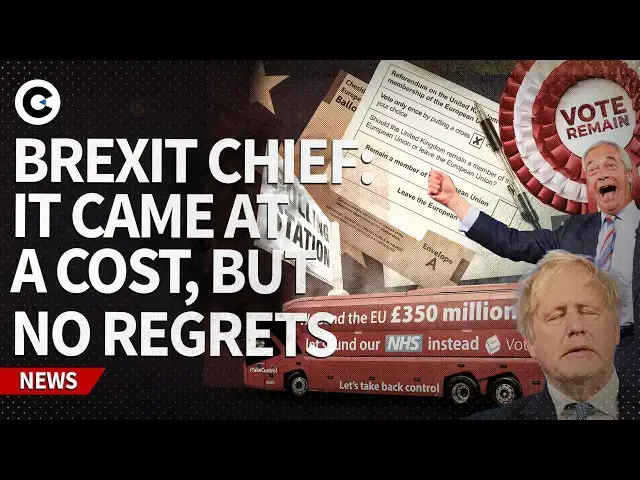
In this exclusive post-mortem, Vote Leave Chief Executive Matthew Elliott exposes the severe internal friction that threatened to derail the entire campaign just days before the historic vote. From the "unhelpful" and inflammatory tactics of Nigel Farage’s unofficial campaign to the senior leadership figures who were convinced they were going to lose on polling day, Elliott delivers a raw look at a political operation on the brink of chaos.
Discover the tactical missteps, the messaging wars, and the true story of how close the official campaign came to unravelling.
#Brexit #VoteLeave #NigelFarage #UKPolitics #Westminster
00:00 - The Secret Panic Inside Vote Leave
00:49 - Post-Referendum Regrets: Why Senior Leaders Expected Defeat
01:31 - How Farage’s Rogue Messaging Threatened the Strategy
02:22 - The Secret Civil War: Official vs Unofficial Brexit Campaigns
03:13 - "Unhelpful" Rhetoric: Deconstructing the Late-Stage Sabotage
04:05 - Losing Control: The Three Years of Westminster Uncertainty
05:08 - The Next Threat: Rejoining the EU and the £28B Penalty
06:16 - Personal and Professional Costs of the Brexit Legacy
07:08 - The Global Realignment: The Macroeconomic Shift Facing the UK
Get more of City AM 👇
🌐 http://www.cityam.com
X(formerly Twitter): http://twitter.com/CityAM
Facebook: http://www.facebook.com/cityam
Instagram: http://www.instagram.com/city_am
LinkedIn: http://www.linkedin.com/company/cityam
Show More Show Less View Video Transcript
0:00
10 years ago, a decade ago, the British
0:02
public was asked, "Does it want to leave
0:04
or remain in the European Union?" And I
0:06
will go to Parliament and propose that
0:08
the British people decide our future in
0:11
Europe through an in-out referendum on
0:13
Thursday, the 23rd of June. All sorts of
0:15
people were involved in that campaign on
0:18
either sides of the question.
0:20
>> But after a great deal of of heartache,
0:22
I don't think there's anything else I
0:23
can do. I will be advocating
0:25
uh vote leave.
0:26
>> One person, perhaps more than any other,
0:28
was at the heart of this, and that's
0:30
Matthew Elliott. He's also been at the
0:31
heart of a number of Westminster's most
0:34
high-profile and influential campaign
0:36
groups over many years.
0:37
>> If you look 10 days out, it was quite
0:39
clear that leave was going to win. But
0:41
of course, a week out, on the Thursday
0:43
before the vote, in the morning, you
0:44
just had the the breaking point poster
0:46
from Nigel Farage and UKIP. And that in
0:49
a sense put leave very much on the the
0:51
right of the campaign, rather than doing
0:52
the moderate mainstream message.
0:54
>> I think the people in this country have
0:55
had enough of experts, organizations
0:58
from acronyms, saying We've had enough
1:00
of experts.
1:01
>> It was very unhelpful to have that
1:02
message raised so late in the campaign,
1:04
because we wanted in the final week of
1:06
the campaign, people to be focused on
1:08
the main message of taking back control
1:09
over policies more generally. You know,
1:11
the 350 million, that was a key message
1:13
as well.
1:13
>> I said that I wanted to lead a campaign
1:16
to get Britain to leave the European
1:19
Union. You all laughed at me. You're not
1:21
laughing now, are you?
1:22
>> We knew that these messages would
1:24
resonate with those swing voters we
1:25
needed in the center. We needed to make
1:27
sure that the swing voters were hearing
1:29
the right messages from the likes of
1:31
Boris Johnson, Michael Gove, Gisela
1:33
Stuart. These were the figures who'd
1:34
drive out the leave vote.
1:36
>> The British people have spoken, and the
1:37
answer is we're out.
1:39
>> Thanks for coming in City A.M.
1:40
>> Thanks for having me.
1:41
>> You are
1:43
here to talk to me about your book, 10
1:45
years on, the untold story of Brexit.
1:47
There have been plenty of stories told
1:48
about Brexit, and there are some untold
1:50
ones in here. But this is not just
1:53
the story of the campaign, it's not just
1:55
another piece of analysis about the
1:57
policy or the economics or the politics
2:00
of our relationship with the European
2:02
Union. It's also very personal memoir of
2:06
your time in politics and I was struck
2:08
by
2:09
one of the ways in which you conclude
2:10
your introduction. You pose the the
2:12
question why write this book and one of
2:15
the reasons you give is that you wanted
2:16
some closure.
2:18
What did you mean by that?
2:20
>> Well, Brexit had been a huge part of my
2:22
life.
2:23
Not just the actual referendum campaign,
2:25
but actually going way back to
2:27
really starting out in politics. My
2:28
first job was as a think tank thinking
2:31
about Britain's relationship with the EU
2:33
and whether or not we should join the
2:34
Euro. This is at the beginning of the
2:36
late 1990s and early 2000s. That's my
2:38
first job. So, Europe had been a
2:40
continuous theme in my campaigning
2:41
career. So, it had gone back for
2:44
15, 16 years.
2:46
So, really
2:48
and dominated since. You know, of course
2:49
the Brexit campaign was a huge part of
2:51
my career as a whole and it felt like
2:54
something I wanted to write about and
2:56
you know, draw conclusion to.
2:58
>> Did you feel and you ultimately in the
3:00
campaign you were the chief executive of
3:02
Vote Leave, the official leave campaign.
3:04
Did you feel at the time or have you had
3:07
a sense looking back that everything
3:08
you'd done previously had led up to
3:10
that?
3:11
>> It felt like that in some ways. A lot of
3:13
the things I learned setting up groups
3:15
like the
3:16
Taxpayers Alliance running the the No to
3:19
AV campaign. This is the referendum
3:21
people forget. The one in 2011 on
3:23
changing Britain's voting system.
3:26
That was a key part of some of the
3:28
learnings for another nationwide
3:30
campaign, Vote Leave. So, for example,
3:33
thinking about the the messaging, how we
3:35
got out the vote
3:36
how we actually set up a campaign, a
3:38
startup campaign in such short period of
3:40
time. All these learnings from the AV
3:42
referendum were transferable to the EU
3:45
referendum.
3:47
>> It's also quite clear looking through
3:48
this book that I I you can tell us how
3:50
you felt, but you make reference to the
3:53
fact that right up to the night of the
3:56
vote itself, there were people, senior
3:58
people in Vote Leave who thought that
4:00
you were going to lose.
4:01
>> Yes.
4:01
>> Um and
4:03
they weren't alone in that because there
4:05
were a lot of high-profile pollsters and
4:07
research organizations who were calling
4:09
it and saying that there was no way you
4:10
were going to win. How did you feel on
4:13
polling day? And why is it that you
4:16
think the polls got it wrong?
4:19
>> So, on polling day itself, I thought it
4:21
was more likely than not that we'd win.
4:24
Because the fundamentals were in place.
4:26
Uh
4:27
Vote Leave had been designated as the
4:28
official campaign. So, that meant that
4:31
voters were hearing from uh moderate
4:34
mainstream politicians like Boris
4:36
Johnson and Gisela Stuart. I knew that
4:38
the messages they were hearing were ones
4:40
that um resonated with them, so that was
4:42
crucial as well.
4:43
But more fundamentally perhaps, um David
4:46
Cameron of course set out to get a new
4:48
deal with the um European Union, and he
4:51
failed to do that. He came back in
4:52
February 2016 with uh a nothing burger
4:55
of a deal. And people saw that, people
4:57
acknowledged that. And he'd always said
4:59
um Britain would be better off out an
5:01
unreformed EU. So, when he when the EU
5:04
was unreformed, the logic was we would
5:06
be better off out.
5:07
>> And on the on the night that you
5:09
referred to people who were senior in
5:10
the campaign, I think
5:12
um Michael Gove might have been one of
5:14
them. Um
5:15
and others who who didn't think that
5:17
they'd done it. And and famously, and
5:19
this has been debated, Nigel Farage went
5:21
on television and said, "I don't think
5:23
we've done it." Um
5:25
and whether he believed that or knew
5:26
that or
5:27
sense of that, we can't read into his
5:29
motives, but um
5:31
why do you think people had that sense,
5:34
even right at that late hour, that they
5:36
hadn't got over the line?
5:38
>> If you look 10 days out, it was quite
5:40
clear that Leave was going to win.
5:42
But of course a week out, um on the
5:44
Thursday before the vote, in the morning
5:46
you had the the breaking point poster
5:48
from Nigel Farage and UKIP. And that in
5:51
a sense put leave very much on the uh if
5:54
you like the right of the campaign
5:55
rather than doing the moderate
5:56
mainstream message.
5:57
>> So, that was the poster highly con-
6:00
controversial poster
6:01
>> Yes.
6:01
>> that showed I think it was a picture of
6:04
of refugees in a long line. I think it
6:07
was an image taken of of them perhaps
6:09
making their way to Germany at the time.
6:10
I can't remember, but uh and and the
6:12
wording was breaking point.
6:14
>> Yes.
6:14
>> which was not subtle.
6:17
Um and you talk a lot in the book about
6:19
your reaction to that and indeed your
6:21
efforts to
6:23
um prevent similar inflammatory campaign
6:27
images um and campaign materials from
6:30
the unofficial Brexit campaign group,
6:32
the Nigel Farage and Arron Banks
6:34
campaign. What was the relationship
6:36
between these two organizations? I know
6:38
it was a very important for you as you
6:40
felt that you got the official
6:41
designation and you were able to have
6:43
these mainstream voices put forward the
6:45
kind of arguments that you wanted to
6:47
about leaving the European Union.
6:50
But there was the other side, slightly
6:52
rougher and slightly rough and ready
6:53
side of kind of Nigel Farage and Arron
6:55
Banks
6:57
who wanted to focus very much on the
6:59
immigration issue. Was it was it helpful
7:01
that that message was raised, but you
7:03
didn't have to get your hands dirty
7:04
doing it yourself?
7:05
>> It was very unhelpful to have that
7:06
message raised so late in the campaign
7:08
because we wanted in the final week of
7:10
the campaign people to be focused on the
7:13
main message of taking back control over
7:15
uh policies more generally. You know,
7:17
the 350 million, that was a key message
7:19
as well. The fact that leaving was the
7:21
safer option in our point of view.
7:22
We knew that these messages would
7:24
resonate with those swing voters we
7:26
needed in the center. We knew that
7:28
people who were uh perhaps you know,
7:30
dyed-in-the-wool Eurosceptics, you know,
7:32
UKIP supporters, Nigel Farage Farage
7:34
supporters would always go out and vote.
7:36
We didn't need We didn't need to
7:38
activate them. They're going to vote in
7:39
any case. We needed to make sure that
7:41
the swing voters were hearing the right
7:43
messages from the likes of Boris Johnson
7:46
who was the most popular politician in
7:47
the UK at the time, Michael Gove, Gisela
7:50
Stuart, the
7:51
softly spoken, you know, well-respected
7:53
Labour MP. These were the figures who
7:55
would drive out the leave vote.
7:57
>> Okay.
7:58
Um there's a line in one of the early
8:00
chapters where you reflect on
8:04
victory itself, winning the referendum
8:07
that night. And I think you talk about
8:09
an exchange where you, I think you're
8:12
sending a message, you send a message
8:14
to Dom Cummings saying we effing did it.
8:17
>> Yes.
8:17
>> Very unlikely to swear.
8:19
And Dom replies, we took back control.
8:21
This is Dominic Cummings, of course.
8:23
And then you say, you know, little did
8:25
we know how quickly we would lose it
8:27
again. You lost control of what happened
8:29
next. What do you mean by that?
8:31
>> What I meant by that was the fact that
8:34
of course the next morning David Cameron
8:36
resigned as Prime Minister
8:38
triggering a Conservative Party
8:39
leadership election to be the next Prime
8:41
Minister. And a week later, I think it
8:43
was,
8:44
what should have been perhaps a
8:46
coronation for Boris Johnson sank
8:49
because he fell out with Michael Gove.
8:51
And famously Theresa May became Prime
8:54
Prime Minister. And what that meant was
8:56
for the three years afterwards, you had
8:58
Brexit in the hands of somebody who
9:00
wasn't a Brexiteer, who didn't really
9:01
understand why people voted Brexit. She
9:04
thought it was purely due to migration,
9:05
we'd be hard on that.
9:07
And actually had a deal, was proposing a
9:08
deal, the Chequers agreement, that
9:10
really wasn't Brexit. It would have
9:11
meant they would have still had to
9:13
go along with EU rules and regulations.
9:16
Meaning we'd be a rule taker rather than
9:18
a rule maker. That wasn't Brexit. So it
9:20
led to that three years of uncertainty.
9:23
I wish looking back it'd gone straight
9:24
from
9:25
the referendum campaign to Boris being
9:27
PM
9:28
because that three years of uncertainty
9:29
wouldn't have been there.
9:31
>> And of course when Boris did become
9:32
Prime Minister
9:33
it was COVID.
9:35
COVID, COVID, COVID. and was one of the
9:38
many things perhaps that got
9:40
squeezed out from that. Um
9:43
when you were
9:45
outside, if you like, looking in at what
9:48
people were doing with your Brexit
9:49
victory,
9:50
Theresa May, John Bercow, and others,
9:54
did you sit there thinking it wasn't
9:55
supposed to go like this?
9:58
>> I was frustrated that
10:00
it was taking so long. I was frustrated
10:02
that Parliament
10:03
couldn't make up its mind. I thought the
10:05
voters gave us a clear
10:07
opinion they wanted to leave the EU, and
10:09
MPs seemed to resisting that and wanting
10:10
second referendums and the like.
10:12
I was also very frustrated that once we
10:15
left in January 2020, as you say, COVID
10:18
came along. So, that very moment where
10:21
Britain had left, Boris Johnson had just
10:23
got his majority of 80, that could have
10:25
been the moment where he said, "Right,
10:27
we've left the EU now. This is the
10:29
vision for life outside the EU. This is
10:31
what we're going to do with those Brexit
10:32
freedoms, making it clear that we're
10:34
going to be still an international
10:36
country wanting the right deals with
10:38
your world organizations and bilateral
10:40
deals, too, but also within the UK using
10:43
those Brexit freedoms to really power
10:46
economic growth." Now, some of that's
10:48
happened almost by chance. So, just say
10:51
one sector, for example, the tech
10:52
sector,
10:53
because the EU has taken on the
10:56
AI Act,
10:57
really sort of snarling up their tech
10:59
system. That's really actually helped
11:01
the UK take off on tech. That's been a
11:02
clear benefit from that. But, there are
11:04
many other areas, too, where we could
11:06
actually make more of those powers to
11:08
really power the economy.
11:09
>> Who do you think, looking at the
11:11
succession of prime ministers that we've
11:12
had since
11:14
the vote to leave,
11:15
um
11:16
have any of them really got it? And I
11:19
ask that because, as you say, Theresa
11:21
May
11:22
was not a Brexiteer
11:23
and thought she should just try to
11:25
implement it sort of technically and
11:27
deal with it. Um
11:29
and
11:31
Liz Truss was Liz Truss,
11:33
Rishi Sunak I think has spoken about
11:36
what he sees as the opportunities,
11:38
perhaps he conceding that he didn't
11:39
grasp them all himself, but he says it's
11:41
all about regulatory freedom.
11:44
Um
11:44
and the Labour government seems to be
11:45
doing quite a few things that they
11:47
wouldn't have been able to do had we
11:48
remained in the European Union.
11:50
>> Not good things.
11:51
>> Not necessarily good things, but
11:52
nevertheless they're using the freedoms.
11:55
Do you think it was ever realistic to
11:56
think that that Brexit, yes it was a
11:58
vote on a day in a year with the
12:01
results,
12:02
but was it realistic to think that it
12:03
would ever then
12:04
give birth to a coherent,
12:07
um compelling
12:10
new way of running the country, a new
12:13
way of managing the economy, or was it
12:15
always just inevitably going to be
12:17
another
12:18
element, another disruptive element,
12:21
another
12:22
um challenging element to our politics
12:24
and economics that successive
12:25
governments and prime ministers would
12:27
would going to interpret in different
12:28
ways and work around in different ways?
12:30
In other words,
12:32
was it ever bound to be this great sort
12:33
of liberating moment rather than just
12:36
something that successive governments
12:38
were going to have to deal with in their
12:39
own way?
12:40
>> In the final chapter I quote from
12:42
interviews I did with um some former
12:44
prime ministers for actually another
12:46
piece of work I produced last year.
12:48
And there's an interesting quote from
12:50
Boris in there where he talks about how
12:53
um he'd hoped that Rishi Sunak would be,
12:56
I think it's a direct quote, a Lawsonion
12:58
type figure.
12:59
So he had this vision of a chancellor
13:01
who would actually um unleash all the
13:04
economic freedom you could get outside
13:06
the EU, really power up the economy,
13:08
really sort of drive prosperity in the
13:10
UK.
13:11
I don't think Boris knew how to do that
13:13
himself, but he wanted a chancellor who
13:15
was able to do that. He'd hoped that
13:17
Rishi could do that, but of course Rishi
13:19
didn't. Now that perhaps could have been
13:20
because of COVID or could have perhaps
13:22
have been because Rishi's instincts
13:24
weren't in that direction, but when
13:26
Rishi came on board,
13:28
um
13:29
it didn't go that way. You could point
13:31
to things like, for example, corporation
13:33
tax going up. That wasn't a great thing.
13:34
You know, it was like one of the best
13:35
things that George Osborne did, showing
13:37
that direction of travel, cutting
13:38
corporation tax year after year after
13:40
year, showing we're open for business.
13:43
When that was reversed, I think that
13:44
sent out a very bad signal. So, I think
13:46
Boris had the right instincts on this,
13:49
wanted somebody who could actually do
13:51
it, but a combination of perhaps having
13:53
the wrong person in his view, and COVID
13:55
coming along, meant it didn't happen.
13:58
>> Well, it's
13:59
it's interesting you you say that
14:00
because
14:02
Brexit is back in the news, it's back in
14:05
the political debate,
14:06
not least because we're chances are
14:09
we're about to get a new Prime Minister,
14:10
who, although he now says he doesn't
14:12
want to reopen that fight, has
14:14
previously said we should be back in the
14:15
European Union.
14:17
Think that Wes Streeting is likely to
14:18
have some high-profile role in this
14:21
government, and he's very clear that he
14:22
thinks Britain's future must be back in
14:24
the European Union. So, it's not
14:26
settled, is it? And it's never going to
14:28
be settled. You could say the best case
14:30
scenario is
14:31
our relationship, our sort of um
14:34
our diplomatic and regulatory
14:35
relationship with the European Union is
14:37
is is always going to shift and change,
14:39
depending on the nature of the
14:40
government in Westminster, what policies
14:41
they stood on, what policies they
14:43
pursue. We might get closer, we might
14:45
come back again.
14:46
That's one thing. Do you think there is
14:48
a chance that somebody will say, "Enough
14:49
of this,
14:51
we need to have another vote, we need to
14:52
go back in as members of the European
14:54
Union?"
14:55
>> It's very clear that that's where the um
14:57
should we say the left of British
14:58
politics is going, in the sense that the
15:01
Lib Dems have basically said they want
15:03
to rejoin the EU. Um I think it's
15:05
official Green Party policy as well,
15:07
it's certainly in that direction. And
15:08
the SNP and Plaid Cymru lean that way as
15:11
well. And within the Labour Party
15:13
itself, um a few years back they were
15:15
very clear that within their manifesto,
15:17
they had clear red lines,
15:19
single market, single the union, respect
15:22
the Brexit vote. That's become slightly
15:24
worn in recent months with for example
15:27
Wes Streeting talking about wanting to
15:29
rejoin.
15:30
Andy Burnham said last year before the
15:32
by-election that he wanted to rejoin the
15:35
EU within his lifetime. And certainly
15:38
lots of Labour ministers talk about
15:39
this.
15:40
I've got a feeling they'll lean more
15:42
into that. Of course there's the EU
15:44
reset bill as part of the King's speech
15:46
from a few months back. They may lean
15:47
into that bit more.
15:48
But on the right of British politics,
15:50
you know, both Conservatives and Reform
15:51
UK
15:53
want to make the most of Brexit, stay
15:55
out of the EU,
15:56
change things like the ECHR, leave the
15:58
ECHR. So that'll be a very clear binary
16:01
choice almost at the next general
16:02
election between those who want to make
16:05
the most of powers outside and those who
16:06
perhaps want to lean in and perhaps even
16:08
rejoin. That'll be a clear choice for
16:09
voters.
16:11
>> You mentioned the first referendum that
16:13
you ran, the referendum on the
16:16
alternative vote system, changing the
16:18
vote. That was That only existed as a as
16:21
a condition that the Liberal Democrats
16:23
required as part of the coalition
16:24
agreement. They said we'll come into
16:26
government with the Conservatives, we'll
16:27
give you a working majority, but here
16:29
are some things we want in exchange. And
16:30
one of them is a referendum on changing
16:31
the way we vote.
16:33
And so you ran that referendum saying no
16:35
we shouldn't do that.
16:37
But it was horse trading, that's why it
16:38
came to be. It's not out of the
16:40
question, is it, that as a result of the
16:42
next election or even ahead of the next
16:44
election
16:45
a minority Labour
16:47
government, Labour Party that doesn't
16:49
have a full majority, might need the
16:51
SNP, the Greens, and certainly the
16:53
Liberal Democrats perhaps. It's not out
16:55
of the question that the conditions that
16:56
they would set for supporting a minority
16:59
Labour government is a referendum on
17:00
rejoining the European Union.
17:02
>> That could be the case. Um
17:05
I still don't think we'd rejoin. And
17:06
perhaps I should say a few reasons for
17:08
that.
17:09
First point is that when you actually
17:11
dig down into the polling all of all of
17:13
this, when you explain to people how
17:15
were to rejoin, we'd
17:18
lose the rebate that we had before. So,
17:19
the membership fee would be about 28
17:21
billion pounds a year.
17:22
Uh we'd have to be part of the Schengen
17:24
area, um which we weren't previously.
17:26
And um we may even have to join the
17:28
Euro. Uh that's somebody who said that
17:30
as well. So, full full full full fat, if
17:32
you like.
17:33
>> It sounds like you'd be up for that,
17:34
fine. You'd be you'd be If it came to be
17:36
again, and you would would you would you
17:38
come back you'd be called back to run
17:39
the second
17:41
uh referendum on this question?
17:42
>> I'll tell you what, it'd be an easier
17:43
campaign to win than the first one was.
17:46
And um and also other member states have
17:48
made it clear they won't have the UK
17:50
back without a referendum. So, you can't
17:52
have it just sneak in through
17:53
Parliament. We'd need to have another
17:55
referendum. So, for those reasons, I
17:57
don't think it'll happen.
17:58
>> A few more questions on on Brexit
18:00
itself, and and then we'll talk a little
18:01
bit about more broadly your your life in
18:03
campaigning. But sure. Um
18:05
David Cameron famously was uh
18:08
verbally assaulted by a member of one of
18:10
his private members clubs uh in the
18:12
aftermath of the referendum, some old
18:14
boy who was furious that Cameron could
18:16
have been so reckless to have asked the
18:18
question
18:19
uh and to have gone the way it did.
18:21
How has it been with you? I know, you
18:24
know, in political and and social
18:26
circles, for you a very broad, and you
18:28
have friends on all sides of the
18:29
argument, but
18:30
it was a very divisive issue. For a lot
18:32
of people, it remains a very divisive
18:34
issue.
18:35
Have Do you feel you've paid uh
18:38
a tangible or intangible personal cost
18:40
for
18:41
uh this Brexit being part of your
18:44
legacy?
18:46
>> I think after the referendum, I was
18:47
slightly um
18:49
naive in the sense that I always thought
18:51
that, you know,
18:52
an expected referendum victory, perhaps
18:55
there'd be all of these, you know, jobs
18:56
laid in front of me and that sort of
18:57
thing. You know, they never happened. Uh
19:00
because, of course, during that period,
19:02
um for the uncertainty we talked about,
19:03
and businesses being, you know,
19:04
uncertain about what would happen, um
19:07
they weren't willing to really engage
19:08
with the key Brexiteers um at the time,
19:11
which um I found unusual. But, um uh so,
19:14
there was a personal cost
19:15
professionally, perhaps, but also, more
19:17
importantly, socially.
19:19
Um
19:20
during the campaign, it was quite
19:22
straightforward. People thought it was
19:23
quite eccentric, perhaps, that I was on
19:24
the leave side. Uh but, after the
19:27
campaign, I was the guy responsible, the
19:29
guy they wanted to take it out on. So,
19:31
that was quite a difficult for a few
19:32
years
19:33
um afterwards, but now, thankfully,
19:35
things are back to normal.
19:37
>> And so,
19:38
leaving aside
19:39
how it's affected you personally, on a
19:41
matter of policy, on the direction of
19:43
travel for this country, you have no
19:45
regrets. You maintain it was the right
19:46
thing to do.
19:47
>> It was the right thing for the country,
19:48
100%.
19:48
>> Even if
19:50
you're still now, 10 years on, talking
19:52
about what those great Brexit benefits
19:54
could be, and if only we did this, and
19:56
if only somebody saw the opportunity, or
19:57
if only somebody seized that chance.
19:58
There's a lot of missed chances, it
20:01
seems, in the conversation about Brexit.
20:02
No one's quite done it right yet.
20:04
>> There's one fundamental fact that's
20:06
really important.
20:08
When we joined the common market back in
20:09
the 1970s,
20:11
uh the nine member states, as they then
20:13
were, accounted for 35% of world GDP.
20:17
The 27 member states of the EU now
20:19
account for 15% of world GDP, and
20:22
that'll be 10% in uh by 2040. This is a
20:25
declining proportion of the world
20:26
economy. Now, what I'm saying as a
20:28
Brexiteer and a free trader and a free
20:30
marketeer is the fact we need that to
20:33
actually actually think about that. 90%
20:34
of the world in a few years' time that
20:36
we need to be trading with. And we need
20:38
to both be able to do trade deals with
20:39
that 90%, but also have the right
20:42
regulatory freedom to be able to attract
20:44
um investors here. We need to make sure
20:46
the country is fit enough and smart
20:48
enough to stay prosperous, and that's my
20:50
big fear that at the moment it isn't
20:52
isn't, and um I think that's quite a
20:54
quite a common view now. So, um
20:57
for example, Tony Blair wrote an essay a
20:59
few weeks ago about his vision for the
21:01
UK now, with what he thought was the
21:03
likely change of Prime Minister. And he
21:05
was talking about how rejoining would be
21:07
a mistake. He talked about embracing AI
21:09
being really important, but he also made
21:11
the point that actually the state is too
21:13
big now. He made the point that taxes
21:15
were too high, spending was too high. We
21:17
needed to shape up as a nation. So, I
21:19
hope as well as Brexit, we have a more
21:21
free enterprise approach to our economy.
21:24
>> Just finally then,
21:25
thinking towards the end of this book,
21:27
there's some throughout there's some
21:28
very candid and personal observations
21:30
from you and you share messages and
21:33
emails from people at the time. And so,
21:34
it's a great read, sort of quite Tim
21:36
Shipman-like in that regard. The great
21:38
chronicler of all of these of these
21:40
years. There's also a very personal
21:42
ending from you where you talk about
21:44
your relatively recent diagnosis for
21:47
autism. And you and I have known each
21:49
other for a very long time. And and and
21:51
I've known it's it's not something that
21:52
you've often spoken about. And you've
21:54
been involved in some um
21:56
issues associated with that in the House
21:58
of Lords, for example.
21:59
>> Yes.
21:59
>> Um but it it's a very interesting way in
22:02
which you draw a a link between your
22:06
interest in and effectiveness in
22:08
campaigning
22:09
um and understanding the kind of bigger
22:11
shifts in politics, perhaps, and some of
22:14
the characteristics of your autism. Talk
22:16
us through a little bit about what you
22:17
meant by that.
22:18
>> Well, the reason I included that
22:20
afterward was because I felt the readers
22:21
deserved um the full picture. You know,
22:24
this is as well as being a book about um
22:26
Brexit and the campaign, it's also
22:28
really a personal memoir. And I'm
22:29
unlikely to write another memoir, so I
22:30
thought, right, give the complete
22:32
picture. I thought that was really
22:32
important.
22:34
But also um one of the um
22:36
characteristics of autism is the fact
22:37
that you have special interests. And for
22:39
me, it was always politics and also
22:42
certain issues. So, for example, when I
22:44
was setting the TaxPayers' Alliance, I
22:45
was very keen on uncovering all sorts of
22:47
elements of government waste. And I
22:49
spent hours in uh libraries sort of
22:52
looking through newspapers for stories
22:53
about government waste and reading
22:54
Hansard to get you all the questions on
22:56
that and compiling books, which you'll
22:58
remember, on government waste. So,
23:00
that's actually given me a lot of focus.
23:03
So, whether it's the
23:04
issue of tax or the European Union or
23:07
now, you know, jobs and getting people
23:08
into work,
23:10
I think that focus has really helped me
23:12
set up quite a lot of campaigns. You
23:14
know, as you know, setting up startups
23:16
is difficult. That's the same in
23:17
business or in public policy. So, that
23:20
focus and drive has really helped me in
23:22
my career.
23:23
>> It's really interesting the way you talk
23:25
about it, particularly, you know, sort
23:26
of not just your interest in politics,
23:28
but in analyzing polling data and in
23:31
trying to detect patterns of where
23:33
behavior is changing and attitudes
23:34
changing.
23:36
It might be one of the, if you like,
23:38
beneficial characteristics of
23:40
of autism. But, you also quite candid
23:42
about how it's been difficult for you at
23:44
times in reading social cues. Or you
23:46
talk about finding
23:48
comforting people or empathy has been
23:50
awkward or difficult for you at times
23:52
and difficulty in expressing your own
23:53
feelings. And those are characteristics
23:55
that one would put quite high on the
23:57
list of kind of successful politicians.
24:00
You're not a politician, you're a
24:01
campaigner.
24:03
But, I wonder if
24:05
if if if there's a link there. You know,
24:07
a lot of people who know you and have
24:09
followed your career would think, "Why
24:10
has Matthew never been a minister? Why
24:11
has he never been an MP? Why has he
24:13
never You know, he's always been
24:16
changing Westminster from the outside,
24:18
not kind of climbing the greasy pole and
24:20
doing all the things you associate with
24:22
with politicians. Do you maybe there's a
24:24
relationship there that actually, you
24:26
know, the the sorts of things that made
24:28
you very good at putting together
24:30
campaigns and strategy, and sticking
24:33
with the autism diagnosis, perhaps less
24:35
good at kind of intimate one-on-one
24:38
political relationships. Do you know, is
24:39
there a
24:40
reason why you've forged your success
24:43
influencing politics from the outside
24:45
rather from
24:46
within it and climbing up that way?
24:48
>> I'd never thought of it in that way, but
24:49
I can see that link. And
24:52
I think being on the outside, I can be
24:54
truthful and honest and stick with my
24:57
opinions and say things as I see them.
25:00
Of course, being on the inside in
25:01
politics, you do have to have your lines
25:03
to take if you're
25:05
an up-and-coming MP or a minister. You
25:07
have your lines to take whether or not
25:09
you disagree or agree with government
25:10
policy. You have to go out there and
25:12
actually make the case on their behalf.
25:14
And
25:15
that's something I've always felt
25:17
found quite difficult. Yeah, I like to
25:18
sort of say things as I see them.
25:20
>> Well, you do that. You do that in the
25:21
book.
25:22
It is honest.
25:24
It is candid. And it is
25:26
well, as it's as it's described here by
25:29
Tim Shipman, the key missing piece of
25:31
the Brexit story. And he should know cuz
25:33
he's written all the other Brexit
25:34
stories.
25:34
>> It's really interesting. I know you're
25:37
doing a lot
25:38
around this 10-year anniversary at the
25:40
moment. Of course, it's not until 2030
25:42
that will be the 10-year anniversary of
25:43
when we actually left.
25:45
>> Correct.
25:45
>> This is 10 years on from the vote. 2020
25:47
is when we left. So, I'm sure there'll
25:49
be plenty more anniversaries to come.
25:51
But thanks for coming in and talking to
25:52
us about it.
25:52
>> Thank you.
News