Up next in 10



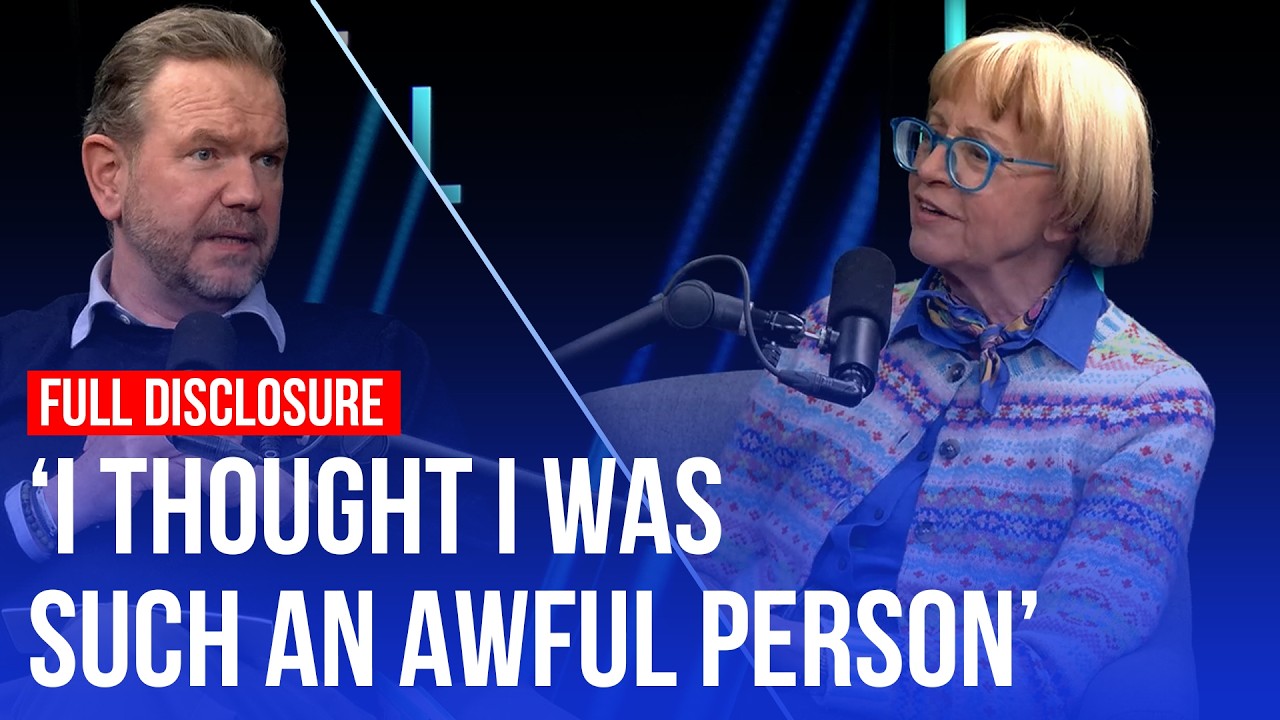
Before she became one of Britain’s most trusted psychotherapists and writers, Philippa Perry had already lived many different lives: boarding school child, dyslexic misfit, debt collector, McDonald’s manager, art student, Samaritan volunteer and late-blooming therapist. In this episode of Full Disclosure, James O’Brien sits down with Philippa to trace the winding path behind her public voice on relationships, parenting and emotional life- from a childhood shaped by emotional restraint, class anxiety and the sense of never quite being seen, to the books, ideas and experiences that helped her begin to understand herself. Philippa reflects on growing up in a materially comfortable but emotionally limited world, being sent away to boarding school, and the long-lasting effects of feeling misunderstood both at home and at school. She describes how reading, work and sheer curiosity opened up new ways of seeing people - and how her early jobs, from tracing debtors in Oxford to managing staff at McDonald’s, taught her as much about human nature as any formal training. They discuss class, confidence and social mobility; the hidden damage of criticism and the transformative power of kindness; why so many therapists are trying to make sense of their own lives; and how motherhood changed Philippa’s understanding of what a child needs in order to feel safe, known and loved. Funny, searching and deeply moving, this is a conversation about childhood, reinvention, emotional survival and the lifelong work of becoming yourself. Find out more about Shrink Solves Murder by Philippa Perry here https://www.penguin.co.uk/books/471239/shrink-solves-murder-by-perry-philippa/9781529155327 Full Disclosure is a Global Production Listen or watch every Friday on Global Player, YouTube or wherever you get your podcasts Listen to the full show on the all-new LBC App: https://app.af.lbc.co.uk/btnc/thenewlbcapp #PhilippaPerry #JamesOBrien #FullDisclosure #Psychotherapy #MentalHealth #ChildhoodTrauma #Therapy #Relationships #Parenting #EmotionalHealth #SelfWorth #BoardingSchool #SelfDiscovery #PersonalGrowth #Podcast #Interview #lbc LBC is the home of live debate around news and current affairs in the UK. Join in the conversation and listen at https://www.lbc.co.uk/ Sign up to LBC’s weekly newsletter here: https://l-bc.co/signup
Show More Show Less View Video Transcript
0:00
This is a Global Player original podcast
0:05
I was such an awful person that nobody would want to marry me. What do you mean by awful
0:10
I don't think they were interested in me as an individual. I could not wait to grow up. I felt like I was in prison
0:18
I had to break the ice on alcohol-based deodorant at my boarding school
0:24
because it was so bloody cold. Good Lord. When you put your incoate, miserable feelings into words, you can take ownership of the feelings
0:37
Hello, and welcome to Full Disclosure, a podcast project conceived entirely to let me spend more time with interesting people than I would ever get on the radio show
0:46
That's almost an understatement in your case. Philippa Perry, welcome. Hello. Polyglot? Or not polyglot, polymath, I'm thinking
0:54
Just a drifter, just a chancer, really. And most recently, a novelist, a crime fiction novelist
1:03
which we will work our way towards. But we will begin as we always do at the beginning
1:08
And I had to double check. I mean, not because of any sort of confusion necessarily
1:17
but elements of your childhood sounded as though you'd been born much earlier than 1957
1:23
Yes, I think they do. I agree with you. My parents were both very old, and their parents were very old
1:30
I'm practically Edwardian. Charles Dance was here not long ago, and he had a very old father who had fought in the Boer War
1:39
So we're not quite in that territory. No, Second World War, but they were very mature in the Second World War
1:44
And by Edwardian, we mean very much the sort of almost Victorian in seen and not heard
1:51
but also emotional regulation on a slightly terrifying level. Yes, I mean, there's only certain emotions that are allowed
2:00
and crying or being unhappy when not of the allowed type. Speaking of anachronisms
2:08
when I read that your mother's family owned a cotton mill. Several, I think
2:12
Several cotton mills, but presumably were nearing the end of their production life
2:17
by the time you came along. Very, very luckily, way before I came along, they got bought out by courtels
2:24
Right. Which was great because the cotton industry in the northwest of England did go down
2:30
So they got out in time and managed to salvage some money from it
2:36
So there's a sort of, I mean, I know that the family described themselves as upper middle class
2:42
If I've understood some of your story correctly, you sort of thought of yourself
2:46
particularly went to finishing school later the manufacturing middle class was a slightly different
2:52
I think my parents thought they were upper middle class because people didn't move about so
2:58
much so in their milieu of you know just outside Warrington they were quite posh
3:04
but all I had to do was go to Switzerland and meet some real aristocrats or
3:08
come down come down south and I find that oh no I'm not posh at all
3:15
So they both inherited then. So mum's family had sold the business and your dad inherited a civil engineering company and a farm
3:24
Yes. So a comfortable childhood then, materially speaking. Materially, very comfortable, yeah. But because of the war, I think, it was not, they were not spenders
3:36
Okay. They were savers and things like double cream was rationed. I mean, we didn't have rationing because I'm not that old
3:44
but um things like oh cream's very special we can only have that on sundays and um always mindful of
3:52
don't waste anything and i think that's a leftover from the wall my father used to collect string
3:57
that came off parcels and tie it up into into new balls so nothing was wasted you're always at pains
4:04
to balance the sort of i'll use the word privations that might be a little bit unfair there's the
4:09
sorts of emotional privations with the with the intent of your parents they weren't deliberately
4:14
doing anything no cruel or uncold no not at all they they did the best they could with what they
4:19
knew and what they had yes uh which meant that um we were somewhat um you know inhibited when it
4:29
came to maybe expressing ourselves or having uh opinions that differed from theirs right so i mean
4:36
you wouldn't argue with your parents really it was a bit of a waste of time yeah my sister would
4:42
argue right but I didn't bother because I'm the youngest so I saw where that got you like nowhere
4:47
so I so if my mother wanted to you know dress me up like a princess or something I'd just let her
4:53
buy the clothes but then I'd never wear them yeah oh okay so this is what you mean by being
4:59
not seen for who you were when you were a child? I don't think they were interested in me as an individual
5:09
I think it was just a matter of she is our daughter
5:14
And this would be quite normal. Yeah, absolutely normal. And I wouldn't know that it was not a good idea
5:21
to be like that as parents at the time. And when did you become aware of what other people's families were like
5:27
Families that were perhaps a bit cosy or a bit warmer? It was amazing when I went round to other people's houses and I saw that children were allowed to disagree with their parents and that was fine
5:39
And there was more warmth and laughter and more touching going on in other people's houses
5:45
More sort of cuddling, more physical, more hugs and things. So I've got austere is a word that's in my mind
5:51
I think that's not fair though. Is that not austere? No, I mean, they were very nice and sociable people, and they had a lot of people round them
6:00
And we were encouraged to drink alcohol. And, you know, it was good in some respects
6:10
So you can't berate people for not having a vocabulary that they just don't have
6:15
Exactly. Right. Yeah, that was very well put. So when did you become you
6:20
I mean, did you show things at school that you hadn't shown at home
6:24
School was absolutely horrible for me because we didn't diagnose dyslexia in those days, and I'm dyslexic
6:33
So I was just put in the remedial stream and told that I was lazy
6:41
Did that annoy your parents? Were they aspirational in that way? did they want you to? Well, I think they thought because I was a girl
6:47
it didn't really matter because I'd just marry someone. Yes. And I was sent to Switzerland and my mother thought
6:55
well, maybe you'll meet someone with a brother. And my father said, it'd be nice if you married someone
7:02
with a stately home so we could live in the lodge, they said at the end of the drive
7:07
I mean, I don't know if he was joking. He probably was. But only half
7:11
Only half joking, yeah. Yeah. And then they thought for a dyslexia, it's not a great idea
7:17
But then they thought secretarial college might be the answer. Right. Because then I work for someone and have a boss and then I marry my boss they thought And this would be an explicit conversation as the expectations of you were to make a good match Yes It another I mean slightly anachronistic
7:36
because you should really have been of a generation who were being primed to break through all of these barriers
7:41
and smash glass scenes. My contemporaries were. Yes. Like, there was people at my school
7:47
who were going to go to medical school, were going to become engineers
7:51
We're going to be, you know, write books or something. But when I went for the careers talk, they looked at my record and thought
8:02
maybe you do well in retail, maybe a job at Marks and Spencers
8:07
Did you know that you had dyslexia, even though you didn't have a name for it
8:12
Did you see other people's relationship with words and books? No, I didn't really
8:17
I just thought I was pretty slow at learning how to spell. So you would blame yourself for it
8:23
Yeah, I blame myself for it, yeah. And then, given what you've told us about your parents
8:29
you wouldn't be expected to perform well academically, so you sort of were able to just drift out of teacher's consciousness
8:37
Yeah, and I never really had any idea of what job or what career I would do at all
8:46
so I did this secretarial course and I couldn't spell so I'd go for a job as a secretary and I
8:53
wouldn't be able to keep it because you know we had no spell check in those days it was all just
8:58
sort of typewriter it's a bit of a bit of an obstacle yeah a bit of a sparkling career but
9:02
I went to uh one job at a firm of solicitors in Oxford and they said well you're a hopeless
9:11
typist but you're you're quite good at um seeing what the work is about so would you like to be a
9:19
solicitor's clerk and we've got these small debts that we'd like you to help us collect through the
9:24
county court and that was easy because they gave me a typist so I was okay then and I think it's
9:30
because I was quite jolly and I got on with everyone that they said oh we're not going to
9:35
sacker okay so they saw something that other people hadn't bothered to try to find
9:40
i keep trying to steer you back to childhood and you keep jumping yeah let's not stay there
9:50
no well i'm just what that's not a coincidence then that's not because i'm very conscious of
9:54
not trying to frame any questions that make me sound like an armistice psychotherapist
9:58
I could not wait to grow up. Right. That's what I wanted
10:02
I could not wait to grow up because I felt the shackles and I felt like I was in prison
10:09
And I'm not saying I had a bad time. No, I get that. But I just wanted to escape
10:14
So where did the idea come from or the knowledge come from that there was a world out there that you would have a relationship with that bore very little relationship to the world that you knew
10:24
Because even though I'm dyslexic, I can read and I read by word recognition rather than by phonetics
10:33
And I've read a lot. And so I think I lived in books and I realized there was another world out there
10:42
And even if it was Barbara Pinn's world, it was another world out there that I wanted to experience
10:50
And you would have a place in it. And I would have a place in it. And I felt like when I read things like Jane Austen, I learned about people's inner lives
11:00
And I recognized that I had an inner life and I could cling to this
11:04
And I used to write a lot. I used to write loads and loads of journals and diaries
11:09
And this sort of kept me company. But not as a substitute for real life, just as a holding tactic before you started living real life
11:18
Yes, that's right. I won't stay here for too long, but there's a couple of other things. No, there's a couple of other things I think are really interesting
11:24
And boarding school at 10, that's pretty brutal. It's very grim, yeah
11:28
But I had read Mallory Towers. That's a help. So I was looking forward to it, and it wasn't like Mallory Towers
11:35
I don't think anything was like Mallory Towers. No, it wasn't like St. Clair's either. Well, my school was a bit like If
11:40
So some fictional representations are actually accurate. I remember If. I can remember watching If
11:47
You went to Ampleforth, didn't you? I did, yes. You've done your research. So no, that was austere and fairly grim
11:53
But I suppose... I had to break the ice on alcohol-based deodorant
11:58
at my boarding school because it was so bloody cold. Good Lord
12:03
The dorms were unheated. But I don't... Again, I'm conscious of not sounding like an amateur psychotherapist
12:10
but it would be less traumatic for you because you hadn't been ripped from a warm, cuddly home or not
12:18
I think it might not have been a warm, cuddly home, but it was what I knew as home
12:22
And it was safe. And it was safer than the groups of girls
12:28
that you try and get into and can't and all of that. And then Switzerland
12:33
And then we'll arrive at when your life actually began. And Switzerland was weird. That sounds like a novel
12:37
I wasn't as posh as the other girls. No. So they were talking a different language to me
12:42
and I hadn't got a copy of that script. So I found that quite hard. So the answer to any question in the first 22, 23 years of your life was that you were being primed to find a husband
12:51
I did find one when I was 20, actually. Well done, ahead of schedule. But he didn't last
13:00
No. And you were probably conforming, were you, by just sort of thinking, well, this is what I'm supposed to do
13:07
I thought I was such an awful person that nobody would want to marry me
13:11
So I think the first person that showed any interest, I thought, well, this is my only chance
13:16
What do you mean by awful? Well, I didn't have that many friends
13:23
Right. And I didn't, I felt on the outskirts of my family
13:30
So if I'm trying to make sense of this, it's because I'm not very nice
13:34
It's your fault. Yes, it is. OK. You're a very good psychotherapist
13:38
And well, and then the final piece of the jigsaw is when you were asked, I think, by a family friend and then by your father, whether you were having a happy childhood
13:46
I read that twice because the question would normally be, did you have a happy childhood? But you were asked mid-childhood
13:53
Yeah, when I was about 12 or something, I was handing around the canopies at one of their parties
13:58
And, you know, a gentleman said, are you having a happy childhood
14:02
And I went, no, not particularly. It's not a question you're supposed to answer, honestly
14:06
It's like saying, how are you? Yeah, well, I didn't know that. No, I know you didn't
14:10
Didn't pick up the signals, I'm afraid. And then your father asked you the same question
14:13
You gave him the same answer. He overheard it. Right. And then I got a real big telling off
14:21
Of course you're having a happy childhood. How dare you? That's extraordinary
14:25
Well, you know, he went through hideous boarding school. Yeah. He must have had to desensitise himself to manage that
14:35
He went through the war. he went through rationing you know he was in Italy in the war and so my life must have
14:42
seemed idyllic to him and I mean a bit of subconscious envy probably as well that things
14:48
were so easy for you and compared to what I don't think he'd ever want to be a girl
14:52
no but just in terms of you know not having to go through a lot of the things that he had gone through Yeah I mean I find that fascinating that kind of stiff upper lip is the lazy way
15:05
Yeah. But it's also the accurate way of describing it. And I don't think stiff upper lip is all bad
15:12
I was just about to say that. It saves some people in some environments. It makes you keep it all together
15:18
I mean, when you hold your feelings prisoner, the danger is that they might riot and rebel
15:28
But on the other hand, sometimes they don't. And sometimes that does keep everything in a nice, neat package
15:35
It doesn't mean you're living life or feeling life to the full, but you're getting by and you're making jokes
15:42
and you're having some sort of life. You know, it might be better than falling apart
15:48
And of course, everybody's different. So some people, that might sound like repression, but for other people, they may only have three gears, three or four emotional gears
15:57
They don't have gear five that they're denying the existence of. They're perfectly happy in gear three and gear four
16:03
When did the first inklings of your fascination with things like that begin to appear
16:09
When did you feel like how? Well, I read a lot. And when you read a lot, you see life from other people's point of view, even if they are just fictional characters
16:19
and so I was very interested in the idea of inner life
16:24
and then as soon as I could I started reading Freud and books on psychology
16:32
Was this when you got to Middlesex or was this before? Oh, this would be before that
16:38
So just reading for fun? Yeah, just reading for fun. Yeah, yeah, for fun. When I came to London I discovered the St John's Wood Library
16:46
which has got a huge psychology section and I sort of worked my way through that
16:52
In search of what, Philippa? Just to find out. Just to find out how human beings work
16:59
Just to find out how I work. I don't think anyone becomes a psychotherapist
17:04
because they've had an easy time of it. We're interested in psychology
17:10
because we're trying to work out our own. The wounded healer, I think it's called
17:15
But is it also a search for forgiveness? Are you also looking to find grounds to forgive yourself
17:21
and understand that you weren't the reason why? No, that would be far too advanced for me
17:26
Subconsciously then. Why would you want to work all this stuff out
17:32
Because it's interesting. It's just grabbing my interest. Well, what grabbed my interest was that brief career
17:40
in sort of debt collection, it sounds about. Oh, yeah. I worked at the solicitors
17:46
And then because I was collecting small debts through the county. Don't just say that. What did you mean
17:50
Did you bang on their door in hobnail boots and things like that or put the frighteners on them
17:54
Well, I'll tell you what happened. I had to use someone to try and find missing debtors
18:01
And they were pretty useless. So I thought I'd be better at this. So I go round to people's houses and I go, is Tom in
18:09
Oh, he's moved. Where's he gone to? it's nan's of course he's nan's just remind me of nan's address go into full character yeah and
18:17
then i'd uh find tom at nan's or whatever and i'd go tom tom tom this uh this uh 49 pounds 50 you
18:27
owe the co-op what we're going to do about it and he said i could pay four pounds a week i said tom
18:33
you can't i know what your income is should we just have it at 50 50p a week and you know it
18:39
might go on for years but we won't go after you at court if this money keeps coming in and so I was
18:45
doing much better as a sort of debt collector than I would be if I was getting court judgments
18:51
and going through the county court and so I just thought well I can do this like an empathic
18:57
detective is what I'm hearing this is fantastic yeah I can do this without without working for
19:04
solicitors they can employ me I can be freelance and because I collected debts through the county
19:10
court I knew all the solicitors in Oxford and they knew me because you know all the junior
19:15
people who were doing this junior work would sort of hang about in the waiting room so I knew them
19:21
so it was easy to get work and so I set up what we call an inquiry agency which is mostly
19:27
tracing missing debtors a bit of marital work a lot of serving of court process right and
19:34
it was quite easy because it was before the internet so it wasn't complicated by you know
19:40
well I suppose a lot of things are a lot easier now there's the internet but I'm quite glad I did
19:47
it IRL and you sound confident now for the first time yeah because I've got my own business yeah
19:55
and you're good at it as well good at it I'm making money yes I've uh saved some money I've
20:02
got married in the meantime and we've managed to buy a house
20:07
with a mortgage just from because he came in with me in the business
20:12
I employed him and then we got married he was a graduate of University
20:18
College Oxford Well that's what your parents wanted when they encouraged you to go to secretarial school
20:25
They must be so happy So confident and competent then Yeah. Which is quite a big moment, I presume
20:34
Yeah. And this is we're talking in a way without being Pat. Life has begun
20:39
Finally. Sort of has begun, but I'm still very much conforming. OK. And I'm very much my father's daughter doing what he'd approve of
20:49
He really liked the Enterprise I was showing. And you liked that he liked it
20:53
Yeah. OK. Yeah, very much so. and because of the enterprise he wanted me to be a non-exec director on um the company firm the
21:04
building and separate engineering firm so i did that as well how did that make you feel because
21:08
that's almost well approved of by my father exactly but then i found that i really didn't
21:14
like the work but i sort of stuck it out for about 20 years being a non-exec director even
21:19
while you were doing lots of other things yes doing lots of other things i mean it wasn't full time sure but it but it didn't thrill me but did it bring you closer to him at all i i think it got
21:30
his approval yeah is that the same thing yeah his approval isn't him getting to know me is it
21:38
it's me conforming to him so i would get lost in that yes yes um why did you run out of
21:51
enthusiasm for the business what what what broke what changed when i'd been a inquiry agent for one
21:59
year that was very exciting when i'd been inquiry agent for two years that was like
22:03
the first year all over again so i didn't feel i was having two years of experience so much as
22:09
one year again and again because that you know it didn't get more exciting or anything
22:13
and I was still in Oxford and I sort of felt the pull to London I wanted to be in London
22:23
where it happens and I not ambitious you know I happen to have a job and I making money and that good but I not ambitious And I thought what would it be like you know to work for a new company
22:36
and, you know, meet new people and do new things? And so I got a job at McDonald's to work in London
22:44
How? Did you just apply? Yeah, I applied because I saw an advert
22:48
I saw an article about them in a Sunday paper magazine about this new company that didn't have knives and forks
22:59
You ate, because Wimpy had knives and forks, remember? This was a new company coming over from America, didn't have knives and forks
23:06
Go ahead, company. And I thought, well, they'll be looking for management material
23:12
And I went in on a trainee manager scheme. Did you sell the business in Oxford or did it just feed her out
23:19
So you had some money in the bank. No, I did really well. Did you? Yeah, because I used to share an office with this guy who sold car accessories
23:27
And this is before the internet. So he was selling them in the back of papers. And I got far more mail than he did
23:32
And he was saying, what are you doing? And I told him about the business. I told him how it worked
23:37
And I sold it for £7,000. Good Lord. Which is a lot of money
23:41
Yes. Yeah. And gives you a freedom as well. I'll jump ahead a bit now
23:45
When you were studying at university, you got quite frustrated with the lackadaisical approach of the young people and the lack of routine and getting up in the morning
23:54
So you liked getting... I've got a bit of a work ethic. So even with seven grand in the bank, you weren't going to go to Goa
24:00
No! Going to McDonald's for a year is better than going to Goa
24:06
And I'll tell you why. Because you meet people from all around the world that come and work in McDonald's
24:12
And they were all very interesting. And this is a terrible thing to say, but I hadn't met very many working class people before
24:21
Sure. And I learned something that shamed me, which was, oh, my God, they're intelligent
24:29
And I had assumed they weren't. And I was deeply ashamed of that assumption
24:36
And that assumption came from the way I'd been educated by my parents, I think
24:41
That we have what we have because we jolly well deserve it. and we work bloody hard and it's a meritocracy that we inhabit
24:47
and lo and behold we've come out near the top of it. Yeah, never mind what they each inherited, which we've touched on
24:53
Yes, the Americans say born on third base and think they've scored a triple
24:58
which I suppose you have to tell yourself, otherwise you might be broken by the injustice of it all
25:03
Or you might be humbled, which I don't think is any bad thing. Which is worse
25:07
Anyway, I was fully humbled and I think that did me a lot of good
25:11
So humbling aside, were you liking yourself more by now? Would you have stopped thinking of yourself as being awful
25:19
No, not yet. Really? Didn't really like myself yet. You were successful? I was working at McDonald's
25:25
But did you not feel? No, I was enjoying it. Because they made you a manager after. I enjoyed it a lot
25:29
Okay, so this was your real finishing school? Yeah. Not the actual Swiss finishing school, but Oxford Circus McDonald's
25:36
But Oxford Circus McDonald's was amazing. and it was a great year, but we were worked hard
25:46
Like sometimes I'd work nine days straight without a day off. Sometimes I'd be supervising the night cleaning
25:59
Really? So, I mean, covering all the bases, you went to Hamburger University
26:03
Yes, I did. I've got a degree in Hamburgerology. Thank you very much. Congratulations
26:07
actually that degree was not a bad degree no i mean it only took me two weeks to get okay you know
26:12
as far as qualifications go doesn't sound very impressive but actually they gave us the basics
26:17
of psychology they gave us they gave us how to how to motivate staff they gave us things like you
26:27
know if someone's doing well praise them if someone's playing up ignore them you know things
26:32
like that that I found really interesting and it was the first time I heard the phrase assume
26:38
ass of you and ass of me which you know being a wordy person I liked very much it is a nice word
26:45
play um what was the difference between you and the working class people that you met
26:52
Not as much as I thought. No. What I really liked about them is that they weren't so held in by societal rules and they seemed to be more themselves
27:12
They knew how to be themselves. Middle class people are told how to behave
27:18
very upper class people aren't and very working class people aren't and they've got more of a sort
27:26
of freedom and i picked up on that and i liked it a lot because middle class people are always
27:33
trying to fit a template that they're not entirely clear they're not very sure of their position
27:38
so they're a bit insecure so you have to hold your knife like this and uh and it's a polarity
27:46
isn't it? If you're at the top or the bottom, there's no confusion. Yeah, exactly. And there's
27:51
less security somehow in the middle. You can go up and down. Whereas if you're up or you're
27:57
down, you know where you are. I love the idea of some of the McDonald's stuff being psychological
28:02
fieldwork in disguise. Really? Well, what we had there, because I thought they were so bright
28:08
I sort of said, God, you're much cleverer than me. You should go to university. And some of them did
28:13
because I was quite encouraging. Were you becoming better at making friends
28:18
Yeah, I made friends much more easily there. For the first time, more than ever
28:22
Yeah, it felt a bit. I mean, I did have some good friends in Oxford
28:25
Sure. But I felt I was getting more. I was stopping being who I thought I ought to be
28:32
and I was becoming more of who I was. What a lovely thing
28:37
And so, of course, there was more of me then available to make friends with, wasn't there
28:42
Yes, of course there was. And you were liking what you found. Yeah, I was enjoying myself
28:47
Good. So ambition. I appreciate you didn't have any in a conventional sense
28:58
but did you ever have ideas of where you would want to be in 10 years
29:02
No. Not at all. No, not at all. Careering through life. But one thing I did learn at McDonald's was how computers worked
29:10
because they were just coming in. you know we sort of they use computers to sort of decide how much stock we needed all we had to do
29:17
is count how many cups we used then we knew how much coffee we used and i just love that all that
29:23
all that stuff and then price water house were looking for people to um they were computerizing
29:32
so they were looking for people with some experience in commute computers and i saw an advert
29:37
or I went through a recruitment thing. I can't remember what it was
29:42
And you're off again. I'm off again. And I was working in these refrigerated rooms
29:49
in Pricewaterhouse with these massive great computers that looked like huge old reel-to-reels. Gosh
29:55
And they were setting up word processing systems, and we We're all on floppy disks and you put the floppy disks onto a hard disk and I was, believe it or not, I was sort of IT backup
30:11
I don't believe it. I mean, I believe it because you're telling me and I've got no reason to doubt you
30:15
But I don't quite understand. There's a strong sense of propulsion through your 20s
30:20
You're like a shark. You're constantly moving forward, but with no ambition. No ambition. I read the manual. Makes things a lot easier
30:27
most people don't read the manuals so they could come to you and say i think i might have invented
30:32
the phrase have you tried turning it off and on again but i i imagine because it's becoming a
30:39
recurring theme already that you get bored i do get bored yeah and uh i'd been there oh god it
30:48
might i don't know if i managed a whole year but i'd been there quite a while and i asked for a day
30:52
off to move house and because I was uh I wasn't professional staff I was backup staff
31:00
and the um my boss was also sort of head of the typing pool sort of thing and uh she said
31:08
what sort of house are you moving to I said a terraced house in Leightonstone she said
31:13
terraced I know your sort you'll be semi-detached and you'll end up detached and I just thought
31:21
this is not the belief system I want to be part of
31:25
She meant it kindly. Yes, she did. She thought, you'll be detached
31:30
I thought, I don't want to be detached. Thank you very much. I still live in a terraced house
31:35
Sorry to disappoint you, Angela, whatever your name was. Yeah. Your mum spoke that language, I think, a bit more than you did
31:44
I think my mum was slightly posher than that. No, but she would have recognised the milestones of social advancement
31:51
Maybe, yeah. So I've never heard that metric. I mean, it's a well-established one, but I'd never thought of it
31:57
It sounds like a kinks lyric almost, doesn't it, that you aspire to being detached one day
32:01
Yeah, weird. And you knew you didn't. I knew I didn't. How did you know that
32:05
If you didn't have ambition... Oh, I was being a bit snobby then. Well, inverse snobbery
32:10
I was a bit inverse snobbery, yeah, sort of like... So you wanted a more bohemian lifestyle
32:15
It was not a value system I wanted to attach myself to. No
32:19
So what did you want to attach yourself to? Well, I got another job in just..
32:25
I got a job at Linklaters and Pains. And I got a temporary job to help organise the annual Christmas bash
32:38
to help the office manager with the extra work that we bring in. So this is an era where you could just open the Evening Standard or go to an agency
32:47
Go to Brook Street Bureau. And you think, oh, that sounds interesting. Yeah, it wasn't LinkedIn
32:52
Oh, go and do it. No, OK. Yeah, OK. And so I thought, yeah, I can organise a party
32:58
I can do that. And then the office manager had a heart attack
33:05
And so I took on the whole of organising this party. It was in the Dorchester
33:11
And, you know, I did a pretty good job. but after I'd sort of finished
33:18
after the party and I'd finished paying off all the invoices and everything
33:22
I thought nobody's here to sack me and they just got rid of the tea ladies
33:28
because they're having automatic coffee machines and stuff but the trolleys and stuff
33:33
were still there and I've got nothing to do so I pushed a trolley up and down and I gave people tea
33:38
and I chatted to people and then I pushed it into a partner's office
33:42
and he said hang on I thought we got rid of the tea ladies I went ah yeah and I confessed all
33:47
and he said do you want a job I said yeah that would be good
33:51
and he gave me a job as I think I was called a litigation clerk
33:57
and I had to do things like do all the admin and logistics for organising arbitrations in Geneva
34:04
and the dyslexia wasn't a problem here no because a spell check was coming in
34:11
Yeah, okay. And B, I was doing more admin than typing out of documents
34:17
So there's a thing here, and maybe it's another difference between you
34:22
and some of the people you encountered for the first time when you worked at McDonald's, in that you weren't daunted by any of this
34:30
What's that you say? I have to organize a party at the Dorchester for everybody. Yes, I can do that
34:34
So there's three Cs. There's competence, confidence, but also class. your background probably giving you an air that probably giving me the confidence yes yeah i think
34:45
so i can do this whereas some of the people you worked with in mcdonald's might have been equally
34:49
competent but not as confident because they were from a different class yeah because they weren't
34:54
brought up to be confident yeah so it gives you wings in a way doesn't it does yeah absolutely
34:59
yeah so how long before you got bored of being a paralegal well my auntie joan was very good
35:07
at the stock market and she made a killing on Glaxo shares and she gave all her nephews and
35:15
nieces £50,000. So that meant I'm not going to work anymore. So that meant I went to art school
35:23
Ah, so before we get to art school, you did kind of put the 80s in a semi embrace. I can
35:29
imagine that you had shoulder pads perhaps. Oh, superb shoulder pads. Yes, I would have hoped
35:35
Huge glasses. Marvellous. And brooches that look like streaks of lightning. And an American Express card
35:42
No, I never had an American Express card. Did you not? So your biographical details somewhere on the internet are false
35:48
It's probably AI. God, they say that to you. They said I had an American Express card
35:54
I've never had an American Express card in my life. There are worse things
35:58
Not even a company one. There are worse things the internet can say about you. I think Linklaters did give me a company card
36:05
That's probably where the confusion has come in. But it wasn't American Express
36:09
I think it was Nat West. Perish the thought. I don't know. Perish the thought. I don't think I could spend more than £20 on it either
36:14
It was petty cash. £7,000 from selling the business wasn't enough, but £50,000 was enough for you to actually stop
36:22
Work. Think. Stop working. Think. What would I really like to do in a world where anything is possible
36:28
I thought I'd go to art school. And had that been fermenting for a while
36:31
Had that been percolating in the back of your mind? or did you arrive at no i sort of like well i'm not bad at drawing you know maybe i could do this
36:40
i might meet some really interesting people i thought yes of course and when i got there
36:48
i just thought oh my god lawyers are so much more interesting than art students
36:52
this was fine art at middlesex university uh well i did two years at kingsway princeton on
36:58
a foundation course a btech course first okay and that's when i got really frustrated with uh
37:05
people not being disciplined about things like punctuality because they were all a few years
37:10
younger than you and the staff were really they'd be bloody late as well it'd drive me mad i just
37:17
felt do you know what my time sheet says you know nobody would keep me waiting like this
37:22
um yeah that was a bit of an education the longest shift you done then going from Kingsway to Middlesex Yeah I did five years at art school That the longest shift by far But I had to make a bit of money as well
37:37
And in the holidays, another friend of mine and me, she was doing fashion
37:45
So she designed these silk shirts. And we said, let's get them made up in China
37:51
Let's go to China. go and visit St. Patrick's, get these shirts made up
37:55
and then let's sell them in the back of colour supplements. And that's what we did
37:59
So again, anything is possible kind of attitude. Why not? Why can't we do that
38:04
She was a lot more let's do this than me. She was brilliant
38:08
And when we got to Beijing, she said, what are we going to do for nightlife? I said, I don't know
38:12
She said, and she contacted all the embassies and said we were two business people
38:18
and we were looking to make contacts. And we got invited to all these parties
38:23
It was amazing. She was incredible at getting a foot in the door like that
38:28
That was incredible. And are you now living the life that you always thought existed
38:31
but weren't quite sure how to access? No, because it never feels like that
38:35
No, I suppose it doesn't, does it? No. It's never game over, mission accomplished. And so that was a little bit of enterprise in amongst being at art school
38:45
And you found something at art school. I mean, you are an artist
38:49
I am an artist and I continue to make art and making art is an important part of my life
38:59
Well, when did it move from just being good at drawing to thinking that this is of existential importance to me
39:05
Well, probably about last week, I think. Don't, don't, don't. I mean, it took me a long time to take art seriously
39:12
Did it? Yeah. Why? It did. I don't know I think it might have been my my uh no nonsense uh there's more much than you know
39:22
because it's a bit like where there's more there's brass it's a bit like crying or showing your
39:26
emotions maybe a little bit I don't know but I I I enjoyed art but I found it hard to take seriously
39:33
um you know when it comes to crit and they they wanted me to say something pretentious about my
39:40
work I would just say I think it looks nice yeah I'd be sort of quite um um what's the word uh
39:49
awkward okay about taking on the the pretentious language of the art world
39:55
um and then I mean all this time I'm still going to the St. John's Wood Library
40:02
and I am psychology yeah I am fighting myself because it's beginning to feel like a vocation
40:08
Yeah, I'm fighting myself. I don't want to do this. It's too big. I can't do it
40:13
I don't want to do it. And then I just gave into it
40:20
Right. There was a psychology library at Middlesex, I think. Was there
40:24
I never went to that. You didn't? No, I was stuck in St John's Wood. Constantly
40:28
Yeah. Just pouring through the books. Yeah. And you began volunteering with the Samaritans as well
40:34
Yeah, I did. Associate. It's linked. Yeah, that was, I think what that was about was I told myself it was because, you know, I've had quite a good life
40:46
I've had quite a lot of luck. I want to put something back into society
40:50
I told myself all this shit. But actually, when I got there, I really discovered what it was about, which is I wanted to make sure or I wanted to find out whether it was safe to explore feelings
41:01
because of that stiff upper lip background I thought it wasn't safe to explore feelings
41:07
you know I didn't really trust that it was and what I found out there by listening to people
41:13
that not only was it safe it was beneficial it actually saved lives when you put your
41:18
inchoate miserable feelings into words you can take ownership of the feelings you can
41:25
you can control the feelings rather than have them control you because you've got words for
41:32
the feelings and I learned that through listening to people at the Samaritans and then then I really
41:39
did get the bug and I thought okay um I'm going to have some therapy right and so I had some
41:46
therapy and I think that's when I began to get to know myself really properly and that was aged
41:51
about 28 29 and there's a kindness to yourself involved in that there's for the first time
41:57
giving us or not i think that came a bit later i tell you where the kindness came from
42:04
and that was getting to know grayson because i think he was like the first boyfriend that had
42:11
been really kind to me whereas you know my first husband I think he felt like a good fit because he
42:23
was super critical of me and my parents would you know in in their well-meaning efforts to make me a
42:29
better person were always critical and so if someone was critical it sort of felt right
42:35
yes and so i colluded with that you know thinking i wasn't quite up to anything
42:43
whereas you know talking to you now i realized god i was quite an enterprising young person i
42:48
did a lot of good you know a lot of interesting things really and um grayson was you know funny
42:57
very bright was not fitting into any mould whatsoever coming from a very working class background
43:06
so he had that going for him for me did that put you off at all? No quite the reverse
43:10
quite the opposite can't wait to take him home that was interesting
43:15
and he was kind like I can remember once I spilt some coffee
43:22
and he just rushed and said oh let me help you whereas everybody in my life hitherto had gone oh you're so clumsy look what you've done now
43:33
and here was this person going let me help you and when someone else is kind to you
43:38
I think that is good modeling for me to be maybe a bit kinder to myself yes you need to be shown
43:44
the way almost yeah a little bit yeah and that changes I mean a lot of things about life for
43:50
anybody doesn't it when you discover yeah and I was I was having therapy at this time but I had
43:54
Pretty harsh therapist. Right. Of course I'd go for a harsh therapist
43:59
who didn't give any feedback and just went, uh-huh, a lot. It's a pattern, isn't it? Yeah
44:10
So you met Grayson, I think, at a creative writing evening course. That's right
44:14
That's right. So you're constantly trying to nourish this thing inside you that you're simultaneously suspicious of, this inner life
44:21
Yeah, writing. Or art or whatever it is, the creative impact. In a life, yeah. I suspect that Grayson is not somebody who seeks to quiet his creative impulse
44:30
No, not at all. So again, that's something else that is in spirit or shows you the way
44:35
Yeah, definitely. You realise pretty quickly, I think, that you wanted to settle down again
44:40
That you wanted to. You've said that you were coming up to 30 and realised you had to find a baby father
44:46
I knew I wanted to be a mother. Oh, OK. And you were
44:51
Yeah, I was. It was very good. And now with a daughter and A grown a very grown daughter Yes 34 I think she is No but she wasn then I thinking about you in the sort of period
45:09
where you move all of your chips onto psychotherapy now. Yeah, yeah
45:14
And did that feel like a completion? No. What did it feel like
45:18
A risk? A roll of the dice? Or just another adventure that would be over in two or three years
45:23
I didn't think it would be over in two, three, three, four. I thought I'd actually found a vocation, yeah
45:28
I thought I found something that I was good at and did enjoy and found satisfying
45:37
You don't look very happy with that answer. I am happy with that answer. My face does this when I'm trying to think of the question that I want to ask next
45:44
because it's about that when you make the move from – I mean, because I don't want to be simplistic
45:50
You have benefited from processes, therapeutic processes, relationship processes and intellectual processes because you've read all these books
45:59
Yeah. And then your daughter is born and you want to do everything differently with her from how it was done with you
46:06
Not everything. No, of course. Again, you're doing that balance thing and it's right that you do
46:09
Not everything. I thought to myself, I want to look at everything I've ever been told, lay it all out and only put back what I need and invent where there's a gap
46:27
That's lovely. And I felt what was really missing in my childhood was a good, open, good relationship where I could be fully myself
46:42
And so I wanted to provide her with a relationship where she could be her and I could discover who she was rather than trying to push her into a mold. Yes
46:52
and that experiment was so successful and along with the psychotherapy um
47:01
you know encouraging people to be who they are rather than who they think they ought to be
47:07
um made me write the book you wish your parents had read when i'd done a couple of decades of
47:15
therapy and my daughter was um becoming an adult i thought okay now i can write this book
47:22
one of the saddest things you've written about is the idea of a child your father's generation or
47:28
your father's mindset being that if a child is crying you can't comfort them because then they'll
47:33
cry more yeah you'll encourage them it's the saddest thing isn't it it's a circle yes which
47:39
never breaks i know it's absolutely heartbreaking yeah and and this i think is where the evangelical
47:46
element to your work comes from is that you know that this work can be good therefore you want to
47:50
spread the word and help other people get to the places that's it that is it yeah most satisfying
47:56
thing you've done do you think that book was the most difficult thing i've done because you know
48:02
how i don't like facing my own childhood particularly i noticed i had to really face it
48:08
yeah to write that book so i wrote that book in tears quite a lot of the time sure and you know
48:14
despite having you know three therapist three therapies and uh psychoysis you know it's
48:22
still hard to to face how i felt then but people listening to this who are still and i was until
48:30
about 10 years ago cynical suspicious skeptical about therapy and they're thinking well why would
48:36
i want to unpack all this why would i want to rip the plaster off that if i see like you acknowledged earlier some people for for whom the stiff upper lip or the survival personality
48:44
I'm doing perfectly well thank you what do you say to them
48:47
how do you say to them no you would benefit from this well I don't want to argue
48:52
with anyone who thinks they wouldn't benefit from it no I do
48:57
you do that then you do my work for me I don't mean that
49:01
sometimes I'm thinking of myself the most sceptical people are the people that probably would benefit
49:08
even more than others from it it's wonderful when you see that they do
49:12
I can only imagine that and then you're sort of now entering the period of your life
49:19
that people will be familiar with which is usually where we nudge towards
49:23
ending it, there are milestones here, you've mentioned the book you wish your parents had read, you did a couple
49:29
before that, you did the graphic novel I did a graphic novel, yeah which feeds a lot of your creative impulses
49:35
doesn't it? Yeah, yeah and writing and then how to stay sane
49:40
which I'm very proud of it's a neat little book that one
49:44
and people come to you now magazines, newspapers you're beginning again it's not like there's a moment where you suddenly think
49:52
oh I've been accepted as a member of this club actually it did happen quite fast
49:57
did it? when Couch Fiction was published reissued in 2020 with illustrations
50:05
by Flo Perry isn't that gorgeous? Yeah. When that was like a calling card, like the magazine psychologist came to me and offered me a column which I said yes to
50:20
And so that happened quite quickly that I got a career as a journalist then, which was I thought that was brilliant
50:28
Did you? Yeah, because I felt like it was easier than being a writer was easier than being a psychotherapist
50:37
And yet it did challenge me and make me grow and take every, you know, make everything
50:42
So I, I, I let the I, I wound down my practice and became a full time writer
50:48
So you're still reaching and helping people just from a slightly different angle. And, and reaching more of them at once
50:54
Yeah. Yeah. How do you measure it, though? because you can't watch, or can you actually
51:00
I suppose if you know you're doing good work with a client, it's very obvious and very clear
51:05
I presume you get fan mail of sorts. You get people saying, God, thank you for that call
51:09
I get so many emails and messages about the book you wish your parents had read
51:14
and how it's really helped people as parents or as people trying to make relationships with people
51:22
Because I had to sort of work out how to make relationships with people
51:26
I wasn't that great at it, you know, in my early life. And so it's so important to when you're making that most important relationship
51:36
the relationship you have with your child to be fully available for that relationship
51:43
And I think talking about that and telling people how to do it has helped a lot of families
51:48
And I'm very proud of that. When I was a kid, I mean, a bit older, sort of 15, 16
51:54
I always thought it was hilarious, for want of a better word, that my most troubled friends were often the children of therapists or psychotherapists
52:04
And I used to think, well, that proves it's a load of old rubbish. Whereas, in fact, the parents, I look back now and realize I'd probably tried to become psychotherapists in order to understand
52:13
And their children. So it's a real chicken and egg situation. It's like you don't become a therapist because you've got a great mental health to start with
52:22
an entirely natural progression to writing an agony aunt column feels like a bit of a of an under statement but you can call it um you know a vice column if you like if to make it a bit more grown up standing but
52:37
I I worked for Psychologies Magazine and then I worked for Red Magazine for quite a few years
52:45
being their agony aunt which was uh very enjoyable and then the observer asked me to be an agony aunt
52:55
for their magazine and i did that for five years and when i got that job i said oh my god this is
53:02
the best job i've ever had and i said to the editor how long can i have this job she said
53:06
oh about 20 years i said oh that's good i'm enjoying it so that's really good and then when
53:13
the Observer got bought by Tortoise Media I found that I was
53:19
not a good fit with Tortoise Media no I did not want to work
53:23
with them for them and so I started a Substack Philippa Perry at Substack.com
53:32
and I continue the work there and to my absolute delight it's been a success
53:40
the Substack and I mean As in professional success, but also as in professional success
53:47
So not just the replacement of income, I suppose, but also you're reaching people
53:53
Yeah. You're reaching people in ways that perhaps you hadn't reached before. This is Ask Philippa
53:57
You know, it's so easy now to reproduce a whole email that someone sent to me that's really interesting with lots of nuance in it
54:06
Whereas before I had to squash it into 200 words. So how many do you do
54:11
What do you do, one a week? I definitely do one a week
54:15
and sometimes I do three a week because something will arrive and you'll
54:18
think I really want to or I've got extra time or an extra day or an extra afternoon
54:22
I know I've been the millionth person to ask you this but I really want to know the answer
54:27
how do you pick them? I like the ones that I don't immediately
54:33
know the answer for because sometimes I read them I go oh yeah
54:36
this is obvious and I can dash up an answer to them
54:41
and they get that but I'm not going to publish it because anyone would have told them that it's not
54:46
new but if there's something like oh my goodness I'm really stuck here I want to think about this
54:51
for a couple of days those are the ones I tend to publish and and do you does it all happen on
54:57
the substack or do you sometimes reply to people privately I reply to people privately I knew that
55:02
because you replied to one of my friends oh right yeah I do reply to people privately
55:06
magnificent thing that you did for them oh thank you good i'm really pleased to hear that
55:11
um and so this is now going to be 20 years hopefully or at least foreseeable future
55:19
uh yeah i really enjoy it and i really enjoy creating things and making things up which
55:27
brings us perfectly as if it was planned as if it was planned to the latest project which takes
55:32
me back first actually um to the to the to the inquiry agent years of philipa perry's life
55:38
although you weren't philipa perry back then so shrink solves murder is your debut as a as a crime
55:43
fiction writer but of course the training for it is as much the psychotherapy as it was um being an
55:50
undercover pretending to be doris from number 47 yeah inquiry agent in oxford that's right i love
55:57
Where does this come from? Where did this little seed start sprouting
56:02
Well, full disclosure, that's the name of your podcast. When The Guardian started thinking about selling off The Observer or giving The Observer away
56:16
I thought, bloody hell, where am I going to get my pocket money from? So I thought, I could write a book, but I don't want to write another non-fiction book
56:24
And I've always wanted to write a novel. I have always read novels
56:35
And you know, when you're in a group of people and they're all talking and you haven't spoken yet
56:40
you feel you're on the outside of the group and you want to bring yourself in
56:44
You want to belong. So you put your hand up and you say your piece and then you feel like, oh, yeah, I'm part of it now
56:51
I felt like that. I wanted to join the gang of EF Benson
56:56
I wanted to, you know, join the Richard Osman crowd. I wanted to I wanted to join in
57:05
I wanted to say, I want to go. I can do this. I've read enough novels
57:10
I should be able to construct one now. And I learned that Agatha Christie starts with the ending and works back
57:17
I thought, well, if she does it like that, I'll try it like that. And that's what I did
57:22
Is it a different, I mean, it's obviously a different discipline from writing nonfiction
57:26
but is it a different writing process? Is your relationship with your desk or your computer different
57:31
Or is it the same sort of, got to get this? It's a bit more lackadaisical. Yeah, okay
57:35
It's a bit less sort of, you don't have to do any research
57:41
I know. You don't have to get your facts right. It's a novel. You can make stuff up
57:47
So you can get the name of a river wrong. It's fine. And are you Patricia Phillips
57:51
well of course when you write a novel part of your personality is bound to leak
57:58
into your characters she's a lot ruder than I am she's probably as rude as I would like to be
58:04
so it is a psychotherapist investigating the mysterious death of a client, her three o'clock appointment
58:11
that's absolutely right and I sense you've loved writing I liked it
58:16
very much I wanted it to be a comic novel and I hope it is funny
58:24
And also, I wanted, what's the word? It begins with P. Everything begins with P, doesn't it
58:31
Patricia Phillips, Philippa Perry. Poignancy. Poignancy. I wanted poignancy. Yeah, I wanted feeling in it as well. Okay
58:40
You know, because if everything's just light, then I think you need dark and shade
58:47
It floats away. You know, I did have, you know, some very sad people in there that Pat helped as well
58:55
And this isn't going to be the only one, I don't think
58:59
No, I don't think so. Nice. So it's another avenue has opened up for you
59:03
Yeah. I do like bringing the changes. I'm realising that in this podcast
59:08
But underpinned now by a vein of consistency with both art and with psychotherapy
59:16
albeit in a slightly different medium from how you started. So those are constants. This might be a constant as well
59:21
You're going to end up on three different rails and hopping gaily from one to the other as the mood takes you
59:27
Makes life a bit more interesting, doesn't it? Sounds delightful. Sounds absolutely delightful
59:31
And still no actual ambition. Still no formalised. What I like doing is something that I'm enjoying in the here and now
59:38
So I go to art school. When I went to art school, I went with the ambition of enjoying myself then
59:44
I didn't go, I'm going to art school and then becoming a great artist. And then I want to write a book because I want to actually write it
59:52
You know, I want to immerse myself in characters that I want to hang out with and spend time with and make myself laugh
59:59
And so it's. It's always in the doing rather than in how it ends up
1:00:03
I understand. And you're still doing the art as well. I am, yeah
1:00:07
There's so many different plates spinning all the time. What would 12-year-old Philippa, who was not enjoying her childhood, make of where she's gone
1:00:17
I think 17-year-old Philippa would be very impressed with me
1:00:27
because I used to look at agony arts and things. I think I want to be one of those
1:00:33
I want to do that. And so I think she'd be very impressed with me
1:00:38
12-year-old Philippa, I'm not sure I'm in contact with her so much. I think what needs to happen to her
1:00:45
is that somebody needs to hold her and soothe her because she is very unhappy
1:00:49
She's having to spend most of her time at boarding school. She hasn't got any friends when she's not at boarding school
1:00:56
because they live in the middle of the countryside. And, you know, she used to climb trees
1:01:03
and look at the M6 motorway that went near our house and thought, I can't wait to get on that motorway and go south
1:01:10
That's all she thought. She'd be very pleased that I managed to get south and I'm here
1:01:15
And the rest. Shrink Souls Murder by Philippa Perry is out now
1:01:20
Philippa Perry, thank you. Thank you so much for having me, James, and being my therapist for the afternoon. Hardly
#news