Up next in 10



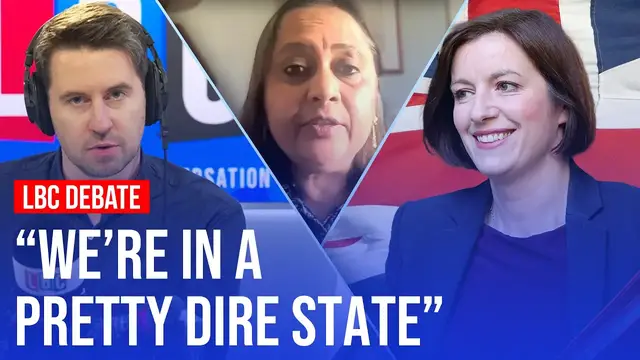
Ben Kentish is joined by Dr Pragya Agarwal and Professor Eric Kaufmann to debate whether racism and sexism have been normalised in Britain
Equalities minister Bridget Phillipson said she was 'increasingly worried' about how commonplace misogyny and racism had become, fuelled by online interactions and statements by politicians she said would not have been acceptable a few years ago.
Listen to the full show on the all-new LBC App: https://app.af.lbc.co.uk/btnc/thenewlbcapp
#benkentish #ukpolitics #debate #uknews #LBC
LBC is the home of live debate around news and current affairs in the UK.
Join in the conversation and listen at https://www.lbc.co.uk/
Sign up to LBC's weekly newsletter here: https://l-bc.co/signup
Show More Show Less View Video Transcript
0:00
Sexism and racism, they're too prevalent, they're too common, they're too widespread
0:05
Have they really been normalized though in Britain? Good morning. So yeah, listening to these comments, I would say that racism and sexism have always existed
0:16
as you've said before, but they've always kind of bubbled under the surface
0:20
But I do think that in the last few years, the political rhetoric, the mainstream media
0:25
the social media all have contributed to them becoming normalized in the way that it's now
0:31
becoming acceptable for people to hold these views and to have overtly sexist and racist
0:38
views and make these statements in public without some people batting an eyelid. Yes
0:45
people would bat an eyelid. Yes, it's still considered prejudicial. But research is showing
0:50
that these views have gone up in the last few years. And I myself have noted how these have become more acceptable
0:58
and more prevalent since perhaps Brexit. But the anti-migrant rhetoric, which is now pretty much all the time
1:08
in newspapers and in political rhetoric, has really contributed to this. Research also showed recently that teenagers in particular
1:17
are being shown racist views. And 95% of young people under the age of 19
1:24
have seen these on social media almost every day. So migrant, anti-migrant sentiment
1:31
which in and of itself might not be racist, is kind of acting as a gateway drug
1:36
almost as it were, Pragya, and kind of turning people against people of colour in general
1:40
Is that what you're seeing? Yeah, I think because anti-migrant rhetoric is kind of homogenising people
1:46
everybody into a group, stereotyping them that certain people, people of colour, people of certain
1:53
minoritised communities are coming in and taking everybody's jobs away or whatever the rhetoric is
2:00
and they not welcome here So everybody who is seen or perceived as such is being associated with these stereotypes Even if it become more common and widespread which obviously should be a cause for concern in and of itself is it not still a bit of a leap for Bridget Philipson to take that
2:18
and say it's been normalised? Because, correct me if I'm wrong, but normalised to me suggests that there wouldn't really be a backlash
2:26
or any negative reaction if somebody came out and said something clearly racist or clearly sexist
2:31
And I just, I don't feel instinctively that it's that bad yet
2:35
I think being normalized means that people are feeling comfortable saying these things openly
2:40
which they might have kept to themselves in the past. Now they feel like they have a right because they see people, political leaders, media
2:48
not reacting against such views. They are supporting them. They see that they have a lot more support than before
2:56
And I guess even if a lot of people, maybe a majority of people
3:00
would still be opposed to them and would still say so, if you get more support, if even a kind of larger minority of people would echo and endorse what
3:08
you have to say that is sexist or racist, then maybe you feel emboldened to say it
3:12
even if the majority would still disagree. I think it is that emboldened. It is
3:17
emboldened to say these views, to voice them publicly, to feel that it's acceptable to say
3:23
these things. And research is supporting that. Research is showing that racism and sexism is
3:29
prevalent in the NHS. There's a recent NHS report that's shown this. It's showing it in social media
3:34
Algorithms are pushing such views as well. And the mainstream media and political rhetoric is
3:39
also pushing these views. Just lastly, would you say we are still in a far better place on both race
3:44
and sexism than we were in the 1980s, for example? I think it is difficult to compare these situations
3:54
but I think we are in a pretty dire state at the moment, I would say, at the moment. And we need
3:58
to take some quick action to turn back some of these normalized behaviors
4:04
Thank you for coming on the program. Dr. Pragya Agarwal is founder of Research Think Tank
4:08
the 50% Project, and visiting professor of social inequities and injustice at Loughborough University
4:14
Listening to that was Eric Kaufman professor of politics at the University of Buckingham and author of the book Taboo How Making Race Sacred Produced a Cultural Revolution Professor thanks for coming on the programme What did you make of what Pragir was saying there that it become so common that people now feel completely emboldened
4:31
to say racist and sexist things without really fearing there's going to be any consequence at all
4:36
I just don't think there's any hard, generalisable evidence behind those kinds of claims
4:41
It's worth saying that a lot of the research that's being done
4:45
on these questions is qualitative. It's based on small samples and anecdotes
4:50
And the kind of researchers who go into these fields represent the extreme left of public
4:55
opinion. And I just think we should be a bit more, we should sort of take this with a grain of salt
5:01
If we look at sort of attitude survey data in Britain, for example, the proportion of Brits
5:07
who say that they wouldn't want their child to marry somebody of a different race is at a historic
5:13
low. It's just around 10%. It's been falling pretty steadily. Fine, but that's still one in
5:19
10 people. Sure. I mean, we would like it to be zero. I mean, we can't compare our society to
5:26
cosmic perfection. I think we can compare ourselves to other times and places. That's legitimate
5:32
I mean, it's not to say racism has completely disappeared. That would be ridiculous. It never
5:36
will. Similarly with sexism. Again, I think these comments from the minister are deeply illiterate
5:43
and irresponsible. Again, the attitudes have been moving in a tolerant direction. And the idea that
5:49
there is nothing problematic about creating moral panic around racism and sexism is wrong. You can
5:56
actually do a lot more damage by overstating the false positives here. So, for example
6:02
young women are much more negative about young men than young men are about young women
6:07
Is that going to help young women? I mean, this is just a question. Likewise, we have
6:11
experimental evidence if you tell black people that their society is racist and everything's
6:16
stacked against them they believe they are less likely to believe you don't they will make their
6:22
own opinions and judgments based on racism based on what they encounter will they not they're not
6:27
going to differ about the scale of racism simply because you or i or bridget phillipson tells them a certain view they will have lived experiences and personal experiences of whether or not they think this country has a problem with
6:39
normalized racism I think that's only part of what goes into making an opinion I think that
6:46
perceptions matter a lot for example I mean I'll give you an example if we take the case of there
6:55
was a view that there was an increase in racial hate crime after the Brexit vote
7:00
If you take British Sikhs who voted remain and British Sikhs who voted leave, there was
7:03
a massive difference in their reported personal experience of racial hate. That doesn't really make a lot of sense
7:11
Like, can people look at a Sikh person and say, you were a Brexiteer, I'm not going to
7:15
direct hate at you. So I do think perception actually is extremely important because something can be interpreted
7:21
in many ways. someone says they want immigration reduced, you can interpret that as they don't like black people or brown people
7:27
No, nobody in their right mind would infer that as racist. I think what Pragya was saying is this kind of growing anti-migrant narrative
7:36
which isn't racist in and of itself, but can stray into it at times and in some ways
7:41
Would you disagree with that? There are obviously elements of people who will do that
7:47
Part of what's going on, of course, is that social media simply exposes people
7:51
whose views would have been under the surface. They can cluster. Twitter is not real life
7:56
I mean, this panic over what's being said on Twitter, I think is, you know, this is not reflective of society as a whole
8:02
It's not real life, but it is real people. And I just wonder if there is a sort of distinction between online
8:07
where I see all sorts of misogyny and all sorts of racism, homophobia and feminism all the time
8:13
It does feel to me like it's become normalized online, even if not offline
8:17
And I wonder whether that is a sort of important distinction. I think it's one thing for people to have their free speech online in Elon Musk's Twitter and to group together and make a noise
8:27
It's quite another to say that in society as a whole, it's been normal
8:31
As you say, I mean, people aren't you can't just say a racist joke and everybody's going to say, oh, well, just simply not in tune with reality
8:38
And my worry is that this is actually leading minorities and women to think things are a lot worse than they are, which doesn't help them
news