0:03
In 2008, the state bank known as VBRF
0:07
provided major financing to build a chip
0:09
factory in Zelengrad.
0:11
The factory was planned to produce
0:13
semiconductors at roughly the 130
0:16
nanometer process node. Angstrem the
0:20
borrower failed to establish a working
0:22
production system for the plant. As a
0:25
result, the loan grew with interest and
0:27
penalties reaching about€ 1.2 to€ 1.3
0:33
The company declared bankruptcy and the
0:35
bank acquired the physical assets to
0:38
cover the claim. The court approved this
0:42
The headline one ruble purchase debt
0:45
erased sounds dramatic. But to know if
0:47
this was a disaster, a smart decision,
0:50
or something else, we need to look at
0:52
the original plan. What actually
0:54
happened? where the equipment came from
0:56
and how other countries handle similar
1:00
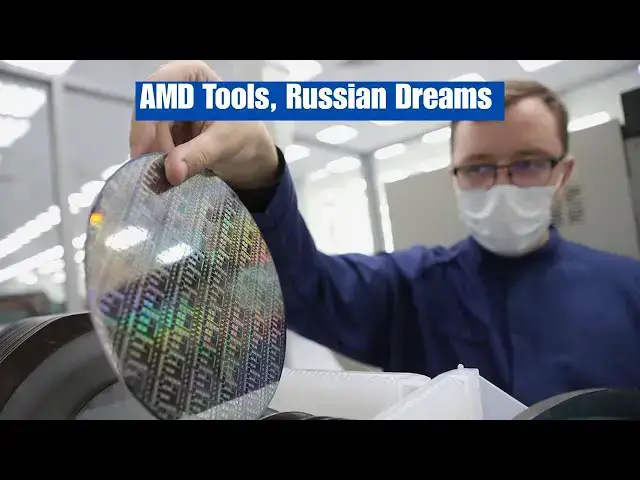
A semiconductor factory, often called a
1:03
fab, is very different from the typical
1:05
factory most people imagine. A fab is
1:09
made up of process engineers, clean
1:11
rooms, chemical supply lines, and highly
1:13
precise machines that turn silicon
1:15
wafers into microchips.
1:18
Two concepts matter most for
1:21
First is the process node which shows
1:24
the smallest features the factory can
1:26
produce such as 130 nanome, 65 nanm, 28
1:30
nanome or even singledigit nanome today.
1:34
Second is yield which is the number of
1:37
usable chips that can be taken from a
1:39
wafer after manufacturing.
1:42
Fabs are not efficient right away. They
1:45
need years of process improvements,
1:47
strong ties with equipment and material
1:49
suppliers, and constant investment to
1:52
buy newer machines as the industry
1:54
shifts to finer nodes. Building or
1:57
reviving a fab is not just about putting
1:59
up walls and switching on equipment. It
2:02
requires creating an ecosystem and going
2:05
through a long learning curve. That is
2:08
why governments often step in since
2:10
private investors see the risk and time
2:12
involved as too great or too uncertain.
2:16
The origin of Angstrom T's equipment is
2:19
a key part of the story. It shows how
2:21
the project tried to speed up
2:23
development by buying secondhand
2:25
machines and also how supply problems
2:27
and delays hurt the plan. Reports say
2:31
Angstrom T bought 130 nanometer
2:33
equipment originally used in an AMD
2:36
plant in Dresden. Much of this gear was
2:38
stored in western warehouses for years,
2:41
making installation and setup difficult
2:44
later. By the time critical lithography
2:47
tools arrived in Russia, the global
2:49
market had already moved ahead.
2:52
Some machines had sat idle for so long
2:54
that they were outdated or hard to use.
2:57
This delay was a major factor in the
2:59
company's failure. The simple line, they
3:02
purchased machines, hides a more complex
3:05
truth. Buying used tools can save money,
3:08
but it requires strong in-house
3:10
engineering, a reliable supply chain,
3:12
and fast integration.
3:14
Long storage and delays reduce the value
3:19
Politics and sanctions also played a big
3:21
role. After 2018, Western restrictions
3:25
made it harder for Angstrom T, maintain
3:28
or upgrade Westernmade machines and
3:32
The bank saw rising risks, and the
3:34
factory never earned enough to service
3:36
its loans. At one stage, the company was
3:40
only able to work at about 250 nanome
3:43
instead of the promised 130 nm. the
3:47
state bank became the main creditor and
3:49
then after bankruptcy the owner. The
3:53
court ruling shows the policy choice to
3:55
keep these assets under national control
3:57
instead of letting them be sold off or
4:01
This meant writing off a very large
4:05
What does this mean for Russia's micro
4:07
electronic strategy? On one side, the
4:10
state has kept the site and hardware
4:12
safe and blocked foreign buyers from
4:14
taking them. Older nodes like 130
4:18
nanometers still have uses in defense
4:20
and industrial systems. So this is not
4:23
pointless. On the other side, the case
4:26
shows a bigger weakness. A strong
4:28
semiconductor industry needs constant
4:31
improvements, skilled engineers,
4:33
supplier networks, and clear long-term
4:35
plans. Owning old machines without that
4:38
culture and system is not the same as
4:41
running a true foundry that can grow
4:45
The one ruble deal may buy time and
4:47
sovereignty, but the real challenge is
4:49
building capabilities, training talent,
4:52
and improving yields.
4:54
That takes money, patience, and years of
4:58
It helps to compare Russia with two
5:00
other state-led strategies.
5:03
China took a top-down approach, heavily
5:05
funding domestic champions such as SK
5:08
and many suppliers. It tied industrial
5:11
policy with finance and procurement,
5:13
creating a market for its fabs while
5:15
they learned and scaled up. The cost was
5:19
huge and China still struggles at the
5:21
cutting edge where only a few global
5:23
players control key tools and patents.
5:27
But China now has a solid base across
5:29
many process nodes. India took another
5:32
path. Instead of directly building
5:35
state-owned fabs, it focused on
5:37
incentives under the India semiconductor
5:40
mission. The goal is to attract private
5:43
fabs, design houses, and packaging
5:45
plants by using public funds to bring in
5:48
private money. India relies on its
5:50
strengths in design talent and services,
5:53
building an ecosystem stepby step. Both
5:56
models teach the same lesson. Government
5:59
money is needed, but it is not enough
6:03
For Russia, the next stage must go
6:05
beyond moving assets around on paper. If
6:08
the Angstrom site is to become
6:10
productive, there must be clear goals
6:12
about which process nodes to target,
6:14
technical leaders to guide progress,
6:17
partnerships for upgrades and service,
6:19
and efforts to grow local suppliers and
6:23
The state's ownership solves the
6:25
immediate financial pressure, but it
6:27
does not create the innovations that
6:29
improve yields or allow modern
6:32
production. The one ruble deal ends one
6:35
chapter, but begins another. The real
6:38
test is whether Russia can turn saved
6:40
hardware into a patient, long-term
6:45
For non-speists, the lessons are simple.
6:48
Buying machines is only the first step
6:50
in chipm which is one of the hardest
6:53
industries in the world. Angstre failed
6:56
because it depended on secondhand gear
6:58
from AMD's old dresn fab long delays and
7:01
later western sanctions. The state's
7:04
choice to take over the site and cancel
7:06
the debt protects sovereignty but it
7:09
does not guarantee technology progress.
7:13
China and India show that there are
7:15
different ways to build a national chip
7:17
industry, but both require careful
7:19
planning, patience, and a focus on
7:22
long-term strengths. The Russian court
7:24
case is not just about money. It is a
7:28
signal of policy. Russia wants to keep
7:31
control of its micro electronics future.
7:34
Whether that leads to a strong
7:36
worldclass industry depends on what
7:38
choices are made today.
7:42
If you like this video, please like,
7:46
Also, please take our channel membership
7:49
which is very affordable to encourage