Up next in 10

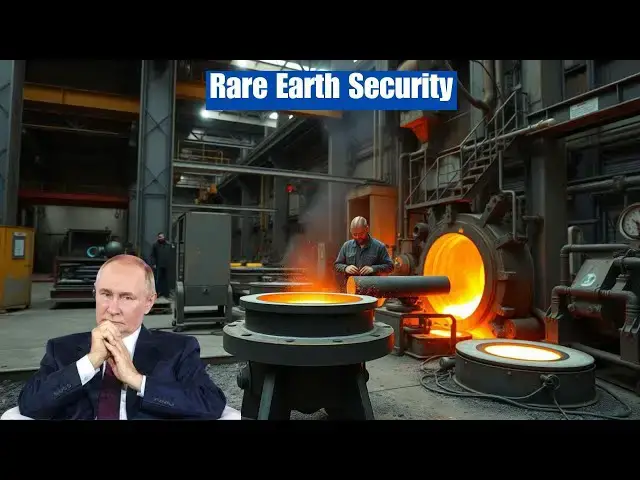
Russia's Massive Push for Own Rare-Earth Magnet Industry | China | BRICS | Eurasia
Sep 28, 2025

In September 2025, Russia signed a major rare-earth metals agreement between the Solikamsk Magnesium Plant (SMZ) and the Ulan-Ude Instrument-Building Association (U-UPPO), a subsidiary of Rostec’s KRET concern. Backed by Rosatom Nedra, this strategic pact focuses on neodymium (Nd) and praseodymium (Pr) — two essential metals used in high-performance permanent magnets that power everything from fighter jets and missiles to electric vehicles and wind turbines.
Why does this matter?
For decades, China has dominated more than 80% of the global rare-earth market, controlling extraction, refining, and magnet production. Nations like the U.S., Japan, and the EU have struggled to reduce dependence on Chinese supply chains. Russia, despite having vast reserves in Siberia, the Urals, and Yakutia, has relied heavily on imports — especially from China — for its aerospace, defense, and energy industries.
This new SMZ–U-UPPO partnership is designed to change that. With plans to produce around 2,500 tons of rare-earth materials annually, Russia aims to build a self-sufficient supply chain:
Mining and refining rare-earths domestically
Developing advanced magnets for defense and civilian tech
Securing strategic independence from imports
The implications are massive:
Defense: Magnets for avionics, radars, drones, and missile guidance.
Aerospace: Critical components for Su-57 fighters, MiG-35s, and helicopters.
Energy: Wind turbines, EV motors, and high-efficiency generators.
Show More Show Less View Video Transcript
0:03
In September 2025, an agreement was
0:06
signed in Russia between the Solicamsk
0:08
magnesium plant and the Yulan Uday
0:11
Instrument Building Production
0:13
Association, which is a subsidiary of
0:15
the Cret concern under Rosstec.
0:18
Vladimir Verovsev, director general of
0:20
Rosatom Nedra, the managing company for
0:22
Rosatam's mining division, and Vladimir
0:25
Lucnikov, director general of the Yulan
0:27
Uday Association, both endorsed the
0:30
official document of strategic
0:32
partnership.
0:33
The collaboration is focused on the
0:35
advancement of domestic production of
0:37
rare earth metals of the magnetic group
0:40
with a particular emphasis on neodymium
0:42
and praodmium, which are essential
0:45
components of modern permanent magnets.
0:48
This initiative is not merely a
0:50
commercial contract.
0:52
It is an important step in Russia's
0:54
effort to establish a technologically
0:56
advanced and self-sufficient supply
0:58
chain in rare earths, thereby overcoming
1:01
dependence on international markets
1:03
dominated by China. Let us first
1:06
evaluate the Russian context for rare
1:08
earth metals and their strategic
1:10
importance.
1:12
Despite their name, rare earth metals
1:14
are actually quite common. However,
1:17
their extraction is technologically
1:20
complex and their refining requires
1:22
sophisticated chemical engineering. The
1:25
magnetic group which is mainly composed
1:27
of neodymium, praodmium, dprosium and
1:30
turbium is of major importance for
1:32
modern high-tech industries. Neodymium
1:35
iron boron magnets which are permanent
1:38
magnets made from neodymium iron and
1:40
boron alloys are widely used in electric
1:42
motors for electric vehicles, renewable
1:45
energy systems like wind turbines,
1:47
precision electronics, aviation, defense
1:50
avionics and guidance systems.
1:53
China controls more than 80% of the
1:55
global market for rare earth extraction,
1:58
refining and magnet production.
2:01
This dominance is a significant
2:03
vulnerability for global supply chains
2:05
and exposes other countries to
2:07
geopolitical risks. The United States,
2:10
Japan, and the European Union have
2:13
attempted to diversify their sources in
2:15
recent years.
2:17
However, the complexity of managing
2:19
environmental costs and scaling up
2:21
production continues to present
2:23
obstacles.
2:25
The challenge for Russia, which has
2:27
large reserves of rare earth minerals in
2:29
Siberia, the eurals, and the far east,
2:32
has been more about industrial
2:33
organization than resource availability.
2:37
To date, Russia has depended on imports,
2:39
including from China to supply its
2:41
high-tech industries with neodymium and
2:44
praodmium.
2:45
The Solicamps magnesium plant and Ulan
2:48
Udi agreement is designed to close this
2:50
gap by establishing a domestic supply
2:52
chain covering mining, processing and
2:55
supplying rare earths for advanced
2:57
military and civilian technologies.
3:00
The Solicamsk magnesium plant located in
3:03
Perm Cry has historically been one of
3:06
Russia's most significant chemical
3:08
metallergy manufacturers.
3:10
For more than 60 years, it has
3:12
specialized in magnesium, rare earth
3:14
compounds, and associated chemical
3:17
products.
3:18
The plant has recently been integrated
3:20
into Rosatam's mineral resources
3:23
division.
3:24
This reflects the state corporation's
3:26
intention to consolidate rare earth
3:28
metals within its industrial ecosystem,
3:31
which is built around nuclear
3:33
technology.
3:34
The strategy is logical as nuclear
3:37
energy and defense require strategic and
3:39
consistent access to advanced materials
3:42
such as high purity metals for magnets,
3:44
catalysts, and alloys.
3:47
According to Russian press reports, the
3:49
new Solic magnesium plant facility will
3:52
be capable of producing about 2,500 tons
3:55
of rare earth materials each year once
3:58
operational.
3:59
This is enough to meet most of the
4:01
domestic demand for permanent magnets
4:03
and prochemical catalysts in Russia. The
4:07
output secures independence from imports
4:09
and positions Russia for exports to
4:12
favorable markets, particularly in the
4:14
Eurasian Economic Union and BRICS plus
4:16
frameworks.
4:18
One of the largest producers of
4:20
avionics, radar equipment, guidance
4:23
systems, and electrical instrumentation
4:25
for both civilian and defense aviation
4:27
in Russia is the Yulan UD Instrument
4:29
Building Production Association, also
4:32
known as Cret, which is part of the
4:34
radio electronic technologies company
4:36
within the Rosstec State Corporation.
4:40
Cret is vital to Russia's
4:41
military-industrial complex as it
4:43
supplies avionics for aircraft such as
4:45
the SUe57 fifth generation fighter, the
4:48
modernized SU35, the MIG35, and advanced
4:52
helicopters like the MY28NM and K52M.
4:56
In addition to radar and communication
4:58
devices, magnet-based components are
5:01
used in actuators, gyroscopes, and
5:03
electric drive systems.
5:05
Furthermore, the production of
5:07
industrial electronics by Ulan Uday
5:09
requires rare earth permanent magnets
5:11
with guaranteed access
5:14
through direct supply agreements with
5:16
Solicamps magnesium plant. Ulan Uday
5:19
guarantees a consistent supply of
5:21
essential input materials from within
5:23
Russia. The agreement also covers the
5:26
joint development of new high-tech
5:28
products based on these rare earths, not
5:30
just raw material supply. For instance,
5:34
magnetosensitive sensors, guided missile
5:36
systems, drones, electric propulsion for
5:39
aviation, and even civilian applications
5:41
such as electric transport.
5:44
Import substitution serves as the
5:46
strategic foundation of this agreement.
5:49
Since the escalation of Western
5:51
sanctions in 2022 and earlier sanctions
5:54
in 2014, Russia has faced shortages of
5:57
semiconductor technologies, composite
6:00
materials, and special metals that were
6:02
previously purchased internationally.
6:06
Magnets are no exception. Russia's high
6:09
precision industries once imported part
6:11
of their neodymium and praodmium content
6:14
from Chinese refineries, either directly
6:17
or indirectly.
6:19
This dependence posed a serious threat
6:21
to national security.
6:23
During the signing ceremony, Vladimir
6:26
Verkovsev emphasized that the agreement
6:28
lays the foundation for an import
6:30
substituting chain from rare earth
6:33
metals to magnets to finalized Russian
6:35
high-tech products. In other words,
6:38
Russia aims to replicate the vertically
6:41
integrated model that China has mastered
6:43
for decades.
6:45
By doing so, it creates a foundation for
6:47
competitiveness in renewable energy,
6:49
defense, and aviation while ensuring
6:52
autonomy.
6:53
Although this agreement is a significant
6:56
development in Russia's pursuit of
6:57
industrial autonomy, the country faces
7:00
many challenges in its full
7:02
implementation.
7:04
The first barrier is technological.
7:07
Advanced chemical separation processes
7:09
such as solvent extraction are often
7:12
used in magnet alloy production and rare
7:14
earth refining.
7:16
These require extraordinary precision.
7:19
Despite Russia's technical expertise, it
7:22
lags behind global leaders like China
7:24
and Japan who dominate large-scale
7:27
production of high-performance permanent
7:29
magnets.
7:30
To bridge this gap, Russia must
7:32
modernize facilities, establish
7:34
specialized magnet plants, and invest in
7:37
focused research.
7:39
Environmental challenges are another
7:41
issue. Rare earth ores are often found
7:44
with thorium and uranium, meaning their
7:46
extraction and refining can produce
7:48
toxic and radioactive waste.
7:52
Proper ecological controls, waste
7:54
management, and safe long-term storage
7:56
solutions are required in sensitive
7:59
regions like the Cola Peninsula and
8:01
Yakushia. Expansion may be limited if
8:04
these risks are not solved. Russia must
8:07
balance environmental protection with
8:09
industrial expansion.
8:12
Market economics also present
8:14
difficulties.
8:15
Despite Russia's progress towards
8:17
self-sufficiency, China still influences
8:20
global pricing. Chinese suppliers can
8:23
lower prices to undermine competitors,
8:25
creating instability.
8:27
Russia may need state subsidies,
8:30
guaranteed government procurement, and
8:32
long-term contracts with defense and
8:34
aerospace firms to stabilize demand and
8:37
protect its rare earth sector from
8:39
market fluctuations. Ultimately, success
8:43
will depend on full industry
8:44
integration.
8:46
Russia must build infrastructure to turn
8:48
neodymium and preademium concentrates
8:51
into finished magnets and alloys. This
8:54
requires investment in downstream plants
8:56
for magnetining, alloy melting, and
8:59
component polishing as well as training
9:02
specialists.
9:03
Without such integration, raw production
9:05
at Solicamp's magnesium plant cannot
9:08
fully support the aerospace, automotive,
9:10
and electronics industries.
9:13
Only coordinated development across
9:15
mining, metallurgy, and high-tech
9:17
manufacturing can unlock the agreement's
9:20
full potential.
9:22
The Solicamps Ulan UD alliance reflects
9:24
a new trend in Russia's industrial
9:26
policy, reinforcing domestic supply
9:28
chains in critical sectors like energy,
9:31
aviation, and micro electronics.
9:34
It aligns with the government's strategy
9:36
for the development of the rare earth
9:38
industry until 2035, which supports
9:41
exploration, refining, and production.
9:45
Russia's self-sufficiency not only
9:47
reduces vulnerability to sanctions but
9:50
also opens doors for geopolitical
9:52
partnerships.
9:53
Cooperation with India, Iran and African
9:56
states along with bricks initiatives
9:58
could create joint enterprises in mining
10:01
and magnet production.
10:03
China and Russia have already discussed
10:05
coordinating rare earth supply
10:07
strategies to allied economies,
10:09
potentially countering western attempts
10:11
to reduce reliance on Chinese supply
10:13
chains.
10:15
In conclusion, the cooperation agreement
10:18
between Ulanudi and the Solicamsk
10:20
magnesium plant is more than an
10:22
industrial contract.
10:24
It is a blueprint for Russia's
10:26
independence in the rare earth sector
10:28
and for technological sovereignty. By
10:31
ensuring annual production of 2500 tons
10:34
of neodymium and praodmium oxides,
10:37
Russia secures its defense, aviation,
10:39
and prochemical sectors while creating
10:42
potential for export growth.
10:44
The collaboration fills a key gap in
10:47
Russia's industrial system by moving
10:49
from raw mineral extraction to refining
10:52
and producing advanced magnet materials
10:54
needed for modern technologies.
10:57
Despite technological, environmental and
11:00
market challenges, Russia is determined
11:02
to cultivate its own rare earth
11:04
ecosystem.
11:06
The partnership of Solicamskin and Ulan
11:08
Uday shows this resolve.
11:10
This project demonstrates how sanctions
11:13
and geopolitical pressures can drive
11:15
internal industrial alignment.
11:18
Over time, it could strengthen Russia's
11:20
domestic position and its global
11:22
standing as new blocks compete for
11:24
technological dominance and resources.
11:29
If you like this video, please like,
11:31
share, and subscribe.
11:33
Also, please take our channel membership
11:36
which is very affordable to encourage
11:38
us.
#Metals & Mining
#Aerospace & Defense