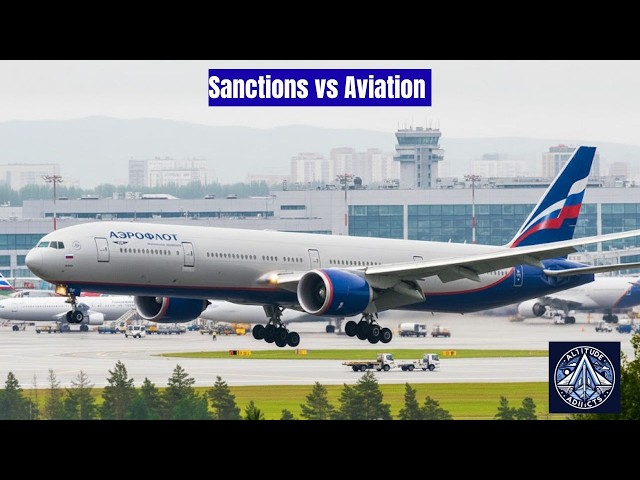
0:05
The question of whether the American
0:07
aerospace giant Boeing could eventually
0:09
return to the Russian market goes far
0:12
beyond a simple commercial discussion
0:14
because it touches geopolitics,
0:16
industrial capability, airline
0:18
economics, and long-term aviation
0:22
Altitude Addicts, the YouTube channel
0:24
bringing you this analysis, explores how
0:27
these layers interact in a rapidly
0:29
changing aviation environment.
0:32
Ivan Lzison, director of the Sonar 2050
0:36
analytical bureau, has argued that a
0:38
potential return could be beneficial
0:40
because maintaining the current fleet is
0:42
becoming increasingly difficult due to
0:45
supply constraints and sanctions.
0:48
At the same time, Altitude Addicts
0:50
explains that domestic aircraft programs
0:52
such as the MC21, SJ100, and 2214 would
0:57
likely continue unaffected because they
0:59
occupy different operational roles.
1:02
This perspective reflects a broader
1:04
debate unfolding across the aviation
1:07
sector about how to balance the
1:09
longstanding goal of technological
1:11
sovereignty with the practical realities
1:14
of cooperating with foreign
1:17
It is also important to note that
1:19
discussion here focuses on Boeing
1:22
because European manufacturers remain
1:24
outside the conversation due to
1:26
political restrictions.
1:28
Looking back to the period after early
1:30
2022, the operational landscape for
1:33
airlines changed dramatically when
1:36
Western manufacturers suspended support
1:38
including spare parts supply,
1:40
maintenance assistance, and engineering
1:44
Modern aircraft depend heavily on
1:46
continuous manufacturer backing for
1:48
software updates, regulatory compliance,
1:53
In response, airlines adopted multiple
1:56
strategies such as cannibalizing
1:58
grounded aircraft, expanding domestic
2:00
maintenance capabilities, sourcing parts
2:03
through parallel channels, and
2:04
accelerating localization efforts.
2:07
However, Altitude Addicts notes that
2:09
these measures are largely temporary and
2:12
introduce higher costs and operational
2:14
complexity over time.
2:17
As supply uncertainties persist,
2:19
airlines must carefully balance safety
2:21
requirements, regulatory obligations,
2:24
and financial pressures while keeping
2:26
aircraft in service. This is why
2:29
maintaining large fleets without
2:31
original manufacturer support becomes
2:34
progressively more challenging.
2:36
Historically, Boeing aircraft have
2:39
played a major role in airline fleets
2:41
with estimates suggesting that roughly
2:43
37 to 40% of foreign aircraft in service
2:47
belong to Boeing models.
2:50
This significant share reflects decades
2:52
of integration into operational systems,
2:54
training programs, and maintenance
2:58
Aircraft such as the Boeing 737 and
3:02
Boeing 777 have formed the backbone of
3:05
many domestic and international routes
3:07
because of fuel efficiency, reliability,
3:10
and global support networks.
3:13
Replacing or reducing dependence on
3:15
these platforms is therefore neither
3:17
quick nor inexpensive.
3:20
Turning to domestic aircraft programs,
3:22
projects like the MC21, SJ100, and 2214
3:27
represent a strategic push toward import
3:29
substitution and technological
3:32
These aircraft are primarily designed
3:35
for narrowbody operations and do not
3:37
directly replace widebody capabilities.
3:41
The MC21 aims to compete with modern
3:44
single aisle aircraft through advanced
3:46
composite wings and efficient
3:48
aerodynamics. While the SJ100 focuses on
3:51
regional connectivity with localized
3:55
the TU214 based on an older platform has
3:58
been reintroduced to help fill capacity
4:02
Altitude Addicts emphasizes that scaling
4:04
production, achieving certification
4:06
milestones, and localizing supply chains
4:09
remain complex tasks that require time
4:12
and sustained investment.
4:14
Meeting national demand will likely take
4:16
years rather than months.
4:19
A particularly important issue is the
4:22
wide body segment where there is
4:24
currently no modern domestically
4:26
produced aircraft in large-scale serial
4:29
production. The IL96, often described as
4:32
the last Soviet era widebody, requires
4:35
extensive modernization, including
4:38
potential engine changes from four
4:39
engines to a more efficient twin engine
4:44
Developing or upgrading a longhaul
4:46
aircraft demands skilled personnel,
4:48
funding, and long development timelines.
4:51
While airlines still need immediate
4:53
capacity for international routes and
4:57
this creates a structural gap in the
5:01
Even as narrow body production
5:03
accelerates, long-d distanceance
5:04
operations remain dependent on existing
5:07
fleets, many of which are westernbuilt
5:11
Altitude Addicts highlights that
5:13
bridging this gap is one of the central
5:15
challenges facing the sector.
5:18
From an economic perspective, airline
5:20
decisions are driven primarily by
5:22
operational realities such as aircraft
5:24
availability, fuel efficiency,
5:26
maintenance costs, and route demand
5:29
rather than ideology.
5:31
Renewed cooperation with Boeing could
5:33
reduce maintenance pressures and extend
5:38
Such cooperation would not necessarily
5:41
undermine domestic manufacturing, but
5:43
could serve as a transitional buffer,
5:45
allowing local programs to mature
5:47
without disrupting airline operations.
5:50
Historical examples show that countries
5:53
often combine domestic development with
5:55
selective imports during industrial
6:00
Boeing itself could also gain from
6:02
renewed engagement because maintaining
6:04
access to diverse markets helps
6:06
stabilize long-term order books and
6:10
Russia's vast geography means air travel
6:13
demand remain substantial despite market
6:17
Maintenance support, spare parts supply,
6:20
and service contracts for existing
6:22
fleets represent significant revenue
6:24
streams that could make re-entry
6:26
commercially attractive.
6:29
Altitude Addicts notes that these
6:30
services often generate steady income
6:33
beyond aircraft sales.
6:36
Nevertheless, geopolitical realities
6:38
present major obstacles because
6:40
sanctions, export controls, and
6:42
political tensions complicate any
6:44
potential cooperation.
6:46
Changes would likely require broader
6:48
diplomatic adjustments and regulatory
6:52
Even if political conditions improved,
6:54
rebuilding trust, reestablishing supply
6:57
chains, and reassessing risk by insurers
7:00
and regulators would take considerable
7:03
Airlines would also need to renegotiate
7:06
agreements and update operational
7:10
A key argument emerging from this
7:11
discussion is that foreign and domestic
7:13
aircraft could coexist rather than
7:16
compete directly forming a layered
7:20
Domestic aircraft could dominate
7:22
regional and medium hall roads while
7:24
selective use of foreign wide bodies
7:27
maintains longhaul connectivity.
7:30
Such mixed fleet strategies are common
7:32
globally as countries balance economic
7:35
efficiency with industrial development
7:37
goals. Altitude Addicts points out that
7:40
diversification often improves
7:44
On a broader scale, the global aviation
7:46
market itself is evolving as new
7:49
manufacturers emerge and geopolitical
7:51
alignments shift, challenging the
7:53
traditional dominance of established
7:55
producers. This trend suggests a more
7:58
multi-olar industry landscape.
8:01
In that context, any renewed engagement
8:04
between Boeing and Russia could reflect
8:06
wider changes in global aerospace
8:08
relationships rather than a simple
8:12
Cooperation and competition may continue
8:16
Ultimately, the debate highlights the
8:19
tension between operational necessity
8:21
and long-term strategic autonomy.
8:24
Because maintaining a large modern fleet
8:26
without manufacturer support is
8:28
inherently difficult, while domestic
8:30
programs require time to scale,
8:33
pragmatic solutions often emerge in
8:36
industries where safety and continuity
8:40
From one perspective, limited
8:42
cooperation could ease immediate
8:44
operational pressures without
8:46
compromising long-term industrial
8:48
ambitions, while from another
8:49
perspective, it could offer Boeing
8:51
market diversification amid global
8:56
Altitude Addicts underscores that
8:58
aviation decisions frequently involve
9:00
navigating such trade-offs.
9:03
In conclusion, the question of Boeing's
9:05
potential return is less about choosing
9:08
between domestic and foreign aircraft
9:10
and more about managing a complex
9:12
transition in a changing geopolitical
9:15
and economic environment.
9:17
As the aviation sector continues to
9:20
adapt, the balance between resilience,
9:22
independence, and practical
9:24
collaboration will remain central to
9:30
If you like the video, please subscribe,
9:32
share and like. Also, please take the
9:35
membership of Altitude Addicts to