Up next in 10


In May 2007, doctors on Everest measured arterial oxygen at 8,400 meters. The mean was 24.6 mm Hg. One climber hit 19.1. A hospital would call that a crash. The body was still walking.
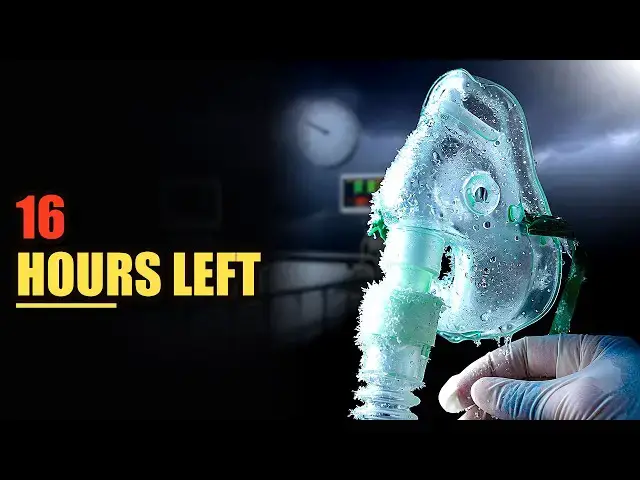
This is the hour-by-hour clock, not the summit photo. Death zone at 8,000 meters. About one-third the oxygen. 16 to 20 hours as the working limit. Lincoln Hall, May 25–26, 2006. What does not happen tomorrow.
Timestamps
0:00 The number you cannot feel
0:40 The Clock You Cannot Feel
1:55 Minute One Above Eight Thousand
3:20 The Midnight Walk
4:55 What Your Blood Is Doing
6:15 When The Bottle Stops
7:20 And It Gets Worse
8:40 Twelve Hours Left For Dead
10:10 What Does Not Happen Tomorrow
11:20 How Many Hours You Get
Public record and published physiology only. Times and survival windows are about, not a personal medical forecast. Not medical advice. Not a climbing guide.
#Everest #DeathZone #Survival #Mountaineering #AltitudeSickness #HumanBody #Explained #LifeIsEasy
Tags: Everest survival, death zone, 16 hours, altitude sickness, Lincoln Hall, Caudwell Xtreme Everest, frostbite, bottled oxygen
Visuals are original AI-generated stills. Audio may be synthetic. Not medical, legal, or financial advice.
Show More Show Less View Video Transcript
0:00
In May 2007, doctors on a research climb
0:03
called Codwell Extreme Everest drew
0:05
arterial blood from climbers at about
0:08
8,400 meters. The mean oxygen pressure
0:11
was 24.6 millime of mercury. One climber
0:15
hit 19.1. A ward clock over a bed would
0:19
already be in a code. You would not feel
0:21
that number. Your hands would still zip
0:24
a jacket. Your legs would still step.
0:26
The clock you cannot feel. That is the
0:30
first trick the mountain plays on a
0:32
body. The death zone starts at 8,000 m
0:35
about 26 247 ft. The summit sits at
0:39
8,849
0:41
m. The air is still about 21% oxygen.
0:44
The problem is pressure. Near the top,
0:47
barometric pressure falls to roughly
0:50
onethird of sea level. So each breath
0:52
delivers about onethird the oxygen
0:55
molecules your lungs are built for. A
0:57
sea level pulse oximter wants you near
0:59
98%. Near the summit, saturation can sit
1:03
in the 50s and 60s even in an
1:05
acclimatized climber. You do not get a
1:08
siren. You get a quiet fade. Heart rate
1:11
at rest can sit over 120. Breathing can
1:14
run 40 to 60 times a minute while you
1:17
stand still. The body is already
1:19
spending its reserves before you take
1:21
the first summit step. You are in that
1:24
body now. The visor is iced. Nothing in
1:28
your chest says the number is already a
1:30
crash. Minute one above 8,000. Drop an
1:34
unaclimatized person on the summit by
1:36
helicopter and the clock is minutes not
1:39
hours. Consciousness goes because the
1:41
brain is not getting enough oxygen to
1:43
stay online. That is not your case. If
1:45
you have spent weeks walking up through
1:47
base camp at 53 and 164 meters, then
1:50
camp 2, then camp 3. You have extra red
1:54
cells. You have learned to pant on
1:56
purpose. You can walk. Walking is not
1:58
surviving. Walking is the body borrowing
2:01
time. At camp 4 on the South Pole, about
2:04
7,900 meters, you are already at the
2:06
edge. Tents sit in wind that can strip
2:09
heat off a face in minutes. Spring wind
2:12
chill near the summit is often around
2:14
minus50 C. Facial frostbite time in a
2:18
typical spring window is about 5
2:20
minutes. In a bad blow, it can drop
2:22
toward 1 minute. You still cannot feel
2:25
the arterial number. You feel cold in
2:28
the fingers first, then you stop feeling
2:31
the fingers. The midnight walk. A normal
2:34
summit push starts in the dark. Teams
2:37
leave camp 4 between about 9 at night
2:40
and midnight, aiming to be on top after
2:43
dawn and back down before the afternoon
2:46
wind. You clip onto a fixed rope. You
2:49
take a step, you wait, you take another.
2:52
At this height, a single step can cost
2:54
10 or 15 breaths. Dry air and heavy
2:58
breathing can pull several liters of
2:59
fluid out of a body in a day, and you
3:02
cannot drink it back as fast as it
3:03
leaves. Food sits in the stomach like a
3:06
brick. In the first 6 hours, you may
3:08
reach the balcony at 8400 meters around
3:11
first light. That is the band where
3:13
those 27 blood samples were taken on the
3:16
way down. If you are still moving at
3:18
dawn, you are on schedule. If you are
3:21
not, the clock is already eating
3:23
daylight for the descent. Most teams
3:25
treat 2 in the afternoon as a hard
3:27
turnaround. A 2008 study of Everest
3:30
deaths found survivors tended to summit
3:33
between 9 and 10 in the morning. People
3:35
who later died tended to summit between
3:38
1 and 2 in the afternoon. The body just
3:40
runs out of margin. What your blood is
3:43
doing? Here is the mechanism in order.
3:46
Pressure falls. Less oxygen crosses from
3:48
lung to blood. Arterial oxygen pressure
3:51
at 8,400 m averaged 24.6 6 millm of
3:56
mercury in those May 2007 samples
3:59
against more than 80 at sea level.
4:01
Carbon dioxide was blown off to about 13
4:04
mm because you are panting. The brain
4:06
swells a little inside a skull that
4:08
cannot expand. Fine motor skill goes.
4:12
You fumble a clip. You misrate a rope.
4:15
Muscle does not rebuild above 8,000 m.
4:18
You start breaking down tissue for fuel
4:20
within hours if you are not eating.
4:22
Maximal oxygen uptake near the summit
4:24
sits so low it is close to what you use
4:27
sitting in a chair at home. That is why
4:29
the photographs look still. They are
4:31
rationing motion. You think you are
4:33
making choices. A lot of those choices
4:36
are hypoxia wearing your voice. When the
4:39
bottle stops.
4:40
Most paying climbers breathe bottled
4:43
oxygen from camp 4 up. It does not make
4:46
the air normal. It buys a few extra
4:48
points of saturation and a little heat
4:50
in the mask. Guides plan the whole death
4:53
zone round trip inside about 16 to 20
4:56
hours. 48 hours is treated as an outer
4:59
limit, even with gas. If a regulator
5:02
ices and the flow dies above 8,500 m,
5:05
the crisis is not theoretical. Within
5:08
about 15 to 20 minutes, the body has no
5:11
stored reservoir to draw from. Decision
5:13
quality falls off a cliff. You sit down
5:16
because sitting feels like a plan.
5:18
Sitting is how people become landmarks.
5:21
The bottle was only one clock and it
5:23
gets worse and it gets worse. The part
5:25
that actually matters is not the flag on
5:27
the top. It is these next two clocks.
5:30
The second clock is the brain. High
5:32
altitude cerebral edema is fluid in the
5:34
skull. Untreated, it can run from
5:36
confusion to coma in about 6 to 12
5:39
hours. You stagger. You cannot walk a
5:42
straight line. You argue with a partner
5:44
about a turn that is not a debate. The
5:46
third clock is the lungs. High altitude
5:49
pulmonary edema fills the air sacks with
5:51
fluid. Breathlessness at rest, a cough
5:54
that does not belong to a cold. It can
5:56
move from early to life-threatening in
5:58
the same 6 to 12-hour window. A study of
6:01
deaths from 1921 to 2006 found that of
6:05
climbers who died after going above
6:07
8,000 meters, about 56% died on the way
6:10
down from the summit, not on the way up.
6:13
Fatigue, confusion, and a drunken walk
6:15
were the common last signs. You will not
6:18
diagnose yourself with a textbook. You
6:20
will feel tired, and tired will feel
6:22
earned. That is the trap. The body keeps
6:24
offering a story that sounds like effort
6:27
while the actual problem is swelling and
6:29
fluid.
6:30
12 hours left for dead. On May 25th,
6:34
2006, Australian climber Lincoln Hall
6:37
summited from the north side and then
6:39
came apart on the descent at about 8,700
6:43
m. His team worked for hours. Night
6:45
closed, oxygen ran low. He was left as
6:48
if dead. A statement went out. About 12
6:51
hours later, on the morning of May 26th,
6:54
another team found him sitting near a
6:56
drop, half out of his down suit, no
6:58
gloves, no mask. He had frostbite. He
7:01
had a swollen brain. He was alive enough
7:03
to be walked down to the North Pole and
7:05
treated. That is not a promise. 10 years
7:07
earlier, on May 10th, 1996, a storm
7:11
pinned teams on the south side. Guide
7:13
Rob Hall spent the night near the South
7:15
Summit with a client who could not move.
7:18
At 4:45 in the morning on May 11th, he
7:20
radioed that the client was gone and his
7:22
own regulator was iced. Hands and feet
7:25
were frozen. He spoke again that
7:27
afternoon. He did not come down. Same
7:29
mountain, same altitude band, two
7:32
different clocks. The difference is not
7:34
courage. It is whether the brain, the
7:36
lungs, the bottles, and the weather all
7:39
fail on the same night. What does not
7:42
happen tomorrow. What does not happen
7:45
tomorrow is this. Your living room does
7:47
not become the death zone. Base camp at
7:49
5,764
7:50
meters is harsh and it is not 8,000.
7:53
People live year round 5100 meters in
7:57
the Peruvian town of La Rinkonada.
7:59
Humans have wintered near 6,000 m. On
8:02
May 8th, 1978, Reinhold Mesner and Peter
8:06
Hobbler proved the summit itself can be
8:08
reached without bottled gas if you are a
8:11
once- in a generation engine. And the
8:13
pressure is kind. In May 1999, Babu
8:17
Chiri Sherpa spent 21 hours on the
8:19
actual summit without supplementary
8:21
oxygen, a record that still sits there.
8:24
He had already stood on that top many
8:25
times. Commercial season still put
8:28
people through a 12 to 15 hour planned
8:30
push with a turnaround time, spare
8:32
bottles, and a line of climbers who will
8:34
still get down. The mountain is not a
8:36
cartoon that kills in 30 seconds. It is
8:38
overlapping that most paying climbers
8:41
never see because the schedule works.
8:43
how many hours you get. So, how long
8:46
would you actually last? If you are
8:47
flown there tomorrow with no
8:49
acclimatization, minutes if you are a
8:52
fit client on bottled oxygen, the
8:54
working advice is do not spend more than
8:57
16 to 20 hours above 8,000 m and treat
9:01
24 as a line you do not want to see. At
9:04
the summit itself, an average
9:06
acclimatized climber might have on the
9:09
order of 12 hours before hypoxia, cold,
9:12
and bad decisions close the door. Some
9:14
more, some less. With gas, people have
9:17
been forced to sit out a night and
9:18
lived. Without it, the record overnight
9:21
on the top is that 21-hour sit in 1999,
9:24
which is not a plan. It is an outlier.
9:27
Even the long stays are not recovery.
9:29
The body is losing heat, water, muscle,
9:31
and judgment the whole time. Descent is
9:34
the actual survival skill. More people
9:36
die coming down than going up because
9:38
the summit is not the finish. It is the
9:40
turn. The finish is a tent with a stove
9:43
at a height where the body can hold a
9:45
line again. If you had 16 hours in the
9:47
death zone and one extra bottle,
News