Up next in 10


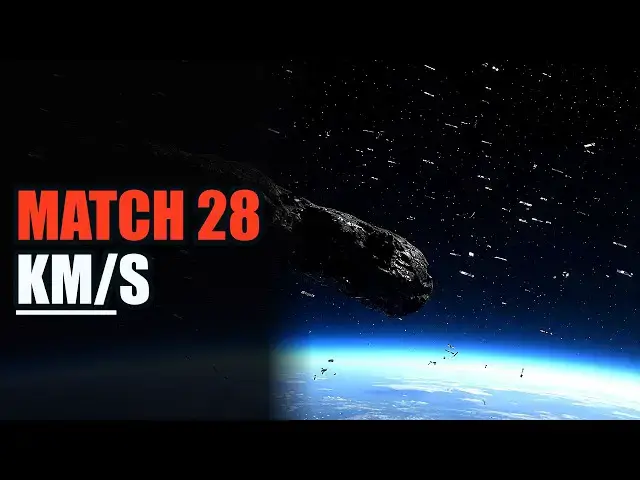
You don't tackle a near-Earth asteroid. On October 20, 2020, OSIRIS-REx sank 48 cm into Bennu's gravel. There was no bedrock. This is the actual capture order: match ~28 km/s, bag a van-sized rock, then tow it for years on a few newtons of ion thrust.
0:00 You Match Or You Crash
1:25 Find A Charcoal Rock
2:45 Pick A Van Not A Mountain
4:10 Launch The Ion Tug
5:25 Drift At Walking Speed
6:40 Close The Bag
8:00 The Pile Has No Handle
9:40 Years Of Quiet Thrust
11:05 What Does Not Happen
Public-record numbers are approximate. This is an explainer, not a mission proposal.
#asteroid #NASA #OSIRISREx #DART #NEO #space #Apophis #Bennu
Life is Easy
Visuals are original AI-generated stills. Audio may be synthetic. Not medical, legal, or financial advice.
Show More Show Less View Video Transcript
0:00
October 20th, 2020. A spacecraft the
0:03
size of a van lowers onto asteroid Bennu
0:05
at a few centimeters per second. The
0:08
sampling head is supposed to kiss solid
0:09
rock for 5 seconds and back away. It
0:12
sinks. 48 cm of loose gravel swallows
0:15
the hardware, and there is no bedrock
0:17
under it. Catching a near-earth asteroid
0:20
is not a tackle and not a net. You spend
0:22
a year matching a rock that already
0:24
flies around the sun at about 28 km a
0:27
second until you are floating beside a
0:29
pile of rubble at walking speed. Then
0:31
you bag a chunk the size of a delivery
0:33
van and you drag it for years with
0:35
engines that push like a hand on a
0:37
table. You match or you crash. A typical
0:40
flyby of a near-Earth asteroid happens
0:42
at 5 to 15 kilometers per second of
0:45
relative speed. At six kilometers per
0:48
second, your ship is not catching
0:49
anything. It is a kinetic impactor. One
0:52
kilogram of spacecraft at that speed
0:54
carries the punch of several kilograms
0:56
of TNT. The giant claw, the cable that
0:59
snaps taut, the astronaut with a tether,
1:02
all of that assumes you already share
1:04
the rock's velocity. You do not. Earth's
1:07
own motion around the sun is about 29.8
1:10
km/s. The asteroid rides a slightly
1:13
different ellipse. The gap between those
1:15
two paths is the entire job. You cancel
1:18
that gap with propellant months or years
1:21
before a bag ever opens until the
1:23
relative speed is centimeters/s. Every
1:26
catch is a crash. You become an asteroid
1:28
first. You copy its orbit. You sneak up
1:30
on a body whose gravity is so weak that
1:33
a hard push from a thruster would send
1:35
you away for good. Feel the silence of
1:38
that approach. No roar, no impact flash,
1:41
just a closing rate you could walk find
1:43
a charcoal rock. Most near-Earth objects
1:46
are the color of charcoal. A 10-meter
1:49
rock reflects almost no sunlight.
1:51
Surveys like Catalina, Pan stars, and
1:54
Atlas. Catch the bright ones and the
1:56
ones that pass close. NASA's old
1:59
congressional target was 90% of objects
2:02
140 m and larger. The kilometerclass
2:04
mountains are mostly in the catalog. The
2:07
vansized and house-sized rocks are not.
2:10
You cannot rendevous with a thing you
2:12
spotted last Tuesday. You need months of
2:14
optical positions, then radar if it
2:17
comes close enough to a big dish until
2:19
the orbit is tight enough that a
2:21
spacecraft launched years later still
2:23
arrives inside a few kilometers. Miss
2:25
the launch window and the rock is on the
2:27
other side of the sun. The catalog is
2:29
the first machine in the capture stack.
2:31
Without a precise orbit, the tug
2:33
launches at empty sky. You are hunting a
2:36
dark potato against a bright field of
2:38
stars night after night until the path
2:40
is a number you would bet a spacecraft
2:42
on. Pick a van, not a mountain. NASA's
2:47
canceled asteroid redirect mission
2:49
studied two options. Option A swallowed
2:52
an entire free-flying asteroid about 4
2:54
to 10 meters across, a few hundred tons.
2:57
Option B plucked a 2 to four meter
2:59
boulder off a larger rubble pile, a 7 me
3:02
stony body at about 2 g per cubic
3:05
centimeter masses on the order of 300 to
3:07
400 metric tons. That is a loaded
3:10
airliner, not a mountain. Apous is about
3:12
340 meters across and hundreds of
3:15
millions of tons. You do not bag Aus.
3:18
You do not bag Benu. You bag a piece a
3:21
crew van could park beside. The poster
3:23
version is a ship clamped to a potato
3:25
the size of a city. The mass budget of a
3:28
real tug says you pick the smallest
3:29
object whose orbit you trust, whose spin
3:32
you have measured, and whose path
3:34
already comes close to Earth's. So the
3:36
return trip is not a second career.
3:38
Every extra meter of rock is more zenon,
3:41
more time, and more chance the pile
3:43
sheds mass when you touch it. The
3:45
capture you can fund is cargo, not a
3:48
continent. Launch the ion tug. The
3:51
vehicle is a solar electric tug. NASA
3:54
studied a 40 kilowatt class spacecraft
3:56
with Hall thrusters or gritted ion
3:58
engines. Thrust is a few newtons. That
4:01
is the weight of a full mug applied
4:03
without stopping for months. Xenon is
4:05
the propellant. The capture gear rides
4:07
up front, a deployable bag or robotic
4:10
arms with crushable contact pads, plus
4:13
cameras and LAR. A heavy lift rocket
4:16
puts the stack into a high Earth orbit
4:18
or onto an escape path. After that, the
4:21
ion engines do the years of work
4:23
chemical rockets cannot afford. Dawn on
4:26
a smaller ion system stacked about 10
4:28
kilometers per second of delta V over
4:31
its life. Capture needs that kind of
4:33
patience. Chemical engines are for
4:35
leaving Earth. The catch happens on a
4:37
trickle of thrust you can run through
4:38
the night. You would hear almost nothing
4:41
if you stood beside the plume. A faint
4:43
blue glow. A tank of noble gas getting
4:46
lighter by grams per hour. That is the
4:48
mill you use to buy another person's
4:50
orbit. Drift at walking speed. Arrival
4:55
is a slow sneak. Continuous low thrust
4:58
bends your path until you share the same
5:00
ellipse. Then you null the last meters
5:02
per second. You station keep tens of
5:05
meters out. Escape velocity from a 10
5:07
meter body is millimeters to maybe a
5:10
centimeter per second. Jump and you do
5:12
not come down. A thruster pulse that
5:14
would be a rounding error near Earth is
5:17
a departure burn here. You come in from
5:19
the sunlit side so the cameras can see
5:21
texture. You map the spin. Periods of 2
5:24
to four hours are common. Some objects
5:27
tumble. You pick a moment when the long
5:29
axis is predictable. Relative speed at
5:32
contact is walking pace or slower. The
5:35
same regime Osiris Rex used on Bennu. If
5:38
you still have tens of meters per second
5:40
on the clock, you abort and loop again.
5:43
There is no harpoon stage. There is a
5:45
parking stage that lasts weeks. And you
5:47
spend it learning how the gravel moves.
5:49
Heat on the sunward face. Deep cold in
5:52
the shadows. Dust hovering because it
5:55
barely has a down. Close the bag. For a
5:59
free 4 to 10 meter object, the hardware
6:02
NASA sketched was a bag. You open a
6:05
flexible enclosure, fly it around the
6:07
rock, and cinch it. The asteroid can
6:10
bounce inside. That is the point. A
6:12
rigid claw on a rubble pile shears. A
6:15
net at high speed is a wire that
6:17
vaporizes. The bag gives the rock a
6:20
padded room so your thrusters talk to
6:22
the bag, not to gravel. For the boulder
6:25
option, arms reach for a stone already
6:27
sitting on a bigger body. Lift it a few
6:29
centimeters and wrap it. Contact pads
6:32
spread the load. Cables can lasso a slow
6:35
spinner if the cohesion holds. You do
6:38
not winch like a tow truck. You close
6:40
volume, wait for dust to settle, then
6:43
fire the ions at a few newtons against a
6:45
few hundred tons. Acceleration is tiny.
6:48
That is the capture. You feel no jolt.
6:52
You see a bag tighten in sunlight and a
6:54
rock that used to be its own world
6:56
become cargo. The cinch is the whole
6:59
trick. Miss the cinch and you have made
7:01
a new meteoroid swarm with your name on
7:04
the tracking file. The pile has no
7:06
handle. And it gets worse. On October
7:10
20th, 2020, Osiris Rex proved the handle
7:14
does not exist. Bennu's bulk density was
7:17
about 1.19 g per cubic centimeter, full
7:20
of voids, weaker than packed snow in
7:23
places. The sampling head sank 48 cm.
7:26
Particles flew. The spacecraft had to
7:29
back out on thrusters. Ryugu, visited by
7:31
Hayabusa 2, was the same kind of ball
7:34
pit. Many near-Earth asteroids live near
7:37
the spin barrier around 2.2 hours per
7:39
rotation where centrifugal force almost
7:42
equals gravity. Cohesion is
7:45
millipascals. Grab one lobe and you
7:47
unspool a landslide. The part that
7:50
actually matters is this. Capture is not
7:52
docking with a ship. It is bagging a
7:55
pile of gravel that is trying to become
7:57
a cloud. Dust blinds LAR. A shed boulder
8:01
becomes its own satellite. If the object
8:03
is a monolith of metal rare, a clamp
8:06
might bite. Most of the ones you can
8:08
reach are piles. September 26th, 2022,
8:13
Dart hit Dimorphos at about 6.1 km per
8:17
second with a 570 kg spacecraft and
8:20
shortened the moonlet's orbit by about
8:22
33 minutes. Eea did extra work. That is
8:26
the opposite of catch. Catch means
8:28
adding almost zero extra velocity.
8:31
Punching is easy. Holding is the physics
8:33
problem. You came to grab a mountain and
8:36
found a ball pit in vacuum. Years of
8:38
quiet thrust. Once the bag is closed,
8:42
you start a years'sl long spiral. The
8:44
asteroid redirect concept aimed at a
8:46
distant retrograde orbit around the
8:48
moon. A parking spot where the rock
8:51
becomes a laboratory and a waypoint, not
8:53
a new crater. The delta V to drop a
8:56
typical near-Earth object into a bound
8:59
Earth orbit in a hurry is kilometers/s.
9:02
You do not have that propellant if you
9:04
also brought a bag. So you thrust at a
9:06
few newtons for a thousand days. Power
9:09
falls as you move away from the sun.
9:12
Zenon tanks empty. If one thruster
9:14
string dies, you replan the spiral.
9:17
Communications lag is seconds to
9:19
minutes. The rock is now attached to
9:22
your power budget. You chose a target
9:24
whose natural path already brushed
9:26
Earth's. So the return is a nudge, not a
9:29
new orbit from scratch. Crews, if they
9:31
ever visit, arrive after the tug has
9:34
already done the boring years. The catch
9:36
was the bag. The mission is the toe. You
9:39
are not racing. You are babysitting a
9:41
few hundred tons of charcoal through cis
9:43
lunar space while the ion plume glows
9:46
faint blue and nobody on Earth feels a
9:49
thing. A thousand days of millutton is
9:51
how you move a loaded airliner of gravel
9:53
without breaking it. What does not
9:56
happen? Apoffus still makes its close
9:58
approach on April 13, 2029 at about
10:01
31,000 kilometers inside the ring of
10:04
geostationary satellites, and nobody
10:06
bags it. Cities do not empty. The moon
10:09
does not grow a new mountain in 2027.
10:12
Your house does not get a new tax on
10:14
space gravel. A captured vansized rock
10:16
in lunar orbit, if it ever happens, is a
10:19
science outpost in a practice mass, not
10:21
a shield for the planet. Planetary
10:23
defense, when it is real, looks like
10:25
dart. Hit early, change a period by
10:27
minutes, let years of orbital mechanics
10:30
do the rest. Capture is a logistics
10:32
project for a few hundred tons. It does
10:35
not stop a 140 meter impactor. It does
10:38
not happen this fiscal year. The sci-fi
10:40
version dies on the relative speed
10:42
number. You cannot cancel
News