Up next in 10


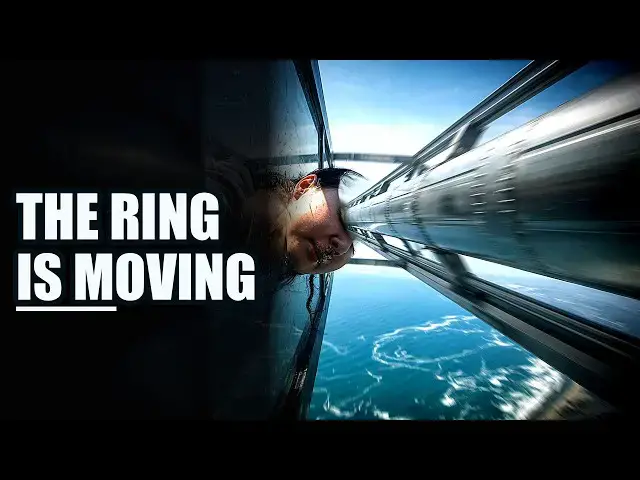
The popular picture of an orbital ring is a solid hoop around Earth. That hoop falls. Here is the racetrack that does not.
0:00 The Picture Is Wrong
1:12 What Is True At T Zero
2:35 The Stationary Hoop Dies
4:08 The Racetrack That Never Stops
5:40 How The Magnets Hold You
7:18 One Hundred Thousand Flights
8:52 Five Minutes To Ground
10:20 Birch In 1982
11:48 What Does Not Happen Tomorrow
This is an engineering walkthrough of Paul Birch's 1982 orbital ring: seed mass, maglev stations, tethers, and the physics that kills the sci-fi hoop.
#orbitalring #space #engineering #whatif #lowearthorbit #paulbirch #spaceelevator #science
Public-record numbers are approximate. This is not a construction plan.
Visuals are original AI-generated stills. Audio may be synthetic. Not medical, legal, or financial advice.
Show More Show Less View Video Transcript
0:00
June 1982, a British engineer named Paul
0:03
Burch publishes a paper that does not
0:05
describe a solid hoop around the Earth.
0:08
He describes a racetrack 42,000 km long,
0:11
moving at 7.7 km/s with stations hanging
0:16
on magnets while the track screams past
0:18
at 27,600
0:20
km an hour. The picture in your head is
0:23
the wrong machine, a solid ring that
0:25
just sits there has no orbital speed.
0:28
Gravity takes it. The planet watches
0:30
40,000 km of metal come down in pieces.
0:34
The picture is wrong. You have seen the
0:37
drawing. A silver bracelet around Earth.
0:40
People walking on the interface. Trains
0:43
sliding along a rail that never moves.
0:45
That drawing is a collapse. At 400 km
0:49
up, orbital speed is about 7.7 km/s. If
0:53
the structure is standing still relative
0:55
to the ground, it is not in orbit. It is
0:57
a bridge with no peers and a span the
1:00
length of the equator. Steel in
1:02
compression over that distance buckles.
1:04
Thermal expansion over one degree C on a
1:07
42,500 km hoop changes the radius by
1:11
tens of meters. Night on one side, day
1:14
on the other. And the hoop tries to
1:16
become an oval, then a knot, then a
1:18
meteor shower. An orbital ring is not
1:20
that hoop. The ring itself is falling
1:23
around the planet the way the
1:24
International Space Station is falling.
1:26
Except the ring is a closed loop, a
1:29
continuous stream of mass in low Earth
1:31
orbit. The stations you care about, the
1:33
ports, the elevators, the places a
1:35
person can stand do not ride the ring.
1:38
They hover on it. Magnets. The track
1:40
never stops. You do. What is true? At
1:44
T0, at T equals 0, there is no ring.
1:48
There is a pad, a vehicle, and a mass
1:51
budget. Earth radius is 6,371
1:54
km. Park the seed at 400 km, and the
1:58
radius of the path is 6,771
2:01
km. Circumference is about 42,550
2:05
km. A starter cable with a cross-section
2:07
of one square centimeter of aluminum
2:10
along that whole loop masses about 11
2:12
million tons. One Starship class vehicle
2:16
puts on the order of 100 tons into low
2:18
Earth orbit. You are looking at about
2:21
110,000 successful flights before you
2:24
have a thread. That is the clock at t
2:26
equals zero, not a skyhook, a logistics
2:29
problem with a circumference at t equals
2:32
one year. If a heavy lift fleet flies
2:34
every day and never misses, you have
2:37
added tens of thousands of tons. You
2:39
have not closed a ring a human can see
2:41
from a backyard. You have a thin
2:43
conducting loop or a stream of pellets
2:45
on the same path and a ground station
2:47
that can talk to it. At t equals 5
2:50
years, the only way the mass budget
2:52
moves is if the seed starts paying you
2:54
back. Rockets do not build this. The
2:57
ring builds the ring. The stationary
2:59
hoop dies. Stand on the equator at
3:01
midnight and look up. A rigid
3:04
non-spinning ring would be a dark line.
3:07
It would also already be moving because
3:09
gravity does not negotiate. Every
3:12
kilogram of that hoop is pulled toward
3:14
Earth's center at about 8.7 meters/s
3:17
squared at 400 kilometers, a little less
3:20
than on the ground. There is no
3:22
centrifugal relief because the hoop is
3:24
not circling. The load path has to carry
3:27
the entire weight of a 42,000 km
3:29
structure in compression and bending. No
3:32
alloy on the table does that. The sci-fi
3:35
bracelet fails in the first hour, not
3:37
the first century. Larry Nven's ring
3:40
world has a related headache on a solar
3:42
scale. A free ring is not a stable
3:44
orbit. Nudge it and the nearest point
3:47
falls in. Earth's orbital ring has the
3:50
same family of problem if you treat it
3:52
as a solid parked object. The fix is the
3:55
same idea Bir used. Do not park it. Let
3:58
it orbit. Then hang the useful parts on
4:01
magnets so they can sit over Keito or
4:04
Singapore while the mass of the ring
4:06
keeps missing the ground by 400 km
4:09
forever at 7.7 km a second. The
4:12
racetrack that never stops you are in a
4:15
magv car the size of a hanger. The floor
4:18
is still. The country under you is still
4:21
400 kilometers below. The Amazon does
4:24
not move. 2 meters from your boots, a
4:27
conductor the width of a river is going
4:29
past so fast that a grain of sand on it
4:32
is a bullet. Relative speed is orbital
4:35
speed. The air is vacuum. There is no
4:38
sound. The only reason you are not a
4:40
smear on that conductor is a magnetic
4:43
field holding a gap measured in centime.
4:45
The ring is a little faster than
4:47
circular orbital speed on purpose. Extra
4:50
speed means it wants to climb. The
4:53
hovering stations pull it down
4:54
electromagnetically. That pull is the
4:57
weight of the stations and the tethers.
4:59
The ring stays in a circle because the
5:01
stations are spaced around the world and
5:04
the current is controlled. You have
5:06
turned orbital mechanics into a bearing.
5:08
The bearing never touches. If it touches
5:12
at 27,600
5:14
km an hour, you do not have a ring. You
5:17
have a spray. Power for the magnets
5:19
comes from solar farms on the stations
5:21
from the ground up. the tethers and from
5:23
the ring current itself. Birch's papers
5:26
treat the ring as a giant conductor.
5:29
Current in a loop that long is an
5:31
engineering object, not a metaphor. You
5:33
are running a planetary armature how the
5:35
magnets hold you. The station does not
5:38
orbit. The station is geographically
5:41
fixed or it crawls slowly along the ring
5:43
to a new longitude. Magnetic coils on
5:46
the station push against the moving
5:48
conductor. The force has two jobs. One,
5:51
keep the gap. Two, transfer weight. Your
5:54
station, your cargo, your elevator
5:57
cable, all of that weight has to go
5:59
somewhere. It goes into the ring as a
6:01
downward force. The ring is already in
6:03
freef fall. That extra downward force
6:05
would drop its orbit. So, you run the
6:07
ring a little hot, a little fast, so the
6:10
extra speed makes extra outward force,
6:12
and the two cancel. Climb a tether from
6:15
the ground, and you are not fighting a
6:16
rocket equation the whole way. You are
6:19
an elevator. At the top, you are still
6:21
relative to Earth 400 kilometers up with
6:24
a track screaming past. To leave Earth,
6:27
you grab the track. You match 7.7 km/s
6:31
with a mag lev accelerator along the
6:33
ring. Stay on longer and you can be
6:35
thrown above escape, about 11 km/s from
6:38
the surface, less from altitude. The
6:41
ring is a launch loop that already went
6:42
around the world before you arrived. And
6:44
it gets worse when you look at the gap.
6:46
The gap is the whole machine. Lose
6:48
current, lose superconductivity, lose
6:51
the control system, and the station is a
6:53
falling building. The ring keeps
6:55
orbiting. You do not. 100,000 flights.
7:00
The seed is the expensive part. Every
7:02
kilogram you loft on methane and oxygen
7:05
costs you the usual 9 to 10 km per
7:07
second of rocket delta V, plus weather,
7:10
plus range safety, plus a fairing. 11
7:14
million tons at 100 tons of flight is
7:16
110,000 flights. Stack that against a
7:19
world that in a busy year does on the
7:22
order of 200 orbital launches. Even a
7:25
factory of Starships flying daily takes
7:27
years to spool a thread. The build order
7:30
is the point. You do not assemble a
7:32
bracelet in a hanger and unfold it. You
7:34
put a thin closed path on orbit
7:37
superconducting cable or a pellet stream
7:39
that you later bind or a conducting
7:41
tether you join at the ends. Then you
7:44
run current. Then you fly a small mag
7:46
lev sled on that path. Then you use the
7:49
sled as a mass driver. Now new mass does
7:52
not need a full rocket ride. You send up
7:55
the tether. Once a fiber reaches the
7:57
ground. The mass budget changes. ore,
8:00
steel, water, people, all climb on
8:03
electricity. Doubling time becomes a
8:06
factory question, not a launch cadence
8:08
question. Burch's claim was that after
8:11
the seed, growth can run away. The
8:13
physics agrees in direction. The
8:15
schedule is the fight. 5 minutes to
8:19
ground. A station that loses magv at 400
8:22
km is in freef fall. Distance is 400,000
8:26
meters at about 8.7 meters/s squared.
8:30
Time to the thick atmosphere is on the
8:32
order of 5 minutes. You do not get a day
8:34
to patch a cable. You get the time it
8:36
takes to brew coffee. And then the
8:38
station is a re-entry. The ring may
8:40
survive. The people on the station do
8:43
not, unless there is a second ring, a
8:45
backup track, a catcher, a parachute
8:47
that works at orbital energy, which it
8:50
does not. That is the part that actually
8:52
matters. Every design that hangs a city
8:55
on a moving conductor has a single point
8:57
story. The field superconductors quench.
9:00
Solar storms induce current in a 42,000
9:04
km loop. A micrometeoroid at 7.7 km/s is
9:10
a shaped charge. You do not get to treat
9:12
this like a bridge with a spare pier.
9:14
You treat it like a particle accelerator
9:16
the length of the world with towns
9:19
riding the beam pipe. Thermal swing is
9:21
the quiet killer. The ISS sees
9:24
temperature changes of more than 100
9:26
degrees C from sun to shadow. A hoop
9:29
that long, half in daylight, half in
9:31
night, wants to stretch and shrink in
9:34
sections. Expansion joints on a
9:37
structure moving at orbital speed are a
9:39
research program. If a joint opens, the
9:42
loop is no longer a loop. If a joint
9:44
seizes, the stress goes into the next
9:46
100 kilometers of cable. Burch. In 1982,
9:51
Paul Burch's papers landed in the
9:53
Journal of the British Interplanetary
9:55
Society in 1982. Three of them under the
9:59
title orbital ring systems and Jacob's
10:01
Ladders. He was not the first person to
10:04
hang a cable from the sky. Jerome
10:06
Pearson's space elevator paper is 1975.
10:09
A space elevator is one tethered to
10:11
geostationary orbit 36,000 km up. A
10:14
different machine, a different mass, a
10:16
carbon nano tube. wish. Burch's ring
10:19
lives in low orbit. The cables that hang
10:21
from his stations, the Jacob's ladders,
10:23
are hundreds of kilometers, not tens of
10:26
thousands. That is why the ring is the
10:28
interesting object. You get elevator
10:30
economics without waiting for a material
10:32
that can dangle from GEO. Birch died in
10:35
2012. The papers are still the canonical
10:37
engineering treatment. No one has flown
10:39
a seed. No one has closed a conducting
10:41
loop around Earth. The International
10:43
Space Station is about 420 tons. Your
10:46
starter cable is tens of thousands of
10:48
times heavier. The gap between a space
10:50
station and an orbital ring is not a
10:52
documentary montage. It is a civil
10:54
engineering century. Unless the seed
10:56
works and the tethers come down and the
10:58
doubling starts, what does not happen?
11:01
Tomorrow, satellites do not start dying
11:03
at dawn because a paper from 1982
11:05
exists. GPS stays up. The moon does not
11:08
notice. Your roof does not gain attacks
11:10
on sunlight. A ring, if it ever closed,
11:13
would occupy a thin band of low orbit,
11:15
and traffic would have to thread it the
11:17
way airliners thread mountains. That is
11:20
a later problem. It is not tonight's
11:22
problem. You also do not get a walking
11:24
path around the world. There is no inner
11:26
surface with 1G in a view. Gravity on a
11:28
station hanging from the ring is
11:30
ordinary Earth gravity, a little weaker
11:32
with altitude. The ring itself is in
11:34
freef fall. Stand on the conductor and
11:37
you float. And then you hit the next
11:38
clamp at 7.7 kilometers per second. The
11:42
useful floor is the mag lev station, the
11:44
port, the elevator car. The bracelet is
11:47
a myth. The racetrack is the machine. If
11:50
the seed never flies, the sky stays
News