Up next in 10


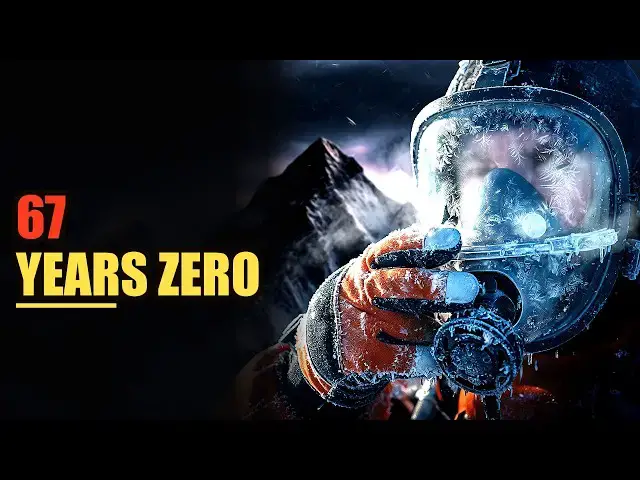
On January 16th, 2021, ten climbers stood on K2 in winter. That afternoon did not make the mountain climbable. This is the jet stream, the pressure drop, and the body hour by hour from Camp 4.
0:00 The January 16th summit
0:48 Ten On The Summit
2:02 The Jet Stream
3:22 Thinner Than Summer
4:40 The Summit Night
6:12 Sleep At Camp Four
7:28 The Bottleneck
8:48 February Fifth
10:10 What Does Not Happen
11:22 Why The Door Stays Closed
Public-record dates and figures; estimates marked as about. Not a guide, not an invitation, not medical advice.
#K2 #WinterClimbing #Karakoram #DeathZone #Mountaineering #Altitude #JetStream #K2Winter
Visuals are original AI-generated stills. Audio may be synthetic. Not medical, legal, or financial advice.
Show More Show Less View Video Transcript
0:00
On January 16th, 2021, at about 5 in the
0:03
afternoon Pakistan time, 10 Nepali
0:06
climbers stood on the summit of K2. The
0:09
mountain is 8,000 seconds 11 m. The air
0:12
at that hour sat near -40 C, and the
0:15
wind had not clocked out. It was the
0:17
first time any human being had stood on
0:20
that point in calendar winter. 67 years
0:23
after the first summer ascent, the
0:25
winter column still read zero. Then it
0:28
flipped in one afternoon. The part
0:31
people get wrong is what that afternoon
0:33
did not change. K2 did not become a
0:36
winter mountain. One team stole a few
0:39
hours from a peak that still runs the
0:41
jetream across the summit ridge. Still
0:43
thins the air below what a summer day
0:46
already steals and still funnels every
0:48
climber under a hanging wall of ice. 10
0:52
on the summit. The names went out that
0:54
night. Mingma gelj sherpa nirmal persia
0:58
gelj mingma David Mingma tenzi da tmba
1:02
pemiri da tenjin keilip pemba sona 10
1:07
people one photograph in a January dark
1:10
that arrives early they had left camp 4
1:13
already inside the death zone and they
1:15
were still inside it when they got down
1:17
a winter summit on K2 is not a walk off
1:20
the top into safety the top is still
1:22
8,000 kung 11 m of air that cannot keep
1:25
a brain fully lit. They used
1:27
supplemental oxygen. That detail got
1:30
argued in the weeks after. And it
1:32
matters because the popular picture of
1:34
K2 has been done in winter sounds like
1:36
the door is open. The door opened for 10
1:39
people who had already spent their lives
1:41
at altitude, who fixed rope for each
1:43
other on the way, and who caught a lull
1:46
in the jetream that most Januaries never
1:48
give you. You with a commercial slot and
1:51
a training block from sea level are not
1:54
in that photograph. The mountain did not
1:56
get shorter for the next person in line.
1:58
The jetream K2 sits at about 35.9
2:02
degrees north on the Pakistan China
2:05
border in the Carakorum. In winter, the
2:08
subtropical jetream drops onto those
2:10
ridges. On a hard day, the wind on the
2:13
summit ridge runs over 160 km an hour.
2:17
That is a body number. At 80 km an hour,
2:20
standing up is work. At 160, you are a
2:24
sail. The ice under a krampon is a hard
2:26
plate with no purchase if a gust lifts a
2:29
boot. Everest in winter is ugly. K2 in
2:32
winter is the same jet sitting on a
2:35
steeper, colder, more technical mountain
2:38
with no walk-off. The jet does not blow
2:40
as a steady wall. It pulses. A summit
2:43
bid needs a window of low wind long
2:45
enough to leave camp 4, climb the
2:47
bottleneck, stand on top, and get back
2:50
below 8,000 meters before the next
2:52
pulse. In January, that window is often
2:55
6 to 12 hours, if it exists at all. Miss
2:58
the timing by a night, and you are a
3:00
person in a tent at about 7,600 meters
3:04
listening to nylon slap while your body
3:07
eats muscle to stay warm. Forecast
3:10
models can see a quiet ridge two days
3:12
out. They cannot hold the ridge still
3:14
for you. Thinner than summer. Cold air
3:18
is denser at sea level. High on a
3:20
mountain in winter, the whole column of
3:22
atmosphere is shorter. Barometric
3:25
pressure on an 8,000 meter peak in
3:27
January can sit hundreds of meters
3:29
higher than the same GPS altitude in
3:32
July. Your watch is not the problem.
3:35
Your lungs are. At the summit in summer,
3:38
you are already breathing air with about
3:40
a third of the oxygen you get on the
3:42
coast. In winter, that fraction drops
3:44
again. Every step costs more. Every
3:47
pause to clip a rope costs more. The
3:50
death zone is the band above about 8,000
3:53
m where you cannot acclimatize. You only
3:57
deteriorate. Winter K2 does not move
3:59
that line down the mountain. It makes
4:01
the same line feel higher. You cannot
4:04
train that away in a gym. You can raise
4:06
your red cell count. You can sleep in a
4:08
tent that simulates 5,000 meters. You
4:11
can arrive as fit as a person gets. None
4:14
of that adds oxygen to January air. It
4:17
only buys you a slower slide. That is
4:19
why a winter summit day is a withdrawal,
4:22
not a performance. The body is the clock
4:25
and the clock only runs down. The summit
4:28
night. Here is the body on the hour. You
4:31
leave camp 4 around midnight. The camp
4:34
sits near 7,600 to 7,800 meters on the
4:37
shoulder of the Abbrutzi spur. It is
4:40
dark. A headlamp on windpacked snow.
4:43
Temperature already in the minus30s
4:45
before wind. A bottle is on your back if
4:48
you brought gas. The regulator can
4:50
freeze. If it freezes, you are on the
4:52
ambient air that is trying to shut a
4:55
brain down one decision at a time. Hour
4:57
one is fingers. Even inside expedition
5:00
mits, the blood has already pulled to
5:02
the core. You stop to clip and the stop
5:05
is attacks. Hour two, the slope steepens
5:08
toward the bottleneck. Each step is a
5:11
full breath cycle, sometimes two. You
5:14
are moving at a pace that would
5:15
embarrass you on a sidewalk. Hour three
5:17
and four, the bottleneck itself. A
5:20
narrow kulwoir of ice under a hanging
5:23
sak. You are a body on a ladder of tools
5:26
and old rope with a block of glacier
5:28
over the lane. There is no fast way
5:30
through. Hour five and six, the summit
5:32
slopes, wind and a GPS number that
5:35
crawls. If you stand on top at 5 in the
5:38
afternoon, you have been in the death
5:39
zone for about 17 hours and you still
5:42
have to reverse the bottleneck in a dark
5:44
that in January owns most of the day.
5:47
Descent is not rest. Descent is the same
5:49
ice, less judgment, and a stove you have
5:52
not touched since midnight.
5:55
Sleep at camp 4. The part that actually
5:58
matters is the night before that push
6:00
and the nights after it. At camp 4, you
6:03
do not sleep in any useful sense. You
6:05
doze. Breathing pauses. You wake with a
6:08
gasp. That is periodic breathing at
6:11
altitude. The body hunting a carbon
6:13
dioxide number that keeps the drive to
6:15
breathe alive. You pee into a bottle
6:17
because leaving the tent is a
6:19
hypothermia event. You melt snow for
6:21
water and the stove eats fuel you needed
6:23
for the next morning. Appetite is gone.
6:26
You force down a few hundred calories
6:28
that took 2 hours to prepare. Muscle is
6:31
already being broken down for fuel.
6:33
After two nights at 7/3 and 600 meters
6:36
in January, you are a weaker version of
6:38
the person who walked in. After four,
6:41
you are a medical problem in a sleeping
6:43
bag. That is why a winter team cannot
6:46
sit on the shoulder waiting for a
6:48
prettier forecast the way a summer team
6:50
sometimes can. The mountain does not
6:52
give you a waiting room. Every extra
6:54
night is a withdrawal from an account
6:56
that does not refill until you go down.
6:59
Hands stop working first, then the small
7:01
decisions, then the will to keep melting
7:03
snow. A person who skips water for one
7:06
night at that camp is already on a
7:08
shorter clock than the forecast, the
7:10
bottleneck. And it gets worse at the one
7:12
place you cannot skip. The bottleneck
7:15
sits around 8,200 meters. It is a steep
7:18
ice kuloir about a 100 meters under a
7:21
serak that has been peeling pieces of
7:23
itself for decades. In summer, climbers
7:26
still file through it because the
7:28
standard abrusi spur funnels you there.
7:31
In winter, the serak is colder and more
7:33
brittle and the people under it are
7:35
slower. Slow is the exposure. Every
7:38
extra minute in that kulawoir is a
7:40
minute under a hanging glacier you
7:42
cannot outrun. You cannot go around it
7:45
on the standard route. You cannot sprint
7:47
it. You move one tool, one foot, one
7:50
clip. If a piece comes off while you are
7:52
in the lane, the physics is simple. Ice
7:55
falls, you are in the fall line. That is
7:58
why the bottleneck is not a scenic pitch
8:00
on a poster. It is the reason a winter
8:02
summit is still a bet against a clock
8:04
you do not set. fixing a rope through it
8:06
in January is its own expedition. A
8:09
private climber arriving to a bare slope
8:12
in a storm is not late. The route is not
8:14
there. February 5th. On February 5th,
8:19
2021, 3 weeks after the 10 stood on top,
8:22
three men left for the summit. Muhammad
8:24
Ali Sadpara of Pakistan, John Snory of
8:28
Iceland, Juan Pablo Moore of Chile. They
8:31
were trying to finish what they had
8:32
started, some of it with less oxygen
8:34
margin on a mountain that had just been
8:37
called possible. They were last seen
8:39
near the bottleneck. They did not come
8:41
back that night. They did not come back
8:43
the next morning. Searchers in the days
8:45
after found tracks and then nothing a
8:47
person could follow in the wind. In late
8:49
July 2021, a team found Ali Sadpara and
8:53
John Snory on the slope. More was found
8:56
later. The dates sit on the public
8:58
record. The lesson is not a mystery. The
9:00
lesson is that a winter K2 that has been
9:03
climbed once is still a winter K2. The
9:06
window closed. A body in the bottleneck
9:09
does not get a second meeting with the
9:10
jetream. 20 days sat between a
9:13
photograph at 8,611 meters and three men
9:16
who did not walk back into camp. That is
9:19
the gap the highlight reel leaves out.
9:21
What does not happen? What does not
9:24
happen tomorrow is a line of guided
9:26
parties booking January as a product.
9:29
Commercial winter K2 does not open like
9:31
a ski hill after one good afternoon.
9:34
Base camp at about 550 meters does not
9:37
turn into a village in December. The
9:40
Pakistan China border does not grow a
9:42
new easy route. Your living room does
9:44
not get colder because 10 people stood
9:46
on a summit. The jetream does not
9:49
retire. Most January forecasts still
9:52
show a ridge that is unclimbable for
9:54
weeks at a stretch. Most people who say
9:57
they want K2 in winter will never sleep
10:00
at camp 1. That is the filter working.
10:03
Summer K2 already turns around the
10:06
majority of attempts. Winter adds a
10:08
pressure drop, a wind that can exceed
10:11
160 km an hour and a calendar with
10:14
almost no consecutive quiet days. Plants
10:17
do not close. Airlines do not cancel.
10:20
The world does not end. The mountain
10:23
stays where it is. And the list of
10:25
people who have stood on it in winter
10:27
stays brutally short. Why the door stays
10:30
closed. So why you cannot climb K2 in
10:34
winter in the way a person means when
10:36
they watch a summit film and picture
10:38
themselves in the frame is a stack of
10:40
clocks. The jetream has to lift. The
10:43
pressure has to be high enough that
10:45
bottled gas and remaining muscle can buy
10:47
the bottleneck and the ridge. You have
10:50
to arrive at camp 4 already paying a
10:52
debt you cannot rest off. You have to
10:54
reverse the serak before the next pulse
10:57
in a dark that owns January afternoons.
11:00
You need a team that can fix a line in
11:02
those winds because a solo body on that
11:04
ice is a body with no margin. The 2021
11:08
10 had all of that for a few hours. The
11:10
three men on February 5th did not get
11:13
the same hours. Between 1954 and 2021,
11:17
the winter score was zero for a reason
11:20
that did not vanish in one afternoon.
11:23
The reason is physics plus a body that
11:26
only loses ground above 8,000 m on a
11:29
peak that puts every climber under a
11:31
hanging wall of ice. If you have slept
11:34
on a winter ridge anywhere, you already
11:36
know the first lie. The cold is not the
News