Up next in 10


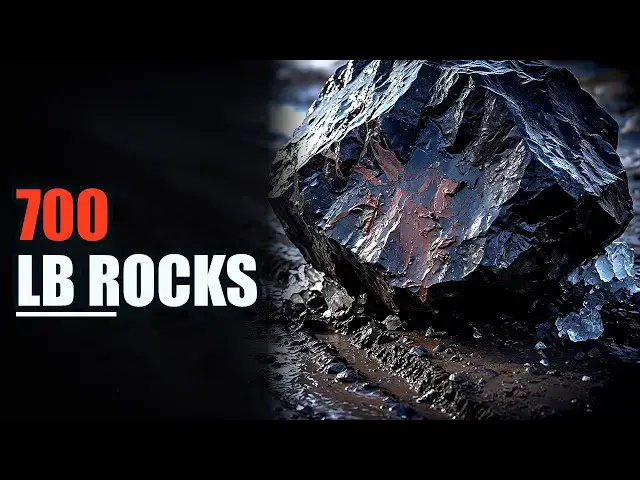
On December 21, 2013, at 11:37 a.m., ice thinner than a credit card started shoving 700-pound rocks across Death Valley. This is the logistics, then the physics, then the morning almost nobody ever sees.
0:00 The Ice Started Popping
0:40 The Floor That Should Not Move
1:35 Trails Without Footprints
2:30 The Wind That Was Not Enough
3:30 The Corral
4:45 Two Years of Nothing
6:00 Eleven Thirty Seven
7:15 Windowpane Ice
8:45 What Does Not Happen
10:05 One Minute in a Million
#SailingStones #DeathValley #RacetrackPlaya #Geology #IceShove #EarthScience #NationalParks #ScienceExplained
Public-record science from published field studies. Do not walk a wet playa. Do not take rocks. High-clearance roads only. This is not a summer travel guide. Life is Easy.
Visuals are original AI-generated stills. Audio may be synthetic. Not medical, legal, or financial advice.
Show More Show Less View Video Transcript
0:00
On December 21st, 2013, at 11:37 in the
0:04
morning, the ice started popping. You
0:06
are standing on a dry lake in Death
0:08
Valley that is not dry today. The air is
0:11
so still, you can hear your own jacket.
0:14
Then a sound like glass snapping from
0:17
every direction at once across a pond 3
0:20
in deep and about a mile wide.
0:23
Richard Norris turns to his cousin Jim
0:25
and says, "This is it." The wind is
0:27
doing about 10 mph. The ice is 3 to 6 mm
0:31
thick and rocks the size of a microwave
0:34
start walking. The floor that should not
0:36
move.
0:37
Racetrack.
0:39
Playa sits at 3,714 ft. A closed basin
0:43
2.8 mi long and 1.3 mi wide. The north
0:46
end is 1 and 1/2 in higher than the
0:48
south. That is the whole slope. Fine
0:51
clay, no plants. A dark dolomite cliff
0:54
dumps angular blocks onto the south end.
0:57
And those blocks sit on the mud as if
0:59
someone placed them for a photograph. To
1:02
get here, you drive about 27 mi of
1:04
washboard from Ubehebe Crater. High
1:06
clearance, spare tire, no cell. Summer
1:09
heat on the valley floor can pass 120.
1:13
Up here in winter, the nights drop below
1:15
freezing. You park. You walk. Your boots
1:18
make a hollow tick on the cracked
1:19
polygons. The silence is not empty. It
1:22
is pressure.
1:24
Trails without footprints.
1:26
Then you see the grooves. A track 3 to
1:29
12 in wide, less than an inch deep,
1:32
running 100 m across a surface that has
1:35
no current and no slope worth naming. At
1:38
the end of the groove sits a stone.
1:40
Sometimes the stone is 6 in across.
1:43
Sometimes it is a 700 lb dolomite block
1:46
named Karen, 29 in by 19 by 20, with a
1:50
170 m trail behind it. Two stones start
1:53
together, run parallel, then one veers
1:56
left as if it changed its mind. Rough
1:59
bottoms leave striated lines. Smooth
2:01
bottoms wander. Some stones flip and the
2:04
track changes width mid-stride. There
2:07
are no footprints, no tire marks if the
2:10
visitors behaved, just a furrow and a
2:12
rock that should not have been able to
2:14
draw it.
2:15
The wind that was not enough.
2:18
Joseph Crook, a prospector out of
2:20
Fallon, Nevada, wrote the first account
2:22
in 1915. In 1948, geologists Jim
2:27
McAllister and Allen Agnew mapped the
2:29
bedrock and guessed dust devil winds
2:31
shoving scrapers over wet mud.
2:34
George Stanley in 1955 said some of
2:37
these rocks weigh as much as a person
2:39
and the local wind is not enough. People
2:41
offered algal slime, magnetic rock,
2:44
pranks, aliens. The serious version was
2:47
always some mix of wind, water, and ice.
2:51
The problem was logistics. A stone that
2:53
heavy on clay that's sticky needs a
2:56
force you can feel. Calculations for
2:58
wind alone ran 33 to 45 m per second.
3:02
That is a storm that would knock you
3:04
over.
3:05
Winter gusts here can hit 90 mph, but
3:08
the rocks were not moving in the storms
3:10
people expected. They were moving when
3:12
nobody was looking, which for 70 years
3:14
was every time.
3:16
The corral.
3:18
In May 1968, Robert Sharp and Dwight
3:21
Carey started staking 30 stones. They
3:23
named them. Nancy was 2.5 in across. She
3:27
moved 260 m over 7 years, 281 m in a
3:31
single winter. 28 of the 30 moved, none
3:34
in summer. They also built a corral,
3:36
seven pieces of rebar 5.5 ft across,
3:40
around a 1-lb stone. If a big ice sheet
3:42
was dragging rocks, the stakes should
3:45
catch it. The first winter, the little
3:47
stone slipped between the bars and went
3:49
28 ft northwest. A heavier companion
3:52
stayed put. Sharp and Carey took that as
3:55
proof ice was not required.
3:57
Wind on wet clay, they said, every one
3:59
to three years. They were looking at the
4:01
right weather and the wrong ice. The ice
4:03
that actually does the work is too thin
4:06
to snag on rebar. It shatters, slides
4:08
past the stake, and still has enough
4:11
panel left to shove one rock and miss
4:12
the other. That is why the corral failed
4:16
and why the failure looked like a win
4:18
for wind. Two years of nothing. Winter
4:21
2011, the National Park Service will not
4:23
let you drill the native stones. So, Jim
4:25
Norris, who builds GPS gear, and his
4:28
cousin Richard, a paleobiologist at
4:30
Scripps, haul in 15 look-alike rocks
4:33
with motion-triggered units in cavities
4:36
on top. They put up a weather station
4:38
that logs gusts to the second,
4:41
time-lapse cameras.
4:43
Ralph Lorenz of Johns Hopkins calls it
4:45
the most boring experiment ever. They
4:48
wait.
4:49
2011 is dry. 2012 is dry. Ponds that can
4:53
freeze on this playa are rare.
4:56
Richard Norris later said it can be a
4:58
decade between rains heavy enough to
5:00
make a substantial pond. The rocks sit,
5:03
the GPS sleeps. You would have driven 27
5:06
miles of washboard for a photograph of
5:08
stillness. Then, late November 2013,
5:11
rain and snow put about 3 in of water on
5:15
the south end.
5:16
The cousins come back in December and
5:18
the playa is slop. They cannot walk on
5:21
it. They service instruments on the
5:24
north end. On December 20th, they missed
5:27
the main event by hours. More than 60
5:30
rocks have already cut fresh trails.
5:32
11:37,
5:34
they camp. December 21st, sunrise on a
5:38
sheet of ice over a pond 5 to 7 cm deep.
5:42
Melt pools open, a light breeze.
5:44
At 11:37 a.m., the ice pops and crackles
5:48
across the whole surface.
5:50
Floating panels tens of meters wide
5:52
start to move. Most rocks act like tiny
5:55
icebreakers. The ice splits, leaves a
5:57
wake of shards, and keeps going. Some
6:00
rocks do not split it. Ice stacks on the
6:03
upstream face, the panel becomes a
6:05
bulldozer, and the stone hydroplanes on
6:08
wet mud at 2 to 5 m per minute. That is
6:11
a crawling baby. You cannot see it from
6:14
100 yd without a reference. Individual
6:16
moves last a few seconds to 16 minutes.
6:19
GPS rocks 153 m apart start and stop
6:23
together. Same speed, same time,
6:26
identical trails. By the end of the
6:28
winter, the farthest instrumented rock
6:30
has gone 224 m in several events.
6:33
Hundreds of stones moved five times in
6:35
10 weeks. By mid-February, the pond is
6:38
gone and the playa is baking again.
6:40
Windowpane ice. And it gets worse
6:43
because the ice that does this is not
6:45
the ice anyone modeled. People wanted
6:47
thick flows that freeze around a rock
6:49
and float it. A raft with a keel.
6:52
Lauren's even froze a rock in a
6:54
Tupperware tray in 2011 and blew it
6:56
across sand. That model needed buoyancy.
7:00
The ice they measured in 2013 was 3 to 6
7:02
mm. Windowpane. Too thin to lift a
7:05
suitcase, let alone Karen.
7:07
Ice melts first around the rocks, so
7:10
they are not even locked in.
7:12
Light winds of 3 to 5 m per second,
7:14
about 10 mph, drive panels the size of a
7:17
parking lot. The force is not the wind
7:20
on the stone. The force is the momentum
7:23
of a sheet that can be a kilometer wide,
7:25
shoving a few millimeters of ice into
7:27
the rock's face while water under the
7:30
ice cuts friction on clay that has gone
7:32
to grease.
7:33
Goldilocks all the way down.
7:35
Pond deep enough to float ice, shallow
7:38
enough that rocks still poke out. Ice
7:40
thin enough to move, thick enough not to
7:43
shred on first contact. Wind strong
7:45
enough to push, weak enough not to
7:47
shatter the panel. Too much water and
7:49
the rocks drown. Too much ice and the
7:52
wind cannot budge the sheet. Too much
7:55
wind and the glass breaks before it
7:57
works.
7:58
What does not happen? Your house does
8:00
not sit on a playa. So, this is not
8:02
coming for your foundation.
8:04
Death Valley does not flood into a new
8:06
lake tomorrow. The sailing stones do not
8:09
start a nightly commute. Most years they
8:11
do not move at all. Lorenz put it at
8:13
about 1 minute in a million. A
8:15
statistical look at published moves
8:17
suggested the events may have gotten
8:19
rarer since the 1960s because you need a
8:22
wet winter and a freezing night and a
8:24
sunny morning with a breeze and drier
8:26
warmer winters steal the recipe.
8:29
Karen, the 700-lb block did not move in
8:33
Sharpen Carrie's 7 years.
8:35
She vanished before May 1994, probably
8:38
in the wet winter of 1992 to 1993, and
8:42
Paula Messina found her again in 1996,
8:45
about half a mile from the playa.
8:48
In May 2013, park staff were
8:50
investigating theft of several stones.
8:53
In August 2016, someone drove about 10
8:56
miles of illegal tire tracks into the
8:58
crust. Volunteers spent March 2018
9:01
erasing those tracks with hand tools and
9:04
750 gallons of water.
9:06
The rocks are slower than vandalism. The
9:08
playa remembers both. 1 minute in a
9:11
million.
9:12
You came for a mystery and you got a
9:14
machine. Rain, freeze, sun, 10-mph wind.
9:18
Ice you could snap with two fingers. A
9:20
rock that weighs as much as a
9:21
refrigerator slides because a pane of
9:23
frozen pond has more surface than the
9:26
rock has stubbornness. The trails last
9:28
for years. The motion lasts minutes.
9:31
Tourists may have watched it happen and
9:33
see nothing.
News
Geology
Physics