Up next in 10


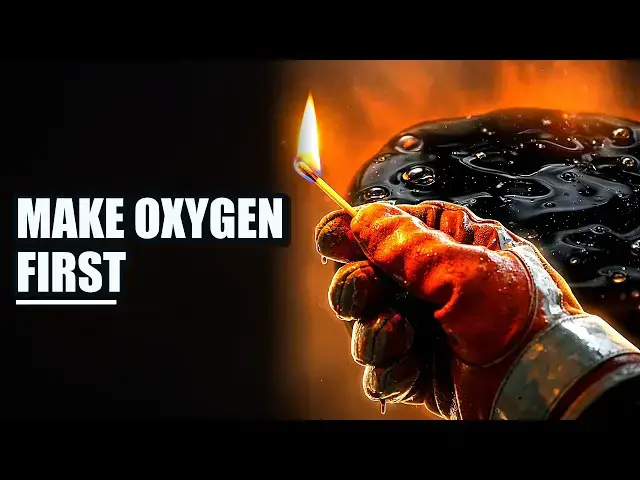
The coat-and-scuba picture of Titan is backwards. Huygens hit the sand on January 14th, 2005 at about 5 meters a second. Surface temp: minus 179 C. Pressure is fine. Fire is not. This is the real build order: seven-year haul, nuclear first, parachute landing, then oxygen from ice harder than granite.
0:00 Huygens, minus 179, the coat is a lie
0:42 The Coat Myth
2:05 Seven Years Out
3:28 Nuclear First
4:48 Parachute Arrival
6:10 Fuel Without Fire
7:32 Ice Like Granite
8:55 The Part That Actually Matters
10:18 Wings Not Rovers
11:28 What Does Not Happen
12:22 The First Hundred
#Titan #Saturn #SpaceColonization #NASA #Dragonfly #Huygens #WhatIf #OuterSolarSystem
Public-record numbers are approximate. This is an engineering thought experiment, not a mission announcement. No gospel pitch. Not financial, medical, or flight advice.
Visuals are original AI-generated stills. Audio may be synthetic. Not medical, legal, or financial advice.
Show More Show Less View Video Transcript
0:00
January 14th, 2005.
0:02
A European probe named Huygens hits
0:05
Titan at about 5 m a second after a
0:08
2-hour parachute ride. And the
0:10
thermometer on the damp sand reads -179
0:14
degrees Celsius.
0:16
The internet version of this moon says,
0:18
"You stroll a methane beach in a parka
0:21
and a scuba tank." That picture is
0:23
backwards. Titan is a planet-sized tank
0:25
of gasoline with nothing to light it.
0:29
The coat myth.
0:31
You step off the lander and the air
0:33
already has the pressure of a thick
0:35
afternoon in Houston, about 1 and 1/2
0:37
bars, almost all nitrogen. Your lungs
0:40
would not explode. Your blood would not
0:42
boil. The hard pressure suit Hollywood
0:45
sold you is dead weight on this beach.
0:48
What kills you in the first 90 seconds
0:50
is heat leaving your body.
0:52
At 94 Kelvin, exposed skin flash
0:55
freezes. A winter coat on Earth holds a
0:58
40-degree gap. You need a 200-degree
1:01
gap, bottled oxygen, and a heater that
1:03
never quits.
1:05
Walk outside in a Canada Goose and you
1:07
last about as long as a steak on a
1:09
cryogenic plate. The coat is a
1:11
punchline.
1:12
The first real object you unstrap is a
1:14
reactor because without watts, you
1:16
cannot make the air you burn. And
1:18
without that air, this whole moon is
1:20
just cold scenery.
1:23
7 years out.
1:24
Saturn sits about 1.4 billion kilometers
1:27
from the sun, 9 and 1/2 astronomical
1:30
units out. A Hohmann style transfer from
1:33
Earth eats 6 to 7 years of your life in
1:36
a can.
1:37
NASA's Dragonfly rotorcraft is booked to
1:40
leave around 2028 and kiss the dunes
1:42
around 2034. That is one cargo drop, one
1:46
robot, one decade. Conjunctions with
1:49
Saturn come around every 378 days, so
1:52
you can launch often, but nothing you
1:54
send today helps the crew that already
1:56
left. Every kilogram on the pad is a
1:58
kilogram you will not see again until
2:01
the next decade. Chemical stages can do
2:03
the haul. Nuclear thermal would cut the
2:06
clock. You still do not get a Mars style
2:08
18-month loop. You get a one-way truck
2:11
with a calendar measured in presidential
2:12
terms. Pack like the resupply ship is a
2:15
rumor.
2:16
If a pump seizes in year two, the spare
2:18
is a launch window and a cruise you will
2:21
not live to unpack unless you brought
2:23
two of everything that matters. Nuclear
2:25
first.
2:26
Sunlight at Titan is about 1% of what
2:29
you feel in Earth orbit. Solar panels
2:32
the size of parking lots still freeze,
2:34
still ice over with sticky organics,
2:37
still give you a trickle that cannot
2:38
melt a drill head. You do not bootstrap
2:41
this colony with photovoltaics. You fly
2:44
a fission reactor or you do not fly. A
2:47
few hundred kilowatts thermal, maybe a
2:49
kilowatt or two electric at first in the
2:51
kilo power class already run in the
2:53
Nevada desert. That core melts ice.
2:56
Melting ice makes water. Water plus
2:58
electricity makes oxygen and hydrogen.
3:02
Oxygen is the missing half of Titan's
3:04
economy. Until that loop is closed,
3:07
every match you strike is a match you
3:09
imported from Florida.
3:10
The popular colony render shows glass
3:13
domes and kids on bicycles under an
3:15
orange sky.
3:16
The actual first year looks like a
3:18
nuclear plant on skis, buried to the
3:20
eaves in haze, humming so the pipes do
3:22
not cease solid at 94 Kelvin. Lose the
3:25
reactor and you lose heat, then water,
3:28
then breath in that order in a week.
3:32
Parachute arrival.
3:34
Here is the gift nobody puts on the
3:36
poster.
3:37
Titan's air is thick and the gravity is
3:39
0.16 G, about 1/7 of Earth. Huygens
3:43
needed no landing rockets at the end. A
3:45
heat shield, a drogue, a main chute, and
3:49
a thud into damp sand. You can land tons
3:51
the same way.
3:53
Hypersonic entry heats the shield, then
3:55
the atmosphere grabs you like water.
3:57
Touchdown speeds sit in the walking
3:59
range. Compare that with Mars, where the
4:02
air is a rumor and every extra ton needs
4:05
retro propulsion and a sky crane prayer.
4:09
On Titan, the sky is your crane. You
4:12
still aim.
4:14
The dunes around Shangri-La and the
4:15
plains Huygens tasted in 2005 are solid
4:18
enough. The lakes are not. Drop a
4:21
habitat into Kraken Mare and you own a
4:23
methane submarine you did not order.
4:26
Site one is high ground ice bedrock out
4:29
of the flood channels within hopper
4:31
range of water ice you can actually dig.
4:35
You pin the first pad with radio beacons
4:38
before the second shoot even opens
4:40
because orange fog will eat your horizon
4:42
the minute you pop the hatch.
4:45
Fuel without fire.
4:47
Kraken Mare alone holds thousands of
4:50
cubic kilometers of liquid methane and
4:52
ethane.
4:53
The air is about 95% nitrogen with a few
4:56
percent methane. Photochemistry rains
4:59
tholins, benzene, acetylene onto the
5:02
dunes. Sci-fi treats that as free
5:05
energy. It is free fuel. Fuel is not
5:09
energy until it meets an oxidizer.
5:11
Titan has been soaking in hydrocarbons
5:14
for about 4 billion years and has never
5:16
had a wildfire because there is no free
5:18
oxygen in that sky.
5:20
You want heat? You electrolyze water
5:22
ice. You store the oxygen cold. You burn
5:25
the local methane in a closed engine and
5:28
then you have kilowatts that did not
5:29
come from the reactor. Reverse the stack
5:32
and you run fuel cells.
5:34
That loop is the whole industrial base.
5:37
Nitrogen plus hydrogen from methane
5:38
cracking gives you ammonia, fertilizer,
5:42
plastic feed stocks, and the ugly
5:44
chemistry of a a factory.
5:46
The moon is a chemical plant waiting for
5:48
a spark you have to manufacture. Until
5:50
the oxygen plant is online, those black
5:53
lakes are scenery, and scenery does not
5:56
keep a crew alive through a 16-day
5:58
night.
5:59
Ice like granite.
6:01
This is where the brochure dies. Surface
6:04
water.
6:06
Ice at 94
6:08
Kelvin is harder than most rock you have
6:10
ever drilled. Huygens' penetrometer
6:13
punched a crust and then sank into
6:15
something with the feel of packed snow
6:17
over wet sand. But that was a lucky
6:20
patch. Most of the crust is ice 1H, cold
6:23
enough that steel tools chip and bits
6:25
wander.
6:26
You do not scoop a drinking supply with
6:28
a shovel. You bring heat. A drill head
6:31
with a nuclear-fed thermal spike or a
6:34
microwave melt probe burns a hole,
6:36
slurries the water, and pumps it into a
6:38
tank before the line freezes into a dead
6:41
steel straw.
6:43
Every liter costs energy. Electrolysis
6:46
then takes about 50 kWh of electricity
6:49
per kilogram of oxygen before losses,
6:52
before the pump seized in the orange
6:54
fog, before you leak a fitting and watch
6:57
the product whistle into nitrogen. A
7:00
crew of 12 burning through a few
7:02
kilograms of oxygen a day is a rounding
7:05
error.
7:06
A settlement trying to smelt, fly, and
7:08
heat hangers is an oxygen mine.
7:11
The doubling time of this colony is the
7:13
doubling time of melt and split. Not the
7:16
doubling time of babies, and not the
7:18
doubling time of 3D printed habitat
7:20
shells you saw in a keynote. The part
7:23
that actually matters, and it gets
7:25
worse. Your waste heat, the thing that
7:27
cooks space stations in Earth orbit, is
7:30
the easy part here. The environment is a
7:33
94 Kelvin radiator. You dump heat
7:35
through huge fins, and the thick air
7:38
drinks it. What you cannot dump is the
7:40
organics. Acetylene can go off if it
7:43
concentrates in a pocket.
7:45
Hydrogen cyanide rides in the upper
7:48
haze. Liquid methane that wicks into a
7:51
seal will freeze it, then crack it, then
7:53
fill the cabin with an asphyxiant that
7:55
has no smell in a cold nose.
7:58
A habitat leak on Mars is a pressure
8:01
emergency. A habitat leak on Titan is a
8:04
chemistry emergency. You build double
8:06
hulls. You keep the oxygen side and the
8:09
methane side on different pads with a
8:11
kill zone of bare ice between them
8:14
because mixing your oxidizer store with
8:16
the native air is how you invent the
8:18
first Titan fire in geologic time. The
8:21
part that actually matters is not the
8:23
coat and not the lakes. It is keeping
8:26
the oxygen you paid 7 years to make away
8:28
from the fuel you are standing on. One
8:30
bad manifold and the outpost becomes a
8:33
flare the color of the sky. Wings.
8:36
Not rovers. Gravity is low. Air is about
8:39
four times denser than sea level Earth.
8:41
Strap on a pair of wings and a human can
8:44
fly. That is not poetry. Density times
8:47
lift divided by weight says a pilot in a
8:50
wing suit scale craft gets airborne with
8:53
a jogging start. NASA already designed
8:56
Dragonfly as an octocopter for that
8:58
reason. Hop about 10 km, sample, hop
9:01
again, covering more ground in a few
9:04
flights than Curiosity covered in a
9:06
decade of wheel time. Your colony does
9:09
not pave highways across linear dunes.
9:11
Your colony hangs hangers. Short-range
9:14
aviation moves ore, people, and spare
9:18
reactors between dune fields while the
9:20
methane weather allows. The same thick
9:23
air that lets you fly also lets you lose
9:26
yourself in orange smog with a
9:28
visibility of a few kilometers on a good
9:30
day.
9:31
You navigate by radio beacons and
9:33
inertial units the way ships did in fog
9:36
because the sun is a smear and Saturn is
9:39
a fixed lantern in the sky.
9:41
A Titan day lasts about 16 Earth days.
9:45
You plan work in long nights and long
9:47
noons, and the rotor blades ice if you
9:49
let them sit. A rover is a backup. The
9:52
real truck on this world has blades.
9:56
What does not happen?
9:58
Nobody founds a city in 2034. Dragonfly
10:01
will be a drone the size of a car, not a
10:04
town.
10:04
Methane lakes do not ignite if a lander
10:07
tips over because there is still no
10:09
oxygen in the air to carry a flame. Your
10:12
current life on Earth does not change.
10:15
Saturn does not get a flag and a mayor.
10:17
A million people do not ship out on a
10:19
7-year clock. The ice crust does not
10:22
melt into a water world under a few
10:24
heaters. Greenhouse tricks that work in
10:27
thin Martian carbon dioxide do not scale
10:29
the same way under a nitrogen sky this
10:32
thick and this cold. You would be
10:34
heating an ocean of atmosphere one watt
10:36
at a time. Crews do not walk to work in
10:39
parkas in year one, year five, or year
10:41
20. They walk in heated oxygenated hard
10:44
shells that look like the coat myths'
10:46
expensive older sibling.
10:48
What stays frozen is the timeline in
10:51
your head. This is a fuel depot and an
10:53
oxygen factory that might, after
10:55
decades, justify a second factory.
10:58
Tomorrow morning, Titan is still minus
11:01
179, still orange, still waiting on a
11:05
reactor that has not left Earth. The
11:07
first hundred. You want a number for the
11:09
first real outpost. Call it 100 tons on
11:13
the ground, a fission core, a melt
11:15
drill, an electrolysis stack, a methane
11:18
engine, two hoppers, and a habitat
11:21
buried under ice for radiation you
11:23
barely need, and for the wind you do.
11:26
Cassini, in orbit from 2004 to 2017,
11:29
measured a surface that is kind by outer
11:32
solar system standards. Galactic cosmic
11:35
rays are blunted by the thick air and by
11:37
Saturn's magnetosphere.
11:39
That is the quiet gift under the orange.
11:42
You spend the mass budget on a
News