Up next in 10


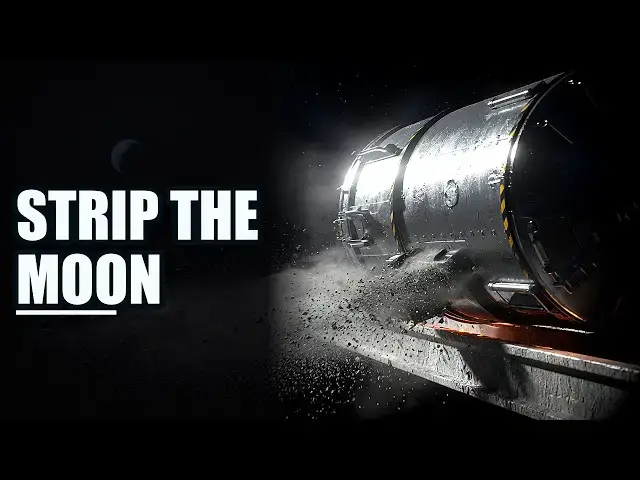
The glass snow-globe city is the last 5% of a Bernal sphere, and the wrong 5%. In summer 1975 NASA Ames and Stanford sized Island One at 500 meters, 1.9 rpm, 10,000 people, and about 10 million tons — most of it lunar slag. This is the build order: mass driver, catcher, can, spin, shield, then a gravity belt.
0:00 The 1975 number
0:48 The Glass Ball Lie
2:12 Strip the Moon First
3:48 Ten Million Tons
5:18 The Catcher at L5
6:42 Pressure Before Beauty
8:06 Two Revolutions a Minute
9:28 The Shielding Problem
10:52 Gravity That Lies to You
12:10 What Does Not Launch
This is a physics and logistics walkthrough, not a launch announcement. Mass, rpm, and shielding figures follow the public 1970s NASA Ames / Stanford summer-study range; treat them as about-numbers.
#BernalSphere #SpaceColony #ONeill #NASA #L5 #MoonMining #SpaceSettlement #IslandOne
Not financial, engineering, or mission advice.
Visuals are original AI-generated stills. Audio may be synthetic. Not medical, legal, or financial advice.
Show More Show Less View Video Transcript
0:00
In the summer of 1975, NASA, Ames, and
0:03
Stanford locked about 30 physicists and
0:05
engineers in a room for 10 weeks and
0:07
told them to design a town in space.
0:09
They came back with a sphere 500 meters
0:12
across, spinning almost twice a minute,
0:14
built for 10,000 people, and a mass
0:17
budget of about 10 million tons. The
0:19
picture that leaked out of that study is
0:21
a glass snow globe with a city glued to
0:24
the inside. That picture is the last 5%
0:27
of the job and it is the wrong 5%. The
0:30
glass ball lie. You do not live on the
0:33
whole inner surface. You live in a belt.
0:35
A Bernal sphere is a pressure vessel 500
0:38
meters in diameter sketched by John
0:41
Desmond Bernal in 1929 and sized as
0:44
island one by Gerard O'Neal in the
0:46
1970s. At t equals zero, you have no
0:50
hull, no air, and no spin. You have a
0:53
drawing. Gravity from rotation is
0:55
velocity squared over radius. For 1g at
0:58
250 meters, the sphere has to turn about
1:01
1.9 revolutions per minute. Walk from
1:04
the equator toward either pole, and the
1:06
floor's radius shrinks, so your weight
1:08
falls with it. At the poles, you float.
1:11
The cutaways still park cottages up
1:13
there. Those cottages would sit in a few
1:15
ten of a g with a coriololis shove in
1:17
every inner ear. The glass is wrong,
1:19
too. You do not glaze the hull and stare
1:22
at the stars. Micrometeoroids would
1:24
frost that window in a year. Sunlight
1:26
comes in through mirrors and light
1:28
pipes. The so-called window on the
1:30
universe is a radiator and a whipple
1:32
shield. You are building a can that
1:34
cheats with mirrors. Strip the moon.
1:36
First Earth will not throw this. A space
1:38
launch system. Block one puts about 95
1:41
tons into low Earth orbit. 10 million
1:44
tons of habitat is on the order of a
1:46
100,000 of those flights before you
1:48
count propellant failures or the fact
1:50
that most of the mass is dead rock for
1:52
radiation. You do not start at Kennedy
1:55
Space Center. You start in a trench on a
1:57
lunar highland because the moon is
1:59
already in space already broken into
2:01
dirt and it only takes about 2.4 km per
2:04
second to leave the surface. At one
2:07
sixth of AG, a mass driver, an
2:09
electromagnetic rail a few kilometers
2:11
long, can throw compacted bags of
2:13
aluminum, oxygen, silicon, and slag
2:16
toward a point 60,000 km away. Lunar
2:20
Regalith is about 40% oxygen, 20%
2:23
silicon, 12% iron, 8% aluminum. That is
2:27
whole metal breathing gas, glass, and
2:29
the ugly remainder that becomes your
2:31
shield. At T equals one year, the first
2:34
buckets leave the rail. They are not
2:36
habitats. They are ore. 10 million tons.
2:40
The number that actually runs the
2:42
project is not population. It is 10
2:44
million tons. And about 90% of that is
2:47
shielding. Cosmic rays and solar
2:49
particle events do not care that your
2:51
architecture is elegant. You want
2:52
several meters of slag or centered rock
2:55
around the living volume on the order of
2:57
four to five tons of mass per square
2:59
meter of hull. Walk the outside of a 500
3:01
meter sphere and the surface area is
3:03
about 785,000 square meters. Multiply.
3:06
You are stacking a small mountain onto a
3:08
balloon. Island one in the 1975 study
3:11
was sized for 10,000 people. That is a
3:14
thousand tons of dead mass per resident
3:17
before anyone unpacks a bed. The
3:19
doubling time of the space industry is
3:21
the real clock. If your lunar mine and
3:24
your smelter at L5 can double output
3:26
every two or three years, you get a
3:27
sphere in a generation. If they cannot,
3:30
you get a monument that starves. Steel
3:32
mills on Earth doubled like that in
3:34
wartime. Vacuum smelters have never done
3:36
it. You are betting the whole town on a
3:38
doubling curve nobody has run in vacuum.
3:41
The catcher at L5. The bags do not land.
3:44
They arrive at Earth Moon L5, the point
3:47
where the gravity of both bodies lets a
3:49
catcher loiter. You are standing in a
3:51
spider of tethers and nets in vacuum
3:53
watching a stream of lunar packages come
3:55
in at a few tens of meters per second if
3:57
the mass driver timed it or a lot faster
4:00
if it did not. A miss is a projectile. A
4:04
hit on the unfinished hull is a hole.
4:06
The 1975 summer study put the industrial
4:08
park here on purpose. Continuous
4:11
sunlight for solar furnaces. No
4:13
planetary night. No atmosphere to fight.
4:15
You melt regalith in a concentrated
4:18
beam. Pull off oxygen. cast aluminum
4:20
plate spin slag into radiation brick. At
4:23
t equals 5 years, you have a stockyard
4:25
and a thin shell starting to close. You
4:28
do not have a sky. You have a glare of
4:30
furnaces and a pile of gray brick that
4:32
will someday be the thing that keeps you
4:34
from dying of a solar flare. The catcher
4:36
is the most boring machine in the
4:38
drawings and the first one that can kill
4:40
the schedule. If it cannot eat a
4:42
continuous stream of rock, the mass
4:44
driver on the moon is just a gunfiring
4:46
into the dark. Pressure before beauty.
4:50
The first closed object is a thin
4:53
aluminum can, maybe a few millimeters of
4:55
plate, welded in sections, not spinning,
4:58
not pretty. You pressurize it with lunar
5:01
oxygen and a nitrogen import you still
5:03
have to buy from Earth or from a
5:05
carbonacious asteroid because the moon
5:07
is stingy with nitrogen. One atmosphere
5:10
inside a 500 meter sphere is about 65
5:13
million cubic meters of air. That is not
5:15
a rounding error. It is a fleet of
5:18
tanker loads. If you try to ship it from
5:20
Florida, you leak check in zerog with
5:22
dye and patience. Until the can holds,
5:25
nothing else matters. Houses, trees,
5:27
rivers in the brochures, those wait. A
5:31
puncture at this stage vents a year of
5:33
atmosphere work into a vacuum that does
5:35
not care. You do not spin yet. Spinning
5:38
a leaky can turns a hole into a moving
5:40
wound. The order is hull, pressure,
5:43
then, and only then, rotation. Every
5:46
painting that shows a finished park
5:47
inside an open lattice is a lie about
5:50
sequence. Two revolutions a minute. Now
5:53
you spin it. 1.9 revolutions per minute
5:56
at the equator gives you 1g. That number
5:59
sits on the edge of what human inner
6:01
ears will tolerate. Turn your head and
6:03
the corololis effect shoves the fluid in
6:06
the canals sideways. Pour a cup of
6:08
coffee and the stream bends. Throw a
6:10
ball and it misses by meters. Comfort
6:13
studies have long treated 2 RPM as the
6:15
ugly end of acceptable. You could build
6:17
a bigger sphere and spin slower. A
6:20
radius of about 900 meters gets you near
6:22
one RPM. That is more hull, more shield,
6:25
more years. Island one was 500 m because
6:28
they were trying to make the first one
6:30
cheap. Cheap here still means 10 million
6:33
tons. During spin-up, there are no
6:35
axles. You fire thrusters or you run a
6:38
flywheel and you watch weld seams take
6:40
load they have never seen. If the mass
6:43
distribution is off by a fraction, the
6:45
sphere wobbles. A wobble at this scale
6:48
is a demolition. You add slag as balance
6:51
weights. The first week of spin is a
6:53
machine shop problem the size of a town.
6:56
The shielding problem. And it gets
6:58
worse. The radiation shield is most of
7:00
the mass, and you still have to hang it
7:02
on a spinning pressure vessel without
7:04
tearing the vessel apart. Several meters
7:07
of rock at 1g on a hull a few millime
7:09
thick is a brick on a balloon. The 1975
7:13
team knew this. The design that actually
7:15
survives is a non-spinning outer shell
7:18
of slag, a gap, and a habitat that turns
7:21
inside it. You live in a rotor. The
7:23
shield sits still and soaks galactic
7:26
cosmic rays. Bearings or magnetic
7:28
suspension or a rotating seal now sit
7:32
between your air and the rock that keeps
7:33
you alive. Those seals leak. They always
7:36
leak. You budget water and air for the
7:39
leak the way a submarine budgets for the
7:41
packing gland. Solar particle events
7:43
still arrive in minutes. The outer brick
7:46
buys you time. It does not make you
7:48
invincible. A big flare in an unshielded
7:50
construction shack, the kind your
7:52
welders are still using at TI equals 5,
7:55
is a medical casualty list. The finished
7:57
sphere is a radiation dump with a hotel
8:00
inside. The dump has to exist before the
8:02
hotel or the hotel is a grave. Gravity
8:05
that lies to you stand on the equator.
8:07
That is 1g or close enough if they spun
8:09
it true. Walk north and your weight
8:11
drops with the radius. At 45° of habitat
8:14
latitude, you are already light.
8:17
Children would learn that uphill toward
8:18
the poles is also toward flying. The
8:21
agriculture does not fill the ball. It
8:23
fills the belt where the gravity is
8:25
honest enough for irrigation to behave.
8:27
Trees in the brochures have a problem.
8:29
They grow in a gravity gradient and a
8:31
coriololis field. Water wants to go to
8:34
the equator. So do loose tools and so do
8:36
you if you trip wrong. The named mini
8:38
case is dated. In August 1975, the NASA
8:42
as summer study closed. there. Island
8:45
one was this sphere. 10,000 people,
8:48
mirrors for light, agriculture in
8:50
modules, a mass driver on the moon as
8:52
the supply chain. They did not put a
8:54
river around the poles. They put
8:56
industry there in low G where moving a
8:58
steel beam costs less. If you ever board
9:01
one, you will spend your life in a band
9:03
a few hundred meters wide under a sky
9:06
that is a mirror, listening to the
9:08
airplanes hum. The rest of the sphere is
9:11
machinery, an empty volume you paid 10
9:14
million tons to enclose.
9:17
What does not launch? What does not
9:20
happen tomorrow morning? Kennedy does
9:22
not start stacking a sphere. The
9:24
International Space Station does not
9:26
grow a 500 meter hull. Your city does
9:28
not empty into L5. Lunar dirt does not
9:32
become a town because a video explained
9:34
the order. Nobody wakes up in a snow
9:36
globe. The physics does not care about
9:38
the paintings. A Bernal sphere is a
9:40
lunar mine, a mass driver, a catcher, a
9:44
can, a spin, a shield, and then a belt
9:47
you can walk. Skip a step and you have a
9:50
wreck. Build them in order.
News