Up next in 10


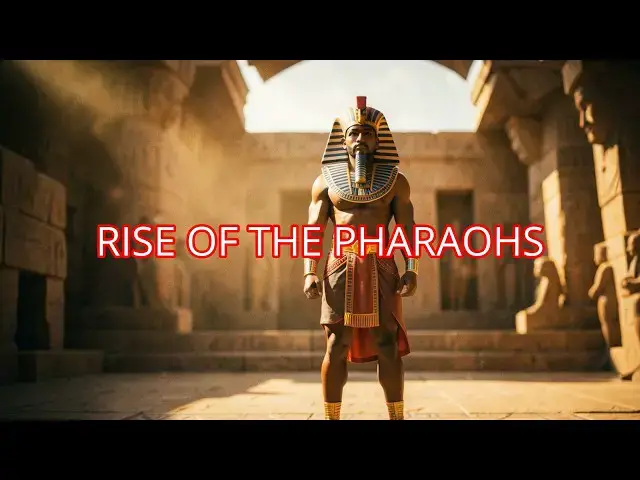
During the time of ancient Egypt, there rose pharaohs, who lead and controlled the nation.
Show More Show Less View Video Transcript
0:00
Women in ancient Egypt wielded
0:01
significant influence, managing
0:03
households and enterprises while some,
0:05
like Hatshepsut, ascended to pharaonic
0:08
power, challenging conventional gender
0:10
roles of their time.
0:12
For centuries, [music]
0:13
Upper and Lower Egypt existed as
0:14
separate kingdoms. Then, a visionary
0:17
king forged them into one, laying the
0:19
foundation for a unified nation.
0:21
This momentous unification marked the
0:23
beginning of dynastic Egypt. [music]
0:25
The First Dynasty arose, establishing a
0:27
central authority that would rule for
0:29
millennia.
0:31
Pharaohs were not mere kings.
0:32
>> [music]
0:32
>> They were considered divine
0:33
intermediaries. Their rule was believed
0:36
to be sanctioned by the gods,
0:37
>> [music]
0:38
>> demanding absolute reverence.
0:40
The early dynasties focused on
0:42
consolidating power and establishing
0:44
administration.
0:45
>> [music]
0:45
>> They organized labor, collected taxes,
0:47
and began ambitious construction
0:49
projects.
0:51
Ancient Egyptians displayed remarkable
0:53
ingenuity. They [music] developed
0:54
sophisticated irrigation systems,
0:57
quarries, and tools to shape their
0:58
monumental vision.
1:00
The Old Kingdom ushered in an era of
1:02
unparalleled ambition, the construction
1:04
[music]
1:04
of the pyramids.
1:06
These colossal tombs were testaments to
1:08
pharaonic power.
1:09
These magnificent [music]
1:10
structures were designed to protect the
1:12
pharaoh's body and guide their spirit to
1:14
the afterlife, ensuring cosmic order was
1:17
maintained.
1:18
The enigmatic [music] Great Sphinx,
1:20
guarding the Giza Plateau, stands as a
1:22
silent sentinel. Its purpose and
1:25
creators continue to inspire [music]
1:26
wonder and debate. Beyond monumental
1:29
feats, pharaohs lived lives of ceremony
1:31
and governance. They [music] presided
1:32
over feasts, judged disputes, and
1:35
maintained crucial trade routes.
1:37
Treasury vaults were filled with goods
1:39
for the afterlife, gold, jewels,
1:41
furniture, [music] and provisions. These
1:44
riches provided invaluable insights into
1:46
their world.
1:47
Following the Old Kingdom, the Middle
1:49
Kingdom saw a resurgence.
1:50
>> [music]
1:51
>> Art and literature flourished, and Egypt
1:53
extended its influence through trade and
1:55
diplomacy.
1:56
Pharaohs of this era actively sought
1:58
trade [music] routes, bringing exotic
2:00
goods from Nubia, Punt, and the Levant.
2:02
This expanded Egypt's wealth and
2:04
cultural horizons.
2:06
However, [music] this golden age was not
2:08
without its trials. Invasions by the
2:10
Hyksos brought instability and
2:12
introduced new technologies like the
2:13
chariot.
2:15
Despite the disruption, Egypt learned
2:17
from its conquerors, adopting new
2:19
military strategies and weaponry.
2:21
>> [music]
2:21
>> This eventually paved the way for its
2:23
recovery.
2:24
Emerging from the Hyksos period, the New
2:26
[music] Kingdom became Egypt's most
2:28
glorious and powerful era. Pharaohs
2:30
commanded vast armies and built
2:32
magnificent temples.
2:34
New Kingdom pharaohs were ambitious
2:36
empire builders. They pushed Egypt's
2:38
borders south into Nubia and [music]
2:39
east into the Levant, creating an
2:41
immense empire.
2:43
Instead of pyramids, New Kingdom rulers
2:45
were buried in hidden rock-cut tombs
2:47
[music] in the Valley of the Kings,
2:49
seeking greater security for their
2:51
treasures.
2:52
Thutmose [music] III, the Napoleon of
2:54
Egypt, was a military genius. His
2:56
campaigns extended Egypt's reach further
2:58
than any pharaoh before him.
3:00
Hatshepsut, one of history's [music]
3:02
most powerful female rulers, defied
3:04
tradition. She ruled as pharaoh,
3:06
commissioning ambitious building
3:08
projects and trade expeditions.
3:10
Hatshepsut's famous expedition to the
3:12
land [music] of Punt returned laden with
3:14
incense, ebony, ivory, and exotic
3:16
animals, showcasing Egypt's global
3:18
connections.
3:20
Pharaoh Akhenaten attempted a radical
3:21
religious shift, promoting the worship
3:23
of [music] the Aten, the sun disk, above
3:25
all other gods. This was a profound
3:28
break.
3:29
Akhenaten moved his capital to a new
3:30
city, Akhetaten, [music]
3:32
modern Amarna, dedicated to the Aten. It
3:34
was a short-lived but revolutionary
3:36
[music] era.
3:37
The boy king Tutankhamun restored the
3:39
old gods after Akhenaten's death. His
3:41
relatively undisturbed tomb provided
3:43
[music] an unparalleled glimpse into
3:45
royal wealth.
3:46
Magnificent temples like Karnak and
3:48
Luxor were [music] built to honor the
3:50
gods and pharaohs. These vast complexes
3:52
were centers of religious and economic
3:54
life.
3:56
Ramses
3:56
>> [music]
3:56
>> II
3:57
the Great, reigned for over 60 years,
3:59
undertaking massive building projects,
4:01
and engaging in famous conflicts,
4:03
>> [music]
4:03
>> most notably the Battle of Kadesh.
4:06
The temples of Abu Simbel, carved into
4:08
cliffs, [music] are monumental tributes
4:09
to Ramses II and his queen Nefertari, a
4:12
testament to his immense power.
4:14
The Battle of Kadesh against the
4:16
Hittites was [music] a pivotal moment,
4:18
leading to one of history's earliest
4:20
recorded peace treaties, signed by
4:21
Ramses II. [music]
4:23
The complex administration of the
4:25
Egyptian state relied heavily on
4:27
scribes.
4:27
>> [music]
4:28
>> They meticulously recorded everything
4:29
from grain harvests to royal decrees on
4:32
papyrus.
4:34
Egyptian physicians developed advanced
4:35
medical knowledge, performing surgeries,
4:38
setting bones, and creating remedies
4:40
from natural ingredients, as documented
4:42
[music] in medical papyri.
4:44
Ma'at, the concept of truth, justice,
4:46
and cosmic order, was central to
4:48
Egyptian belief.
4:50
Pharaohs were responsible for upholding
4:51
Ma'at throughout the land.
4:53
For the common people, life revolved
4:55
around the Nile's annual inundation.
4:58
Farming was the backbone of the [music]
4:59
economy, providing sustenance for all.
5:02
Skilled artisans created beautiful
5:04
objects, pottery, [music] jewelry,
5:06
furniture, and tomb decorations. Their
5:08
dedication to detail and artistry was
5:10
legendary.
5:11
Religion permeated every aspect of
5:13
Egyptian life.
5:15
Temples were centers of worship, and
5:17
[music] priests held significant
5:18
influence, mediating between mortals and
5:20
the divine.
5:22
The vizier [music] was the pharaoh's
5:23
chief advisor and administrator, second
5:25
only to the king. They oversaw justice,
5:27
[music]
5:28
public works, and the treasury.
5:30
The cult of Amun-Ra rose to prominence
5:32
during the New Kingdom, becoming the
5:34
state [music] god.
5:35
His priests wielded considerable
5:36
political and economic power.
5:39
Egypt maintained [music] complex
5:40
relationships with neighboring kingdoms,
5:42
engaging in diplomacy, trade, and
5:44
occasional conflict.
5:46
Treaties were crucial for regional
5:48
stability.
5:49
The elaborate [music] process of
5:50
mummification ensured the body's
5:52
preservation for the afterlife. It was a
5:54
sacred ritual conducted by skilled
5:57
embalmers.
5:58
The Book of the Dead provided spells
6:00
[music] and guidance for the deceased's
6:02
journey through the underworld, helping
6:04
them navigate the perils of the
6:05
afterlife.
6:06
Despite its grandeur, [music]
6:08
the New Kingdom eventually faced
6:09
internal strife and external pressures.
6:12
The vast empire began to fray at its
6:14
edges.
6:15
Waves of Sea Peoples
6:16
>> [music]
6:16
>> attacked Egypt's shores during the reign
6:18
of Ramesses III, further destabilizing
6:20
the kingdom and weakening its defenses.
6:23
Over time, regional governors [music]
6:25
and temple priesthoods gained more
6:27
autonomy, diminishing the central
6:29
authority [music] of the pharaoh and
6:30
leading to fragmentation.
6:33
The Third Intermediate Period saw Egypt
6:35
divided, with rulers in Tanis and Thebes
6:37
often coexisting, sometimes in conflict.
6:40
Foreign powers exerted influence.
6:42
Libyans, Nubians, [music] and Assyrians
6:44
would eventually conquer and rule parts
6:46
of Egypt, challenging its sovereignty
6:48
and altering its cultural landscape.
6:51
A period of revival known as the Saite
6:53
Renaissance saw efforts to restore
6:55
ancient traditions and pride, though
6:57
Egypt remained under foreign influence.
7:00
The Persian Empire conquered Egypt in
7:02
525 BCE, adding it to their vast domain.
7:07
Pharaohs were replaced by satraps
7:08
[music] under Persian rule.
7:10
Alexander the Great liberated Egypt from
7:12
Persian rule, founding the city of
7:14
Alexandria, which would become a center
7:16
of Hellenistic culture and learning.
7:19
Following Alexander's death, his general
7:21
[music] Ptolemy established the
7:23
Ptolemaic dynasty. Greek rulers now sat
7:25
on the pharaonic throne, blending
7:27
[music] cultures.
7:29
Cleopatra VII, the last Ptolemaic ruler,
7:31
navigated the complex political
7:33
landscape, [music]
7:34
forging alliances with Roman leaders
7:35
like Julius Caesar and Mark Antony.
7:38
Cleopatra's defeat and death marked the
7:40
end of pharaonic rule and the Ptolemaic
7:42
dynasty. Egypt became a Roman province
7:45
in 30 before [music] common era.
7:47
Though pharaonic rule ended, the legacy
7:49
of ancient Egypt persisted. Its
7:51
monumental architecture, art, and
7:53
religious ideas profoundly [music]
7:55
influenced the world.
7:57
From humble beginnings along the Nile,
7:59
ancient Egypt rose to become one of
8:01
history's most enduring civilizations,
8:03
>> [music]
8:03
>> shaping human development for millennia.
8:06
The pharaohs cast a long shadow. Their
8:08
reigns marked by divine authority,
8:09
[music]
8:10
monumental construction, and ambitious
8:12
expansion that defined an ancient world.
8:14
[music]
8:15
The sands of Egypt still whisper tales
8:17
of these powerful rulers. Their cities,
8:19
tombs, and temples stand as [music]
8:21
silent witnesses to a magnificent past.
8:24
From irrigation to hieroglyphs, their
8:26
innovations were groundbreaking. They
8:28
mastered architecture, astronomy, and
8:30
governance, [music]
8:31
leaving a legacy of human achievement.
8:34
Their deeply religious society believed
8:36
in [music] an afterlife and the divine
8:38
right of kings, shaping their monumental
8:40
efforts and daily rituals.
8:42
Egyptian art was rich with symbolism,
8:45
telling stories of gods, rulers, and the
8:47
afterlife through intricate carvings,
8:49
paintings, [music] and statues.
8:51
The pharaoh's journey from earthly ruler
8:53
to divine being was central to their
8:55
ideology, driving the monumental efforts
8:58
for tombs and temples.
9:00
The grandeur and mystery of ancient
9:01
Egypt continue [music] to captivate us.
9:03
Their civilization remains a profound
9:05
source of wonder and study.
9:07
Ultimately, the Nile sustained it all.
9:10
The river provided life, facilitating
9:12
agriculture, transport, and the very
9:14
foundation of this magnificent
9:16
civilization.
9:17
Do you feel the pull of ancient Egypt's
9:19
mysteries?
9:21
Share your thoughts in the comments,
9:22
>> [music]
9:22
>> and follow for more journeys into
9:24
history's greatest empires.
Arts & Entertainment
History
Royalty
Archaeology