Up next in 10


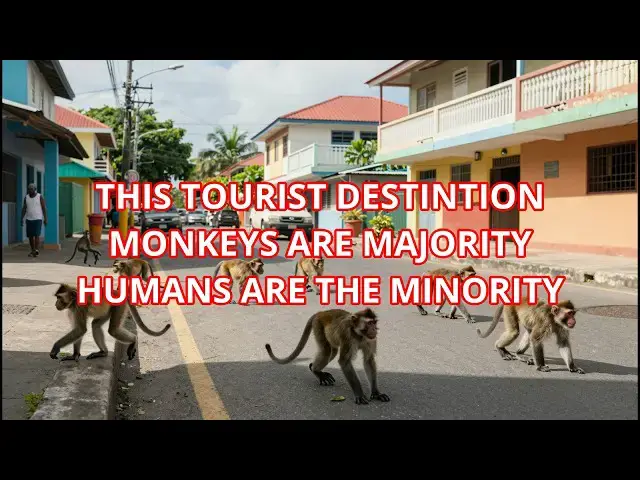
A small beautiful tourist island in the Caribbean has a larger monkey population than human residents. Monkeys terrorize the residents, destroy their gardens plants and vegetables. Steal their food and sometimes try to enter their homes.
Visit and learn more about St. Kitts and Nevis and the Caribbean:
Travel free or at discount. Work from home as a Travel Agent: https://gr3f.co/c/61445/er6g5
Show More Show Less View Video Transcript
0:00
Beautiful island I left years ago is now
0:02
overrun by monkeys.
0:04
Gosh, what happened?
0:08
>> St. Kits, a jewel of the Caribbean, is
0:11
known for its [music] stunning beauty.
0:13
But beneath the surface, a centuries old
0:15
conflict is escalating between residents
0:17
and an [music] unexpected, rapidly
0:19
growing population. The island's most
0:21
famous non-human inhabitants, the
0:23
African vervet monkeys, were not always
0:25
here. They were first introduced
0:27
centuries ago, likely during the
0:29
colonial era for reasons now lost to
0:32
time. Today, [music] these green
0:34
monkeys, classified as an invasive
0:36
species, number in the tens of
0:38
thousands. Their population has
0:40
exploded, thriving in an environment
0:42
with few natural predators to keep them
0:44
in check. Historically, [music] these
0:46
primates stayed primarily in the
0:48
island's lush mountain rainforests.
0:50
However, [music] recent ecological
0:52
shifts and resource availability have
0:54
driven them down into human inhabited
0:56
areas seeking easier sustenance. Now,
0:59
these intelligent animals are venturing
1:01
into villages and [music] towns, their
1:03
natural foraging grounds becoming less
1:05
fruitful or more competitive, pushing
1:07
them toward easily [music] accessible
1:09
human settlements. Residents are finding
1:12
their homes increasingly vulnerable.
1:14
Monkeys are bold enough [music] to enter
1:16
kitchens and living spaces, seeking out
1:18
any accessible food left unguarded by
1:21
the island's human [music] inhabitants.
1:23
Groceries, fruits, and even full meals
1:25
are becoming targets. These
1:27
opportunistic [music]
1:28
feeders have developed a knack for
1:30
snatching food, leaving families
1:31
distressed and their carefully prepared
1:34
meals gone. Home gardens, [music] a
1:36
source of fresh produce for many St.
1:38
Kits residents, are being systematically
1:40
destroyed. Monkeys consume [music] young
1:43
plants and vegetables, decimating crops
1:45
before they can be harvested. Beyond
1:47
property damage, the [music] monkeys
1:49
exhibit increasingly bold behavior
1:51
towards humans. Residents report being
1:53
chased [music] or intimidated by troops
1:55
of monkeys, creating a climate of fear
1:57
and unease. For centuries, [music] these
2:00
green monkeys have been labeled a pest
2:02
species on St. Kits. Their abundance
2:04
[music] and disruptive behavior
2:06
necessitate active management strategies
2:08
to mitigate the impact on local life.
2:11
The lack [music] of natural predators on
2:12
St. Kits allows the Vervet monkey
2:14
population to grow unchecked. This
2:17
ecological imbalance is a primary driver
2:19
behind their increasing pressure on
2:21
human settlements. Scientists are using
2:24
advanced techniques like radio telemetry
2:26
tracking to estimate population sizes
2:28
and understand home range behavior. This
2:31
data is crucial for developing effective
2:33
[music]
2:33
long-term management plans.
2:36
Understanding exactly where the monkeys
2:38
roam and what resources they seek
2:39
[music] is key. Habitat analysis helps
2:42
researchers pinpoint areas of high
2:44
activity and identify critical zones for
2:46
intervention. The island's [music]
2:48
government and scientific community are
2:50
exploring various management strategies.
2:52
[music] These range from population
2:54
control measures to educational programs
2:57
aimed at fostering coexistence. These
2:59
monkeys controversial measures like
3:01
culling and trapping are often
3:02
considered for population control.
3:05
However, these [music] methods spark
3:06
intense debate about ethics,
3:08
effectiveness, and the broader
3:10
ecological [music] implications.
3:12
Understanding how the local community
3:14
perceives the monkey [music] problem is
3:16
vital. Their long-standing experiences
3:18
and viewpoints shape the feasibility and
3:21
acceptance of [music] any proposed
3:22
management solutions. Harm reduction
3:25
concepts are being applied to understand
3:27
this issue. The goal [music] is to
3:29
minimize negative impacts on agriculture
3:31
and residents while acknowledging the
3:33
monkeykey's role in [music] tourism and
3:35
research. Local agriculture suffers
3:37
immensely. [music] Farmers lose entire
3:40
harvests to monkey raids, impacting
3:42
their livelihoods and the [music]
3:43
island's food security. This makes
3:45
subsistance farming increasingly
3:47
difficult. While monkeys are a draw for
3:49
tourists, their aggressive [music]
3:51
behavior and the damage they cause can
3:53
detract from the visitor experience,
3:55
posing a [music] complex challenge for
3:57
the island's economy. Interestingly,
4:00
Vervet monkeys also play a role in
4:02
biomedical research. Their physiological
4:05
similarities to humans make them [music]
4:07
valuable subjects for scientific
4:08
studies, adding another layer to their
4:10
management debate. A significant concern
4:13
[music] is the potential transmission of
4:15
parasites. Studies have linked St. kits
4:18
vervet monkeys to parasites capable of
4:20
infecting humans. Though conclusive
4:22
testing on the island is ongoing,
4:25
residents are forced to adopt new
4:26
strategies to protect their homes. This
4:29
includes reinforcing windows, securing
4:31
[music] food supplies, and constantly
4:33
being vigilant against raids by the
4:35
everpresent primates.
4:37
Simple acts like leaving food out or
4:39
windows open are no longer feasible.
4:41
Storing groceries in sealed containers
4:43
and keeping doors firmly shut are now
4:45
daily necessities for survival. This
4:48
persistent issue has become known
4:50
locally as the monkey problem.
4:52
>> Go away.
4:52
>> It's a daily struggle for many,
4:54
impacting their quality of life and
4:56
sense [music] of security on their
4:57
beautiful island home. While monkeys can
5:00
be an attraction, aggressive encounters
5:02
can deter tourists. Negative experiences
5:05
can lead to poor reviews and [music]
5:07
reduced visitor numbers, affecting the
5:09
island's vital tourism industry. St.
5:12
Kits [music] faces a delicate balancing
5:14
act, protecting its residents and
5:16
agriculture while [music] managing an
5:17
invasive species that's also part of its
5:19
unique ecological and economic [music]
5:21
fabric. The ultimate goal is
5:23
sustainable, scientifically informed
5:26
management. This requires long-term data
5:28
and locally relevant strategies [music]
5:30
to ensure a future where humans and
5:32
primates can coexist. St. Kits serves as
5:35
a case study [music] for the complex
5:36
challenges of human primate interfaces
5:39
worldwide. Its experiences offer
5:41
critical lessons for managing [music]
5:43
invasive species and ecological
5:45
conflicts. The island's ecosystem
5:47
[music]
5:47
is shared. Finding a way for its human
5:50
and primate populations to thrive
5:51
[music] without constant conflict
5:53
requires innovative solutions and a deep
5:56
understanding of ecological dynamics.
5:58
The sheer abundance of vervet monkeys on
6:00
St. [music] Kits presents a unique
6:02
challenge. Managing a population that
6:04
has become so wellestablished and
6:06
widespread requires sustained effort and
6:08
[music] resources.
6:10
Local residents have adapted to the
6:12
constant presence of monkeys. They've
6:14
developed routines [music] and
6:15
strategies to minimize interaction and
6:18
protect their property from these
6:19
persistent opportunistic primates. The
6:23
impact extends to domestic animals. Pets
6:25
can be harassed or even injured by
6:27
aggressive monkeys, adding another layer
6:29
of concern for St. Kits households.
6:31
>> I am not afraid of highly adaptable and
6:34
resilient. [music]
6:35
Their ability to thrive in diverse
6:37
environments, including urban fringes,
6:39
[music] makes them a formidable species
6:41
to manage effectively on St. kits.
6:44
Striking an ecological balance is
6:46
paramount. [music]
6:47
St. Kits is working to find solutions
6:49
that reduce human wildlife conflict
6:51
without [music] causing unintended harm
6:53
to the island's delicate natural
6:54
systems. Managing invasive species
6:57
[music] like the verve monkey requires a
6:59
multifaceted approach. St. Kits's
7:01
efforts involve scientific research,
7:03
community engagement, and adaptive
7:05
policymaking to address the ongoing
7:07
challenges.
7:09
Studies on home range [music] dynamics
7:11
reveal how monkeys utilize their
7:13
environment. Understanding these
7:15
patterns helps predict their movements
7:17
and design interventions in critical
7:18
[music] zones. The dynamic interface
7:21
between humans and primates on St. Kits
7:24
is a complex study. It highlights how
7:26
human activities and wildlife behavior
7:28
[music] are intertwined, demanding
7:30
integrated management approaches. The
7:32
search for sustainable solutions is
7:34
ongoing. Researchers and locals are
7:37
collaborating [music] to find non-lethal
7:38
methods and community-based initiatives
7:40
that foster coexistence [music] and
7:42
reduce conflict. The future of
7:45
coexistence on St. Kits hinges on
7:47
proactive management. Addressing the
7:49
root [music] causes of the monkey
7:50
population surge and mitigating human
7:52
wildlife conflict are critical for
7:54
long-term success.
7:57
St. Kits [music] grapples with a unique
7:58
dilemma. how to manage an invasive
8:00
species that has become deeply ingrained
8:02
in the island's identity, economy, and
8:05
daily [music] life. Farmers are
8:07
implementing creative solutions to
8:09
protect their crops. Fencing, [music]
8:11
deterrence, and careful planting
8:13
schedules are becoming essential tools
8:15
in the battle against hungry [music]
8:16
primates. Both monkeys and residents are
8:19
demonstrating behavioral adaptations.
8:22
The [music] primates learn human
8:23
routines while humans develop strategies
8:26
to coexist with their primate neighbors,
8:28
creating a [music] unique island
8:29
dynamic. Long-term mixed methods data
8:33
are critical. This includes ecological
8:34
[music]
8:35
surveys, behavioral observations, and
8:37
community input, all vital for crafting
8:39
scientifically [music]
8:40
informed and sustainable management
8:42
strategies. Effective management relies
8:45
on community engagement. Educating
8:47
residents about monkey behavior and
8:49
involving them in conservation efforts
8:51
fosters shared responsibility [music]
8:53
and successful outcomes. Efforts are
8:56
underway to restore natural habitats
8:57
[music] and enhance biodiversity.
9:00
This aims to provide sufficient
9:01
resources in wildlife areas, potentially
9:04
reducing the need for monkeys [music] to
9:06
venture into settlements. For tourists,
9:09
encounters can be memorable but also
9:11
problematic. Safe viewing guidelines and
9:13
education are crucial to ensure monkeys
9:15
remain an attraction, not a menace. The
9:18
economic ramifications are significant,
9:20
affecting agriculture, tourism, and even
9:23
the cost of living. Managing the monkey
9:25
population is crucial for St. Kits's
9:28
economic stability and growth. Ethical
9:30
considerations are central to any
9:32
management plan. [music] Balancing the
9:34
welfare of the monkeys with the needs
9:36
and safety of human residents is a
9:38
[music] complex moral and practical
9:40
challenge. Beyond visible damage,
9:42
there's an unseen impact on residents
9:44
[music] peace of mind. The constant
9:46
vigilance required erodess tranquility
9:48
[screaming] and creates underlying
9:50
stress in everyday [music] life on the
9:51
island. The vervet monkeys have become
9:54
an intrinsic part of St. Kits's unique
9:56
[music] identity. Balancing their
9:58
presence with human needs is key
9:59
[screaming] to preserving this distinct
10:01
Caribbean [music] island character.
10:03
Adaptive management, which involves
10:05
continuous monitoring and adjusting
10:07
strategies, is essential. St. Kits must
10:10
remain flexible in its approach [music]
10:11
as the human primate dynamic evolves.
10:14
Ongoing scientific research is the
10:16
bedrock of informed decision-making. St.
10:19
Kits relies [music] on studies to
10:20
understand population trends, health,
10:22
and behavior to guide management efforts
10:25
effectively. [music]
10:26
Securing agricultural futures requires
10:29
innovative solutions. St. Kits is
10:31
exploring [music] advanced farming
10:33
techniques and protected cultivation
10:35
methods to ensure reliable food
10:36
production despite monkey pressures.
10:38
[music]
10:39
Tourism, a vital economic pillar for St.
10:42
Kits, is a double-edged sword. While
10:44
monkeys attract visitors, negative
10:46
interactions [music]
10:47
can severely damage the island's
10:48
reputation and appeal. Education [music]
10:51
is a powerful tool in conflict
10:53
mitigation, teaching residents and
10:55
visitors about monkey behavior, risks,
10:57
and responsible practices [music] can
10:59
significantly reduce negative
11:01
encounters. A long-term vision is
11:03
essential for St. Kits. [music] It
11:05
requires sustained commitment to
11:07
research, community involvement and
11:09
adaptive management to foster a
11:11
harmonious future [music] for all
11:12
inhabitants.
11:14
The monkey problem has redefined island
11:16
life on St. Kits. It challenges
11:18
traditional notions of paradise [music]
11:20
and highlights the complex realities of
11:22
living in close proximity to abundant
11:24
wildlife. St. Kits's situation offers a
11:27
parallel to human wildlife conflicts
11:29
worldwide. The strategies developed
11:31
[music] here can provide valuable
11:33
insights for other regions facing
11:35
similar challenges with thriving primate
11:37
populations.
11:39
St. Kit stands as a compelling case
11:41
study in the intricate dance between
11:43
human civilization and thriving
11:44
wildlife. Its ongoing efforts highlight
11:47
the challenges and possibilities of
11:49
[music] coexistence.
11:51
The island's journey is one of
11:52
continuous adaptation and [music]
11:54
learning. St. Kits' story is a powerful
11:56
reminder that finding harmony between
11:58
[music] human needs and the natural
12:00
world is a shared evolving
12:02
responsibility.
12:03
Discover more about the incredible
12:05
biodiversity and the ongoing [music]
12:07
conservation efforts on islands like St.
12:09
Kits. Support initiatives dedicated
12:11
[music] to understanding and managing
12:13
human wildlife relationships.
12:16
>> Thank you for watching. Please
12:18
subscribe, please share, please like and
12:22
help us grow this channel. Also tell us
12:25
where you are watching from.
Travel & Transportation