Up next in 10


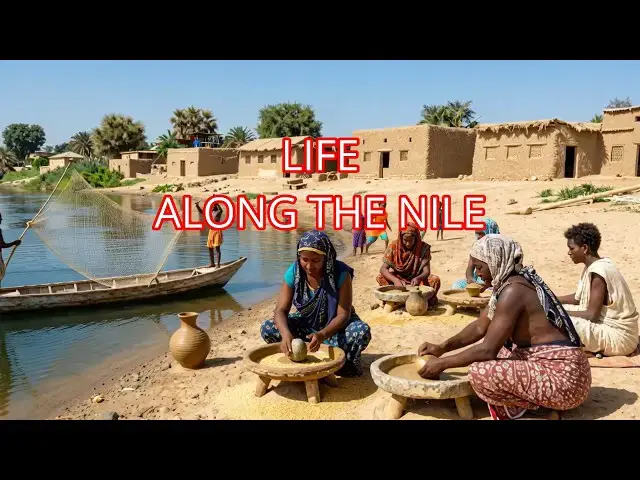
Life depended much on the River Nile during ancient times. Their source of food, through farming as water irrigation came from the Nile.
Travel free or at discount. Work from home as a Travel Agent: https://gr3f.co/c/61445/er6g5
Show More Show Less View Video Transcript
0:00
Scribes often worked in communal spaces
0:02
where they documented [music] daily
0:03
activities. These spaces buzzed with
0:05
energy, filled with ink pots, reeds for
0:08
writing, and scrolls of papyrus.
0:10
The Nile River stood as the undisputed
0:13
center of ancient Egypt's existence. Its
0:15
consistent seasonal rhythm nurtured a
0:17
civilization that flourished for
0:19
millennia.
0:20
This civilization, established around
0:23
5,000 years ago, endured [music] for
0:25
over 2,000 years, a longevity directly
0:27
attributable to the river. It provided
0:29
fertile land, water, and [music]
0:31
transportation.
0:33
The annual floods of the Nile River were
0:35
a pivotal natural event.
0:37
>> [music]
0:37
>> These floods consistently brought rich
0:39
black soil to the river banks,
0:41
rejuvenating [music] the land for
0:42
essential agriculture.
0:44
This fertile black soil from the floods
0:46
[music] was the cornerstone of ancient
0:48
Egyptian agriculture. It enabled farmers
0:50
to cultivate abundant crops, [music]
0:52
sustaining the entire population.
0:55
Farmers formed the very foundation of
0:56
[music] ancient Egypt's economy. Their
0:59
agricultural output was the backbone of
1:01
society, supporting all other
1:03
professions and classes.
1:05
Most of [music] the Egyptian population
1:06
resided in villages, typically located
1:08
near the Nile Valley and its [music]
1:10
Delta region. These communal settlements
1:12
provided a base for farming families.
1:15
After the Nile's annual inundation
1:17
receded, farmers diligently [music]
1:19
tilled the newly fertilized soil.
1:21
This was the crucial period for sowing
1:23
their primary [music] crops.
1:25
Wheat and barley were the staple crops,
1:27
forming the foundation of [music] the
1:28
Egyptian diet. Bread, made from wheat,
1:31
was the main source of food for all
1:33
social classes.
1:34
Beyond food, farmers also cultivated
1:36
flax, a vital crop used to produce
1:38
linen.
1:39
>> [music]
1:39
>> This versatile textile was essential for
1:41
clothing, sails, and other daily
1:43
necessities.
1:44
To manage unpredictable [music]
1:46
water levels, farmers dug short canals
1:48
leading from the Nile to their fields.
1:50
These ingenious systems ensured
1:52
year-round irrigation, even during dry
1:54
periods.
1:55
Beyond staples, Egyptian farmers
1:57
cultivated variety of foods, including
1:59
vegetables and fruits.
2:01
They also raised livestock like cattle,
2:03
goats, and poultry, diversifying the
2:05
diet.
2:06
>> [music]
2:06
>> The harvest was a busy, communal time,
2:08
requiring collective effort.
2:11
Families worked together to gather the
2:12
ripe crops, ensuring the season's bounty
2:14
was secured.
2:16
Commoners, including most farmers,
2:18
resided in smaller mud-brick houses.
2:20
These practical dwellings were typically
2:22
located close to their fields or
2:24
workshops,
2:24
>> [music]
2:25
>> facilitating daily work.
2:27
Unlike farmers in some other regions,
2:29
ancient Egyptian farmers often lived in
2:30
villages rather than directly on their
2:32
land.
2:33
>> [music]
2:33
>> Many villages also had protective walls,
2:36
prioritizing communal safety.
2:38
This village-based living fostered
2:39
[music] strong community ties and
2:41
cooperation. Tasks like irrigation and
2:44
harvesting often involved collective
2:46
effort, [music] reinforcing social bonds
2:48
among farmers.
2:49
The annual rhythm of life for farmers
2:51
was entirely dictated by the Nile.
2:54
Flood, sowing, and harvest formed the
2:56
unyielding yearly cycle [music] of their
2:57
labor.
2:58
The staple foods of the Egyptian diet
3:00
predominantly included bread [music] and
3:02
beer. These were often supplemented with
3:04
onions, garlic, lentils, and fish,
3:07
providing basic sustenance.
3:09
Fishing in the Nile and hunting in its
3:11
surrounding regions further supplemented
3:13
the diet. These activities [music]
3:15
provided crucial protein and variety,
3:18
supporting a healthy population.
3:20
During the annual Nile flood, when
3:22
fields were submerged, many farmers
3:24
temporarily [music]
3:25
worked for the pharaoh. They often
3:27
served as laborers on grand construction
3:29
projects, [music] like pyramids.
3:31
Artisans and craftsmen, vital to
3:33
Egyptian society, typically worked in
3:35
small [music] workshops.
3:36
These spaces were often located near the
3:38
villages, reflecting their middle-class
3:40
[music] status.
3:42
The range of craftsmanship was
3:43
extensive, from potters shaping vessels
3:46
to jewelers creating exquisite
3:47
adornments. Each skilled [music] trade
3:49
contributed unique goods to society.
3:52
Sculptors carved stone and wood into
3:54
statues and reliefs,
3:55
>> [music]
3:55
>> while carpenters fashioned furniture and
3:57
tools.
3:59
These professions required specialized
4:00
skills and meticulous [music]
4:02
precision.
4:03
Weavers transformed flax into linen,
4:05
creating clothing for all classes, from
4:07
simple kilts to elaborate dresses.
4:10
Their craft was fundamental to daily
4:11
life and trade.
4:13
From simple pottery for storing grains
4:15
to ornate jewelry for the elite,
4:17
craftsmen produced goods for both
4:18
necessity and luxury. They catered to
4:21
the entire social spectrum.
4:24
Technological innovations in brewing,
4:26
architecture, and textiles
4:27
>> [music]
4:27
>> reflected the ingenuity of the Egyptian
4:30
workforce.
4:31
This advanced craftsmanship was a
4:32
hallmark of their civilization.
4:35
Along with merchants, craftsmen and
4:37
middle-class professionals generally
4:38
enjoyed relative prosperity.
4:41
Their skilled labor was highly valued,
4:43
offering a comfortable life above basic
4:45
farming.
4:46
Scribes occupied the highest echelons of
4:49
ancient Egyptian society, alongside
4:51
priests [music] and the pharaoh's
4:52
family. Their education and literacy set
4:55
them apart.
4:56
Education for scribes was a rigorous and
4:58
specialized path, mainly reserved for
5:00
boys from noble or wealthy families.
5:03
Most Egyptians could not read or write.
5:05
In these special schools, aspiring
5:07
scribes [music]
5:08
learned hieroglyphics, the intricate
5:10
picture writing system. They also
5:12
mastered mathematics and crucial
5:14
administrative skills.
5:16
Scribes were [music] indispensable
5:18
record keepers, documenting everything
5:20
from grain harvests and [music] tax
5:22
collections to legal proceedings. Their
5:24
meticulous notes preserved history and
5:26
maintained order.
5:28
They authored official government
5:29
documents, decrees, and correspondence,
5:32
acting as the bureaucratic backbone
5:34
[music] of the state.
5:35
These writings guided administration
5:37
across the land.
5:39
Scribes also [music] played a crucial
5:40
role in cultural preservation,
5:42
meticulously copying religious texts,
5:45
literary works, and historical accounts.
5:47
They safeguarded Egypt's intellectual
5:49
heritage. [music]
5:50
Their mathematical and administrative
5:52
skills extended to architecture. Scribes
5:55
might assist [music] in planning
5:56
monumental structures, calculating
5:58
resources and logistics for vast
6:00
projects.
6:01
Scribes [music] were crucial for
6:03
managing the economy, particularly the
6:05
storage and distribution of grain. Their
6:07
grain accounting [music] ensured food
6:09
security and managed the barter system.
6:12
They meticulously [music] recorded taxes
6:14
and tributes owed to the pharaoh and
6:16
temples. This ensured the stable
6:18
functioning of the state and its
6:20
monumental projects.
6:22
In legal matters, scribes documented
6:24
court proceedings and judgments,
6:26
ensuring a written record of justice.
6:28
>> [music]
6:28
>> They provided clarity and accountability
6:30
within the legal system.
6:33
The work of farmers, [music]
6:34
craftsmen, and scribes was profoundly
6:36
interconnected. Each group relied on the
6:38
others for the functioning and
6:40
prosperity of the ancient Egyptian
6:42
state.
6:43
The concept of Ma'at ensured that all
6:45
labor, whether menial or prestigious,
6:47
was respected. Every profession was
6:50
viewed as essential to maintaining
6:51
societal harmony and order.
6:53
Farmers constituted the largest segment
6:55
of the population and formed the base of
6:57
the social hierarchy. Their labor
7:00
sustained everyone, from pharaohs to
7:02
priests.
7:03
Craftsmen, [music]
7:04
merchants, and other middle-class
7:06
professionals occupied a more
7:07
comfortable position. Their skills
7:10
allowed for a higher standard of living
7:12
than most [music] farmers.
7:13
At the very top of the social hierarchy,
7:16
scribes, along with priests, held
7:18
significant power and prestige. They
7:20
contributed to governance and cultural
7:22
preservation.
7:23
Scribes were crucial to the governance
7:25
of Egypt. [music]
7:26
Their ability to read, write, and manage
7:29
records made them indispensable
7:31
administrators for the pharaoh and his
7:32
officials.
7:33
Through their collective efforts, the
7:35
people of ancient Egypt created [music]
7:37
one of history's most enduring legacies.
7:40
A stable civilization arose the diverse
7:42
workforce.
7:44
The specialized trades [music] along the
7:45
Nile's banks allowed for a thriving
7:47
society. From farmers to scribes, every
7:50
role played [music] a vital part in
7:51
sustaining the nation.
7:53
Examining the daily lives and
7:55
achievements of workers [music] across
7:56
all classes reveals the ingenuity and
7:59
resilience of this extraordinary
8:00
civilization. Their solutions [music]
8:03
endured for millennia.
8:04
The flourishing of their economy,
8:06
religion, and artistry was [music]
8:08
deeply rooted in specialized trades.
8:10
These roles allowed for high-quality
8:12
production in every sector.
8:14
By combining practical [music] skills
8:16
with cultural and spiritual dedication,
8:18
ancient Egyptians created a stable and
8:20
enduring [music] civilization. Every
8:23
profession contributed meaningfully.
8:25
The Nile River also served as ancient
8:27
[music] Egypt's primary transportation
8:29
route. Its waters facilitated trade,
8:31
communication, and the movement of goods
8:34
and people. [music]
8:35
At the pinnacle of the social hierarchy
8:37
stood the pharaoh and his family.
8:38
>> [music]
8:38
>> Below them were nobles, priests,
8:40
doctors, and the increasingly crucial
8:43
scribes.
8:44
>> [music]
8:44
>> The upper class consisted of the
8:45
pharaoh, his family, wealthy landowners,
8:48
priests, [music] and doctors. This elite
8:50
group enjoyed privileges and held
8:52
significant power.
8:54
Traders, merchants, and craftsmen
8:55
[music]
8:56
belonged to the middle class. They
8:58
benefited from their specialized skills
9:00
and contributed to commerce and
9:02
production.
9:03
Unskilled workers formed the lower
9:04
class, primarily working in the fields
9:06
of [music] farms.
9:08
They were the essential labor force,
9:10
performing physically demanding tasks.
9:12
Despite social stratification, loyalty
9:15
to the pharaoh, and cultural dedication
9:17
united all ancient Egyptians. This
9:19
shared purpose fostered a cohesive and
9:22
effective society. [music]
9:23
The overall prosperity driven by
9:25
agriculture and specialized trades
9:27
allowed for magnificent cultural
9:29
richness. This extended to elaborate
9:31
[music] temples, tombs, and stunning
9:33
visual arts.
9:34
From the colossal pyramids to the
9:36
intricate temples, ancient Egyptian
9:38
architecture [music] stands as a
9:39
testament to their organized labor and
9:42
skilled craftsmanship.
9:44
Scribes preserved their extensive
9:46
knowledge in hieroglyphs, ensuring the
9:48
continuation of their wisdom. This
9:50
included religious texts, historical
9:52
annals, and rich literary works.
9:55
The contributions of farmers, [music]
9:56
craftsmen, and scribes formed the
9:58
bedrock of one of history's most
10:00
fascinating civilizations. Their
10:02
ingenuity along the Nile left an
10:04
indelible mark. [music]
10:06
The adherence to Ma'at, the principle of
10:08
cosmic order and justice, fostered a
10:10
cohesive society. Every member, from
10:13
farmer to pharaoh, understood [music]
10:14
their role in maintaining balance.
10:17
The Nile River, a timeless source of
10:18
life, [music] shaped every aspect of
10:20
ancient Egyptian civilization. Its
10:22
waters enabled a unique interplay
10:24
[music] of human effort, creativity, and
10:26
administration.
10:28
Discover more about the fascinating
10:29
daily [music] lives and incredible
10:31
achievements of ancient civilizations.
10:33
Like this video. [music] Subscribe for
10:35
more historical journeys.
News
Anthropology