Up next in 10

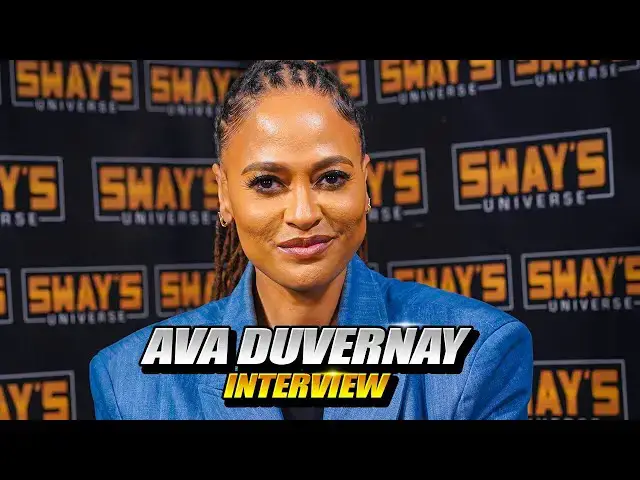
Inside 'Origin': Ava DuVernay's Bold Take on 'Caste' - Transformative Cinema 🌟 | SWAY’S UNIVERSE
Jan 22, 2024


Join us for a riveting journey with Ava DuVernay as 'Origin' delves deep into the untold narratives that have shaped our society. The acclaimed filmmaker sits down in an exclusive interview on Sway’s Universe to discuss the groundbreaking film adapted from Isabel Wilkerson's eye-opening book, "Caste: The Origins of Our Discontents." This must-watch conversation explores how 'Origin' confronts the systemic structures of racism and the cast system, offering a profound reflection just in time for a pivotal election year.
With DuVernay’s passion for storytelling and commitment to social justice, this film is not just a cinematic triumph but an essential piece in understanding our history and its impact on the present. As we navigate a charged political climate, 'Origin' emerges as a critical lens, challenging us to re-examine the hidden histories that have been swept under the rug. Ava's insights on balancing creativity with business, empowering every individual on set, and the urgency of heeding political warnings make this interview a source of inspiration and a call to action.
Don't miss the powerful narrative that has audiences of all backgrounds applauding in theaters. Subscribe to Sway's Universe for more exclusive interviews that enlighten, entertain, and inspire. Watch 'Origin' to witness the transformative storytelling of Ava DuVernay and join the conversation on our social media platforms. #AvaDuVernay #OriginMovie #IsabelWilkerson #SwaysUniverse #HiddenHistories #SocialJustice
#AvaDuvernay #BackgroundActors #VisionaryFilmmaking #Sexism #HipHopCulture
CHAPTERS:
0:00 - Introduction to Ava DuVernay
2:48 - Ava DuVernay's Creative Process
5:35 - Teamwork in Filmmaking
9:27 - "Sankofa" and Political Relevance
10:02 - Timing of "The 13th" Release
11:23 - Filmmaking Book Recommendation
14:59 - Starting a Film Production Company
17:17 - Inspiration Behind "The 13th"
22:16 - Understanding Caste Systems
24:30 - Making of "Origins" Movie
Subscribe Here! http://bit.ly/SubscribeSU
Watch the Best of Sway In The Morning! http://bit.ly/BestOfSITM
Check out More From Sway’s Universe
http://swaysuniverse.com
http://twitter.com/swaysuniverse
http://instagram.com/swaysuniverse
http://facebook.com/swaysuniverse
#SwaysUniverse #SwayInTheMorning #SiriusXM #Shade45
About SWAY’s UNIVERSE
Exclusive interviews from Sway Calloway and the Sway In The Morning/ SwaysUniverse.com team with some of today's biggest celebrities, like Kevin Hart, Kanye West, Eminem, Usher, Jessica Alba, Steve Aoki, Torey Lanez, Julia Stiles and so much more.
Ava DuVernay's 'Origin' Exposes Hidden Histories: Must-Watch 🎬 | SWAY’S UNIVERSE
https://youtu.be/54QNMhZ3Nfo
Sway’s Universe
https://www.youtube.com/UCuS96jkLKpTaGB_OWnwZV_A
Show More Show Less View Video Transcript
0:00
I just made a promise to her that I'm
0:02
I'm going to stop bringing that up.
0:04
That's only one. You know only one.
0:05
Well, they don't go as deep as I go, do
0:07
they?
0:08
You know you know a thing or two about
0:10
research. You know all your amazing
0:12
projects. I'm sure you did a lot of
0:14
research.
0:16
That's that's Okay, this one we're about
0:18
to talk about now. You couldn't have
0:19
made this without doing the research.
0:21
Yes. Right?
0:22
It's true. Okay,
0:24
um and so I want to welcome you back to
0:26
the show, ladies and gentlemen.
0:28
Um this woman is great um for so many
0:30
reasons. Um When They See Us is one of
0:33
them. A big round of applause.
0:35
Okay, Middle of Nowhere is another one.
0:37
Yes. Give that big round of applause.
0:39
Selma is another one. Give that a big
0:41
round of applause. No misses. I Will
0:43
Follow is another one. Give that a big
0:45
round of applause. THIS IS THE LIFE.
0:48
AND I COULD GO ON AND ON and on um for
0:51
the way that she tells stories, I think
0:54
is uh so necessary. It's been such an
0:56
additive to uh cinema, to film, um to
0:59
our community. This movie that she made
1:01
um called this new film called Origin
1:05
is so powerful for so many reasons. Um
1:08
it's based on a it's an adaptation from
1:11
a book called Caste: The Origins of Our
1:13
Discontents by Isabel Wilkerson.
1:16
Brilliant book. Brilliant movie. I think
1:20
we all should go see this movie,
1:22
especially now as we enter this uh
1:24
presidential race and what we're
1:26
starting to see, what we're starting to
1:28
witness in our country. There's a lot of
1:30
history that's been swept under the rug
1:32
now. People are just lying in our faces
1:34
about what actually took place, how this
1:36
country was built, how other countries
1:39
were built. History um is not our it's
1:42
not true. History has been very
1:44
inaccurate um over the years and um this
1:48
movie is going to open people's eyes to
1:51
a different way of seeing society and
1:53
how it's been built. Uh racism and how
1:57
it's used and utilized, the caste system
1:59
which I'm going to ask her to um uh
2:01
break down momentarily, but I want to
2:03
say thank you, Ava DuVernay, for the
2:04
work that you put out into the world.
2:06
Yes. The vibrations that you put out in
2:08
the world. I went and saw this movie by
2:10
myself last night and I didn't feel
2:12
alone.
2:14
Ain't that something?
2:15
Yes. Ain't that something, right? And
2:17
people of all walks of life were in that
2:20
theater.
2:21
All walks of life and we all applauded
2:24
it.
2:25
You know.
2:26
Okay.
2:26
Different religions, different tax
2:28
brackets.
2:28
Race, yep. Different places in the caste
2:31
system.
2:31
Yes, yes. And we all applauded this
2:33
movie. Ava DuVernay is here. Please give
2:35
her a big round of applause.
2:37
YAY, I always love coming here. Thanks
2:40
for welcoming me.
2:41
I would wouldn't have it any other way.
2:43
This is why I do this, for moments like
2:44
this and for people like you. Which is
2:46
conduits. Yay, I I hear you. It's good
2:49
word.
2:49
Well, we're all right. Isn't that what
2:51
we are?
2:52
It is. These visions that you get when
2:54
you want to make a movie
2:56
like Origin, you know, um what what what
2:59
are you what where do they come from?
3:01
Where do ideas come from? You know what
3:02
I mean? They just sometimes they just
3:03
hit me strong and I know they're for me.
3:05
I don't even know if it's a calling or I
3:08
don't know what to say. I just know that
3:09
when I hear it or when I read it, I know
3:12
it's for me. And they don't come often.
3:14
Okay. And it comes on strong like, you
3:16
must do this. This is yours.
3:18
Mhm. And you know, I I I take it on as
3:21
as as my responsibility to do and then I
3:24
I work hard until I deliver it to
3:25
people. Wow. How do you cuz now you got
3:28
the studios, right? You got the facility
3:30
built that you built up, right? What
3:32
what's it called again?
3:33
Array. Array, right? And then how many
3:34
employees do you have now?
3:35
Uh a couple dozen. Couple dozen, right?
3:38
Are you there every day? I am there. If
3:40
I'm not on the road or if I'm not on the
3:41
set. When I'm on the set I have about a
3:43
thousand people working with me. But at
3:45
home at Array it's a couple dozen, yeah.
3:47
How do you balance the the the
3:48
professionalism, the the business aspect
3:51
with the creative aspect? How does it
3:52
not get convoluted?
3:54
It's a bit of a juggling point, but I'm
3:55
a writer, director, and producer. So the
3:57
producer is the business side of the
3:58
movies.
3:59
So I'm on set doing all of those all of
4:02
the aspects of that job, which it just
4:04
all is one thing to me. You know, if
4:05
you're lucky enough to be a creative
4:07
person and you also know about business,
4:09
right? Then you're going to be able to
4:11
protect yourself much more in your
4:12
expression and have more freedom because
4:14
you're not relying on someone else. So I
4:17
find that they go hand in hand.
4:18
They go hand in hand. I'm wondering what
4:20
Array is like to be a actor or actress
4:23
that comes through that company. We had
4:24
the cast assistants Mhm. um here the
4:27
other day. Had to be who had to step out
4:29
um is with the season six of Sisters,
4:32
right?
4:32
she on it? Six. Yeah, she was on there
4:34
and she spoke about being on the set
4:37
with Tyler Perry at his studios. They
4:40
treated her like royalty.
4:42
The the actors and said that they get
4:45
treated like royalty. What is it like
4:47
being in Array? Uh well, on our sets I
4:50
feel like everybody's royalty. And so
4:52
you can't forget about the crew. I mean
4:54
these are the people who are waking up
4:55
first. They're waking up when it's dark.
4:57
They're setting up the lights, you know,
4:58
they're bringing in the porta-potties.
5:00
They're bringing in the food. And so
5:01
it's important for me that everyone be
5:03
treated um
5:04
be treated well. Like I I yes, I want
5:07
the actors to be treated well, but I
5:08
also want the grips and the gaffers and
5:10
the camera people and the hair and
5:11
makeup people to be treated well. So I
5:13
try to create like a flat system where,
5:15
you know, disrespect is not allowed.
5:17
None of that is accepted. And we have
5:19
like less hierarchy, less you're better
5:22
than this person. So um so that's
5:24
something that we you really have to
5:25
cultivate because the way our society is
5:27
set up,
5:28
you know, some people are stars and some
5:30
people are not. And um we try to make it
5:33
so that everyone feels like they have a
5:34
seat at the table. I saw you speaking
5:36
very highly and my goodness, I have to
5:38
commend you for this, Ava, for really
5:42
bringing reverence to um
5:45
the extras on set.
5:48
They're the you know, they're Sorry, go
5:49
ahead.
5:50
Yeah, no, especially for a film like
5:51
this where they're so necessary and you
5:53
mentioned how they're like um such a
5:56
necessary brushstroke in this like
5:59
picture that we're painting. When did
6:01
you understand was it from jump as soon
6:04
as you entered filmmaking that you
6:06
really understood the importance of
6:08
every single person that's on camera or
6:11
did you have to develop that? Because
6:12
you don't really hear that and the way
6:14
it translates for the consumer, of
6:15
course you're just focused on like who
6:17
is the movie star? Who is the main
6:19
character? But where did that love for
6:21
community in terms of your full cast
6:23
come from? Yeah, it's a great question.
6:25
I used to be a crew member. I used to be
6:26
a publicist before. That's how you Did
6:29
Did we meet while I was there?
6:29
We met a few times. You don't remember
6:31
every time we met. Don't don't do that
6:32
to yourself.
6:34
But I used to be a publicist, so I used
6:36
to be on set as a crew member. And so I
6:39
would see the ways in which some people
6:40
are treated better than others. But when
6:42
we talk about casting, we'll talk about
6:43
it a little bit. Caste is basically
6:45
saying there's some people at the bottom
6:46
and some people at the top. And this is
6:48
the way that that society is structured.
6:50
On a film set, the lowest of the low in
6:53
the way that they're treated are extras.
6:55
They are in a separate area. They're
6:56
segregated out. They are given the
6:59
really the worst food. They're usually
7:01
in the cold or they're outside or
7:02
they're in a bad tent far away from the
7:04
thing. They're shuttled in. They don't
7:06
even know what scene they're in. They're
7:07
just told to stand there and hold this
7:09
cup. You know what I mean? And it's
7:10
disorienting. They're making not not a
7:13
lot of money. And they're working long
7:15
hours. And I just thought that is a
7:16
horrible a day. I don't know why people
7:19
do it.
7:20
Um I mean people are doing it for for
7:22
for for income, obviously, but they're
7:25
not treated well. And so I like to
7:28
talk to them. I mean it's very basic. I
7:30
like to talk to them. I like to bring
7:31
them in. At minimum I like you to know
7:33
what scene you're in. Right. What the
7:35
heck you're doing here. Right. And then
7:37
also to feel a part of the movie. And so
7:39
I I you know, that has added um such a
7:42
beautiful, like you said, brushstroke to
7:44
the way that I paint. Because now I have
7:46
all these people, all these faces, all
7:47
this emotion, all this energy. Why would
7:49
you leave that on the table just because
7:51
you are told we don't talk to them. And
7:53
that's the same way that we are in
7:54
society. We're leaving people out.
7:56
People are left out of the of the
7:58
conversation. They're not around the
8:00
table. I was just walking through
8:01
Congress yesterday, met with some
8:02
congressmen, and every every every hall
8:06
I went down, every space I went in,
8:08
there were statues of white men. Like no
8:10
one else is even there. Like no one else
8:13
is in the architecture of these spaces
8:15
that are halls of power. We're we're
8:16
invisible. And so we've been told that
8:18
people are invisible. We've been told
8:19
that you can't talk to these folk. They
8:21
have no value. And wherever that happens
8:23
in your life, you have to challenge it.
8:25
Got to challenge. So on our set, it's
8:26
the it's the background actors. That's
8:28
the way to do it.
8:28
Also known as extras. I don't like
8:30
extras. I don't Background actors.
8:31
Background actors.
8:33
I like that. Yeah, so you you eliminated
8:36
the caste system in your on your set.
8:38
Yeah, you tried to.
8:39
It's a process, but you try to at least
8:41
work at it. You try to work at it. Ava
8:42
DuVernay is here. We're talking about
8:44
the movie, it's the new film Origin.
8:46
Um written and directed by her. It's in
8:48
theaters now. I saw it last night. I'm
8:49
going to keep saying it. You should go
8:51
see this movie.
8:53
Very informative, very entertaining,
8:55
well shot, tremendous acting.
8:58
Um even when it ended, the movie is 2
9:00
hours and 20 minutes. I didn't even
9:02
realize that.
9:04
Yeah. Yeah. It it moves by because
9:06
you're globe-trotting around the world
9:07
with with a very dope entrepreneur,
9:09
Ellis Taylor.
9:10
Uh and she's taking you around the
9:11
world. She's showing you all of these
9:13
new ideas. She's investigating
9:15
something. She's also, you know, in in
9:17
in a in a love story
9:19
Mhm. within it. And so there's there's a
9:21
lot of things going on. By the time you
9:22
look up, you will have learned some new
9:24
things and you would have traveled
9:25
around the world.
9:26
Absolutely. Uh Mike, you want to jump
9:28
in? I'm going to let you Okay. Mike
9:29
News.
9:30
Yeah, yeah. So um your constitution is
9:33
so strong and I love how you are talking
9:36
about and describing the work of
9:37
background actors and the caste system
9:40
that exist um within film. Also too,
9:44
it's a juxtaposition that's happening
9:45
right now in today's political world and
9:47
political cycles. How do you hope uh
9:50
Origin will inform this current
9:52
political cycle in particular as we are
9:54
in this presidential cycle because I see
9:56
Origin as political film. Mhm. Yeah, you
9:59
know, we are uh-oh, about to get on my
10:01
soapbox. We are in a state of emergency
10:05
and it doesn't feel like anyone is
10:07
paying not anyone, enough people are
10:09
paying close enough attention.
10:10
This man who just won the Iowa caucus
10:13
and it will be the Republican nominee
10:15
hands-down is saying every day on the
10:17
campaign trail what he is going to do
10:20
when he's president again. He's saying
10:22
outrageous things that are dangerous to
10:25
black and brown people and people who
10:26
believe in justice and dignity. Like
10:28
he's giving every day he goes on the
10:30
trail and he says something not just
10:31
crazy and wild like specific laying down
10:34
instructions in the same way that Hitler
10:36
did. He was very explicit about what he
10:38
was going to do. Mhm. And this man is
10:40
saying the same thing and yet you have
10:42
many people in the country who will vote
10:44
for him and many other people who will
10:45
be affected by it who are not listening.
10:47
Mhm. And so it was important for me to
10:49
get this film out in an election year
10:51
just to contribute to a conversation,
10:53
try to ring the bell and say
10:56
I mean really specifically like you will
10:58
not be able to use issues with your
11:00
passport, issues with your movements,
11:03
issues with your bank accounts, issues
11:05
with who he deems to be an enemy of the
11:07
state and who he doesn't. If you're an
11:09
artist, if you have certain points of
11:10
view. Like we got to listen to what's
11:12
going on. It is serious. And so I'm
11:15
hoping that this film gives people a new
11:17
language, new words, new tools to start
11:19
to have those conversations and not just
11:21
have conversations, take action. How do
11:23
you feel those tools
11:25
are important to empower like the voter
11:29
as they begin to think about who they
11:30
want to elect, right? Because I feel
11:32
like some people are intimidated to
11:33
engage in political discourse because
11:35
they don't have the language. I mean
11:37
this election it's it's just a disaster.
11:40
When we look at the top of the ticket,
11:42
you know,
11:43
I don't see good options. Um it still
11:46
doesn't mean that there aren't ways that
11:47
we can assert our voices because you
11:48
have a whole ticket, your local
11:50
government, your state government. These
11:52
are the things that really affect you in
11:54
your city and where you are, right? They
11:56
can defend against whatever's going on
11:58
up at the top in the federal government,
12:00
right? Mhm. And they can um they they
12:02
they basically inform your daily life
12:04
and existence. These are things we I
12:05
feel like we need to tune into because
12:07
I'm I you know unimpressed with with
12:10
with With the choices.
12:11
With the choices. But we can't let that
12:14
not inspire us to raise our voices and
12:16
also there are ways to organize outside
12:18
of the voting process. You need to vote.
12:20
But then also what are the other ways
12:22
that we can organize ourselves, prepare
12:23
ourselves, defend ourselves
12:25
um against some of these dangerous
12:26
ideas. I mean yesterday what was it four
12:28
days ago Nikki Haley said um
12:31
there never has was racism in this
12:33
country.
12:33
country. There isn't now and there never
12:35
was.
12:36
And so that that goes out into the world
12:38
and and permeates throughout the country
12:40
and it goes unchallenged. I mean we
12:42
should be she should not even be able to
12:44
fix her mouth to say those words next
12:46
time and yet they're doubling down
12:48
again. That's a double down on what a
12:50
couple months ago one of them said uh
12:52
slavery was good for us. They taught
12:54
them some skills. Mhm. You know, and and
12:56
and so are we not challenging that? Are
12:58
we not in in the streets, in their
13:00
faces, on every airwave, writing,
13:03
talking, making art about this to combat
13:05
it? That's the level it starts as words
13:08
and then it becomes actions and then it
13:10
becomes policy and then it becomes law
13:12
and you look up. I'm not playing. You
13:14
look up and you your white rights are
13:16
stripped from you. All of them. the
13:17
rights that our people have fought so
13:19
hard for. Why you getting me on a
13:20
SOAPBOX THIS MORNING?
13:24
I'M JUST TRYING TO HANG OUT.
13:25
NO, YOU MADE THE MOVIE.
13:28
BUT I JUMP IN REAL QUICK. MATTER OF FACT
13:30
UM AVA, I'LL NEVER forget the first time
13:31
you came here you talked about how
13:33
watching director commentary really
13:34
helped you understand like the making
13:36
the filmmaking process. So I was just
13:38
wondering because I collect physical
13:39
media and I feel like it's an important
13:41
thing to really hold on because you you
13:42
can get so many extras and bonus content
13:45
through physical media that you don't
13:46
get probably with streaming services. Is
13:48
there a specific DVD or movies or movies
13:51
in general that helped you that you can
13:52
recommend people go watch if they don't
13:54
want to do the schooling or anything
13:55
like that but just to give them that
13:56
basic sort of understanding of the
13:58
filmmaking process?
13:59
Yeah, well I'm glad you're championing
14:00
physical media because you can't let the
14:01
streamers dictate when and where you can
14:03
see things. You want to have it in your
14:05
hand so you can control it. So I think
14:06
that's important whether it's vinyl,
14:08
DVDs, whatever, Blu-rays. But um but I
14:11
can't one doesn't come to mind. But if
14:13
you're interested in filmmaking, there's
14:14
a book by Sidney Lumet called Making
14:18
Movies.
14:19
Write it down. And it is it is he's a
14:22
director. He was an older older white
14:23
man director. He um he
14:27
made The Wiz.
14:28
And he made many beautiful many
14:31
beautiful films. But basically it's his
14:33
diary of how he talks to actors and what
14:35
he does when he goes on set. And I
14:36
remember it was really inspiring for me
14:38
just to read what other because
14:40
directing is is one of those jobs where
14:41
no one no one no other directors see you
14:44
do it. Mhm. So if I want to be a
14:46
director, how am I going to get on a set
14:47
and watch another director do it, right?
14:50
It's different than than many other
14:52
positions where you can observe and
14:53
train under someone. And so those DVD
14:56
commentaries and books like that become
14:57
important. Yeah, thanks. Ava DuVernay is
14:59
here. I'm going to go to the phone lines
15:01
and we're going to talk more about the
15:02
movie Origin. X is on the line. X rise
15:05
and shine. How you feeling X? What's up
15:06
X? Rise and shine. I'm excited. How are
15:09
y'all doing? How are y'all doing?
15:10
Feeling good X.
15:11
Go for it. Oh, yes Ava Ms. DuVernay, I I
15:16
love your work. I just want to say I
15:18
love Queen Sugar. It was like a family
15:20
show that I watched with my parents. I
15:22
love And I'm I'm so excited to watch
15:25
this new movie Origin. But I just have a
15:27
quick question for you.
15:28
So I started a film and production
15:31
company
15:32
and I want to tell these beautiful
15:33
stories. And as I'm waiting for the
15:35
copyright on my name to come through,
15:38
I'm getting this overwhelming feeling
15:39
that like as a black person that I'm
15:42
scared that my that my company will come
15:45
off too quote unquote ethnic
15:47
and I'm starting to question whether I I
15:49
chose the right name or if my stories
15:52
like will will miss the masses like and
15:55
stories that should be heard by
15:56
everybody. I'm just wondering have you
15:58
ever had that feeling and if so, how did
15:59
you overcome it? It's a great question.
16:02
I don't know what the name is but if
16:04
it's something that mean that is
16:05
meaningful to you, you should keep it. I
16:08
don't even know what it is. Watch what
16:09
she's going to say. It's going to be
16:10
something crazy. I'll be like
16:12
Change it brother change. It's going to
16:13
BE SHOOTER
16:16
AVA DON'T CHANGE THE NAME.
16:19
JUST USE YOUR IMAGINATION.
16:21
WHAT'S THE NAME OF THE COMPANY? What's
16:23
the name?
16:24
The name of the company is Day Zero Lock
16:26
and it's basically colored backwards.
16:29
Great. Oh, that's cool. I think it's
16:30
lovely. And I think that I think that
16:33
you know you
16:34
you as an artist have to be
16:37
clear that if you are an artist and
16:39
you're making work, you have to step
16:40
into vulnerability. That's your job. You
16:42
have to step into the dark space where
16:44
there are lots of questions and you
16:45
don't know how it's going to be
16:46
received. When you step into that place
16:48
and you make things authentically,
16:49
that's what's going to connect. And so
16:51
you cannot start compromising your
16:53
vision before you even started. You
16:55
cannot start making it for other people
16:57
and what they'll think. That's not art.
16:59
Art is express yourself. And so go with
17:02
your first instincts and don't don't
17:04
compromise. Just go hard.
17:07
Thank you. Thank you so much. I
17:08
appreciate it. And
17:10
again congratulations on Origin. Good
17:12
luck to you. That's great. Hey, I
17:13
appreciate that. Um That's good. I want
17:16
to um
17:17
you you mentioned
17:19
a second. You mentioned Aunjanue Ellis
17:21
Taylor.
17:24
Our girl.
17:25
I know.
17:26
I know. Killed. Mhm. I couldn't stop
17:29
looking at her
17:31
on that screen. The character she
17:33
played, you know, Isabella. Isabelle.
17:37
Um what why why what what did you learn
17:40
from the book first of all?
17:43
And then what did it trigger to you I
17:44
got to make this film? Mhm. Well yeah,
17:47
Aunjanue Ellis Taylor, she's a magnetic
17:50
magnificent, one of our best actors.
17:52
She's never been the lead in a movie.
17:54
Really? Never been the lead in a film.
17:57
Uh and and this
18:00
in in her early 50s is is her
18:03
was her moment and is her moment to
18:05
really show
18:06
just a small fraction of what she can do
18:08
because the sister is limitless. So I'm
18:09
happy that you had that reaction to it.
18:11
Why did I have to make the movie?
18:13
Um I read the book the first time and I
18:15
didn't understand it. It
18:17
irritated me, it frustrated me that
18:19
everybody else was reading it and they
18:20
were like it's great, it's great. Why
18:22
don't I I was ONE OF THOSE
18:25
I DON'T GET IT. SO I READ IT again and I
18:28
started to get it. It started I don't
18:30
think people really read it. That's a
18:32
big book. It's 500 pages. I think people
18:34
were like you know read a few things and
18:36
were like yes, it's fabulous but wasn't
18:38
really I really wanted to understand it.
18:39
And once it is and once I understood I
18:42
was like wow. Like there there's some
18:44
real information in here that that
18:47
reveals the secret arcs of history.
18:49
There are things going on that have not
18:51
been revealed, have not been shared,
18:52
have been hidden on purpose and a lot of
18:54
that is in the book. So all my aha
18:57
moments from the book like every time I
18:58
took out a pen to highlight, all those
19:00
are in the movie. And there's there's
19:02
some big pretty pretty
19:04
pretty shapeshifting things in there,
19:05
things that changed my perspective, you
19:07
know. Talk about it though. Like
19:10
the what I found fascinating was the
19:12
parallels made between India, caste
19:15
being in India,
19:16
being in South South Africa and even
19:19
here in America and the tie that was
19:21
made to Trayvon Trayvon being killed.
19:25
Trayvon Martin being killed. Um talk
19:27
about that a little bit too cuz I I love
19:30
there was a scene
19:31
in the movie where it talks about a part
19:34
of the India
19:35
population, the Dalit. Mhm. And they're
19:38
at the low end of the caste system.
19:41
These are the people who are not allowed
19:43
you can't it's hard to get out of caste
19:45
if you even can.
19:47
You could get murdered, you could get
19:49
thrown in jail. So many things can
19:51
happen if you violate the caste system.
19:53
The untouchables.
19:54
The Yeah, and these people's jobs for
19:57
life is to clean out sewer systems. Mhm,
20:00
with their hands. With their hands.
20:03
Today, in 2024.
20:05
protective covering, with nothing.
20:07
But oils. With just with oil that they
20:09
put on each other. I mean, it's just it
20:11
you're right, you know, you you look at
20:13
something like the murder of Trayvon
20:14
Martin and you understand that, you
20:16
know, he is murdered He is stalked by a
20:18
Latino man to protect a all white
20:20
community. He's a black boy. Is that
20:22
racism? Right?
20:24
Mhm. Or is there something else
20:25
happening there?
20:27
Um, and that's what Isabel Wilkerson
20:28
started to research. She's like, "Wait a
20:30
minute, everybody's calling this racism,
20:31
but he's he's brown. The boy was black.
20:34
They were in a white community. That's
20:36
that's something else than just race.
20:37
That's something else than just the
20:39
privilege of status. That there's
20:40
something else going on there." So, she
20:41
started to research caste, and caste is
20:43
really what all the isms sit on top of.
20:46
That's why we call it origin. It's the
20:48
root. It's the base. It's the
20:49
foundation. If you've built a house on
20:52
top of a foundation, that is what all
20:54
the isms are. All the rooms in the
20:56
house, racism, sexism, and
20:58
Islamophobia, anti-semitism, homophobia,
21:01
all of those are rooms in a house, but
21:03
the bedrock underneath it is caste,
21:05
which is simply this idea that human
21:08
beings
21:09
must, in any situation, for some reason,
21:12
create hierarchies.
21:13
Mhm.
21:15
Someone has to be better than someone
21:16
else.
21:16
Mhm.
21:17
It's just the way it works. And so, you
21:19
can't really solve for racism, sexism,
21:21
all those things unless you know caste
21:23
underneath the way that it functions.
21:25
It's a part of the equation. You're
21:27
never going to get to the answer if you
21:28
don't know all the pieces of the
21:29
equation. So, it just adds a
21:31
something to the math that we're doing
21:33
to figure things out. Wow.
21:35
Real talk.
21:37
I'm about to go see the movie again.
21:42
But this also just is evidence of the
21:44
brilliance of Ava's filmmaking to take
21:47
something that's very complex and to
21:49
make it so sticky. You know what I mean?
21:51
To make it easily digestible. Myself, my
21:54
mom, and my sister, we have this like
21:56
intergenerational book club, and Caste
21:58
was the very first book that we tackled
22:00
together. And we had to go slow cuz
22:03
there's there's just so much to unpack,
22:05
and then there's so much that you've
22:07
been taught for so many years, and then
22:09
boom, this truth bomb comes, and you
22:12
just have to make space to like hold it,
22:14
and then see yourself in such a
22:15
different light. I want to
22:17
get into some of the initial stages of
22:20
filmmaking, especially how you approach
22:22
Origin, Ava, because to go from
22:26
when you first are like, "Okay, we're
22:27
going to Let's do this, you know? Let's
22:30
take Caste, and let's turn it into this
22:32
film." An idea starts out very
22:36
amorphous, right? Like, you can't really
22:38
It's intangible, and then you have to
22:40
work with so many different people to
22:42
put it into something that is feels like
22:45
a physical product of sorts. Who are
22:48
those first couple people that you sit
22:50
down with? Let's Let's say the very
22:52
first week of work. Yeah. What does that
22:55
look like? Yeah, well, it's a beautiful
22:57
process because when you're making
22:58
films, you're working with hundreds of
23:00
people to try to get to a certain end.
23:02
So, over the course of of filmmaking,
23:04
the writing for me, it's a very solitary
23:06
process, but you're showing pages to
23:08
people who you trust, getting feedback.
23:11
For me, on this process, it was another
23:12
filmmaker named Guillermo del Toro, Mhm.
23:15
filmmaker friend of mine named J.J.
23:16
Abrams, Um,
23:18
David Oyelowo,
23:19
Mhm. who played Dr. King in Selma, is
23:20
one of my sounding boards. My
23:22
cinematographer, Matt Lloyd. Uh,
23:25
you know, this these this was a group
23:26
And my producing partner, Paul Garnes.
23:28
So, this is kind of like my quorum of
23:29
people that, you know, would push me a
23:31
little bit. Then you get onto the set,
23:32
and it gets bigger. Yeah. You have your
23:34
production designer, a sister named Ina
23:35
Mayhew. You have your your your people
23:37
who are doing construction, building
23:38
your sets. You have your editor who's
23:40
getting the the material back home,
23:42
Spencer Averick, and he's telling you,
23:44
"This take wasn't good. This looks
23:45
great." And so, you're constantly taking
23:47
all this information, and and then it's
23:48
the actors.
23:49
Are not My casting director, Aisha
23:51
Coley, black woman's cast in all my
23:53
films. We're looking at actors. We're
23:54
trying to find the right people. We're
23:56
trying to interview actors, watch
23:58
auditions, reach out to actors who I
23:59
just want to work with who I've never
24:01
met, reach out to actors that I've
24:02
worked with before and I want to work
24:03
with again. So, you've got all these
24:05
departments working. It's like I'm a
24:07
mayor of a small town. Mhm. Right? And
24:09
like the And like you've got all of
24:10
these different neighborhoods, and
24:11
everybody's doing their thing, and I'm
24:13
going around and just checking in, and,
24:15
you know, writing tickets, and scolding
24:17
these people, and encouraging these
24:19
people, and getting it all to like this
24:21
place like a conductor where eventually
24:23
there's music. And um, but everyone has
24:26
their own instrument. And so, you have
24:27
to kind of get them on the same page.
24:29
Ava DuVernay, it's such a pleasure. It's
24:32
always It's an honor. Truly.
24:34
Yes. It's an honor to have you here. You
24:36
are a tremendous visionary, and the
24:39
stories that you make and you bring to
24:40
that screen are awesome and necessary.
24:43
Thank you. Thank you. Thank you. I think
24:45
I can speak on behalf of all of us,
24:47
right? Thank you for what you do. This
24:49
movie, Origin,
24:50
um,
24:51
very powerful. It's extremely
24:54
interesting.
24:55
Really well done. It's one of those type
24:58
of movies you should see every year,
25:00
okay? Um, and so, make sure, if you can,
25:02
citizens, you get to the theater,
25:04
support the movie, support Ava DuVernay
25:07
and everybody involved. Thank you for
25:08
coming by.
25:09
Thank you so much. I appreciate it so
25:10
much.
25:11
Okay. Thank you. That's Ava DuVernay.
25:13
We'll be right back. Stay for five.
Arts & Entertainment