
Rail Passenger Competition Is Exploding Across Europe
Jun 14, 2026


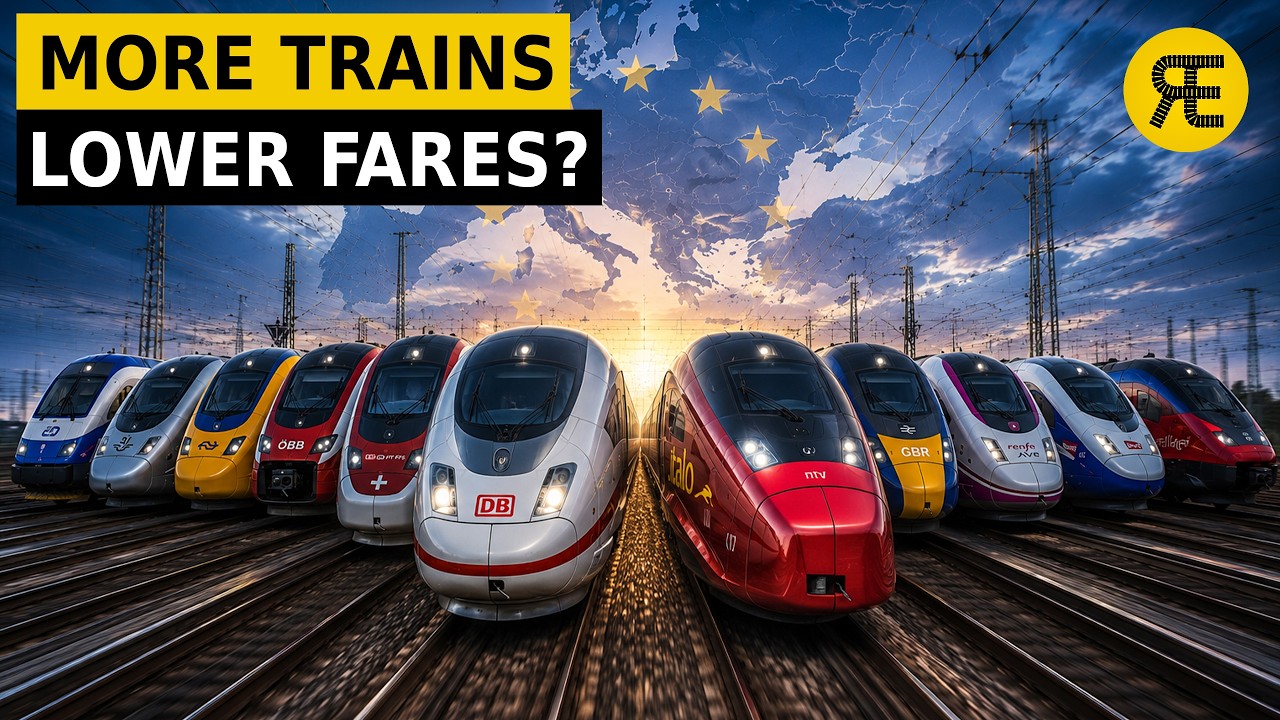
Get Our E-Book! We’re thrilled to announce the upcoming release of our first-ever e-book: a curated compilation of 100 Railways Explained scripts, filled with insights, facts, and rail stories from across the globe. If you love our videos, you’ll definitely enjoy reading it. https://payhip.com/b/mTDPX Check out our video about 10 heaviest trains in the world: https://youtu.be/gCwDAz7Ruh4 Support Us & Get Exclusive Benefits: Become a member on Patreon for exclusive content, behind-the-scenes access, and more: / railways_explained Join our YouTube membership to support the channel and get special perks: / @railwaysexplained Donate via PayPal: PayPal.Me/railwaysexplained Check out our official merch and show your love for all things railway: https://railways-explained.creator-spring.com/ The liberalization of Europe’s passenger rail market didn’t begin overnight — since the 1990s, the European Union has been steadily pushing to break up national rail monopolies. Early reforms focused on separating infrastructure from train operations and opening freight markets. Passenger rail, however, remained largely protected, with state-owned companies dominating domestic services in almost every country. The real turning point came with the EU’s Fourth Railway Package, adopted in 2016. These rules required member states to open their domestic passenger markets to competition—both by allowing new operators to run commercial services and by introducing competitive tendering for publicly funded routes. But while the legislation was agreed earlier, its effects only started to become visible in the early 2020s, as countries began implementing these rules in practice. So, over the last five years, this long process has finally started to translate into real competition—at least in some parts of Europe. Countries like Italy and Spain have become the most prominent examples. On major high-speed routes, multiple operators now compete directly, leading to lower ticket prices, more frequent services, and a noticeable improvement in quality. In these markets, rail is starting to look more like aviation, with competing brands fighting for every passenger. Elsewhere, the picture is more uneven. In many EU countries, national operators still dominate, and meaningful competition has yet to emerge. Legal barriers may be gone, but practical obstacles — such as limited access to rolling stock, infrastructure constraints, and regulatory systems that still favor incumbents – still remain. If you enjoy railway history, train documentaries, infrastructure stories, and transport systems from around the world, make sure to like, comment, and subscribe. Subscribe for more in-depth railway stories and analyses from around the world. Big thanks to our Patrons: Walid, Mind K, An Oni Moose, Julian Baumann, Hendrik Hinrichs, Robert P. Walsh, Xosé F. Estrada, Mårten Hammarstrand, Lucas Richter, Korawich Kavee, Alex Zaslavsky, Ben M, Nathan Walls, Bill, Tim McKeoun, August Bigelow, Brendan McKeon, Linda Vainomae-Hoffmann, Linda Vainomae-Hoffmann, Reinforcedconcrete, Alex McDonald, Martin Pelles, Alice Conalbi, Declan Crowley, Martin Hinge, William Rohe Follow us on Social Networks: Facebook: / railwaysexplained Instagram: / railways_explained Linkedin: / posts #railways #europe#trains#liberalization#
Show More Show Less #education