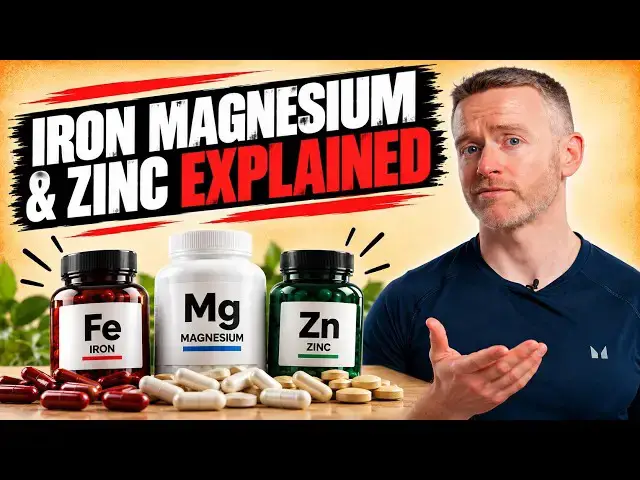
Iron, magnesium and zinc explained. What do these essential minerals actually do in your body, how much do you need, and should you be taking supplements? Learn how iron, magnesium and zinc support energy, muscle function, recovery, immunity and overall health.
In this video, expert nutritionist Dr Richie Kirwan breaks down the science behind three important minerals, where to find them in your diet, the signs of low intake, and whether supplementation is actually necessary.
Key Facts:
Iron is essential for producing haemoglobin, which allows red blood cells to transport oxygen around the body.
Low iron levels can contribute to fatigue, weakness and reduced exercise performance, particularly when iron deficiency causes anaemia.
Magnesium supports hundreds of enzyme reactions involved in energy metabolism, muscle function and normal nervous system activity.
Zinc plays an important role in immune function, wound healing, DNA synthesis and normal growth and development.
Iron-rich foods include red meat, shellfish, beans, lentils and fortified cereals.
Magnesium can be found in nuts, seeds, whole grains, legumes and leafy green vegetables.
Zinc is found in foods such as meat, shellfish, dairy products, beans and seeds.
Most people can obtain these minerals through a balanced diet, although individual requirements and deficiency risks vary.
Taking more than you need doesn't automatically improve your health, and excessive supplementation can cause problems.
FAQ:
Q: What does iron do in the body?
A: Iron is essential for haemoglobin production and oxygen transport. Getting enough iron helps support normal energy metabolism and physical performance.
Q: What are the benefits of magnesium?
A: Magnesium contributes to normal muscle and nerve function, energy metabolism, bone health and many other processes throughout the body.
Q: Why is zinc important?
A: Zinc supports normal immune function, wound healing, protein synthesis and the maintenance of healthy cells and tissues.
Q: Do you need to supplement iron, magnesium and zinc?
A: Not necessarily. Many people can meet their requirements through food, but supplementation may be appropriate when dietary intake is insufficient or a deficiency has been identified.
Q: Can low iron, magnesium or zinc make you feel tired?
A: Inadequate intake or deficiency can affect normal bodily functions and may contribute to symptoms such as fatigue. However, tiredness has many potential causes and shouldn't be used alone to diagnose a deficiency.
Q: Is taking more minerals always better?
A: No. Excessive intake of certain minerals can be harmful. For example, too much supplemental iron can cause toxicity, while excessive zinc can interfere with copper absorption.
#myprotein #wheyprotein #protein #nutrition
*********************************
Myprotein is Rated Excellent on Trustpilot
🔔 Subscribe to our channel: https://www.youtube.com/user/MyproteinUK?sub_confirmation=1
📲 Download the Myprotein app: https://myprotein.onelink.me/IYeO/o2erh9hb
The UK & Europe's Number 1 Online Sports Nutrition Brand, Myprotein.