Up next in 10

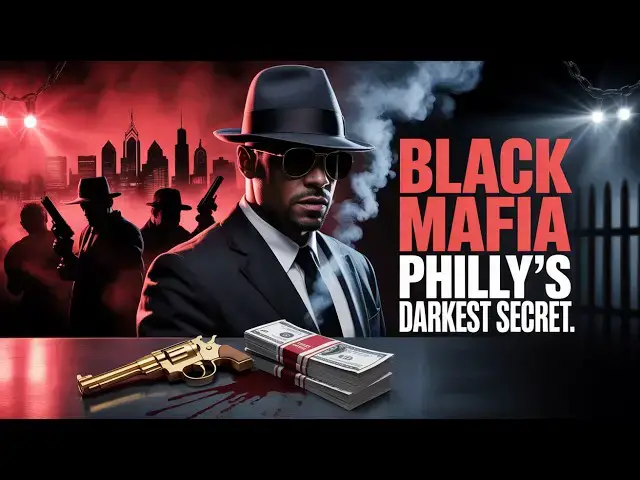
Imagine a city gripped by fear, where power was absolute and betrayal lurked around every corner. Welcome to Philadelphia in the late 1960s — the birthplace of one of America’s most notorious and least-known criminal empires: The Black Mafia.
Led by the ruthless and ambitious Samuel Christian, the Black Mafia rose from the streets of Strawberry Mansion to build a shadow empire that rivaled the Italian and Irish mobs. From brazen heists and cold-blooded executions to alliances with the Nation of Islam and total dominance of Philadelphia’s heroin trade, their reign of terror would leave a scar on the city that lasted for decades.
In this full documentary, we uncover:
⚡ The origins of Samuel Christian and his rise to underworld power
⚡ The Furniture Store Massacre that shocked the nation
⚡ How the Black Mafia infiltrated business, religion, and politics
⚡ The bloody internal wars that tore the organization apart
⚡ The final downfall at the hands of the DEA and federal raids
👉 This is more than a true crime story. It’s a tale of ambition, brutality, and collapse — a chilling reminder of how power corrupts and communities suffer.
If you’re fascinated by true crime documentaries, mafia history, and untold stories from America’s underworld, this is one you can’t miss.
-~-~~-~~~-~~-~--~-~~-~~~-~~-~--~-~~-~~~-~~-~-
⚠️ Content Disclaimer:
This video is created for educational and informational purposes only. We do NOT glorify, promote, or encourage any form of criminal activity.
All visuals, audio, and materials used in this video are either:
✔ Created using AI tools, or
✔ Sourced from royalty-free platforms with valid licenses.
No copyrighted content belonging to others has been used without permission.
❤️ Support the Channel:
If you enjoy learning about real-life crime stories, history, and social issues, don't forget to:
✔ Like the video
✔ Subscribe to the channel
✔ Share your thoughts in the comments
Your support helps us keep creating more valuable content!
🔧 Tools I Use to Grow This Channel:
I personally use vidIQ to optimize my videos, find trending keywords, and grow my YouTube channel faster. Try it for free and see the difference!
💼 Contact & Copyright:
If you believe any part of this video violates your rights, please contact me directly via YouTube. I fully respect copyright laws and will respond promptly.
-~-~~-~~~-~~-~--~-~~-~~~-~~-~--~-~~-~~~-~~-~-
-
Show More Show Less View Video Transcript
0:00
Imagine a city gripped by fear, where power is absolute and betrayal lurks
0:05
around every corner. Welcome to Philadelphia in the late 1960s, the
0:10
birthplace of one of America's most notorious criminal empires, the Black Mafia. In a time of racial tension and
0:19
social unrest, one man would rise from the impoverished streets of Strawberry Mansion to build an underworld empire
0:26
that would shake the very foundations of the city of brotherly love. This is the
0:31
story of Samuel Christian, the visionary behind the black mafia, whose ambition
0:36
and ruthlessness would forever change the face of organized crime in America.
0:42
From brazen heists to cold-blooded executions, the Black Mafia's reign of
0:47
terror would leave an indelible mark on Philadelphia's history. Join us as we
0:53
delve into the dark underbelly of the city, exploring the rise and fall of an
0:58
organization that dared to challenge the established criminal order and build a
1:04
black empire to rival the Italian and Irish mobs. Prepare yourself for a tale of ambition,
1:11
violence, and ultimate downfall in the Black Mafia. Philadelphia's Underworld
1:17
Empire. Chapter 1. The birth of an empire. Philadelphia's underworld awakens.
1:25
The city of Philadelphia in the late 1960s was a powder keg of racial tensions and social unrest. Decades of
1:32
economic decline, urban renewal projects that displaced minority communities, and
1:38
simmering resentment over systemic inequalities had created an atmosphere of volatility. Against this backdrop, a
1:45
young man named Samuel Christian would rise to infamy as the founder of one of the most notorious criminal
1:52
organizations in the city's history, the Black Mafia. Born in 1940 in the impoverished
1:59
Strawberry Mansion neighborhood, Samuel Christian had experienced firsthand the
2:04
harsh realities of life in Philadelphia's urban core. As a child,
2:09
he witnessed the neglect and discrimination that plagued the city's African-American communities, fueling a
2:15
deep-seated resentment that would shape his world view. Drawn to the promise of power and wealth, Christian soon found
2:23
himself drawn into the city's thriving underground economy, honing his skills as a street hustler and small-time
2:30
criminal. Samuel was always a scrapper, recalled Tyrone Watkins, a former associate. He
2:37
grew up on the streets, and he knew how to handle himself. But he also had big ambitions. He wanted more than just
2:43
being another petty thug. He wanted to build something that would make him feared and respected. In September 1968,
2:52
Christian's ambitions took a decisive turn. Gathering a group of like-minded
2:57
individuals, he founded the Black Mafia, a criminal organization that would soon
3:03
become the scourge of Philadelphia's underworld. The group's origins were humble, operating out of a dilapidated
3:10
rowhouse in the north Philadelphia neighborhood of Strawberry Mansion. But Christian's vision was anything but
3:16
small scale. He had this way of drawing people in, of making them believe in his
3:23
dream, said Watkins. He sold us on the idea of building an empire, a black
3:28
empire that would rival the Italian and Irish mobs that had dominated the city's crime scene for decades.
3:36
The Black Mafia's first documented crime occurred on April 19th, 1969 when a
3:42
group of the organization's members carried out a brazen armed robbery at a West Philadelphia grocery store. The
3:50
heist, which netted the gang over $20,000, was a stark departure from the
3:55
petty thefts and drug deals that had characterized the city's criminal landscape up to that point.
4:02
It was like nothing we'd ever seen before, recalled Philadelphia police detective John Russo, who was among the
4:09
first responders to the scene. The level of violence, the precision of the
4:14
operation, it was clear these were not your average street thugs. They were
4:19
professionals and they were out for blood. In the months that followed, the
4:24
Black Mafia's reputation for ruthlessness and efficiency only grew. The gang's members, many of them
4:31
veterans of the Vietnam War, employed a range of intimidation tactics from
4:36
brutal beatings to coldblooded executions to assert their dominance over rival criminal organizations and
4:44
the communities they sought to control. "They were like a pack of wolves," said Reverend Nathaniel Johnson, a community
4:50
leader in Strawberry Mansion. They would descend on a neighborhood, terrorizing the people, extorting businesses, and
4:57
leaving a trail of bodies in their wake. It was a reign of pure, unadulterated terror. The Black Mafia's most infamous
5:06
crime during this period occurred on January 4, 1971, when a group of the
5:12
gangs members stormed a furniture store in North Philadelphia, gunning down the owner and several customers in a
5:18
horrific display of violence. The so-called furniture store massacre sent
5:23
shock waves through the city, cementing the Black Mafia's reputation as a force to be reckoned with. "That was the
5:30
moment when we all realized just how dangerous these guys were," said Russo. "They had no qualms about killing
5:37
innocent people, just to send a message. It was a level of brutality that was
5:42
almost unimaginable." As the Black Mafia's reign of terror continued, the organization's reach and
5:50
influence only grew. Christian and his lieutenants, including a young enforcer
5:55
named Eugene Bow Baines, began to forge alliances with other criminal elements,
6:01
including the Nation of Islam, a black nationalist religious movement that had
6:06
established a significant presence in Philadelphia. Samuel Christian saw the Nation of Islam
6:13
as a way to bolster his organization's legitimacy and provide a veneer of respectability, explained Dr. Amelia
6:20
Watkins, a sociologist who has studied the history of organized crime in Philadelphia. The alliance allowed the
6:27
Black Mafia to infiltrate legitimate businesses and institutions, expanding their criminal empire beyond the streets
6:35
and into the heart of the city's power structure. Through a combination of violence, intimidation, and strategic
6:43
alliances, the Black Mafia had by the early 1970s become a formidable force in
6:49
Philadelphia's underworld. With an estimated 200 members and affiliates, the organization controlled a
6:56
significant portion of the city's lucrative drug trade, particularly the heroin market. Their ability to corrupt
7:03
and co-opt local officials only further entrenched their influence, making them a seemingly unstoppable criminal
7:10
juggernaut. Yet, as the Black Mafia's power grew, so too did the determination of law
7:17
enforcement and community leaders to bring an end to their reign of terror. The stage was set for a showdown that
7:24
would ultimately determine the fate of the organization and the city it had come to dominate.
7:31
Chapter 2, Reign of Terror: The Black Mafia rise to power. 1969,
7:37
1971. As the Black Mafia emerged from the shadows of Philadelphia's underworld in
7:43
1968, its members wasted no time in establishing their reign of terror across the city. Led by the charismatic
7:50
and ruthless Samuel Christian, the organization set out to seize control of the lucrative drug trade and cement its
7:57
position as the dominant criminal force in the region. The group's first documented crime, a
8:04
brutal assault on April 19th, 1969, signaled the start of a campaign of
8:09
violence that would send shock waves through the community. A rival drug dealer, known only as Slim, was ambushed
8:17
by a group of black mafia members near his home in the Strawberry Mansion neighborhood. The attack was swift and
8:24
merciless with Slim suffering multiple gunshot wounds before being left for
8:30
dead on the sidewalk. This incident was a chilling harbinger of the Black Mafia's modus operandi, a
8:38
combination of unbridled aggression and calculated precision that would become the hallmark of their criminal
8:44
operations. As news of the attack spread, the city's criminal element took
8:50
notice, recognizing the formidable threat posed by this new player in the game. They came in like a hurricane just
8:58
sweeping everything in their path, recalled Tyrone Johnson, a former drug dealer who witnessed the group's early
9:04
rise. Slim was just the first of many who learned the hard way not to cross
9:09
the black mafia. Over the next 2 years, the organization's reign of terror
9:15
intensified as they systematically eliminated rivals, intimidated witnesses, and expanded their foothold
9:22
in the drug trade. One of their most notorious crimes occurred on January 4,
9:28
1971, when a group of black mafia members stormed a furniture store in North
9:33
Philadelphia, brutally executing the owner and two employees. The attack, which became known as the
9:40
furniture store massacre, sent shock waves through the city and thrust the Black Mafia into the national spotlight.
9:48
Eyewitness accounts described a scene of unparalleled violence with the victims
9:53
suffering multiple gunshot wounds and the store left in a state of utter carnage. "It was an execution, plain and
10:01
simple," said Detective John Russo, who was part of the initial investigation. These guys came in, knew exactly what
10:08
they were doing, and left no survivors. It was a message, a warning to anyone who dared to challenge their authority.
10:16
The furniture store massacre cemented the Black Mafia's reputation as a force to be reckoned with, and their influence
10:24
continued to grow in the following months. They expanded their criminal empire, diversifying their activities to
10:31
include extortion, robbery, and the trafficking of narcotics. particularly
10:36
heroin. "They had a strangle hold on the drug trade in this city," said Reverend
10:41
Michael Daniels, a community leader in North Philadelphia. "Anywhere you went, you knew the Black Mafia was involved,
10:49
either directly or through their network of informants and enforcers." The group's tactics were as ruthless as
10:56
they were effective. They employed a network of informants to gather intelligence on their rivals and
11:01
potential threats. And they were not afraid to use violence to eliminate anyone who stood in their way. The Black
11:09
Mafia's reputation for brutality and their willingness to resort to murder to protect their interests struck fear into
11:16
the hearts of both law enforcement and the community. "They were like a pack of
11:21
wolves, always hunting, always on the move," said Detective Russo. We'd get a
11:26
lead, think we had them cornered, and then they'd slip away, only to resurface
11:31
somewhere else, committing another crime. It was a constant game of cat and mouse, and they always seemed to be one
11:39
step ahead of us. Despite the efforts of law enforcement to bring the Black Mafia
11:44
to justice, the organization continued to expand its reach, recruiting new
11:49
members and solidifying its control over the city's criminal landscape. Their
11:54
success was fueled by a combination of strategic planning, ruthless execution,
12:00
and the exploitation of the social and economic vulnerabilities that plagued many of Philadelphia's marginalized
12:07
communities. "They knew exactly where to strike, where the police weren't looking, and
12:13
they had the manpower and the resources to carry out their plans," said Reverend Daniels. It was like they had a map of
12:20
the city's weak spots, and they used that knowledge to their advantage. As
12:26
the Black Mafia's grip on Philadelphia tightened, the city's residents lived in fear, unsure of when or where the next
12:33
attack would come. The organization's reign of terror had transformed the urban landscape, casting a dark shadow
12:40
over the lives of those who dared to cross its path. It was a time of pure chaos. A war zone
12:47
right here in our own neighborhoods, recalled Tyrone Johnson. You couldn't trust anyone. Couldn't even feel safe in
12:54
your own home. The Black Mafia had turned our city into a living nightmare.
13:00
With each passing month, the Black Mafia's power and influence continued to grow, leaving law enforcement and
13:07
community leaders struggling to find a way to break the organization's strangle hold on the city. The stage was set for
13:14
an epic confrontation that would ultimately determine the fate of Philadelphia's underworld Empire.
13:21
Chapter 3: Expanding Horizons: Infiltration and Growth, 1971, 1973.
13:31
As the Black Mafia's reign of terror solidified in the early 1970s, the
13:36
organization began to set its sights on expanding its criminal empire beyond the
13:41
boundaries of Philadelphia. Driven by an insatiable ambition and a thirst for power, the Black Mafia leadership
13:48
embarked on a strategic campaign to infiltrate legitimate businesses and religious organizations, further
13:55
entrenching their influence in the city's underworld. The pivotal moment came in September
14:02
1971 when the Black Mafia orchestrated one of its most daring and lucrative heists to
14:08
date. On a warm autumn evening, a group of armed Black Mafia members descended
14:14
upon the Adelfia Bar in Atlantic City, New Jersey, a popular night spot frequented by the city's elite. With
14:22
military-like precision, the crew overpowered the security guards, made off with a staggering $145,000
14:30
in cash, and disappeared into the night without a trace.
14:35
The Adelfia Bar robbery was a watershed moment for the Black Mafia, cementing
14:40
their reputation as a ruthless and sophisticated criminal enterprise that was not to be trifled with. That job put
14:48
the black mafia on the map, recalled former Philadelphia police officer, Detective James Saunders. It showed they
14:55
had the resources, the manpower, and the audacity to pull off a major heist
15:01
outside of their home turf. That's when we knew we were dealing with a different kind of criminal organization.
15:08
The success of the Adelfia Bar Operation emboldened the Black Mafia's leadership,
15:13
particularly its newly ascended second in command, Eugene Bo Baines. Baines, a
15:20
charismatic and calculating individual, recognized that the organization's long-term survival, depended on its
15:27
ability to diversify its criminal portfolio and establish a presence in legitimate sectors of the economy.
15:35
Under Baines's direction, the Black Mafia began to infiltrate local businesses, leveraging a combination of
15:42
intimidation, bribery, and strategic partnerships. The group's tentacles soon
15:47
reached into a wide range of industries, from construction and real estate to
15:52
nightclubs and transportation. They had their fingers in everything, said former
15:58
community activist Reverend Nathaniel Jones. If you wanted to do business in this city, you had to go through the
16:04
Black Mafia. One of the Black Mafia's most significant infiltrations was their
16:10
foray into the Nation of Islam, a prominent African-American religious and
16:16
political organization led by Elijah Muhammad. Recognizing the potential
16:21
benefits of aligning themselves with the nation's vast network and influence, the Black Mafia forged strategic alliance
16:28
that provided them with access to new resources, legitimacy, and a wider pool
16:33
of potential recruits. The relationship between the Black Mafia and the Nation of Islam was a complex
16:41
and often contentious one. While the nation's teachings of self-empowerment and economic independence resonated with
16:48
the Black Mafia's members, the organization's strict moral code and aversion to overt criminality created
16:56
ongoing tensions. There were always these underlying conflicts between the Black Mafia's criminal ambitions and the
17:03
nation's desire to uplift the community, said Reverend Jones. Nevertheless, the
17:09
Black Mafia's association with the Nation of Islam provided them with a veneer of respectability and a valuable
17:16
cover for their illicit activities. The group's members were able to leverage the nation's influence and reputation to
17:24
gain access to new business opportunities, secure political connections, and even secure protection
17:30
from law enforcement. As the Black Mafia's reach expanded, so too did their
17:36
criminal operations. The organization's drug trafficking activities, particularly their control over the
17:43
city's heroin trade, became increasingly sophisticated and profitable. The
17:48
group's distribution network stretched across state lines, with the Black Mafia establishing a presence in major East
17:55
Coast cities like New York, Baltimore, and Washington, DC. The black mafia's dominance of the local
18:02
drug trade, coupled with their growing influence in legitimate businesses and religious institutions, began to create
18:09
tensions with rival criminal organizations. Turf wars erupted with the Black Mafia engaging in bloody
18:16
confrontations with other gangs and drug syndicates, vying for a piece of the lucrative Philadelphia market.
18:24
It was a war zone out there, recalled former Philadelphia police commissioner John Tim. The streets were running red
18:31
with blood as the black mafia fought to maintain their strangle hold on the city's underworld. They weren't just
18:37
dealing drugs. They were waging a fullscale campaign to control every aspect of the criminal landscape. The
18:45
Black Mafia's expansion and infiltration of legitimate institutions also drew the
18:50
attention of law enforcement who recognized the growing threat posed by the organization. However, the group's
18:58
deeprooted connections and ability to evade detection made them a formidable
19:03
adversary, frustrating the efforts of local and federal authorities to dismantle their criminal empire.
19:11
As the 1970s progressed, the Black Mafia's influence continued to grow,
19:16
solidifying their position as one of the most powerful and feared criminal organizations in Philadelphia's history.
19:24
Their ability to infiltrate and manipulate the city's social, political, and economic fabric would ultimately
19:31
prove to be both the source of their strength and the seeds of their downfall.
19:36
Chapter 4. The fall of a founder. Leadership in Transition 1973
19:43
1974 The arrest of Samuel Christian on December 11, 1973
19:49
marked a pivotal turning point in the Black Mafia's reign over Philadelphia's criminal underworld. For nearly 5 years,
19:57
Christian had commanded the organization with an iron fist, instilling fear and
20:03
commanding loyalty through a relentless campaign of violence and intimidation.
20:08
But his downfall would usher in a new era of instability and power struggles
20:13
that would ultimately lead to the black mafia's eventual unraveling.
20:19
Christian's arrest stemmed from a 1971 robbery, a daring heist that had netted
20:25
the Black Mafia, a staggering $145,000 from the Adelf Bar in Atlantic City.
20:32
Though he had evaded murder charges, the long-running investigation finally caught up with him and he was sentenced
20:39
to 20 years in federal prison. As the news spread through the streets of Philadelphia, a palpable sense of
20:45
uncertainty gripped the organization. When Samuel went down, it was a huge
20:51
blow, recounted former Philadelphia Police Department narcotics detective Michael Santoro. The Black Mafia had
21:00
been built around his leadership and vision. Without him, there was a real power vacuum that everyone was
21:06
scrambling to fill. In the wake of Christian's arrest, a fierce internal
21:12
struggle erupted as various factions jockeyed for control. Eugene Bo Baines,
21:17
a seasoned enforcer and trusted lieutenant, emerged as the frontr runner to succeed Christian. Baines had been
21:24
with the Black Mafia since its inception, and he possessed a ruthless reputation that commanded respect from
21:30
the rank and file members. "Baines was a cold-blooded killer, no doubt about it,"
21:37
said Santoro. "He had no problem eliminating anyone who got in his way, whether it was a rival gang member or
21:44
one of his own. He was determined to keep the Black Mafia's grip on the city's underworld.
21:50
Baines wasted little time in consolidating his power. He quickly purged the organization of perceived
21:57
threats, ordering the executions of several highranking members who had dared to challenge his ascension. The
22:04
streets of Philadelphia ran red with blood as the Black Mafia's internal conflict spilled out into the open, each
22:12
faction fighting for survival. It was a war zone out there, recalled Reverend Nathaniel Johnson, a community
22:19
leader who had witnessed the fallout firsthand. You couldn't walk down certain blocks without the risk of
22:25
getting caught in the crossfire. The Black Mafia was tearing itself apart, and the city was paying the price. As
22:32
the violence escalated, law enforcement began to take notice. The Philadelphia
22:38
Police Department, in collaboration with federal agencies, launched a renewed effort to dismantle the Black Mafia once
22:45
and for all. Investigators poured over evidence, analyzed intelligence, and
22:50
built cases against the organization's key players. "We knew we had to act
22:56
fast," said former DIA agent Claudia Ramirez. "The Black Mafia was like a
23:02
hydra. Cut off one head and two more would grow in its place. We had to go
23:07
after the entire network, not just individual members. In September 1974,
23:13
the DA orchestrated a massive coordinated raid, deploying hundreds of agents to strike simultaneously at the
23:20
Black Mafia's operations across the city. The operation, cenamed Black Hammer, was a resounding success,
23:28
resulting in the arrest of dozens of suspects, including Baines himself.
23:34
A grand jury indictment soon followed, revealing the full scope of the Black Mafia's criminal enterprise. Prosecutors
23:41
alleged that the organization had controlled over 60s of Philadelphia's heroin trade, operating a vast
23:48
distribution network that stretched across state lines. The charges against
23:53
Baines and his lieutenants were staggering, ranging from racketeering and money laundering to murder.
24:00
The impact of the DA's intervention was immediate and profound. The Black Mafia's carefully constructed criminal
24:07
infrastructure was dealt a devastating blow, and the organization's public image was shattered. The once feared
24:15
gang was now the subject of intense media scrutiny and public outrage.
24:21
When the DA raid went down, it was a real wakeup call for the city, said Reverend Johnson. people realized just
24:28
how deep the black mafia's tentacles had reached, and they were horrified by the level of violence and corruption that
24:35
had been allowed to fester. The arrest of Baines and the subsequent indictments
24:40
marked a significant turning point in the Black Mafia's history. With the organization's leadership in disarray
24:46
and its operations severely disrupted, the stage was set for a new chapter of internal strife and collapse.
24:54
Chapter 5. The Empire Strikes Back. DIA. Intervention. 1974.
25:01
1975. The walls of the Black Mafia's criminal empire began to crumble in the summer of
25:08
1974. As the full might of the federal government descended upon Philadelphia,
25:14
after years of unchecked expansion and infiltration, the organization's reign
25:19
of terror was about to meet its match. The buildup to this moment had been
25:24
gradual but inexurable. Law enforcement, frustrated by the Black Mafia's ability
25:30
to evade prosecution, had been quietly gathering intelligence and building
25:35
their case. The Drug Enforcement Administration, DIA, formed just 2 years
25:41
earlier, was determined to make its mark by taking down one of the nation's most formidable drug trafficking syndicates.
25:49
On September 12th, 1974, the DA launched a massive coordinated raid targeting the
25:55
Black Mafia's operations across the city. Hundreds of federal agents supported by local law enforcement swarm
26:02
the group's strongholds, executing search warrants and making arrests. The scale and precision of the operation
26:09
stunned the city as the full extent of the Black Mafia's criminal enterprise was laid bare.
26:16
It was like a scene out of a movie, recalled former Philadelphia police officer John Harrington, who was present
26:23
during the raids. We hit them hard and fast, taking down their key players one by one. They weren't expecting anything
26:30
like this. The DA's meticulous planning and intelligence gathering had paid off.
26:37
agents had infiltrated the organization, gathering evidence of the Black Mafia's
26:42
involvement in a vast drug distribution network that controlled an estimated 60
26:48
of Philadelphia's heroin trade. "The scope of their findings was staggering."
26:53
"We knew they were big, but we had no idea how deeply they had penetrated the
26:58
city," said Dia agent Michael Walters. "They had their hands in everything.
27:03
legitimate businesses, political connections, even the Nation of Islam.
27:09
It was a sprawling criminal enterprise. Among those arrested during the raids
27:14
were the Black Mafia's new leader, Eugene Boaines, as well as several of his top lieutenants. The indictments
27:22
that followed painted a damning picture of the organization's operations, detailing the intricate web of drug
27:28
trafficking, money laundering, and violence that had allowed the Black Mafia to amass such power. The impact of
27:36
the DA's intervention was immediate and profound. The organization's carefully
27:41
constructed infrastructure began to crumble as its members faced the full force of the federal justice system.
27:48
Many of the Black Mafia's most seasoned criminals were now staring down lengthy prison sentences. Their dreams of
27:55
expanding their criminal empire shattered. However, the Black Mafia's downfall was
28:01
not without its casualties. The raids and subsequent crackdown sparked a wave of retaliatory violence as the
28:09
organization's members lashed out against those they perceived as betrayers or informants. Several key
28:15
figures, including interim leader Jerome Barnes and founding member Hershel Williams, were murdered in the aftermath
28:22
of the Diaz's intervention. The public reaction to the Black Mafia's exposure was a mix of relief and
28:29
outrage. For years, the organization had operated with impunity, praying on the
28:35
city's most vulnerable communities and corrupting the very institutions meant to protect them. Now the veil had been
28:42
lifted and the people of Philadelphia were forced to confront the harsh realities of the underworld that had
28:48
been festering in their midst. "It was a wakeup call for the city," said
28:53
community activist Reverend David Hollands. "We knew the black mafia was a
28:58
problem, but I don't think anyone realized just how deep their tentacles had reached. This was a reminder that we
29:06
had to do more to address the root causes of crime and poverty in our neighborhoods.
29:12
The Diaz crackdown on the Black Mafia was a significant victory for law enforcement, but it also highlighted the
29:19
challenges of dismantling entrenched criminal organizations. While the indictments and arrests had dealt a
29:25
severe blow to the group's operations, the underlying social and economic conditions that had given rise to the
29:31
Black Mafia remained largely unressed. As the city grappled with the aftermath
29:37
of the Diaz intervention, it became clear that the story of the Black Mafia was not just a tale of criminal ambition
29:44
and greed, but a reflection of the broader struggles facing urban America in the 1970s. The organization's ability
29:52
to infiltrate legitimate institutions and exploit societal tensions
29:57
underscored the vulnerabilities of communities struggling with poverty, discrimination, and a lack of
30:03
opportunity. In the months that followed, the Black Mafia's collapse would continue to
30:09
reverberate through the city, setting the stage for a new chapter in Philadelphia's ongoing battle against
30:16
organized crime and its devastating impact on the lives of its citizens.
30:22
Chapter 6, Cracks in the Foundation, Internal Strife and Collapse, 1975,
30:29
1977. The death of Elijah Muhammad in February 1975
30:35
dealt a significant blow to the black mafia's ties with the Nation of Islam.
30:41
The influential religious leader had been a key source of support and legitimacy for the criminal organization
30:47
and his passing left a power vacuum that the black mafia struggled to fill. When
30:53
Elijah Muhammad died, it was like the glue that held the Black Mafia together started to come undone, recalled former
31:01
Philadelphia police officer Thomas Brennan. They had relied on the Nation of Islam's influence and resources for
31:08
so long, and without that connection, it was every man for himself.
31:13
The internal conflicts that had been simmering beneath the surface of the Black Mafia now erupted into open
31:20
warfare. Power struggles and shifting allegiances within the organization led
31:25
to a series of retaliatory killings that further destabilized the group's operations.
31:31
In April 1975, the body of Jerome Barnes, a rising figure within the black
31:38
mafia's hierarchy, was discovered in a vacant lot in North Philadelphia. His
31:43
murder was a shocking blow, as Barnes had been seen as a potential successor to the aging Eugene Baines.
31:51
Investigators believed the killing was the result of a power struggle with Barnes's ambitious plans to expand the
31:57
organization's reach clashing with the more cautious approach of the existing leadership.
32:04
The death of Hershel Williams, one of the Black Mafia's co-founders just a few
32:09
months later in August 1975 further exacerbated the internal turmoil.
32:15
Williams, who had been serving a 20-year sentence for a 1971 armed robbery, was
32:21
gunned down by a fellow inmate at the federal penitentiary in Lewisburg, Pennsylvania. The circumstances
32:27
surrounding his murder remained murky, but many speculated that it was a hit ordered by rivals within the
32:34
organization. "The Black Mafia was eating itself alive," said former FBI agent David
32:40
Russo. The infighting and retaliation were tearing the group apart from the inside. They had become so paranoid and
32:47
distrustful of one another that they couldn't even maintain their own criminal empire. As the body count
32:54
continued to rise, the Black Mafia's grip on the city's underworld began to loosen. Law enforcement, emboldened by
33:01
the organization's internal strife, launched a series of targeted raids and investigations that further disrupted
33:08
the group's operations. In the summer of 1976, a major crackdown
33:14
by the Philadelphia Police Department's narcotic strike force resulted in the arrests of several highranking members
33:20
of the Black Mafia, including Eugene Boaines. The raid seized large
33:26
quantities of heroin, cocaine, and cash, delivering a significant blow to the
33:31
organization's drug trafficking network. We finally started to see cracks in the
33:36
Black Mafia's armor," said Sergeant Michael Hartley, who led the strike force. "They had become so
33:42
overconfident, so sure of their invincibility that they got sloppy, and that's when we were able to move in and
33:48
start dismantling their operation." The loss of key figures like Baines and
33:53
the continued internal violence further destabilized the Black Mafia's leadership structure. Without a clear
33:59
chain of command or unified vision, the organization began to fragment with various factions vying for control of
34:06
the remaining criminal enterprises. By 1977, the once formidable Black Mafia had been
34:14
reduced to a shadow of its former self. Law enforcement's sustained pressure combined with the organization's own
34:20
self-destructive tendencies had finally brought about its downfall. It was a slow, agonizing collapse,
34:28
reflected former community activist Janice Williams. The Black Mafia had terrorized our neighborhoods for years,
34:35
and to see them finally unravel like that, it was both a relief and a tragedy. So many lives had been
34:42
destroyed in the process. As the curtain fell on the Black Mafia's reign, the
34:47
city of Philadelphia was left to grapple with the lasting impact of the organization's legacy. The wounds
34:54
inflicted by the group's violence and corruption would take years to heal, and the lessons of their rise and fall would
35:00
reverberate through the city's criminal justice system and community fabric for decades to come.
35:08
Chapter 7. Legacy of the Black Mafia echoes in Philadelphia's history. The
35:14
fall of the Black Mafia left an indelible mark on Philadelphia, a city forever changed by the rise and collapse
35:22
of its notorious criminal empire. As the dust settled on the organization's final
35:27
days, the reverberations of its impact could be felt throughout the city's neighborhoods and institutions, shaping
35:34
the trajectory of law enforcement, community relations, and the broader cultural landscape.
35:41
In the aftermath of the Black Mafia's demise, Philadelphia's criminal underworld underwent a seismic shift.
35:47
The power vacuum left by the organization's disintegration gave rise to new players, each vying to fill the
35:54
void and assert their dominance. Law enforcement agencies, once outmatched by
36:00
the black mafia's expansive reach and ruthless tactics, now turned their attention to the emerging power
36:06
struggles, determined to prevent the rise of another such formidable criminal enterprise.
36:13
"The collapse of the Black Mafia was a wake-up call for us," recalled former Philadelphia Police Department detective
36:20
John Walters. We realized that we had to adapt our strategies to be more
36:26
proactive and collaborative in our approach to organized crime. The lessons we learned from the Black Mafia would
36:33
shape our efforts for years to come. Indeed, the Black Mafia's downfall
36:38
prompted a fundamental shift in the way law enforcement tackled organized crime in Philadelphia. Increased cooperation
36:46
between local, state, and federal agencies, as well as the establishment
36:51
of specialized task forces enabled a more coordinated and effective response
36:57
to the city's criminal networks. The creation of the Philadelphia Highintensity Drug Trafficking Area,
37:04
ITA, program in 1990, was a direct result of the lessons gleaned from the Black Mafia's reign, providing a
37:11
framework for intelligence, sharing, and joint operations that targeted the flow
37:17
of drugs and illicit funds. We realized that to truly dismantle these
37:22
organizations, we needed to follow the money, explained former DIA agent Emily
37:27
Hernandez. The Black Mafia had shown us how deeply they could infiltrate
37:33
legitimate businesses and institutions. We had to be smarter, more strategic in
37:39
our approach, and that's exactly what we set out to do. The impact of the Black
37:45
Mafia's collapse, however, extended far beyond the realm of law enforcement. The
37:50
organization's grip on certain neighborhoods and its involvement in the drug trade had left deep scars on the
37:56
community, eroding trust and exacerbating the challenges faced by residents. In the aftermath, community
38:04
leaders and activists stepped forward, determined to reclaim their streets and rebuild the social fabric that had been
38:11
torn us under. The Black Mafia's reign of terror had left us feeling powerless,
38:17
like our community didn't matter, recalled Reverend Denise Williams, a longtime resident of North Philadelphia.
38:24
But when they fell, we saw an opportunity to come together to reclaim our neighborhoods and create the change
38:30
we so desperately needed. Grassroots organizations sprang up, focusing on
38:36
youth outreach, job training, and community based policing initiatives.
38:42
Churches and community centers became hubs of activism, hosting forums and workshops that addressed the root causes
38:49
of crime and violence. Slowly but surely, the resilience and determination
38:54
of Philadelphia's residents began to reshape the city's landscape, transforming once, blighted areas into
39:02
vibrant, thriving communities. The legacy of the Black Mafia, however,
39:08
continued to reverberate in the city's cultural and artistic expressions.
39:13
Writers, filmmakers, and musicians grappled with the organization's impact,
39:18
using their craft to explore the complex interplay of race, power, and the lure
39:24
of the criminal underworld. Works like the 2002 film The Salesman and the 2019
39:30
novel, The Grind offered fictionalized accounts that drew inspiration from the
39:36
black mafia's rise and fall, captivating audiences and sparking critical
39:41
discussions about the enduring influence of organized crime. The story of the black mafia is a
39:48
cautionary tale, one that speaks to the corrosive power of unchecked ambition and the devastating consequences of
39:55
violence, said Dr. Amelia Sinclair, a sociologist at the University of
40:00
Pennsylvania. But it's also a story of resilience, of a community that refused
40:05
to be defined by the darkness that threatened to consume it. That legacy, that struggle is woven into the fabric
40:12
of Philadelphia's history. A testament to the human spirit's ability to overcome even the most formidable of
40:20
challenges. Challenges. As the city continued to grapple with
40:25
the aftermath of the Black Mafia's reign, the lessons learned from its rise and fall echoed through the decades. Law
40:33
enforcement agencies refined their tactics. Community organizations redoubled their efforts, and the city's
40:40
cultural landscape evolved to reflect the complexities and consequences of unchecked power and violence.
40:47
As we conclude our journey through the dark and complex history of the Black Mafia, we're reminded of the enduring
40:54
power of community resilience and the importance of learning from our past. If
41:00
you found this video enlightening, please take a moment to like, subscribe,
41:05
and hit that notification bell to stay updated on more captivating stories from
41:11
history's shadowy corners. Your support helps us continue to shed light on these
41:16
crucial narratives. Share this video with friends and family who appreciate thought, provoking content, and join our
41:24
growing community of history enthusiasts. Together, we can explore
41:29
the lessons of yesterday to build a brighter tomorrow.
#Crime & Justice
#People & Society
#Discrimination & Identity Relations
#Violence & Abuse