Up next in 10

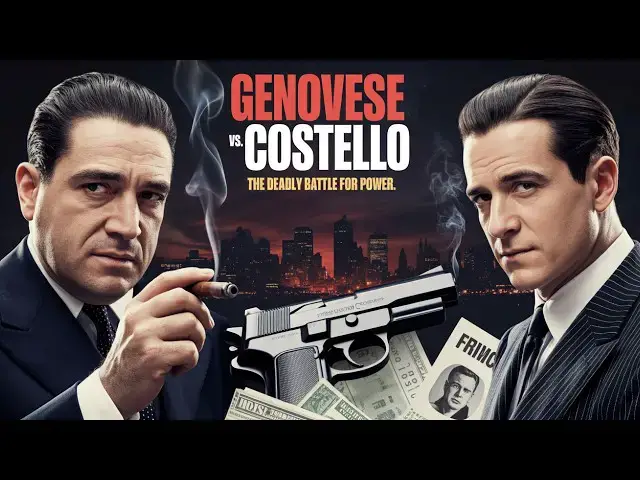
Step into the bloody world of the Mafia, where betrayal is currency and power is everything. This is the untold story of Vito Genovese, the most ruthless boss of them all, and his cutthroat battle with Frank Costello, the “Prime Minister of the Underworld.”
👉 From hidden deals and brutal hits to the shocking assassination attempt that shook the mob world, this video reveals the dark truth behind one of organized crime’s greatest rivalries.
🔥 Discover:
How Vito Genovese rose to power through fear and violence.
The infamous assassination attempt that nearly killed Frank Costello.
The inside story of the Genovese Crime Family’s dominance.
The betrayal, power plays, and corruption that shaped Mafia history.
If you think you know the Mafia… think again. This is the real story they tried to hide.
🔔 Subscribe now to Survival Horror Channel for more shocking Mafia stories, true crime sagas, and dark secrets from the underworld.
#Mafia #TrueCrime #VitoGenovese #FrankCostello #OrganizedCrime #SurvivalHorror
-~-~~-~~~-~~-~--~-~~-~~~-~~-~--~-~~-~~~-~~-~-
⚠️ Content Disclaimer:
This video is created for educational and informational purposes only. We do NOT glorify, promote, or encourage any form of criminal activity.
All visuals, audio, and materials used in this video are either:
✔ Created using AI tools, or
✔ Sourced from royalty-free platforms with valid licenses.
No copyrighted content belonging to others has been used without permission.
❤️ Support the Channel:
If you enjoy learning about real-life crime stories, history, and social issues, don't forget to:
✔ Like the video
✔ Subscribe to the channel
✔ Share your thoughts in the comments
Your support helps us keep creating more valuable content!
🔧 Tools I Use to Grow This Channel:
I personally use vidIQ to optimize my videos, find trending keywords, and grow my YouTube channel faster. Try it for free and see the difference!
💼 Contact & Copyright:
If you believe any part of this video violates your rights, please contact me directly via YouTube. I fully respect copyright laws and will respond promptly.
-~-~~-~~~-~~-~--~-~~-~~~-~~-~--~-~~-~~~-~~-~-
-
Show More Show Less View Video Transcript
0:00
In the world of the mafia, only those with a relentless appetite for violence or a shrewd cunning rise to the
0:06
pinnacle. Yet nothing in the underworld is as perilous as a mobster who embodies both traits. Veto Genovves, driven by an
0:14
unparalleled ambition, sought to ascend to the prestigious position of Capo Tuttiap, the boss of all bosses. This
0:22
relentless pursuit placed him at the helm of a crime syndicate destined to carry his name, placing him at the
0:28
epicenter of events that would profoundly shape the American criminal landscape. The tale of Veto Genevvesi
0:35
begins when he arrives in New York from Naples as a mere 15-year-old. He was just one among the throngs of Italian
0:42
immigrants flooding the city's shores at the turn of the century. Raised in the squalor of New York slums, Genevies was
0:49
no stranger to the harsh realities of life. He found his early footing amidst the terrifying street gangs where
0:55
violence reigned supreme. An environment that would indelibly shape his character. A product of the city's
1:02
darkest corners, Genevese thrived amidst conflict and chaos. Violence was his
1:07
language and the gun his constant companion. Police records stand as a testament to his ruthless nature. Over a
1:13
span of 10 years, charges of unspeakable brutality marked his name. From shooting a man in Queens to the brutal slaying of
1:20
another in Brooklyn, his rap sheets spoke volumes. The streets whispered tales of Genevvesy's exploits of a
1:27
loaded revolver discreetly nestled into his belt on the Lower East Side and the swift deadly retribution he unleashed
1:34
upon rival hoodlams. Veto Genevves story is a saga painted in blood, a narrative
1:39
of unrelenting ambition and unwavering brutality that etched his name into the annals of organized crime history. Peter
1:46
Jennifer provides a vivid illustration of Veto Genevvesy's ruthlessness through a chilling example. Genevves, driven by
1:53
a forbidden love for a woman named Anna, who was already married, orchestrated a gruesome act. He and his henchmen
2:00
callously threw Anna's husband off a rooftop, clearing the path for Genevves to marry her. This act of violence was
2:07
merely a ritual to him, devoid of any moral compass or conscience. Genevvesy's
2:12
insatiable appetite for bloodshed did not go unnoticed. In the midst of the 1920s, he emerged as a formidable
2:19
hitman, working under the toutelage of one of the most notorious mafia bosses, Charles Lucky Luciano. Under Luciano's
2:27
patronage, Genevvesi ascended through intimidation and fear. Luciano, despite his cultivated appearance, relied on
2:34
Geneovves as his enforcer. The mafia kingpin needed individuals capable of executing his directives and Geneovves
2:41
was one of the primary go-to figures. By 1931, Geneovves had secured his place as
2:46
Luchiano's right-hand man and under boss. He was entrusted with pivotal tasks, including being one of the key
2:52
hitmen dispatched by Luchiano to eliminate rival boss Jeppe Maseria. His
2:58
trail of violence and ruthlessness earned him a notorious moniker, Don Veto, or the great Veto. Genevvesy's
3:05
reputation as a ruthless figurehead was solidified by his willingness to execute merciless orders without a hint of
3:11
hesitation. In 1936, fate presented Genevvesi with an unprecedented opportunity. Following mafia boss
3:18
Luchiano's conviction on prostitution charges, resulting in a 50-year prison sentence, the vacancy at the top
3:25
beckoned Genevves. Following Lucky Luciano's conviction and imprisonment, Veto Genevves envisioned himself as the
3:32
rightful successor to the throne of the Luchiano family. However, his aspirations hit a snag as authorities
3:38
began pursuing him for his involvement in a murder dating back to the early 1930s. Despite having previously evaded
3:45
legal consequences, this time an informant stepped forward, accusing Genevves of orchestrating the fatal hit.
3:52
The victim, a member of Genevvesy's gang, had demanded a larger portion of the spoils from a rigged card game,
3:58
ultimately meeting a gruesome fate at Genevvesy's alleged command. As Genevves stood on the cusp of seizing control of
4:05
the Luchiano family, the murder charge forced him into a hasty escape to Italy to evade both arrest and the electric
4:11
chair. With Genevvesy's sudden departure, Luchiano orchestrating events from his prison cell signaled for Frank
4:18
Costello to assume a significant role in the syndicate. Frank Costello, like Genevvesi, hailed from Italy, arriving
4:25
in East Harlem at the age of four with his parents. His father's modest grocery store upbringing, which Costello abhored
4:31
for its acceptance of a life of poverty, steered him toward the streets. Rejecting his father's path, Castello
4:38
embraced the ruthless underbelly of New York, joining one of the city's notorious and violent gangs. In 1915,
4:45
Frank Costello faced a turning point when he was arrested and sentenced to a year in jail for carrying a firearm.
4:52
This experience marked a pivotal shift in his demeanor, setting him apart from the likes of Genevese. Upon his release,
5:00
Castello made a conscious decision to employ his intellect rather than resorting to brute force to ascend in
5:06
the criminal world. Unlike the conventional mobsters he associated with, Costello comprehended the
5:12
detrimental impact of violent acts on business dealings. He distanced himself from the typical muscentric approach,
5:19
earning a reputation as a gentleman gangster who assued thuggery. Additionally, Castello recognized the
5:25
potential in slot machines, embracing this illicit venture. By the 1930s, he
5:30
gained notoriety as the king of the slots. His underground network of one-armed bandit machines rad in a
5:36
staggering $500,000 daily, catapulting him into a league of unprecedented
5:42
wealth. Costello's strategic focus on lucrative endeavors positioned him as a
5:47
significant earner in the underworld, distinct from those reliant on violent crimes or hits to establish their
5:53
dominance. Meanwhile, across the Atlantic, Veto Genevves navigated life
5:59
in Italy, attempting to carve out a path for himself after fleeing the United States to evade the murder charges
6:05
looming over him. Rumors circulated that he carried a fortune of $750,000
6:10
in his escape, indicative of his intent to rebuild and possibly reclaim his stake in the criminal hierarchy. With
6:17
Geneovves absent from the American underworld, Frank Costello emerged as a formidable force. As the head of the
6:24
largest mob family in America, commanding over 400 soldiers, Costello seamlessly stepped into Luciano's shoes,
6:31
continuing to expand the family's fortunes by billions of dollars. As the head of the National Fascist Party in
6:38
Italy adamantly opposed the Sicilian Mafia, Veto Genovves found himself challenged to prove his medal in both
6:45
cunning and violence. Geneovves astutely aligned himself with Bonito Mussolini by
6:50
generously contributing money and donations towards fascist buildings. His actions didn't stop there. In an
6:57
audacious move, Genevvesi orchestrated a hit in New York City on behalf of Mussolini. A persistent critic of
7:04
Mussolini in a newspaper met a fatal end orchestrated by Genevvesy's hired killers. In recognition of his financial
7:11
aid and services, Mussolini honored Genevves with an Italian knighthood. However, despite this recognition,
7:18
Mussolini's reputation for executing mafios kept Genovves on edge, never
7:23
allowing him to truly relax. When World War II erupted, Genovves, ever the
7:28
opportunist, capitalized on the chaos. Initially he exhibited a deceptive duality cooperating with both the Axis
7:35
and the allies. When the American forces invaded Sicily in 1943 and Mussolini
7:41
fell from power, Genevves swiftly switched sides. He aligned himself with the US military as an interpreter and
7:48
adviser, apparently aiding them. However, his true motives lay elsewhere. Behind the facade of assistance,
7:55
Genevvisi ran a clandestine black marketeteering scheme. Exploiting corruptible army officers, he pilfered
8:01
supplies from army bases and sold them on the black market in Italy. His cunning maneuvers and exploitation of
8:07
wartime chaos allowed him to amass wealth and influence while appearing as an ally to the US military, all the
8:14
while profiting from illicit dealings. Vito Genovves, the cunning mobster known
8:19
for his knack for survival, successfully turns defeat into victory once more.
8:24
While he thrives in Italy, aligning himself with Bonito Mussolini and the National Fascist Party, his ambitions
8:31
and destiny lie thousands of miles away across the Atlantic. 6 years after
8:36
fleeing the United States to evade arrest, Geneovves establishes himself in Italy, serving the influential leader
8:43
Bonito Mussolini. Seizing an opportune moment during the shift in the tides of war, Geneovves strategically switches
8:51
allegiance to the US army, offering his services as an adviser. However, despite
8:57
his success in Italy and his assistance to the Allied forces, Genevvesi remains a wanted man in New York City. A witness
9:05
named Peter Latmpa implicates him in an unsolved murder back in the US, casting
9:10
a shadow over his newfound life abroad. In August 1944, American authorities
9:16
finally catch up with Genevvesy in Naples and extradite him back to New York to face the pending murder charge.
9:22
However, Genevy, with no intention of taking the blame, finds himself in a peculiar turn of events. In January
9:29
1945, while under protective custody, Latmpa complains of a gallstone problem.
9:35
Guarded by officers, he receives painkillers to ease his suffering. Shockingly, within 2 hours of taking the
9:41
painkillers, Latmpa succumbs to an unexplained demise. After the unexpected demise of Peter Latmpa, a key witness
9:48
against Veto Genevi. The case against him crumbles. The toxicologist examining
9:54
Latmpa's body reports an astonishingly high dosage of sedatives, enough to incapacitate eight horses. With Latmpa
10:02
eliminated, there is no substantial evidence left against Genevese. Upon his trial, the judge, acknowledging the lack
10:08
of corroborating evidence, delivers a scathing assessment. I cannot speak for the jury, but if there was any shred of
10:15
corroborating evidence, you would have faced a different fate. By devious means you have thwarted justice time and time
10:21
again," the judge pronounces. Despite the accusations, Veto Genevves walks out a free man, escaping conviction once
10:28
more. However, while Genevasi is now a free man, he finds himself not as the boss, but as a subordinate to his old
10:34
rival, Frank Costello. Costello, a master strategist, presents himself not merely as a gangster, but as a
10:41
sophisticated businessman. His expansive network includes politicians, congressmen, journalists, authors,
10:48
judges, and other influential figures bridging the gap between the legitimate world in the underworld. Genevves, now
10:54
on the sidelines, witnesses Costello's rise to power and influence in New York. Despite his own prowess, Genevves is
11:01
intimidated by Costello's intelligence and ability to navigate situations with words rather than relying solely on
11:08
violence. Castello's sway and connections reach such heights that aspiring political candidates in the
11:15
Democratic party seek his endorsement, acknowledging his influence in the city.
11:20
Jealousy and a sense of intimidation simmer within Genevves as he watches Costello become a pivotal figure in New
11:26
York's intricate power circles. In the intricate world where the mafia's grip extends into the political and judicial
11:32
systems, Frank Costello emerges as a figure of peculiar danger. He may have
11:38
appeared refined, well-dressed, and cultivated, but behind this facade lay one of the most potent mafiosos in
11:45
American history. Castello gained the moniker prime minister in the media, a designation suggesting his immense
11:51
influence in the underworld. While there was no official boss of bosses, Castello
11:56
held a significant position among equals, sometimes a bit more equal than others. Yet Veto Genovves, observing
12:03
from the shadows, discerns a fatal flaw in Castello's approach. Castello's focus leaned heavily on dealing with the
12:10
higher echelons, neglecting the foot soldiers of the mafia, the Kappos, the
12:15
captains, and their loyal crews. This negligence, perceived as favoritism towards the upper ranks led to
12:21
resentment among the overlooked members. Seizing this discontent as an opportunity, Genevvesi cleverly
12:27
undermines Costello's authority. While Castello immersed himself in the upper echelons, Genevvesi recognized the true
12:34
pulse of the mafia lay within the soldiers, the buttonmen, the backbone of the family. To them, Genevves
12:40
represented authenticity, the genuine criminal figure, while Castello seemed somewhat detached and out of touch with
12:47
the underworld's core essence. While Castello drifted from the roots, perhaps momentarily forgetting his criminal
12:53
nature in pursuit of sophistication and influence, Genevves remained steadfastly aware of his true identity, a fact that
13:01
ultimately became a pivotal weapon in his covert war against Costello. As the dynamics within the criminal underworld
13:08
continued to unfold, Frank Costello in his ascent began to embody his own
13:13
legend, a larger than-l life image that even his adversaries acknowledged. Genevves, keenly aware of Castello's
13:20
high standing and the reluctance of other bosses to support a change in leadership, meticulously orchestrated
13:26
his strategy. Genevves understood that brute force alone wouldn't grant him Castello's coveted position. Instead, he
13:33
meticulously worked to strengthen his footing, building connections, expanding his financial interests, and ensuring he
13:40
had a network of soldiers and hitmen at his disposal in case of a showdown. And a critical turning point arrived in 1950
13:47
when Estus Keavver, an ambitious Democratic senator from Tennessee,
13:52
spearheaded a committee to probe organized crime in the United States. Kever's inquiry summoned over 600
13:59
individuals, including gangsters, politicians, law enforcement figures, and other underworld personalities to
14:05
testify before his committee. The hearings held the nation enthralled, dominating headlines and television
14:10
broadcasts. Witness after witness, some compelled, some reticent, divulged
14:16
secrets and insights into the workings of the organized crime syndicates. Reflecting on those tumultuous times, a
14:22
witness recalls the sensation these investigations caused among the public, shedding light on the wellorganized
14:28
criminal entities operating in the country. A revelation that was both shocking and eyeopening for many. Amidst
14:35
the hesitation of several witnesses to speak, Frank Costello, in a surprising move, agreed to answer questions. His
14:42
demeanor and responses to probing inquiries not only captivated the committee, but also echoed across the
14:48
nation, raising questions about his allegiances and contributions as a citizen. The stark contrast between the
14:55
guarded silence of others and Castello's willingness to engage with the investigative process only heightened
15:02
the intrigue surrounding his role in the labyrinthine world of organized crime.
15:07
Amidst the heated investigations led by Estus Keavver, Frank Costello, a figure
15:13
of formidable repute in the underworld, found himself under intense scrutiny. As
15:18
he faced the committee's probing inquiries, seeking validation for his contributions as an American citizen,
15:24
Castello's reticent responses only added fuel to the fire. When questioned about his accomplishments as a citizen,
15:31
Castello, feeling slighted by the interrogation, responded curtly, citing his tax payments as his contribution. He
15:39
felt his obligations to the country were fulfilled through financial means, underestimating the gravity of the
15:44
inquiry and the public's expectations. His demeanor shifted from irritation to
15:50
a sense of humiliation, feeling belittled by the line of questioning. This escalating discomfort reached its
15:56
pinnacle when Costello, feeling ridiculed, refused to entertain further inquiries, producing a doctor
16:02
certificate, claiming an inability to testify truthfully due to a supposed mental fog. This moment marked a turning
16:10
point in Costello's life, a public disgrace that shattered his once stellar reputation. He left the hearings as the
16:17
primary target of the Justice Department, his once powerful standing tarnished irreparably by the exposure.
16:23
Subsequently, Costello faced a barrage of legal troubles. Indictments for tax
16:28
evasion and lying to Congress followed, leading to his convictions. The man once hailed as the prime minister of the
16:35
underworld found himself stripped of his power and influence, a consequence of his televised appearance before the
16:41
Kever committee. This televised humiliation proved to be the catalyst that brought the activities of organized
16:48
crime into the limelight. It heralded the decline of not just Castello's reign, but also cast a shadow on the
16:54
entire criminal underworld. The attention drawn to the mob's activities following Castello's public debacle
17:00
would have longlasting repercussions, eventually culminating in the gradual disintegration of the mob's influence.
17:07
Castello's downfall paved the way for the inevitable clash between him and Donvito Genevves. With Castello's
17:15
reputation in ruins and his power waning rapidly, Genevvesi, sensing an
17:20
opportunity, positioned himself for the final showdown to seize control. The
17:25
stage was set for a battle that would not only determine the fate of these underworld figures, but would also mark
17:30
the beginning of the end for an era in organized crime. Following Frank Costello's televised ordeal during the
17:37
Senate investigations, his rival, Veto Genovves, saw a window of opportunity to assert control. Determined to seize
17:44
power, Genevese commenced a ruthless campaign, initiating a series of targeted assassinations with his sights
17:51
set on gaining dominance over the most prominent mafia family in America. Among
17:56
his primary targets was William Willie Moretti, one of Costello's trusted top hitmen. Moretti, a feared New Jersey
18:03
racketeer with his own sizable force of 60 soldiers, had been a steadfast supporter of Costello. His elimination
18:10
wasn't merely a strategic move. It carried profound personal undertones. The animosity between Genevvesi and
18:17
Moretti had roots in a promotion. When Moretti was promoted to Costello's under boss, second in command only to
18:23
Costello, Genevves found himself demoted to the captain of his previous crew.
18:28
This apparent slight fueled Genevvesy's vendetta against Moretti. Exploiting
18:34
Moretti's debilitating condition caused by advanced syphilis which was affecting his cognitive functions. Genevves saw an
18:42
opportunity. He skillfully manipulated the situation, highlighting Morett's compromised state to the mafia
18:48
commission. Luciano's brainchild established in 1931 to oversee the mob's
18:54
affairs democratically. Genevves painted a dire picture, warning that Morett's
18:59
illness might lead him to divulge sensitive information to the press. Under the guise of a mercy killing,
19:05
Genevvesi sought the commission's permission to eliminate Moretti, leveraging the strict rules set by the
19:12
commission that dictated no boss could be taken out without their authorization. Eventually, the
19:17
commission with its strict protocols and adherence to the rules of engagement within the mafia granted Genevves the
19:24
green light for the hit on Moretti. In the backdrop of an ordinary October morning in 1951, as New Yorkers carried
19:31
on with their daily routines, the stage was set for a chilling turn of events.
19:36
The orchestrated assassination of Moretti, orchestrated by Genevvisi, unfolded, marking a significant moment
19:43
in the power struggle within the criminal underworld. This meticulously planned elimination wasn't merely about
19:49
a change in leadership. It symbolized the commencement of a deadly power play that would reverberate throughout the
19:55
mafia landscape, signaling the impending clash between contenders vying for dominance. Following Frank Castello's
20:03
televised vulnerability during the Senate investigations, his rival Veto Genovves became increasingly overt in
20:10
his pursuit to unseat him from power. Yet, Costello found himself unable to mount a counteroffensive. He was
20:17
entangled in a continuous legal battle with the US authorities over charges of contempt of court and tax evasion. Over
20:24
the subsequent 6 years, Castello was in and out of jail, his freedom swinging on bail. However, when he emerged on bail
20:31
in March 1957, Genevese was poised to deliver the fatal blow that would cement his ascendancy
20:37
within the mafia hierarchy. Despite multiple attempts to gain the mafia commission's approval to eliminate
20:43
Castello, Genevese faced continual denial. But patience wore thin for
20:48
Genevy, who grew weary of waiting for permission that never arrived. Determined to proceed regardless, he
20:54
meticulously studied Castello's routines and movements. Genevves astutely observed that the 66-year-old Castello
21:02
had a habit of taking cabs or walking to various meetings across the city, often without the protection of bodyguards,
21:08
making him an easy target. Unlike other bosses who surrounded themselves with armies of bodyguards, Castello quipped,
21:15
"If they're going to kill you, that's the first ones they'll bribe." His minimal security measures left him
21:20
vulnerable, a fact Genevvisi aimed to exploit. Genevves entrusted the contract
21:26
to Vincent Gigante, a former prize fighter turned chauffeur known for his brute force and ruthless demeanor.
21:32
Gigante epitomized Genevvesy's aggression and was disliked for his similarity to Genevvesy's demeanor. On
21:38
May 2nd, 1957, during a dinner outing with friends at an eastside restaurant,
21:43
Frank Costello's life takes a dramatic turn as he unwinds among his companions,
21:49
unaware of the imminent danger lurking nearby. The stage is set for a chilling confrontation that would mark the
21:55
conclusion of a long-standing power struggle within the criminal underworld. Following a dinner outing, Frank
22:02
Costello hails a cab to head back to his luxurious apartment at the majestic apartments known for its opulence
22:08
overlooking Central Park. Despite being aware of Veto Genevvesy's presence in the vicinity, Castello remained
22:14
confident in his own safety. On a fateful night, as Castello arrives at the lobby of his apartment building,
22:20
Vincent Gigante, Genevvesy's hired hitman, confronts him. In a startling move, Gigante raises his gun, aiming
22:26
directly at Castello and shouts, "This is for you, Frank." A gunshot echoes and chaos ensues. Castello, covered in
22:33
blood, manages to reach Roosevelt Hospital. The bullet has grazed his skull, and despite the close call,
22:38
Castello survives the attempt on his life. Authorities launch an investigation into the failed assassination. The doorman at the
22:45
Majestic identifies Gagante as Costello's asalent. Gagante is subsequently put on trial for attempted
22:51
murder, creating a complex dilemma for Veto Genevves. Genevves faces a precarious situation as Costello's
22:58
testimony could implicate Gigante, who might in turn expose Genevvesy's involvement. However, adhering to the
23:05
mafia code of silence known as Omera, Castello chooses not to identify Gigante
23:11
during the trial. Gigante emerges acquitted and as he exits the courtroom he approaches Costello extending his
23:17
hand in gratitude saying thanks Frank. This turn of events while saving Gigante
23:22
leaves Genevese anticipating the inevitable repercussions. In anticipation of looming threats,
23:28
Genevves seeks counsel from Albert Anastasia, a notorious figure known for his ruthlessness and association with
23:35
murder incorporated. Anastasia's reputation as a fierce and merciless executioner contrasts sharply with
23:42
Castello's demeanor despite their friendship. Anastasia's presence as a counterforce indicates that any move
23:48
against Castello while Anastasia remains a formidable figure would have triggered a powerful retaliatory response
23:56
amplifying the tension within the criminal underworld. Veto Genovves, realizing the urgency of the situation,
24:03
sets his sights on Albert Anastasia, the formidable boss, in a bid to strike
24:08
first. However, Anastasia's fortified New Jersey mansion, guarded by dogs and
24:13
encircled by barbed wire fences, poses a significant obstacle. Anastasia always
24:19
moves with a retinue of vigilant bodyguards, making direct confrontation almost impossible. To orchestrate
24:25
Anastasia's downfall, Geneovves turns to an ambitious and rising figure in the crime world, Carlo Gambino, a lieutenant
24:32
within Anastasia's ranks. Geneovves persuades Gambino that their mutual interests would be better served with
24:38
Anastasia eliminated. On a fateful day, October 25th, 1957,
24:44
Anastasia strolls into a barber shop in Midtown Manhattan. His usual bodyguards
24:49
park the car in an underground garage and take a brief stroll. Anastasia, known for his meticulous grooming
24:55
habits, relaxes into the barber's chair, unsuspecting of the impending danger. Suddenly, two men dressed in suits
25:02
concealing their lower faces with scarves, approach Anastasia from behind. In a swift and brutal assault, Anastasia
25:09
is brutally gunned down, ruthlessly blasted out of the barber's chair. With this act, Genevves effectively removes
25:16
Castello's primary line of defense. With Castello's defense eliminated, Genevvesi seizes the moment to consolidate power.
25:23
He publicly renounces Frank Costello's authority, declaring himself as the new head of the family. Castello, fully
25:29
aware of the implications, realizes that his reign has reached its end. He faces a stark choice. Surrender or risk
25:37
assassination. Genevves, now in complete control, takes drastic measures. He
25:42
strips Castello of all his gambling assets and interests across key territories like Las Vegas, Florida, the
25:48
Caribbean, and New York. Despite this drastic action, Genevves allows Castello to live, but under strict conditions. He
25:55
must leave the criminal enterprises behind and never engage in rakateeering again. This bold move by Genevvesi not
26:02
only solidifies his dominance, but also marks the end of an era for Frank Costello, who must grapple with life
26:08
outside the underworld, stripped of his once vast criminal empire. Following the
26:14
seismic shift in power, Frank Costello conveys a resounding message to Veto Geneovves, acknowledging Genevvesy's
26:21
ascent to the throne of the largest mafia family in New York. This endorsement solidifies Genevvesy's
26:28
authority and control over the intricate underworld network. With his newfound position at the helm, Veto Genevves
26:34
becomes the undisputed boss of the largest mafia family in New York. However, his rapid ascent to power
26:40
blinds him with a ruthless ambition, leading him down a treacherous path. Genevves starts ordering hits on fellow
26:47
mafia leaders without seeking approval from the established governing body of the mafia, the commission. This cavalier
26:54
behavior sets off alarm bells among commission members, stirring discomfort and disqu within the once tightlyknit
27:01
criminal organization. Genevy's unchecked actions and unilateral decisions to eliminate other mob leaders
27:08
without the commission's consent violate the sacred rules of engagement within the mafia. But that's not the only cause
27:14
for concern. Genevves ventures into drug trafficking add fuel to the fire of
27:20
unease. While some bosses previously dabbled in narcotics, the recent enactment of stringent anti-drug laws by
27:27
Congress sends shock waves through the mafia underworld. Genovves embrace of drug trafficking, which he views as a
27:34
lucrative opportunity for the mob, rattles many within the mafia's ranks. The narcotics trade, while potentially
27:41
profitable, carries immense risks, especially with the looming threat of harsh legal consequences. The fear of
27:48
attracting unwanted attention and legal repercussions becomes a pressing concern for the crime syndicate. The bosses
27:55
understand the ramifications. Drug dealings bring not just wealth but also intense scrutiny and increased risk of
28:02
informants. The threat of lengthy prison sentences and the potential for members to turn into informants, rats, looms
28:09
large over those involved in drug trafficking. The bosses grapple with the stark reality that dealing in drugs
28:15
could result in severe legal repercussions and betrayal from within their own ranks. In this climate of
28:21
apprehension and uncertainty, the mafia bosses grapple with a critical decision. Whether to continue venturing into the
28:27
perilous world of drug trade, knowing the significant risks it poses to their carefully constructed criminal empires.
28:34
Genevacy's bold move into drug trafficking becomes a contentious point, raising concerns about the potential
28:40
downfall of the once elusive and secretive criminal organization. In the wake of mounting concerns and widespread
28:47
unease within the mafia ranks regarding Veto Genevvesy's erratic behavior and ventures into drug trafficking, the
28:53
syndicate's leaders nationwide begin to fear Genevacy's renegade approach. They
28:58
view him as a wildcard who disregards the established rules governing their clandestine operations.
29:06
Realizing the potential peril his actions pose not only to himself but also to the entire organization, Genevy
29:13
takes a decisive step to salvage his precarious position. He appeals for a
29:18
meeting of the commission seeking an opportunity to clarify and rationalize his recent controversial actions in New
29:25
York. However, Genevvesy's call for a gathering of the commission becomes an unprecedented move. According to the
29:31
established traditions, the commission wasn't scheduled to convene for another four years, but Genevvesy's urgency and
29:38
the gravity of the situation in New York compelled him to press for this exceptional assembly. The meeting site
29:44
is Appalachian, a tranquil town in upstate New York. This same location previously hosted a national convention,
29:51
making it an ironically chosen site for this critical assembly. More than 60 senior mafia bosses, accompanied by
29:57
their advisers and bodyguards, converge at this remote hilltop estate, journeying from different corners of the
30:04
globe, Cuba, Italy, and various parts of the United States. The chosen location,
30:10
far removed from the bustling city of New York, offers a sense of seclusion and security from law enforcement
30:16
surveillance. Appalachian, nestled 180 mi northwest of New York City, provides
30:22
an ideal setting for the secretive and highly anticipated gathering of the most influential figures in the mafia. Joseph
30:28
Barbara, a prominent mafia boss, hosts this pivotal meeting at his sprawling estate. Among the esteemed guests are
30:35
towering figures in the mafia world, including the likes of Joe Banano and other powerful figures who wield
30:42
considerable influence within the criminal syndicate. At the head of this elite assembly sits Don Veto Genevvesi,
30:49
signifying his pivotal role in orchestrating this highstakes meeting. Little did Genevi know that this
30:55
gathering convened in an effort to assert control and address mounting concerns would become a watershed
31:01
moment, a pivotal event that would change the course of mafia history. Local Detective Sergeant Edgar Cwell of
31:07
the New York State Police becomes increasingly suspicious of unusual activity in the normally quiet town of
31:12
Appalachian. The sudden influx of tourists and a considerable number of cars converging upon a single farmhouse
31:18
in this remote area doesn't escape the notice of the vigilant local police. Cwell's curiosity is peaked when he
31:25
observes Joseph Barbara, a figure known for his connections to the mob, making arrangements at the local hotel,
31:32
significantly booking up rooms. This combined with a tip off from a local food supplier regarding Barbara's
31:39
substantial food orders. 20 lb of steak, 20 lb of ve cutlets, and 15 lb of cold
31:45
cuts in a single day adds to the intrigue. Detective Croswell, already
31:50
keeping a watchful eye on Barbara due to his suspected ties to organized crime, becomes increasingly concerned by the
31:56
converging circumstances. Realizing the gravity of the situation and the potential risks associated with mob
32:03
related activities, Cwell decides to take action and calls for backup. The mounting evidence, such as the unusually
32:09
high number of visitors, Barbara's accommodation arrangements, and the large food orders, raises red flags in
32:15
Cwell's mind. With his awareness of Barbara's connections to the mafia, Cwell understands the need to approach
32:22
the situation cautiously and with adequate support. Therefore, requesting backup becomes an essential step in
32:29
preparing for any potential confrontations or criminal activities that might unfold in the days to come.
32:36
The events at Appalachian marked a pivotal moment in law enforcement's battle against organized crime.
32:42
Detective Sergeant Edgar Croswell, upon receiving a critical tip, took swift action and rallied the New York State
32:49
Police to surround the farmhouse where an unprecedented gathering of mafia members was taking place. As law
32:55
enforcement closed in, chaos erupted among the gathered mobsters. Panic set in as some attempted to flee, rushing
33:02
towards their cars while others dashed into the nearby woods, their designer suits torn in their desperate escape.
33:09
Cwell, leading the operation, directed his troopers to pursue the fleeing mob figures. The police managed to apprehend
33:16
around 60 members of the mafia, including prominent leaders from New York like Proface, Galante, and Gambino.
33:23
However, some of the attendees managed to evade capture with estimates suggesting that approximately 50
33:29
individuals, including Chicago boss Sam Gianana, successfully escaped the
33:35
authorities grasp. The arrested mobsters attempted to justify their presence at the gathering by claiming they were
33:41
visiting a sick friend, Joseph Barbara, whose farmhouse hosted the meeting.
33:46
However, law enforcement remained unconvinced by this excuse. The magnitude of the gathering comprising
33:53
Italian or Sicilian-American mobsters, couldn't be dismissed as a casual visit.
33:58
This law enforcement raid at Appalachian, the largest ever carried out on a mafia gathering, served as a
34:04
turning point. It not only disrupted the assembly, but also signaled the end of such extensive mob meetings. While Veto
34:11
Genovves's bid to assert his leadership to the commission failed, the fallout exposed the entire group to the
34:18
authorities, causing significant damage to their criminal operations and secrecy. The Appalachian meeting of
34:25
November 14th, 1957 proved to be a watershed moment that altered the
34:30
perception and approach towards organized crime in the United States. Initiated by Veto Genevves, this summit
34:37
of mafia families brought together highranking members, unwittingly attracting the attention of law
34:42
enforcement and the FBI. The fallout from the Appalachian summit was seismic.
34:48
Federal authorities taking a queue from this gathering pressed forward with a federal grand jury investigation that
34:54
resulted in charges against 20 mafia figures. The allegations included conspiracy to commit perjury and
35:00
obstruct justice. despite initial convictions. These rulings were later overturned due to what the United States
35:07
Court of Appeals deemed insufficient evidence. Nevertheless, this event served as a catalyst, effectively
35:13
spotlighting organized crime in the public eye and the FBI's focus. Jay Edgar Hoover, the FBI director, had
35:20
previously been reticent to acknowledge the existence of organized crime, often dismissing claims of a national crime
35:27
syndicate as baseless. However, the magnitude and visibility of the Appalachian meeting forced a shift in
35:33
this perspective. The significance of this gathering underscored the interconnectedness and scope of
35:38
organized crime across various states. Until then, the prevailing notion was
35:44
that crime was primarily a local issue handled by individual law enforcement agencies. However, the Appalachian
35:51
meeting shattered this notion, exposing the interconnected and organized nature of criminal syndicates operating
35:56
nationwide. Genovves attempt to solidify his power ultimately backfired, causing
36:02
a ripple effect that drew unprecedented attention to the pervasive presence and influence of organized crime. The failed
36:09
summit inadvertently forced law enforcement led by the FBI to acknowledge and confront the reality of
36:15
a more extensive and coordinated criminal network beyond local jurisdictions. The Appalachian meeting
36:21
of November 14th, 1957 was a pivotal moment that reshaped the way law
36:26
enforcement and the public perceived organized crime in the United States. It was an audacious display of power and
36:33
unity within the mafia. A gathering that mirrored the way legitimate corporations conducted highlevel meetings to
36:39
strategize, plan, and make crucial decisions. This meeting, however, had a ripple effect, altering the landscape of
36:46
law enforcement's approach to tackling organized crime. Prior to Appalachian,
36:52
J. Edgar Hoover, the FBI director, had been dismissive of the idea of a national crime syndicate denying its
36:58
existence. The boldness and magnitude of the mafia summit forced a re-evaluation
37:03
within the FBI. It became glaringly evident that they had a role to play in curbing the widespread influence and
37:10
operations of organized crime. Consequently, the FBI underwent a transformation in its investigative
37:16
focus. They began institutionalizing intelligence gathering on organized crime, aiming to understand the
37:23
structure, activities, and influential figures within these criminal syndicates. The meeting served as a
37:29
wake-up call, compelling the FBI to acknowledge the existence of a criminal organization known as the mafia, which
37:36
had long troubled law- abiding citizens in Sicily, Italy, and the United States. The fallout from the Appalachian meeting
37:43
led to a more comprehensive approach to intelligence gathering within the FBI. Investigation shifted toward gathering
37:50
crucial information about the identities of members involved, their activities, and their influence. The raid also
37:57
prompted the Federal Bureau of Narcotics to target veto Geneovves in their fight against drug trafficking. Despite
38:03
government accusations linking Genevvesi to narcotics, he vehemently denied any involvement, dismissing the charges as
38:10
baseless and ridiculous. However, this intensified the government's efforts to dismantle his alleged role in the
38:16
narcotics trade. In summary, the Appalachian meeting's aftermath served as a turning point, spurring a
38:22
fundamental shift in law enforcement's approach toward organized crime. It compelled the FBI to recognize the
38:29
existence of a national criminal syndicate and prompted more organized and strategic efforts to combat its
38:35
influence and activities across the country. In April of 1959, Veto
38:40
Genevves, known as Don Veto, across the criminal underworld, faced justice in a
38:46
Manhattan federal court. He was found guilty of leading an international narcotics syndicate responsible for
38:52
smuggling heroin and cocaine into the United States. Genevves, a significant
38:57
figure within the mafia, was fined $20,000 and sentenced to 15 years in prison. This landmark conviction marked
39:04
a pivotal moment in the fight against organized crime. However, even with his departure to prison, the impact of
39:11
Genevvesy's criminal legacy endured. He played a significant role in introducing the scourge of heroin and narcotics
39:18
distribution into America. His actions opened up opportunities for the mafia, enabling widespread drug distribution in
39:25
major cities like New York and Chicago. The consequences of Genevacy's actions
39:30
extended beyond his personal guilt. His criminal operations had widespread ramifications, marking the onset of a
39:37
narcotics contagion that engulfed the nation. For the first time, narcotics gained mass appeal, penetrating the
39:44
inner cities of America and fueling a nationwide crisis. Veto Genevvesy's criminal empire continued to thrive
39:50
despite his imprisonment as he ruled his organization from behind bars until his death in February 1969.
39:58
Even after his passing, the powerful crime family bearing his name, the Genevese family, persisted in their
40:04
illicit activities, making millions through their criminal endeavors. However, Genevy's legacy was twofold.
40:10
While he left behind a thriving criminal enterprise, his actions unwittingly exposed the inner workings of the mafia
40:16
to the FBI. His prosecution marked the beginning of the government's crackdown on organized crime in America,
40:24
initiating a new era of law enforcement targeting these criminal syndicates. Geneovves's conviction served as a
40:30
catalyst for increased scrutiny and action against organized crime groups, heralding a turning point in the fight
40:36
against their pervasive influence. Thank you for joining us on this compelling journey through the murky depths of
40:42
organized crime. We hope this exploration into the chilling world of the mafia's influence has shed light on
40:48
the complex tapestry of survival and horror in our society. Stay tuned for more spine-tling narratives, intriguing
40:56
insights, and gripping tales as we continue to unravel the mysteries behind survival amidst darkness. Your support
41:03
means the world to us. Don't forget to hit the subscribe button and turn on notifications to stay updated on our
41:09
upcoming videos. Together, let's continue to delve deeper into the intriguing world of survival horror.
41:15
Thank you for watching and until next time, stay safe and stay vigilant.
Arts & Entertainment