Up next in 10


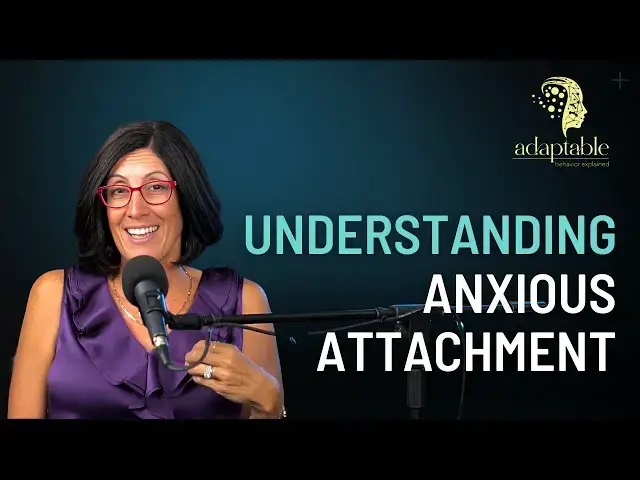
Welcome to Adaptable | Behavior Explained! In this episode, we explore anxious attachment, what it looks like in relationships, how it develops, and ways to move toward greater security. Tune in to learn how awareness and understanding can help transform anxious patterns into deeper, more stable connections.
I'm Kelly O'Horo, Attachment based EMDR Therapist, EMDRIA Consultant, and Advanced Trainer. I'm a mom of 5, Nonna of 5, wife, and a healer. I have the honor of spending my workdays walking along side people while they brave their healing journeys. I try to live with the generous assumption that we're all doing the best we can with what we know. Therapists are teachers for the "life stuff" and "emotional vocabulary" that may not have been learned due to gaps in our care givers capabilities. In the last 15 years I've learned that people are freaking amazing, resilient, and inspiring. Most importantly, we are hardwired for connection and for healing!
I hope to bring an authentic, compassionate, and unpolished approach while we explore a variety of topics such as parenting, marriage, relationships, dating, trauma, attachment, adoption, depression, addiction, anxiety, and love! There's a why for all behaviors and an explanation that makes perfect sense as emotion is at the root of it all.
-- Links --
https://linktr.ee/kellyohorolpc
https://youtu.be/rLnARKekvgo
https://www.emdria.org/find-an-emdr-therapist/
Show More Show Less View Video Transcript
0:06
Hi everyone, I'm Kelly O'Horo and this
0:09
is Adaptable Behavior Explained. Hi
0:12
everybody. Thanks for tuning in today to
0:14
Adaptable. I'm Kelly O'Horo, your host
0:16
and today we're going to talk about one
0:19
of the four attachment styles and that's
0:21
anxious attachment. I did an episode on
0:25
all the four attachment styles as an
0:27
overview and I had some requests for uh
0:30
me to dig into each one specifically and
0:32
how they were developed and how we can
0:34
heal from them and what that looks like
0:35
in relationships and some things around
0:38
the pattern. So that's what we're going
0:39
to do today on this episode. I started
0:41
this show because people always ask why
0:44
others act the way that they do. And
0:46
really, every behavior is motivated by
0:48
emotion. And our behaviors are shaped by
0:51
our earliest relationships. And so
0:54
that's what this whole show is about.
0:55
It's why I created the channel is
0:57
because we really want to understand
0:58
what's going on with other people. And
1:00
when we do, we can have more compassion
1:02
and understanding. So today, we're going
1:05
to talk about anxious attachment style.
1:07
It is the second most commonly found.
1:10
And someone with anxious attachment has
1:13
really a deep-seated fear for
1:15
abandonment and disconnection. And often
1:17
times they crave constant reassurance
1:21
and they find themselves overanalyzing
1:23
their partners or their relationships
1:26
every move. So this episode is for you
1:28
if you find yourself resonating with
1:30
that. So what is anxious attachment? So
1:34
attachment theory was developed by John
1:36
Bulby and Mary Ainsworth. And anybody
1:38
who's in psychology has had their
1:39
bachelor's in psychology. You learned a
1:41
little bit about attachment. But it
1:43
really explains how our early
1:44
experiences with our caregivers shape
1:47
our adult relationships. And like I
1:50
said, there's four main attachment
1:52
styles. We have secure attachment, which
1:54
is the last episode if you want to check
1:55
that one out. We've got anxious
1:57
attachment style, which which is today's
1:59
show, and then we're going to dig into
2:01
the in the next couple of shows in the
2:03
series, avoidant attachment and
2:05
disorganized attachment. So, anxious
2:08
attachment is marked by a very strong
2:11
fear of abandonment and a lot of need
2:15
for emotional validation. Uh, people
2:17
with this style of attachment often grew
2:20
up in environments where emotional
2:22
connection felt unpredictable. Sometimes
2:25
it was really present and warm and
2:27
loving and sometimes it was withdrawn.
2:30
And those reasons for the withdrawal
2:34
don't necessarily have to be because a
2:35
parent was a bad person. Sometimes
2:38
things happen in our lives that
2:39
overwhelm us as parents and pull us away
2:42
from our attunement and our connections
2:44
with our kids. So, we're going to dig in
2:45
a little more deeply. But what happens
2:47
is we develop beliefs about ourselves
2:50
based on our attachment style. So,
2:52
someone with an anxious attachment style
2:54
might think things like, "Others might
2:57
give me connection or they might not. I
2:59
can't really trust it. Maybe my needs
3:02
are too much or I'm too much for others.
3:04
And even if I get the connection I need,
3:07
I can't trust it. It might vanish at any
3:09
moment." And these beliefs show up in
3:11
relationships like being overanalyzing
3:14
the signals of others and making
3:17
conclusions or assumptions about what
3:19
those signals mean and worrying about
3:21
losing interest in uh love or connection
3:25
and loss. And someone with anxious
3:28
attachment uh seeks constant
3:30
reassurance. Are you okay? Are we okay?
3:32
What's going on? Are you all right? So
3:35
someone with anxious attachment
3:36
struggles to trust that their
3:38
connection, that their love, that their
3:41
feelings of safety in the relationship
3:42
will last. So let's talk about how
3:45
anxious attachment shows up in
3:47
relationships. Because anxious
3:49
attachment isn't just about a feeling or
3:52
being needy. It's developed based on a
3:55
survival need. Our brains are wired to
3:58
seek connection. And it's the very first
4:01
thing that we do when we're born is we
4:03
are seeking connection with our mothers.
4:06
Um, and when that connection feels
4:08
uncertain, anxiety ramps up. And so some
4:12
traits of somebody who's anxiously
4:14
attached might look like kind of
4:16
tethering their self-worth to the
4:19
relationship status. You know, having a
4:21
lot of separation anxiety. uh even brief
4:24
distance can bring um up anxiety or
4:27
stress and be triggering for someone. Uh
4:30
they might catastrophize or jump to
4:32
conclusions that worst case scenario uh
4:35
after a missed call or a text. They're
4:38
kind of dress rehearsing tragedy that
4:40
whatever happened means more than it
4:42
does to the other person. Someone with
4:44
anxious attachment struggles typically
4:46
to set and maintain healthy boundaries.
4:49
um they're more concerned about making
4:51
sure people are okay, that they're okay
4:53
themselves, and they might stay in
4:56
relationships that aren't meeting their
4:58
needs because their fear of being alone
5:00
is greater than being healthier. And so
5:03
this style of attachment often leads to
5:06
negative cycles in relationship. So
5:09
we'll pursue or withdraw. So for
5:12
example, one partner or person will
5:14
chase for the connection and then the
5:16
other retreats. And in Sue Johnson's uh
5:19
work, she talks about the um dance of
5:21
attachment and and everybody has a dance
5:24
depending on our attachment style and
5:25
what our propensities are really are
5:28
dependent on what we grew up with and
5:30
what we're reenacting. There's the other
5:32
pattern of criticize and defend. So this
5:35
is where one person attacks and then the
5:37
other becomes defensive. And so there's
5:40
this dependency paradox. The more
5:43
securely dependent we are on someone,
5:45
the more independent and daring we
5:47
become. And this feels counterproductive
5:49
to people because healthy relationships
5:52
really do encourage both closeness as
5:55
well as autonomy. And so that's the
5:57
paradox. It's safe to be alone and it's
5:59
safe to be in connection. And that
6:00
actually creates the best outcome in a
6:03
relationship.
6:04
So let's talk about how a person was
6:07
likely parented who has anxious
6:10
attachment. And like I talked about in
6:12
secure attachment episode, our earliest
6:15
years really shape our attachment style.
6:18
It's the environment that often leads to
6:20
whatever our our attachment strategy,
6:22
our primary attachment strategy becomes
6:24
as an adult. So people who develop an
6:28
anxious attachment style were often
6:30
parented in ways that made emotional
6:32
connection feel inconsistent or perhaps
6:35
unpredictable. Maybe their caregivers
6:37
might have at times been loving and
6:40
attuned and sweet and kind and
6:43
attentive. Or maybe sometimes they were
6:45
distracted or stressed or something
6:47
happened in their life that pulled them
6:49
away which made them then become
6:51
emotionally unavailable for others. This
6:54
could be things as simple as you know in
6:56
today's day and age what we see a lot is
6:58
our distractability with our phones and
7:00
with our computers and our devices.
7:02
we're not present a lot these days and
7:04
it takes a lot of discipline to to be
7:07
present and so I think that um the
7:09
generation that's coming up I think
7:11
we're going to see a lot more anxious
7:13
attachment because of our you know
7:15
really addiction to our phones but this
7:17
can also show up for for someone for
7:20
example in my story my mom had um a
7:23
miscarriage when I was like 2 years old
7:25
and it just threw her into such a
7:28
drastic state of grief and she was
7:30
really depressed for like several weeks
7:32
and and wouldn't touch me, look at me,
7:33
hold me. And so in in me came up this
7:37
I'm gonna be left, I'm going to be
7:38
abandoned. And that unpredictability, it
7:41
sends these powerful messages to us as
7:43
children. Um love and comfort aren't
7:46
guaranteed. You can't always count on
7:48
it. And so common patterns in our
7:51
childhood would be inconsistent
7:53
responsiveness by a a caregiver.
7:55
Sometimes a parent was warm and
7:57
nurturing, other times distant or cold
7:59
or or in this day and age, like I said,
8:01
preoccupied with something else that has
8:03
their attention. And as a result, the
8:05
child learns to kind of stay
8:07
hypervigilant. Um, they're always
8:09
scanning for signs of connection or
8:11
their perception of rejection. The
8:13
caregiver anxiety or emotional
8:15
volatility is another trait that can
8:17
happen where the child will then be in
8:20
doubt of secure connection. So if a
8:22
parent struggled with their own anxiety,
8:24
their own depression, their own
8:26
inability to regulate their emotion, the
8:29
child is very connected especially to
8:31
the mother and may have felt responsible
8:33
for the parents feelings or worried
8:36
about being the why in their parents'
8:38
stories um ultimately causing them
8:40
distress. You know, I'll tell my clients
8:42
things like we don't have a sense of
8:45
other when we're little. We don't start
8:46
to develop that until about the age of
8:48
12. And so everything is about me. If
8:50
I'm a little kid and no one's paying
8:52
attention, it must be because I'm bad.
8:54
It must be because I did something
8:56
wrong. Well, if you think about
8:58
adaptation, what ends up happening is I
9:00
then become very aware and vigilant as
9:03
to what I can do to fix that. And so, it
9:06
becomes an unhelpful adaptation for a
9:08
child when they don't have that
9:10
consistent affection and nurture. So
9:12
that conditional affection looks like
9:15
love and attention might have been given
9:17
like I said but sometimes taken away or
9:20
a reward for good behavior. What a good
9:22
little girl for cleaning up the house
9:24
and now I'm going to give you so many
9:26
hugs and kisses. And so now my
9:28
connection is paired with my good
9:30
behavior and those become tied. I have
9:32
to hustle for my worth. I have to do
9:34
things so that I can get the attention
9:36
and the connection from somebody. And so
9:39
these might be your hustle for your
9:41
worth people who are really high
9:42
achievers and they always are striving
9:44
for the next thing. Not healthy
9:46
striving. That's different. But they're
9:48
always looking to try to be shiny enough
9:51
to get on somebody's radar and they're
9:53
in compliance. They're good rule
9:55
followers and they want to make sure
9:57
they're seen as as a good little boy or
9:59
a good little girl. Another thing that
10:02
happens is uh a parent can give mixed
10:04
signals. So they might say, "I love
10:06
you." But then they act withdrawn. So, I
10:08
love you too, but I can't bother to tuck
10:10
you in or go give you a kiss or read you
10:12
a story. And so, that can be very
10:15
confusing for a child a child or let's
10:17
say, you know, as a parents, we have our
10:19
own stresses. We have our bills, we have
10:21
our jobs, we have our household chores,
10:24
our everything else that pulls us in
10:25
every direction as a parent. And so, I
10:27
might be irritable. I remember one time
10:29
I came home, my second youngest son says
10:33
to me, I I came in the house and the
10:35
first thing I notice is like the dishes
10:37
are in the sink and he didn't do his
10:39
chores. And I'm thankful to this day
10:41
because he said to me, you know, mom,
10:44
you come in and the very first thing you
10:46
said is the complaint or the problem
10:49
that you see instead of saying, hey
10:50
babe, how was your day? I hope that you
10:52
had a good day. And greeting him with
10:54
with some connection. And I really heard
10:57
that. I mean, it really stopped me in my
10:58
tracks and I thought, you know, he's
11:00
right. And my own irritability and my
11:02
own overwhelm and stress from my job, I
11:05
didn't switch states before coming into
11:06
the house so that I could meet my
11:08
children with like attunement and love
11:10
and connection. And so, this leaves a
11:12
child confused and they don't know what
11:14
to necessarily expect from their parent.
11:16
And and many of us are guilty of that.
11:18
It's very hard to be attuned and
11:20
consistent all the time. But if we have
11:22
that pattern all the time of the
11:25
inconsistent love and connection and
11:27
attunement, it creates anxiety in our
11:29
offspring. And so another trait that
11:32
happens in a child is they kind of
11:34
become the little adults. They try to
11:36
anticipate and meet the needs of others.
11:38
They try to be caretakers of their
11:40
younger siblings. They try to jump to be
11:42
super helpful. And they often feel
11:44
anxious when they're separated from a
11:47
caregiver uh fearing abandonment or
11:49
being left or disconnection. And so as
11:52
you think about what happened for you as
11:54
a child or if you're a parent, even in
11:56
your own parenting style, these are
11:58
things to kind of think about because
12:00
these children might have become highly
12:02
sensitive to the others moods, believing
12:04
that their own worth depends on keeping
12:06
other people happy. So if you have a
12:09
peacekeeper type of person in your
12:11
family or or you were one, this is
12:13
probably your attachment style. So let's
12:15
give an example. Let's say there's a
12:18
child whose parents affectionate one
12:19
day. they're distracted or critical the
12:22
next. And so this child may learn to
12:24
seek constant reassurance and they're
12:26
always worried about being too much or
12:28
feel responsible for maintaining the
12:31
closeness. So they're the ones that take
12:33
all the initiative. They're the ones
12:34
that run up to the parent and always ask
12:36
for hugs and kisses like more than is
12:39
needed for a securely attached child.
12:43
So we can work on these healing. We can
12:46
heal this attachment strategy through
12:49
relationships, through therapy. We can
12:52
do, you know, kind of relational or or
12:55
attachment focused EMDR therapy where
12:57
the therapist really models and shows up
13:00
with excellent attunement so that we can
13:03
address um these patterns and help
13:05
adults understand and heal the roots of
13:08
their anxious attachment style. And by
13:11
dealing with these early memories that
13:13
are at the core or the roots of how we
13:15
grow up, um we can then build uh new
13:18
emotional capacities and we can learn
13:21
and move toward secure ways of relating
13:23
with one another. Um and I talked about
13:26
earned secure attachment in more detail
13:28
in the last episode. So if that's um
13:30
something that sounds enticing to you, I
13:32
say check it out for sure. So let's talk
13:36
about what it looks like in an adult,
13:38
right? So, our anxious attachment, um,
13:41
it shapes our romantic and close
13:43
relationships. And if you're wondering
13:46
if this is you, well, here are some
13:48
behaviors and scenarios. This might look
13:50
like someone who
13:53
consistently looks for reassurance. They
13:55
might ask, "Do you still love me? Are we
13:57
good? Are we okay? Are you mad at me?"
14:00
These people are sending maybe multiple
14:02
texts if their partner doesn't respond
14:04
quickly and they feel kind of panicked
14:06
by the silence and disconnection is
14:09
really overwhelming. And so those kinds
14:10
of things are kind of a sign that either
14:12
you or your partner might be showing up
14:14
with anxious attachment. But at the root
14:17
of it is really this fear of
14:18
abandonment. They're always worried
14:20
about their partner leaving and um and
14:23
this feeling feels like a fact even
14:25
though there's not evidence that
14:26
supports it and they can feel devastated
14:29
by minor disagreements and interpret
14:31
them as signs that the relationship is
14:33
just over. And so there's a lot of
14:35
difficulty trusting the closeness. They
14:38
can struggle to believe that the
14:39
intimacy is real or that it will last.
14:42
And they're constantly like reading
14:43
between the lines of every comment or
14:45
action. What does this mean? What does
14:47
that mean? and really searching for
14:49
hidden meanings and then potentially
14:51
getting stuck in their own confirmation
14:53
bias by continually looking for proof
14:56
that what they feel is true in fact. And
14:58
so there's an emotional neediness that
15:01
is at the base of of an anxiously
15:03
attached uh uh a person and they rely on
15:07
others whether it's partners or
15:08
friendships for their worth, for their
15:10
self-worth and and most importantly for
15:12
that emotional stability. They require
15:15
others to help them regulate uh and they
15:18
they they oftentimes feel threatened by
15:20
a partner's independence or need for
15:22
alone time or desire to do things like
15:24
have other friends or experiences. And
15:27
so they don't really feel tolerant of
15:30
disconnection. And this creates some
15:32
boundary challenges. Uh you know, they
15:34
might have trouble setting boundaries or
15:37
fear that it'll push their partner away
15:39
if they do. They're fearful or anxious
15:42
about conflict or disconnection and so
15:44
they then become overaccommodating and
15:47
peopleleasing. Uh they'll sacrifice
15:49
their own personal needs so that they
15:51
can maintain the closeness and that can
15:54
be overwhelming to someone who's more
15:55
securely attached needing to constantly
15:58
re reassure someone. So think about like
16:01
this as an example. Imagine u you know
16:04
someone whose partner goes out with
16:05
friends for the evening. the anxiously
16:08
attached um partner uh feels
16:11
overwhelmed. They feel upset. They send
16:14
repeated messages. They're sending
16:15
pictures of themselves with their dog to
16:18
be like constant reminders like, "I'm
16:20
still here. I'm still here." And they're
16:22
usually worried that their partner is
16:23
maybe losing interest. And so when the
16:26
partner returns, they might seek extra
16:29
affection or reinsurance. Sometimes it
16:31
can lead to conflict or like I said,
16:34
exhaustion because it's a lot of work to
16:36
constantly try to help someone else
16:38
maintain their emotional regulation.
16:41
Another example comes up in arguments or
16:44
conflict. Uh the anxiously attached
16:46
person might become highly emotional,
16:50
overwhelming. They they're fearing the
16:52
relationship is at risk. They might
16:54
apologize excessively trying to fix
16:56
things or take accountability for things
16:58
that really aren't their responsibility
17:00
just to get back in connection. Maybe
17:02
they become immediately more clingy
17:04
because uh they just are feeling so
17:07
relieved that they're back in connection
17:09
even if there's like a minor issue. So
17:12
if you recognize this in yourself or in
17:14
someone you know, you're not alone. It's
17:16
a very common attachment style. Like I
17:19
said, it's the second most common
17:20
attachment style according to research.
17:23
And change is possible. It starts with
17:25
the self-awareness, which if you're
17:27
watching this show, you're learning.
17:28
Therapy is always really helpful.
17:31
Therapists can model appropriate
17:33
connection, appropriate boundaries, and
17:36
then of course establishing supportive
17:38
and healthy relationships in adulthood.
17:40
This will help build new pathways. we
17:43
can move more toward secure attachment
17:46
which helps us learn to trust, helps us
17:48
to learn to set boundaries and
17:50
ultimately regulate our emotions more
17:52
effectively internally without the need
17:55
for someone else to do that for us. So,
17:58
like I said, there's good news.
18:00
Attachment styles, they aren't set in
18:02
stone. They're flexible. Healing is
18:04
possible through self-awareness, through
18:07
intentional change and challenging
18:09
yourself to move into discomfort. You
18:12
know, you work on practicing skills
18:14
like, "I'm not going to text them back
18:16
for a little while. I'm not going to
18:17
respond immediately. I'm going to be
18:19
okay waiting for them to have their own
18:22
life and that they'll get back to me
18:23
when they can't." And helping uh grow
18:26
these pathways really is about
18:28
supportive relationships. So really
18:31
learning new uh new things that are
18:34
different or don't match what your
18:36
childhood looked like. So some tools for
18:38
healing anxious attachment would be
18:40
recognizing positives. Notice when a
18:42
person in relationship shows up for you.
18:45
Let them know it feels good. Let
18:47
yourself know. You can see it. You can
18:49
feel it. Practice true vulnerability.
18:52
You know, express your fears. Express
18:54
insecurities rather than blaming or
18:57
protesting. Get underneath that blame
18:59
and look at the pain that you're feeling
19:01
and express that. Practice boundaries.
19:04
This takes work. You have to learn to
19:07
identify and voice your needs even if it
19:09
feels uncomfortable or you feel fearful
19:11
like there's going to be potential
19:13
rejection or disconnection. Have
19:15
self-compassion. Be gentle with
19:18
yourself. This is hard. Um, as someone
19:20
who I would have identified very much as
19:22
someone who was anxiously attached, it's
19:25
hard to really work those edges and
19:27
really give yourself space. So, have
19:29
compassion. Uh, it takes time and we
19:31
have to have new neuropathways built in
19:34
order to establish new default modes of
19:36
how we show up in relationship. Don't do
19:39
it alone. We can't do it alone. So make
19:41
sure you seek out therapy, you get
19:43
support because working with a therapist
19:46
helps you to establish new patterns and
19:48
rewire the old pathways in our brain.
19:51
And think about things like what gives
19:53
you energy, who gives you energy, what
19:56
feels meaningful outside of
19:57
relationships. Building a sense of
20:00
purpose, building your own sense of self
20:02
beyond attachment as an autonomous
20:05
independent person really is key. So the
20:08
good news is is you can reclaim your
20:10
joy. You can move yourself into a more
20:13
securely attachment pattern because
20:15
anxious attachment makes you feel like
20:17
your spark is lost. It makes you feel
20:19
lonely. It makes you feel tired. It's
20:21
really just buried under old fears. So
20:24
working on uncovering those old fears
20:26
and leaning into those emotional
20:28
histories where you weren't able to
20:30
count on connection is critical. I want
20:32
you to celebrate small wins. Every time
20:34
you set a boundary or express a need,
20:36
you're growing. And this is the evidence
20:38
of that. And reconnecting with self and
20:40
purpose and joy. Find moments that make
20:43
you smile, even if they're short. And
20:45
tune into those moments. Remember that
20:47
you're not too much. Your needs are
20:49
valid. You matter. And your needs matter
20:51
equally to others. So, it's not about
20:54
pushing through the anxiety. It's about
20:56
learning to bend. It's about learning to
20:58
be flexible. It's about showing slowing
21:01
down so that you can breathe and showing
21:03
yourself that you can tolerate some
21:05
disconnection and honoring your limits
21:07
along the way. So anxious attachment,
21:11
like I said, it's rooted in those early
21:13
experiences. It shapes how we seek
21:15
connection. It shows up in our
21:17
relationships and it leads to those
21:19
cycles of anxiety of overanalyzing trust
21:22
issues. uh not being able to trust in
21:25
relationships of of love is really a
21:28
character trait of someone with anxious
21:30
attachment. But healing is possible.
21:33
You've got to have self-awareness.
21:34
You're watching this show, so it tells
21:36
me you're interested. Um you're looking
21:38
at yourself or the people around you and
21:40
really trying to dig deep and
21:42
understand. Requires vulnerability. We
21:44
don't grow without discomfort and so
21:46
it's uncomfortable. And then really
21:48
arming yourself with supportive
21:50
relationships, people that want to see
21:52
you heal. You're not broken. You're just
21:54
human. And we all have childhoods that
21:56
were imperfect because we all have
21:58
parents that were imperfect even if they
22:00
were doing the very best that they
22:01
could. So check in. What is your estach?
22:04
What is your attachment style? What's it
22:07
trying to teach you about your needs?
22:09
And more importantly, what's your
22:10
attachment style teaching you about your
22:12
story? So I want you to think about
22:13
that. If this episode resonated with
22:16
you, I want you to subscribe or share it
22:18
with somebody. Leave a review. let us
22:21
know how we're doing or if there's
22:22
another topic you want me to dig into
22:24
more deeply. Um connect with me on
22:26
social media. I do read all of my
22:28
comments and and I do respond. And if
22:31
you want to learn more about these
22:33
styles, we've got more to come. We've
22:35
got um avoidant is next week and we've
22:38
got disorganized the week after that. So
22:40
tune in for the whole series. But thank
22:43
you very much for tuning in and remember
22:45
until next time, don't forget to lead
22:48
with love. It'll never stare you wrong.
22:51
[Music]
#Mental Health
#Anxiety & Stress
#Counseling Services