videocam_off
This livestream is currently offline
Check back later when the stream goes live
Up next in 10


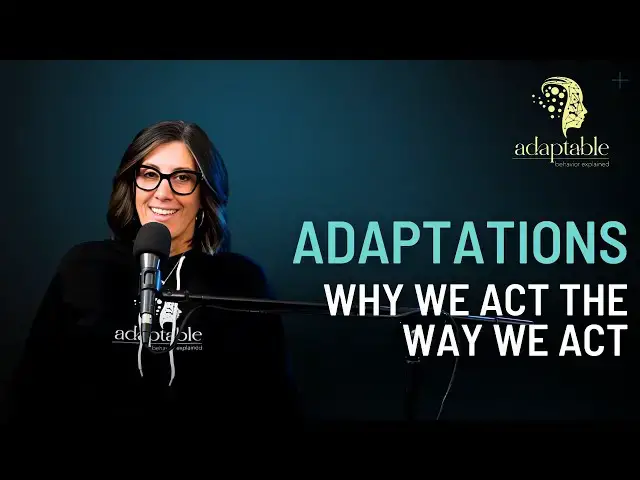
Welcome to Adaptable | Behavior Explained! In this episode, we explore Adaptation, why we act the way we act and how our behaviors are shaped by our experiences, environments, and nervous systems. Many of our patterns once helped us survive or cope, even if they no longer serve us in the same way today. Understanding this can bring more compassion, clarity, and choice to how we respond to ourselves and others.
I'm Kelly O'Horo, Attachment based EMDR Therapist, EMDRIA Consultant, and Advanced Trainer. I'm a mom of 5, Nonna of 5, wife, and a healer. I have the honor of spending my workdays walking along side people while they brave their healing journeys. I try to live with the generous assumption that we're all doing the best we can with what we know. Therapists are teachers for the "life stuff" and "emotional vocabulary" that may not have been learned due to gaps in our care givers capabilities. In the last 15 years I've learned that people are freaking amazing, resilient, and inspiring. Most importantly, we are hardwired for connection and for healing!
I hope to bring an authentic, compassionate, and unpolished approach while we explore a variety of topics such as parenting, marriage, relationships, dating, trauma, attachment, adoption, depression, addiction, anxiety, and love! There's a why for all behaviors and an explanation that makes perfect sense as emotion is at the root of it all.
-- Links --
https://linktr.ee/kellyohorolpc
https://youtu.be/rLnARKekvgo
https://www.emdria.org/find-an-emdr-therapist/
Show More Show Less View Video Transcript
0:06
Hi everyone, I'm Kelly O'Horo and this
0:09
is Adaptable Behavior Explained. Hi
0:12
everybody, I'm Kelly O'Horo. I'm your
0:14
host for Adaptable Behavior Explained
0:17
and I came up with this idea to do this
0:19
podcast because as a therapist, I just
0:22
saw so many adaptations and behaviors
0:25
that most persons find confusing or
0:28
bothersome. And when I look at the roots
0:30
of why people act the way they do, what
0:32
I've learned is those adaptations make a
0:34
lot of sense when you start to think
0:35
about the reasons for them. And so this
0:37
show is about that. It's about
0:39
adaptation and why we act the way we
0:40
act, even when some of those uh
0:43
behaviors are confusing or don't make a
0:45
lot of sense to us. And today's episode
0:47
is, I think, really important for
0:50
anybody who thinks about wanting to go
0:52
through a healing journey or um knows
0:55
someone else that has been maybe
0:57
avoiding our their story and not wanting
1:00
to deal with the trauma of their life or
1:03
their stories again feel too hard. And
1:05
so this is really about facing your
1:08
trauma or your history, going to
1:10
counseling, going to do something to
1:12
growth and being brave and afraid at the
1:14
same time. And something that I want you
1:16
to think about is if you or anyone you
1:19
know has ever felt the urge to run from
1:22
your story or you think about things
1:25
that have happened to you that were bad
1:26
and you're you find yourself going that
1:29
was in the past. It was a long time ago.
1:31
I just want to be here now and I don't
1:33
want to deal with the things that are
1:34
over. They're done with. Maybe you've
1:36
been through something painful or
1:37
something you'd rather just keep locked
1:39
away. And maybe you even tell yourself
1:41
that you're fine, but deep down you know
1:43
that there are parts of your past that
1:45
you would do anything to avoid. If
1:47
that's you, you're certainly not alone.
1:49
Even sometimes people come to therapy
1:51
and they are still saying that. And
1:53
today we're going to talk about why
1:54
avoidance is so common and what it costs
1:57
us and ultimately how we can gently
1:59
plant seeds for our own healing and
2:01
growth even if we're not fully ready to
2:03
dive in all the way just yet. We're also
2:06
going to talk about how unfair it feels
2:08
to have to do this work when usually
2:10
we're dealing with things that happened
2:12
to us that weren't our fault and why
2:14
courage often means that being brave and
2:16
afraid at the same time is 100%
2:19
necessary when we're going to dive into
2:22
the pain of our past so that we can
2:25
ultimately be our very best selves. So,
2:28
we're going to talk about why we avoid
2:30
and really hopefully change your
2:32
perspective on the fact that it's not
2:33
weakness. It's really a survival
2:35
mechanism. And it's a natural response
2:38
to pain. For many of us, the idea of
2:41
revisiting our past feels super
2:43
overwhelming and sometimes even
2:46
dangerous. And we don't fully realize
2:48
how much our avoidance is shaping our
2:51
lives. Every decision we make is usually
2:54
predicated in past learning. And until
2:56
those consequences show up in our
2:58
relationships or in our work or in our
3:00
sense of self, in our beliefs of self,
3:03
we don't necessarily find the urgency. I
3:06
find it funny when I talk to friends or
3:08
people that are single, they don't have
3:10
partners or anybody who lives with them
3:12
or anybody that's really interacting
3:14
with them daily and they say to me
3:15
things like, "I'm fine. I wouldn't need
3:17
to go to therapy." And my answer to that
3:20
is it's a lot easier to avoid therapy or
3:24
growing when you're single and you're by
3:26
yourself because truthfully, you don't
3:27
have anybody that's activating your
3:29
unfinished business on the daily and
3:31
you're not having to navigate those
3:33
experiences and relationships as often
3:36
as someone who's in a family system of
3:38
some sort. So, let me give you an
3:40
example of, you know, place yourself in
3:42
this example or someone you might know.
3:44
But, let's say there's a young adult and
3:47
they avoid thinking about a childhood
3:49
trauma. They focus on school, on
3:51
friends, on work instead because it
3:54
feels safer for them to just keep things
3:56
life and kind of live more at the
3:58
surface. Or maybe someone survived a
4:01
painful breakup and refuses to talk
4:03
about it. They insist that they're fine.
4:06
They just want to do something else. And
4:08
even as they notice themselves pulling
4:09
away from new relationships, they avoid
4:12
potentially the reason why that's
4:14
happening in the first p place. And
4:16
sometimes the pain is so much from
4:19
something much deeper like the surviving
4:21
a childhood sexual abuse or physical
4:24
neglect or danger. And oftentimes even
4:27
years later, people can't bear to talk
4:30
about what happened to them. Just the
4:32
very idea of facing those memories feels
4:34
like it could break them or crush them.
4:37
And so I want you to just, you know,
4:39
practically think about a couple of
4:41
things. Of course, I want to avoid pain.
4:44
That's human. That is a natural
4:46
propensity when we want to stay out of
4:48
discomfort. And I want you to notice
4:50
what feels unsafe about facing the past.
4:53
And really try not to judge it because
4:55
this is a really a survival instinct.
4:58
And then go ahead and practice some
5:00
grounding skills. Deep breaths. take a
5:02
walk or find something comforting in a
5:04
routine like yoga or swimming. Um, if
5:07
you need more ideas on ways to manage
5:10
distress from trauma, I've got an
5:12
episode on that earlier in my list of
5:15
shows, so check that out. But I really
5:17
want to talk about the cost of avoidance
5:19
that is sometimes not very uh obvious.
5:23
Avoidance might bring short-term relief,
5:25
but it's kind of like the phrase credit
5:27
card parenting. If we do the easy thing
5:28
now, we're going to end up paying more
5:30
later. And the same thing goes with
5:31
avoiding our trauma. And it can often
5:33
lead to much greater pain in the long
5:35
run the longer we wait to uh address
5:38
things. Unadressed trauma can show up
5:40
like anxiety, depression, struggles with
5:43
relationships or even physical symptoms
5:45
or somatic distress that shows up in our
5:47
body. And we may not see the connection
5:50
until those patterns repeat over and
5:53
over again. And sometimes the pain of
5:56
the relationship patterns that we have
5:58
is is really profound. And I oftentimes
6:01
have clients who will say,"Wh do I keep
6:03
ending up with someone like this who's
6:06
un unavailable emotionally or really
6:08
selfish or so overfunctioning they won't
6:11
get off my back about everything? And
6:13
why do I keep attracting that?" And I
6:15
think that that's a good question to ask
6:17
yourself because usually there's
6:19
something unresolved or reenacted in a
6:21
previous relationship that is showing up
6:23
in your life now. Someone who avoids
6:26
thinking about a difficult childhood
6:28
finds themselves repeating old patterns
6:30
in adult relationships and oftentimes
6:33
choosing partners who aren't safe or
6:34
supportive or really the ideal person
6:37
one would choose on paper. And a person
6:39
who never talks about loss finds
6:40
themselves feeling numb, disconnected,
6:43
unable to fully enjoy life. And they're
6:45
those people that kind of live in the
6:47
middle in the gray area where they've
6:49
blunted their emotions, both protective
6:51
and enhancing because we can't allow for
6:55
the full rainbow of emotions when we've
6:57
got things squashed and we don't get to
6:58
pick and choose which emotions end up
7:00
squashed. And so that gray way of living
7:02
in the middle is is uh you know it's not
7:05
very exciting because we don't have the
7:07
full array of good um positive emotions
7:10
either when we've smooshed the
7:13
protective ones. So let me go back to
7:15
the example for a survivor of sexual
7:17
abuse. For these people, avoidance might
7:20
mean dissociating during intimacy, being
7:23
in a safe, loving relationship now and
7:25
not being able to, you know, approach
7:28
intimacy with freedom. Or maybe they
7:31
have to work through the feeling
7:33
flashbacks and the intrusions of
7:35
thoughts with their partner before they
7:38
can be present in the intimate
7:40
experience with their partner because
7:42
they struggle to trust and they feel
7:43
stuck in life in general. and that pain
7:46
that they tried to bury just keeps
7:48
resurfacing in ways that they never
7:49
expected. And they may know that this is
7:52
a problem and they may even know what
7:53
it's connected to, but just the idea of
7:56
the fact that one, it could be better,
7:58
and two, to what I would have to face in
8:00
order to have that happen is scary. So,
8:03
some other things you might consider is
8:04
just gently asking yourself, are there
8:07
places in your life where you feel stuck
8:09
or that you keep repeating the same
8:11
patterns? And maybe use metaphors like,
8:14
you know, ignoring traumas like leaving
8:16
a monster in a closet. It doesn't go
8:18
away just because you don't look at it.
8:19
These things hide in plain sight when
8:21
they are really actively being avoided.
8:24
And you may not feel the effects now,
8:26
but they often show up when you least
8:28
expect it. Sometimes my clients will say
8:31
things like, "I don't understand why I
8:36
get here and I just start crying, but I
8:38
was fine all week." And what I tell them
8:40
is your body is starting to create
8:41
associations that when you're here,
8:44
you've given yourself permission to
8:46
feel, to go there, to, you know,
8:49
experience some of the things that you
8:50
have to zip up and compartmentalize when
8:53
you're not in therapy. And I want to
8:55
tell you that that's a really normal
8:57
occurrence, too. And the more that you
8:59
do that, the more your body starts to
9:01
trust that you're handling it and you
9:04
don't have to keep it all zipped up
9:05
anymore, but you are now in charge of
9:08
when things come out and are, you know,
9:10
are triggering or activating. And then
9:12
you can go live your life in the more
9:14
functional way that you always do. Come
9:16
back to therapy, pull it out, and so
9:18
that becomes more of a pattern. So for
9:20
those who are avoidant of wanting to do
9:22
the work, that's something you can
9:24
expect to happen. And that's actually a
9:26
lot of freedom because you're now
9:28
empowered to take charge of when and
9:30
where you deal with the activating
9:32
events and the emotions that accompany
9:34
that. If you're not ready to face your
9:36
past, it's okay. Healing can't be
9:38
rushed, but it helps to know what to
9:40
expect. So that you're not so surprised
9:42
when old wounds show up later. Sometimes
9:45
just having information or a gentle
9:47
invitation is enough to plant a seed for
9:49
your future growth. So maybe you're
9:51
listening and you are thinking about
9:53
some unhealed trauma that you know is
9:56
affecting you now or might affect your
9:58
future relationships and you start to
10:01
notice patterns in your own life. Maybe
10:03
if if they're a sexual abuse survivor
10:06
and you're not ready for therapy, but
10:08
you save some resources from some of our
10:10
podcast episodes or other episodes and
10:13
think of them in play them in like bites
10:15
that feels right for your own timing.
10:18
Maybe start some grounding exercises
10:20
before you dig into your trauma on your
10:22
own with potentially things like
10:24
meditation or more calming exercise like
10:28
yoga or things like that. Even those
10:30
small acts of steps towards healing will
10:33
help make the process easier for you
10:35
when you do decide to really dig in to
10:38
your past. You really have to give
10:39
yourself permission to go at your own
10:41
pace. You want to learn about trauma,
10:43
its effects, even if you're not ready to
10:45
dive in, and that's okay. and tell
10:47
yourself like, I can come back to this
10:49
when I'm ready. I'm allowed to take
10:50
small steps. And for those of you who
10:52
are right there, um I'd like to invite
10:55
you to check out a couple of my earlier
10:57
episodes. Those ones are how we work,
10:59
parts one and two. That'll give you some
11:02
history on um kind of just really the
11:05
biology and neuroscience of trauma and
11:07
how it might be affecting you while
11:09
keeping it out at a little bit more of a
11:11
distance and not so specifically deeply
11:14
into your own personal work. So now I
11:16
want to talk a little bit about
11:17
something that comes up for people
11:19
pretty regularly, which is the concept
11:22
of how unfair it is that I have to go
11:25
dig through all of this painful stuff
11:27
when I'm not even responsible for having
11:28
it h like how it happened to me. And it
11:31
really isn't fair that you've been hurt
11:34
and that you have to do the hard work of
11:35
healing. You didn't choose what happened
11:37
to you. And and it really is deeply
11:39
unjust that the burden of healing and
11:41
recovery falls on your shoulders. And I
11:43
think naming that unfairness is a bit of
11:45
a an act of compassion for yourself
11:47
because it really isn't fair. And pity
11:51
is a synonym for compassion. And really,
11:53
we have to feel bad for ourselves for
11:55
things that weren't our fault so that
11:57
that emotion can come through, be fully
11:59
felt, and and be resolved so that we can
12:01
then move forward and just take care of
12:04
the things that we need to take care of.
12:06
thinking about like um you know a
12:08
survivor of childhood sexual abuse and
12:11
how angry they often are that they have
12:13
to clean up a mess that you know they
12:16
didn't cause and someone else harmed
12:17
them. That anger is really really valid
12:20
or even thinking about grieving a loss
12:23
that builds up in you because you're
12:26
dealing with the triggers from the way
12:28
other people treated you. It's it's okay
12:30
to acknowledge the feelings that it's
12:33
unfair so that you don't end up in a lot
12:35
of resentment. And so I think that
12:37
really with lots of types of trauma, we
12:39
start there. Like this sucks. Why do I
12:40
have to deal with this when it wasn't my
12:42
fault? But the choice is really ours
12:44
because even though we didn't cause the
12:46
things that happened to us, no one else
12:49
can fix it for us. We don't have a time
12:51
machine. We can't go back and change it.
12:53
We can't, you know, we can't have
12:55
different parents or teachers or whoever
12:57
caused our pain. They just, it is what
13:00
it is. And so for us to have the freedom
13:02
we deserve and be in healthy
13:05
relationships or have the peace that we
13:07
deserve, really it is our empowered
13:10
opportunity to face the things that keep
13:12
us stuck. So again, it's okay to say, "I
13:14
I shouldn't have to do this work, but I
13:16
deserve healing." and allow space for
13:18
that grief and anger and the unfairness
13:20
to just be part of the healing process
13:23
so that you don't stay stuck where you
13:25
currently are. I've often told people,
13:27
you know, we have choices. We don't have
13:29
choices about what happened to us, but
13:31
we do have choices as to whether we wake
13:33
up in 10 more years with the same level
13:35
of pain and stuckness and relational
13:38
discord as we currently have. And that
13:40
then is your adult decision to make. And
13:42
that part's a little bit hard to swallow
13:44
when you think about that. So when you
13:47
think about healing from trauma, it does
13:49
require a lot of courage, a lot of
13:51
vulnerability, and the choice to face
13:54
the past. It's not easy. It never really
13:56
is. But it really is the only way to
13:58
move from surviving to thriving. You
14:01
don't have to force yourself to be
14:02
ready, but you can offer yourself hope
14:05
and a steady presence of what could come
14:08
if you were willing to face that. So, an
14:12
example might be someone who, you know,
14:15
avoided their story. They returned to it
14:18
years later and they're ready to heal
14:19
because, you know, maybe a seed was
14:21
planted from something like this show
14:23
and they're having a moment of
14:24
compassion in their life and they've
14:26
decided, you know what, I think I'm
14:27
going to go back and face this stuff. Or
14:30
maybe, you know, a sexual abuse survivor
14:32
has decided after years of avoidance
14:34
that maybe their partner deserves them
14:37
to finally face this stuff so that they
14:39
can be the right kind of person for
14:41
their partner who's been, you know,
14:43
patient and loving and kind through the
14:46
triggering experiences. And even though
14:47
it's terrifying, it also can be the
14:50
beginning of freedom while putting this
14:53
backpack down and no longer carrying
14:55
stones that that you didn't put in your
14:57
bag. taking these small steps are really
15:00
helpful. Maybe you start with journaling
15:01
or just talking to somebody about what
15:04
their therapy experience was like. Or
15:06
maybe you join a Facebook group and kind
15:08
of listen as a distant observer about
15:10
what things people have dealt with. And
15:13
maybe you'll find that it's less scary
15:15
than you had originally imagined. But I
15:17
want to give you some mantras that might
15:18
help. Things like I said before, being
15:20
brave and afraid at the same time. You
15:23
want to celebrate small steps towards
15:25
those open opportunities and moments
15:27
even if you're not ready for the whole
15:29
journey. And I want you to really
15:31
remember that you've already survived
15:33
the worst and you've already overcome
15:37
that because of your resilience. And so
15:39
healing is absolutely possible. So as a
15:42
bit of a recap, avoidance is a survival
15:45
strategy. It's not a character flaw.
15:47
It's not a deficit. And um if you're not
15:49
ready to face your past, know that
15:51
you're not alone. Healing is absolutely
15:54
hard. It's not fair that we have to do
15:56
it, but you deserve freedom from the
15:59
past. And you can be brave and afraid as
16:02
you take the next step. If this episode
16:04
spoke to you or you know somebody who
16:07
seems like they might be struggling with
16:09
something similar, please share this.
16:11
And also, if you're listening, please
16:14
subscribe. Something that we've noticed
16:16
on recent checking out our analytics is
16:18
that most of our watch hours actually
16:20
are coming from people who haven't
16:22
subscribed to the channel. So do us a
16:24
favor, go ahead and click subscribe and
16:26
help us out with that algorithm and
16:28
become more known for a trusted resource
16:31
for people that are need information
16:33
like this just like you. Thank you so
16:35
much for tuning in today. I really
16:37
appreciate your attention, your courage,
16:39
your bravery. And until we meet again,
16:41
don't forget to lead with love. It'll
16:43
never steer you wrong.
16:45
[Music]
#Family & Relationships
#Troubled Relationships
#Counseling Services