Up next in 10



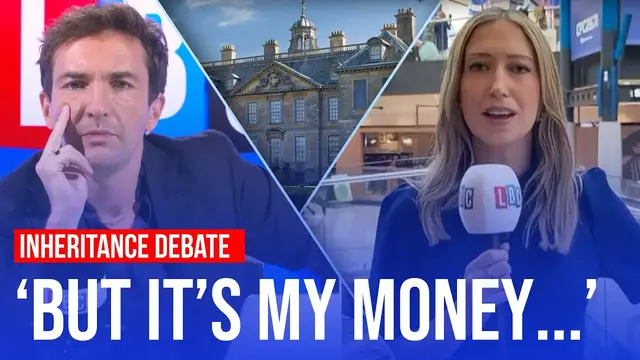
Laura Trott joined Lewis Goodall from the Conservative Party Conference.
They began by discussing the future prospects of the Tory Party, but quickly got into a debate on inheritance tax.
Kemi Badenoch has suggested cutting inheritance tax would be "morally right", as the Conservatives begin their party conference with a raft of new policy pledges.
The Tory leader suggested she was open to changes to inheritance tax, the levy paid on most estates worth more than £325,000, but only if it were fiscally responsible.
Ahead of the party conference, Mrs Badenoch was asked if she planned to abolish the tax.
She replied: "It is morally right that people don't get taxed twice. It is morally right that if you work hard and want to give something to your children the Government doesn't take it away."
Mrs Badenoch later added: "I am not going to announce tax cuts unless we can show how we pay for them... tax cuts are a good thing but you've got to be fiscally responsible."
The Conservatives have made a series of policy announcements in the days approaching the annual party conference in Birmingham, as they seek to broaden their platform for government ahead of the next general election.
The party has pledged to end a childcare "cliff edge", which currently means parents earning more than £100,000 do not qualify for the entitlement.
All parents working 16 or more hours a week would be eligible to get 30 hours of free care a week under the Tories' proposals.
The policy is estimated to cost £700 million a year, which party officials say could be funded by cutting the number of public servants at arms-length bodies.
Listen to the full show on the all-new LBC App: https://app.af.lbc.co.uk/btnc/thenewlbcapp
#lewisgoodall #conservative #debate #news #inheritance #economy #capitalism #inequality #LBC
LBC is the home of live debate around news and current affairs in the UK.
Join in the conversation and listen at https://www.lbc.co.uk/
Sign up to LBC's weekly newsletter here: https://l-bc.co/signup
Show More Show Less View Video Transcript
0:00
Is this year's Conservative conference a happier place without Robert Jenrick and Suella Braverman
0:05
It's definitely a more positive place this year, right? It was a really critical moment for our party last year
0:10
It was really tough. And you'll remember, Kemi really pulled it out of the bag with her conference speech at the end
0:15
I think we approached this conference much more positive and with a new team in place
0:21
And we're excited to kind of set out our plan for how we want to change Britain. I understand we'll talk about some of those plans in a second
0:27
But just looking at the overall politics for a moment, I mean, Kemi Bade, as you say, much more authoritative position this year after that speech last year, removing Robert Jennerick and others from the party, defections and so on
0:39
She's being hailed by a party as doing an excellent job. But is your definition of an excellent job polling at a lower level than even Rishi Sunak did at the general election, which is the Conservatives' worst performance in history
0:49
I mean, when might that expect to change? Oh, hang on. Sorry. Sorry, it's just falling out
0:56
Oh, dear. Just for people listening rather than watching. Lewis, I'm just going to hold this in. Sorry
1:00
That's all right. That's fine. Just your earpiece problem there. Can you hear me? Is that all right? Yeah, yeah, yeah
1:04
That's OK. Sorry. So I think the issue... Sorry. What did you ask me about
1:10
I was just asking when we might expect Kemi Badenock, who, you know, you say and lots of Tory MPs say
1:14
is doing such a fantastic job, but she's polling or the party's polling worse than Rishi Sunak did at your worst performance
1:20
at any general election. And you still haven't overtaken that point. Look, we've come back from a historic defeat in 2024, right
1:28
And I think we've rebuilt from that time. We have set out a number of fresh faces
1:34
We've set out a new direction for the country. And we've actually got a plan for how we fix things
1:39
And I think that is a contrast between us and the other parties. I also think, Lewis, I don't know about you
1:44
but I do feel we're talking a little bit more about policies now than we have been previously
1:48
And there is such a dividing line between us and the Labour Party. Now, Andy Burnham's speech, it was a very well-delivered speech
1:55
He seems like a very nice person. But I thought it was extraordinary that it was talking about things
1:59
that were happening after the next election. And sometimes, but not for many years after that
2:04
electoral reform, maybe something about Brexit, doing the triple lock, which will kick in the savings in 2040
2:10
Nothing about what's happening now. And I think what you'll see from us is a plan for actually the economy
2:16
people's jobs, how we improve things, and who we're on the side of
2:22
So I think there is a big contrast. And I do like the fact we're talking about policy more. I get that. And you say that you've come back from that general election performance
2:28
But I suppose my point is that you haven't come back in the sense that you're polling worse than you did at that general election
2:34
after two years of Kemi Baden-Ock's leadership. I mean, she is a straight talker. So let's be straight in a manner of which she might approve
2:40
Is there a danger that you're just kidding yourselves at the moment? No, I think that we have made progress
2:46
We are, you know, we're speaking to people. we getting a hearing on the doorsteps just directly after the last election People just really weren that interested in hearing about what we had to say and talking to us I think that has really changed I think that we as a country really need a plan
3:04
We need people to set out something different, something that is going to make things better. And I think that's what people are seeing for us. I think they are open to it
3:11
I think people do really like Kemi. I think our brand as a party has got further to go
3:17
But I think what we're doing this week is trying to set out those changes that we've made, the difference that we have as a party
3:23
And I think that that is what we'll cut through. You're proposing to change the system whereby there is a cutoff for childcare support of £100,000, thereby ending that disincentive to work
3:32
I think lots of people would agree who are in that position. I'm really sorry, Lewis, I can't hear you. I'm just going to try and move this round again
3:37
I'm really sorry. I tell you what, why don't we just let's let's just maybe ask the person who's with you just to help you out by a second
3:44
We'll go to a call and try and come back to you, Laura. I'm really sorry about that. My apologies
3:48
Let's go to Matthew while we just sort out that line, who's in Stowe on the Wald in Cotswolds
3:53
Matthew, what have you got to say about that, while we sort out some technical difficulties in Birmingham? Hi, yeah, good morning
3:58
I won't give my daughter's name. She's a police officer in the north of England, a frontline police officer
4:04
When the announcement was made for these hoodlums to be released back into the community after shortened sentences
4:11
they were all briefed on various individuals who've committed some quite awful crimes against women and children
4:17
that they needed to keep their eye on, basically. So she's been diverted now, believe this
4:24
she's been diverted off of other duties to go and keep around these people
4:29
They've had frightened women, families coming into the police station saying, we know these people are back in the area
4:35
Now they're out, they're messaging them. And lo and behold, they've had their first war offence
4:39
and it was exactly the same crime as the individual was locked up for
4:44
So these frontline police officers are now out in the community watching known criminals who've been let out after shortened sentences
4:52
So what have we done? We've just absolutely opened a can of worms, haven't we? Gosh, that's sad
4:57
And is your impression this is a common thing, Matthew? Yeah, absolutely, yeah
5:02
I mean, obviously, my daughter is very discreet and clearly she wouldn't discuss what's going on
5:06
But she said, Dad, we had a massive briefing. We know where they are
5:10
We've got intel telling us that they're coming back to the area. These individuals, because, you know, I won't generalise
5:16
but not all of these individuals are, you know, they've not been rehabilitated, have they
5:21
So they're going to come back and they've got revenge. They've got scores to settle against people that have given evidence
5:25
who've put them in prison. And they're now travelling, lots of them, and they will be
5:29
back to the areas where they committed these god-awful offences. And who were picking the pieces up
5:35
The frontline police. And more importantly, there's a whole lot of frightened families out there
5:44
While we get Laura back on the line, I think Laura Trott is back with us from Birmingham now
5:49
Can you hear me, Laura Trott? I can hear you loud and clear. Sorry about that. No, no, no, no, no, not at all
5:54
I was about to ask a question. I mean, it's not entirely clear yet, but it's been briefed to the papers that Kemi Bainock is minded to abolish inheritance tax
6:02
or at least reduce it in some way. Now, this is a tax, as you know, which is paid by the wealthiest one in 20 estates
6:08
You say that you're the party of hard work. Why should someone earning their money through work pay tax
6:14
while someone receiving a substantial windfall inheritance pays nothing? So I think this is really about who we're on the side of and principles, right
6:22
Because we, as you rightly say, are on the side of people who work, who want to provide for their family and who want to get on in life
6:29
Now, it's not necessarily about whether you think it's going to affect you
6:32
It's about aspiration. We are an aspirational country. And people like to think that if they do well in life
6:38
which they should be able to do, with amazing education, with jobs, opportunities
6:42
that then they are going to be able to pass that on to their family. Now, I can't comment, obviously, on any individual policy, frankly, because I don't know what it is
6:49
That's not the way these conference policies work. But I think the principle of the thing is really important and one that I absolutely will defend
6:57
Well, surely the principle ought to be that the Conservative Party would reward those
7:01
who are getting up every morning and working every day, who are sometimes being charged at marginal tax rates of over 50%
7:08
as opposed to literally allowing people to inherit, say, £10 million without a single penny piece of tax being paid
7:17
Look, I think that it's important to defend the right of people to hand down stuff to your family, and I don't care how much money that is
7:24
It's a principle thing. Why is that an important principle? Because I think that you should be able to do that
7:30
Some people may disagree. I agree. But this is because, like, you, if you are working, it is your money
7:36
You've paid tax on it in your life. You should be able to then hand that down to your family
7:41
Why? Like, you should be able to look after your family. It's your money
7:45
But I'd like to look after my family when I'm alive, not when I'm dead. Yeah, fine. And I have to pay tax on it while I'm alive
7:51
I'm sorry. Like, it's your money. It's not the government's money. Well, it's my money on my income, but I get taxed on it
7:56
Why should I pay tax on my income, but I have a friend who has been given a huge whimful and they not pay a penny piece
8:05
Because it's money that's in their family that they have paid tax on that they should be able to hand down
8:09
This is money in my family. I'm owning it now. That's my family. What's the difference? I think you and I disagree on this
8:15
I'm just asking for the difference. To your point as well, you also said, what are we doing to help with marginal tax rates
8:21
That's one of the announcements that we're making today about the childcare cliff edge
8:25
where you lose all your childcare entitlement the second you go over a certain amount of money, 100k
8:32
We think that's fundamentally wrong. It should always pay to work. There is a principle here
8:36
We think that if you go out and get a promotion that shouldn come with a bill Sure But I mean what the difference between I just trying to understand the principle between me I mean you talk about the idea and people often say that and I heard Conservatives say that this has been double taxed and it already been taxed
8:52
But I mean, I pay double tax all the time. If I go and buy television right now, my income has already been taxed and I have to pay VAT on it
8:58
So what's the difference? I think it's reasonable to say that... And most people listen to this would understand
9:05
that money that you have earned in your lifetime, that you have paid tax on, that you've contributed to society with
9:13
is not the government's when you die. It's your money. But why is it the government's when I'm alive
9:20
Because everybody accepts that in order to have the public services that we want
9:24
you have to pay some income tax on your taxation. Now, it is important that we keep that at the lowest level possible
9:30
to make sure that we are growing the economy and making sure there's always an incentive to go out to work
9:34
But you could reduce the taxes on people who are alive and earning
9:38
simply by keeping some inheritance tax on a state, which is a windfall, basically not on the people who are dead
9:44
but on the people who are alive inheriting it, who have done nothing to deserve it. I'm just wondering why you're not prioritising people
9:50
who are getting up in the morning and going to work every day rather than simply the inheritance of the richest one in 20
9:55
But we're doing both, Lewis, that's my point. What we're not doing is saying that we are going to prioritise
10:01
giving welfare handouts to people who aren't working. And that is a choice that we are making
10:05
Fair enough. Your Shadow Chancellor has been recorded when he was Shadow Business Secretary
10:10
this is in The Guardian today, saying that there will need to be departmental cuts
10:14
above and beyond the £47 billion that have already been pledged, which is mainly welfare, I think. Do you think the government departments
10:19
need to be smaller, their budgets cut? Yes, I do. And would that include the education budget
10:25
No. But I think we've announced that we are going to make cuts
10:29
to working age welfare. And I think that is the right thing, actually, for the individuals involved
10:33
and the right thing for the country. because, again, we believe in people going out to work if they can
10:39
and if they can't, they should be supported. But it is important that government gets out of the way of people
10:45
that it's not overcomplicated, and that we are providing services to people that are excellent
10:51
but that cost the minimum amount to the taxpayer that they possibly can. Just on your own area in education
10:57
I know that something you've been concerned about is the idea of children in schools having to wear the hijab
11:03
or being forced to do so as young as seven. I know you've criticised Lucy Powell for not doing more on it
11:08
I think you told the Mail, I do not believe the state should be a party to an instrument of female suppression
11:13
Read the hijab. I mean, is that how you see it? And if so, do you think that there should be other..
11:18
And does it follow, therefore, that there should be a wider ban, as reform have called for
11:23
I think, look, this is something we're looking at as part of our kind of cultural commission. But our policy is very, very clear
11:30
A hijab should never be part of school uniform. and we must never be in a situation
11:36
where we are forcing girls to cover up. I just think that's fundamentally wrong
news