Up next in 10



As Russia loses half a million soldiers in Ukraine and Iran takes control of the two biggest oil routes, how are these conflicts developing? And are they in any way connected?
War historian and former British Army intelligence officer Dr Lynette Nusbacher joins Matt Frei to discuss the latest developments in Russia and Iran.
00:00 Russia's huge casualty numbers
05:30 Iran and the Red Sea chokepoint
07:58 Trump's prediction the war will end soon
08:25 Is Iran now in control?
Listen to the full show on the all-new LBC App: https://app.af.lbc.co.uk/btnc/thenewlbcapp
#mattfrei #ukarmy #uknews #ukpolitics #politics #donaldtrump #trump #uspolitics #iran #iranwar #houthis #hormuz #straitofhormuz #russia #russiaukrainewar #ukraine #putin #vladimirputin #oilprices #LBC
LBC is the home of live debate around news and current affairs in the UK.
Join in the conversation and listen at https://www.lbc.co.uk/
Sign up to LBC's weekly newsletter here: https://l-bc.co/signup
Show More Show Less View Video Transcript
0:00
on Ukraine, the extraordinary casualty numbers that have come out this week, especially on the
0:04
Russian side. And the other is the ongoing war started by America and Israel on February the 28th
0:11
against Iran and the repercussions of that. And just this morning, we hear that the Houthis
0:16
have effectively controlled the other water strait through which the Saudis have been able to
0:22
export their oil, the Bab el-Mandab strait, which is on the Red Sea. They now control three small
0:27
islands off the coast of Yemen. And that effectively puts them in the same position
0:32
that the Iranians are in in the Strait of Hormuz. Now, this is really bad news for oil prices. So
0:37
for all of you trying to fill up your car with petrol, and it's, of course, bad news for, you
0:43
know, why there's security in that part of the world. Let's speak now to Dr. Lynette Nussbacher
0:47
war historian, former British Army intelligence officer and former strategist in the UK cabinet
0:52
office. Lynette, good morning to you. Good morning, Matt. So let's start with Ukraine and Russia
0:57
I mean, the casualty numbers that have come out are quite extraordinary
1:02
Half a million Russian soldiers killed in action in Ukraine, and perhaps twice as many again maimed and injured so that they can't go back to the battlefield
1:11
let alone any kind of normal life. I remember that in the 10 years of Soviet occupation of Afghanistan
1:17
a brutal experience for Moscow at the time that ended or helped to end the Soviet Empire, if you like
1:23
10,000 Soviet soldiers were killed. we're talking about a million and a half killed or maimed since the beginning of the full-scale war in 2022
1:35
Do you think that those numbers, first of all, are believable? Well, those are confirmed numbers
1:44
The real number could be higher. So the numbers are credible, but the numbers might be estimates at the low end of the spectrum
1:56
The Russians could have been losing a lot more than that. And that is really sobering
2:02
And it's especially important that we remember that you drew that Afghanistan comparison
2:07
The Russians knew why they were in Afghanistan They had strategic aims in Central Asia But of course after the first two weeks in Ukraine it became apparent the Russians were not going to achieve
2:23
their aims against Ukraine, but they stayed and kept fighting. So the Russians are not killing
2:32
half a million or more Russians plus mercenaries and allies in order to achieve some achievable goal
2:41
This is really wasting lives because the Russians just don't know how to stop
2:49
That's a very stark way of putting it. Does that mean that Vladimir Putin can continue doing this
2:56
because ultimately this is a war that started with his particular interpretation of Russian and Ukrainian history
3:03
Does he just carry on or do they at some stage run out of men or out of the money that pays for the men or out of political patience
3:13
Russia has run down their sovereign wealth fund. They have not got the kind of cash reserves that they've had for the last three years, four years
3:26
But what you've got to remember, Matt, is that every time the price of oil goes up because of that strange Middle East theater of operations, every time the price of oil goes up and it's back over 100 bucks a barrel now, the Russians make more money selling oil, especially to China
3:48
So the Russians are destroying their economy. They're killing their people. But they can keep going for a long time
4:00
And I'll make one other point that's significant here. Russia has not yet started conscripting young people and sending them to Ukraine
4:11
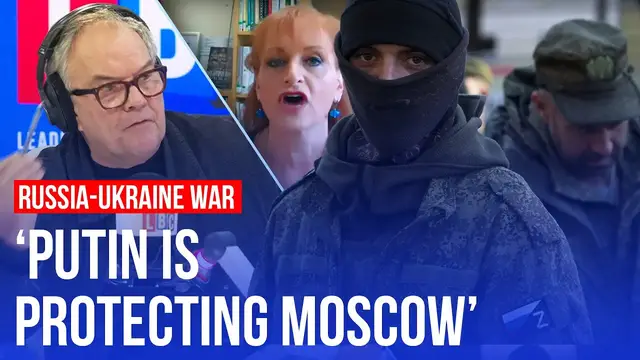
especially not people from Moscow and St. Petersburg. Putin is keeping the fighting supplied with bodies from the Russian periphery from Russian ethnic minorities But Putin is protecting Moscow and St Petersburg and he protecting white Russians And she might have to cross that line
4:36
Just briefly on the casualty front, how many do we think the Ukrainians have lost? Because
4:40
of course, they're also not being open about their numbers. Yeah, and we don't have good numbers on that. So I wouldn't want to venture it
4:47
But it's very important that we recognize that because the Ukrainians are able to mechanize a lot more of their defense, and perhaps most important, remember that in classical military theory, a well-dug-in defender is six times as strong as an attacker
5:07
So the Russians have got to pour more ammunition and more manpower in than the Ukrainians do
5:15
Let's get on to the Bab al-Mandab Straits. This is the very narrow body of water between Egypt and Yemen in the Red Sea
5:25
The Houthis now effectively control that. How significant is that? Iran had only one of the big choke points in the world
5:38
And now the Iranians have two. And we say that it's the Houthis
5:42
And of course, it is Ansar Allah, the Houthi militia, who currently control one side of the Bab al-Mandab, the entrance and exit from the Red Sea
5:53
But it's the Iranians who are running that show. The Iranians have got advisors helping the Houthis do this
6:00
The Iranians have arranged Chinese networks to supply the Houthis not only with missiles and drones, but with the components to build their own missiles and drones
6:13
So make no mistake, this is the Iranians controlling not only the Strait of Hormuz, but the entrance and the exit to the Suez C
6:23
And you remember when the Suez C was shut down because of the ship going sideways a few years ago
6:29
Well, the Houthis can make that happen again. So really the Houthis and their masters in Tehran effectively control the most important choke points for oil flowing out of the Gulf That is alarming in itself Why then also have the Saudis close down that east pipeline that runs through the kingdom
6:51
that has allowed them to divert their oil from the Strait of Hormuz to the Bab al-Mandab Strait
6:56
What's that all about? The Saudis are closing that pipeline down because it's too easy to attack
7:01
The Iranians on one end, the Houthis at the other, well, they know exactly where that pipeline is
7:09
You can see it on commercially available satellite photography. So all they've got to do is fly a bunch of drones or a couple of ballistic missiles with high explosive warheads
7:20
And that pipeline switches off. The Americans have been making much of the idea that the Strait of Hormuz isn't that important because there are pipelines that go in other directions
7:30
Fact is, bulk oil moves in tankers and those pipelines are less important because they've got less capacity and because they're so vulnerable, they're so easy to hit
7:46
Quickly, Donald Trump, who's visiting Ireland today, I think the primary reason is to play golf, but he's also just had a meeting with the Irish president and he's currently talking to the Taoiseach, Michael Martin
7:56
He has said, and he said it before, the war will end very soon and everything will work out just fine
8:05
Do you attach any credibility to that optimism? Absolutely not. Donald Trump, every weekend before the markets open, says that the war will end soon
8:16
And as we've seen, the Iranians are continuing to shoot. The Americans are continuing to shoot back
8:25
And perhaps most important, the Strait of Hormuz and the Bab el-Mondeb Strait, which are not only shipping choke points, not just for oil, but these are Internet choke points
8:38
The Iranians and their proxies are in control. They are the most powerful state in the Middle East, not the Americans
8:46
And Iran is possibly going to catch hell for this. But right now, the Iranians are in control
#news