0:03
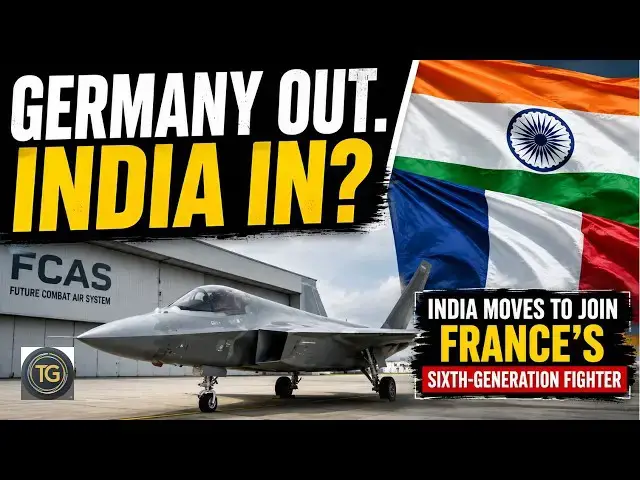
Could India genuinely step in to rescue
0:05
France's most ambitious sixth generation
0:07
stealth fighter project from absolute
0:11
Welcome to Teranov's Geopolitics, your
0:14
home for unfiltered deep dive military
0:18
Right now, Europe's flagship air combat
0:20
program has suffered a massive fracture
0:22
and New Delhi is making bold moves that
0:24
might reshape global air power forever.
0:28
In today's video, we are breaking down
0:31
the entire picture. How the original
0:33
European fighter project fell apart, why
0:35
the Indian Air Force is pushing to
0:37
co-join this ultra advanced program, the
0:39
massive geopolitical risk surrounding
0:41
China's rapid rise, and whether New
0:43
Delhi will actually get real technology
0:45
transfer or just another empty assembly
0:47
line. Make sure you stick around all the
0:50
way to the end because the highstakes
0:52
leverage game playing out between Paris
0:54
and New Delhi is something you simply
0:56
cannot afford to miss.
0:58
India may emerge as an unexpected
1:00
powerhouse that helps France rebuild
1:02
Europe's troubled sixth generation
1:04
fighter project. The Indian Ministry of
1:07
Defense has officially confirmed that
1:08
New Delhi has begun targeted efforts to
1:10
co-join France's future combat air
1:13
system widely known as FCAS.
1:16
This move could grant India an
1:17
unprecedented seat at the top table of
1:19
next generation combat aviation. The
1:22
disclosure was submitted straight to
1:24
Parliament, arriving just on the heels
1:26
of the original FrancoGerman alliance
1:30
The timing here is seriously critical.
1:33
Back in 2017, France, Germany, and Spain
1:37
launched FCAS as a mega program to forge
1:40
the next era of European dominance in
1:42
the skies. It was never conceived as
1:44
just a single jet. Instead, it was
1:47
planned as a total combat ecosystem
1:49
featuring an ultraast combat cloud,
1:52
autonomous swarming drones, and a
1:54
radical new stealth fighter.
1:56
But behind closed doors, managing the
1:59
project turned into an absolute
2:00
logistical nightmare. The primary
2:03
corporate titans aviation in France and
2:06
Airbus Defense and Space in Germany
2:08
completely locked horns over core
2:10
intellectual property, workshare splits,
2:12
and overall design authority. When two
2:15
corporate giants refused to budge on who
2:17
gets the master blueprints, things go
2:19
south fast. The joint fighter
2:22
arrangement between Paris and Berlin was
2:24
officially shut down in June 2026,
2:26
opening a gigantic void.
2:29
That sudden breakdown gives India a rare
2:32
massive window of opportunity leading
2:34
straight into why New Delhi is so deeply
2:36
interested in the first place. FCAS
2:39
presents India with a golden ticket to
2:41
co-develop futuristic aerospace
2:43
technologies that could completely
2:44
redefine air combat for decades to come.
2:47
Something an off-the-shelf import could
2:51
Right now, India is already pushing hard
2:53
on its own indigenous fifth generation
2:56
jet, the advanced medium combat aircraft
2:58
or AMCA. But attempting to build a
3:01
comprehensive sixth generation combat
3:03
ecosystem completely alone requires
3:05
astronomical budgets, extreme propulsion
3:08
breakthroughs, specialized stealth
3:10
codings, next level artificial
3:12
intelligence, and advanced drone
3:14
swarming links. Teranov's analysis is
3:16
that skipping the intermediate research
3:18
steps through a direct French alliance
3:20
could save New Delhi decades of trial
3:24
There is already massive industrial
3:26
momentum between these two defense
3:27
partners. India is actively advancing a
3:31
procurement pipeline for 114 Rafalei
3:33
multiroll fighters. France has submitted
3:36
its formal technical and commercial
3:38
proposals packing in significant local
3:40
production inside Indian facilities.
3:44
But an entry into FCAS is an entirely
3:46
different beast compared to standard
3:48
procurement. Indian defense planners do
3:51
not want another domestic wrench turning
3:53
gig where foreign kits are merely bolted
3:55
together. They want pure industrial
3:57
muscle and homegrown sovereignty. That
4:00
brings us right to the ultimate
4:01
obstacle. Will real technology transfer
4:06
This specific friction point is where
4:08
highlevel talks could grind to a
4:10
complete halt. Decades of foreign
4:12
fighter contracts have taught India the
4:14
hard lesson that basic domestic assembly
4:16
does not equate to genuine military
4:18
independence. The actual strategic value
4:21
of joining FCAS will be judged entirely
4:24
by the real engineering authority France
4:26
is willing to concede.
4:28
Critical questions must be answered
4:30
right off the bat. Who controls the
4:32
master flight design?
4:35
Who retains the underlying intellectual
4:40
How much core airframe structure can
4:42
Indian engineers directly modify?
4:45
Will India gain unrestricted access to
4:48
source codes and sensor integration
4:52
And will domestic Indian weapons be
4:54
plugandplay without foreign clearance?
4:57
Take a second to think about how
4:58
critical these questions are when a
5:00
country is surrounded by regional
5:02
adversaries. If you are enjoying this
5:04
breakdown, make sure to hit that like
5:06
button and subscribe right now so you do
5:08
not miss our upcoming deep dives.
5:11
The existing Rafaeli saga highlights the
5:14
exact paradox. Even as India pushes
5:17
ahead with extensive local production
5:19
for the 114 jet order, unrestricted
5:21
access to the most sensitive blackbox
5:23
avionics remains strictly guarded by
5:25
Paris. Basically, FCS will either turn
5:29
into a historic technological leap or
5:31
just another overly expensive license
5:33
building project. New Delhi is strictly
5:36
gunning for the former.
5:38
This ambitious leap towards sixth
5:40
generation hardware is running headfirst
5:42
into a pressing reality. The Indian Air
5:44
Force's shrinking fleet. The Air Force
5:47
currently operates approximately 29
5:50
active fighter squadrons which sits
5:52
dangerously below the authorized
5:53
operational baseline of 42 squadrons.
5:57
That massive deficit creates a severe
5:59
defense planning dilemma. While chasing
6:02
an ultra futuristic platform whose
6:04
operational delivery might be 20 years
6:06
down the road, India has to
6:08
simultaneously keep older airframes
6:10
airborne, ramp up homebuilt tagious
6:12
output, integrate new Rafalees and fund
6:15
AMCA. That is a lot of balls to keep in
6:18
the air at the exact same time. Frankly
6:22
this is why the 114 Rafale acquisition
6:25
remains vital in the short term, putting
6:27
metal on the tarmac to stop squadron
6:29
decline. FCAS meanwhile targets the long
6:33
range technological gap. These two
6:36
tracks do not need to fight each other.
6:38
France can leverage the active Rafale
6:40
deal to lay a strong foundation for the
6:44
But can Indian participation genuinely
6:46
rescue the entire FCAS venture?
6:50
The short answer is yes. But throwing
6:53
pure cash and factory floors into the
6:55
mix will not solve the underlying
6:56
disease. Remember, toxic industrial turf
7:00
wars are what killed the original
7:04
France demanded total leadership and
7:06
control over the aircraft's core
7:08
architecture, while Germany insisted on
7:10
heavy industrial parody. That clash
7:13
broke the program wide open. If India
7:16
enters without airtight operational
7:18
boundaries, the project could easily
7:20
spiral into a chaotic three-way standoff
7:22
involving France, Germany's successor
7:24
initiatives, Spain, and India.
7:28
If France restructures the program into
7:30
a balanced two-pillar model, India
7:32
brings something no European partner
7:34
could match. Massive scale, sustained
7:36
domestic demand, and a massive defense
7:38
budget. Teranov's analysis is that this
7:41
turns India from a conventional buyer
7:43
into a mission critical co-developer.
7:46
This partnership holds the potential to
7:48
construct an expansive aerospace
7:50
ecosystem spanning advanced radar,
7:52
mission computers, indigenous weapon
7:54
integration, and jet engine metal energy
7:57
provided Indian aerospace firms receive
7:59
true design responsibilities.
8:02
Connecting all these dots reveals a
8:04
massive external catalyst, the rapid
8:06
rise of China's air power. Beijing is
8:09
rapidly churning out stealth fighters,
8:11
expanding carrier wings, deploying
8:14
long-range missiles, and integrating
8:16
sophisticated artificial intelligence
8:18
into combat clouds. By the time the AMC
8:21
enters full service, India risks facing
8:24
a Chinese air fleet that has already
8:25
evolved to the next tactical tier.
8:28
Securing an active stake in a sixth
8:30
generation program is New Delhi's
8:32
fastest way to maintain regional air
8:34
deterrence. Yet balancing all these
8:37
defense priorities at once carries real
8:39
operational friction. India needs
8:42
airframes on runways today, engine
8:44
technology needs major maturation, and a
8:47
jet entering service in the late 2030s
8:49
does nothing to fix current squadron
8:51
shortages. FCAS must be viewed strictly
8:54
as a long-term technology road map, not
8:57
an emergency fleet fix.
8:59
The strategic cards on the table are
9:01
fascinating because both Paris and New
9:03
Delhi hold serious leverage. France
9:06
urgently needs industrial scale and
9:08
funding after its European alliance
9:10
fractured while India requires an
9:12
expressway into next generation
9:14
aerospace technology.
9:16
New Delhi will undoubtedly bargain
9:18
aggressively at every step. If India
9:21
secures genuine design ownership, deep
9:23
software access, and independent weapon
9:26
clearance, this deal could easily become
9:28
the defining defense partnership of the
9:30
century. If it gets reduced to assembly
9:33
line labor, the strategic payoff drops
9:37
Teranov's analysis is that the ultimate
9:39
factor rests on whether France is truly
9:41
ready to treat India as an equal
9:43
aerospace pier rather than just a very
9:45
lucrative export market. That exact
9:48
decision will determine whether FCAS
9:50
goes down in history as a failed
9:52
European dream or the birth of a
9:53
dominant Franco Indian sixth generation
9:56
powerhouse. If you like this podcast,
9:58
please like, subscribe, and share.