0:03
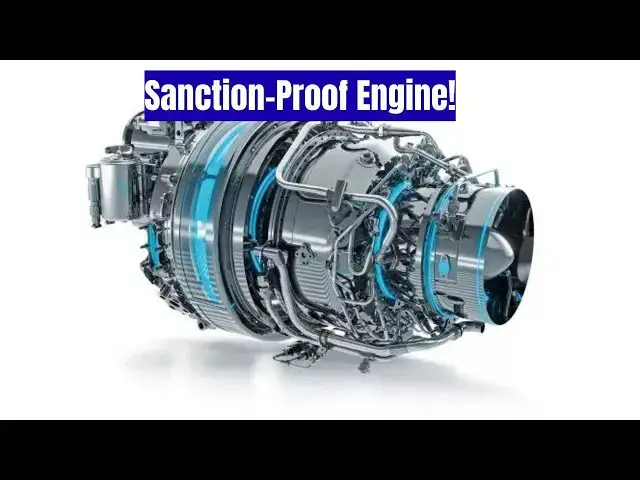
Russian engine company UEC Clemor has
0:05
developed the VK 650V, a contemporary
0:08
turbos shaft engine that has been
0:10
expressly engineered for light
0:12
helicopters with a takeoff weight of up
0:16
The first demonstrator engine was
0:18
assembled within 6 months, a remarkable
0:20
feat of engineering efficiency following
0:22
the project's inception in the third
0:27
During the subsequent 5 years, the
0:29
development team conducted a rigorous
0:31
cycle of endurance testing and
0:33
engineering, which culminated in the
0:35
engine receiving its type certificate in
0:39
The demand for domestically produced
0:41
power plants of this class was
0:42
substantially increased by the urgent
0:44
need to replace imported engines as a
0:47
result of Western sanctions and the
0:49
withdrawal of foreign suppliers, which
0:51
drove this rapid development.
0:54
The VK 650V will be fine-tuned and the
0:57
first flights of three helicopter
1:04
equipped with this new engine will
1:06
initiate in the current year. According
1:08
to Yukimov's press service, the VK 650V
1:12
is anticipated to enhance the efficacy
1:14
and reliability of these helicopters
1:17
which are essential to Russia's light
1:20
The VK 650VS design is based on
1:23
cuttingedge digital engineering
1:25
technologies such as additive
1:27
manufacturing, 3D modeling, and digital
1:32
Components manufactured through 3D
1:34
printing comprise approximately 12% of
1:36
the engine's mass, particularly in
1:38
critical parts like the turbine and
1:41
combustion chamber. This method not only
1:44
expedites the development process but
1:46
also improves the precision and quality
1:48
of the final product. Engineers were
1:51
able to reduce the engine's weight to
1:53
105 to 115 kg while maintaining the
1:57
engine's long-term durability and
2:00
strength through the implementation of
2:02
advanced heatresistant alloys and a
2:04
modular construction philosophy.
2:06
The VK 650VS dual channel digital full
2:10
authority digital engine control system
2:12
is a critical feature that enhances
2:14
operational reliability and provides
2:17
highly accurate parameter control. The
2:19
engine is capable of producing 650
2:22
horsepower during launch and up to 750
2:25
horsepower in emergency mode which can
2:28
be maintained for a maximum of 2.5
2:30
minutes. The VK 650V is positioned as a
2:34
direct replacement for foreign engines,
2:36
particularly the Pratt and Whitney
2:40
which previously powered the ANSAT and
2:44
helicopters based on these performance
2:46
figures. The Russian engine not only
2:49
matches, but in some instances surpasses
2:52
the launch power and specific
2:54
performance characteristics of its
2:56
Western counterparts.
2:58
The VK 650VS attraction to helicopter
3:01
manufacturers and operators is further
3:04
enhanced by its high powertoweight ratio
3:06
and closed loop autonomous oil system.
3:09
The engine's modular design enables easy
3:12
adaptation to various aircraft classes
3:15
such as both manned and unmanned aerial
3:17
vehicles. It is designed to operate
3:20
consistently in a broad range of
3:22
temperatures from as low as -55°
3:25
centigrade to as high as plus 60°
3:27
centigrade and at altitudes of up to
3:30
7,000 m rendering it suitable for
3:32
various geographical and climatic
3:36
The VK 650V project's assimilation into
3:39
hybrid power plants is one of its most
3:42
innovative features. UEC Cleorf has
3:45
already created a hybrid propulsion
3:47
system that integrates a conventional
3:49
gas turbine engine with electric motors
3:51
and batteries using the VK 650V.
3:55
This composite system has been showcased
3:58
at numerous aviation and helicopter
4:00
exhibitions and is considered a
4:02
promising solution for advanced
4:03
aircraft, air taxes, and next generation
4:08
The hybrid demonstrator is intended to
4:10
considerably broaden the potential
4:12
applications of the VK 650V engine
4:15
family by generating up to 500 kW of
4:22
Chinese MMP, CIAM, and VIAM collaborated
4:26
extensively to develop and manufacture
4:31
These organizations ensure a
4:33
comprehensive and integrated approach to
4:35
the project by contributing to the
4:37
engine's design, manufacturing, and
4:39
testing. The use of additive
4:41
manufacturing is particularly noteworthy
4:44
as VIM provides 3D printed components,
4:47
including turbine nozzles and transition
4:49
ducts, and UECO implements welding and
4:52
brazing technologies for additive parts.
4:56
Certification of the VK 650V was
4:58
accomplished in an unprecedented amount
5:00
of time from the inception of the
5:02
project to type approval in a mere 5
5:05
years. The engine was initially verified
5:08
with a takeoff power rating of 545
5:11
horsepower with the intention of
5:13
increasing this to the design target of
5:15
650 horsepower after undergoing
5:18
additional certification tests. The free
5:20
turbine shaft's initial time before
5:23
overhaul is set at just under 75 hours,
5:26
while other main components are subject
5:28
to a life limit of 100 cycles.
5:31
These figures are anticipated to
5:33
substantially increase over time with
5:35
future objectives of 4,500 hours or
5:38
3,000 cycles for hot section parts and
5:41
up to 9,000 hours or 6,000 cycles for
5:47
The VK 650V is designed to be the
5:50
standard engine for a new generation of
5:52
light Russian helicopters such as the
5:59
It is also being considered for export
6:01
and for installation on foreign
6:03
helicopters including Iran's Saba 248,
6:07
China's Chanhar Z11, and the Shard 285.
6:11
The VK 650V is currently being assessed
6:14
for potential use in unmanned aerial
6:16
vehicles and training aircraft such as
6:19
the Yak 152 in addition to its
6:22
application in helicopters.
6:24
The engine is a critical component of
6:26
Russia's endeavors to establish
6:28
technological independence in the
6:30
aerospace sector and to effectively
6:32
compete in the global aviation market
6:34
due to its adaptability and
6:36
sophisticated features.
6:39
The VK 650V based engine family is
6:42
anticipated to expand in the future with
6:44
the introduction of hybrid and electric
6:46
modifications that are specifically
6:48
designed for various aircraft classes.
6:51
The ongoing development and refinement
6:53
of the VK 650V and its derivatives are
6:57
indicative of Russia's dedication to the
6:59
advancement of its domestic aerospace
7:01
industry and the reduction of its
7:03
dependence on foreign technology.
7:06
Now, do you think the Russians have now
7:08
mastered the art of creating aircraft
7:10
engines in short notice, even if they
7:13
are a bit less efficient than their
7:14
Western counterparts?
7:16
Let us know in the comments. Please feel
7:19
free to like, share, and subscribe to