Up next in 10


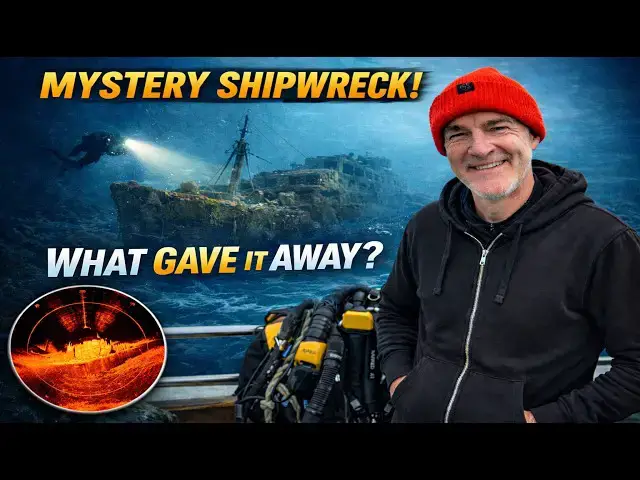
Identifying a shipwreck isn't just about luck—it's about seeing what others miss. In this video, I break down the specific visual clues that turn a pile of rust into a identified piece of history. I'm diving deep to interpret specific visual clues—from boiler shapes to hull plating patterns—that turn a pile of rust into a positively identified ship.
If you want to move beyond just sightseeing and start truly analyzing the history in front of you, this breakdown is for you.
In this video, we cover:
👉 My 3-step structured approach to diving an unknown wreck
👉 The key features of steamship wrecks
👉 The specific visual markers I look for first
🔍 Join the Investigation:
Did you spot a detail I missed? Use the timestamp and tell me what you saw! Sometimes the community solves the puzzle before I do.
━━━━━━━━━━━━━━━━━━━━━━
*Highlights*
00:00 One dive, One chance
05:00 The 3 stages
05:37 Stage 1 - Before the dive
08:42 Stage 2 - During the dive
11:54 Engines & Propulsion
15:01 Boilers
18:01 Artefacts
19:14 Weapons
20:25 Stage 3 - Post dive
22:40 Case Study - SS Nantes
24:14 This dive
27:13 Next dive!
━━━━━━━━━━━━━━━━━━━━━━
*ABOUT THIS CHANNEL*
Deep Wreck Diver explores shipwrecks, submarines, and sunken aircraft from around the world - combining technical diving with detailed wreck identification and historical storytelling. Every dive uncovers a piece of history lost to the depths.
━━━━━━━━━━━━━━━━━━━━━━
*Kit I Use*
Note, some of these are affiliate links so help support making my videos:
👉 Gloves are Ansell Alphatec 87-063 - https://amzn.to/4jDHhX4
👉 Drysuit is an O-Three Ri2-100 - https://www.othree.co.uk/drysuit-range/ri-2-100-drysuit/
👉 CCR is an AP Diving Inspiration (XPD) - https://www.apdiving.com/
👉 Backup computer is a Shearwater Perdix v2 - https://amzn.to/42FXZOW
👉 Reels are by Kent Tooling - https://www.divingproducts.co.uk/
👉 Phone housing is Divevolk Seatouch 4 Max - https://s.click.aliexpress.com/e/_omJlNKL
👉 Stickers for gear by Dive Signs - https://www.divesigns.com/
━━━━━━━━━━━━━━━━━━━━━━
*Video Gear*
I use the following gear (also affiliate links)
👉 Action Camera is Insta360 Acep Pro 2 - http://bit.ly/4nkMEwA
👉 Helmet mounted cameras are Paralenz Vaquita
👉 Video light is LetonPower Sealion L24 (10% off!) - http://bit.ly/4nFLCva
━━━━━━━━━━━━━━━━━━━━━━
*Strobes*
I use two different strobes (also affiliate links)
👉 Prozhaozhu 3000 Lumen Diving Strobe - https://s.click.aliexpress.com/e/_oBMRF3X
👉 Prozhaozhu 4000 Lumen Diving Strobe - https://s.click.aliexpress.com/e/_oCTEses
👉 Jon clip - https://s.click.aliexpress.com/e/_oDqq0RW
━━━━━━━━━━━━━━━━━━━━━━
📱Follow My Socials!
Instagram 👉 https://www.instagram.com/deepwreckdiver/
Facebook 👉 https://www.fb.com/DeepWreckDiver
Buy Me A Coffee 👉 https://buymeacoffee.com/d33puk
Email 👉 [email protected]
#wreckhunting #shipwreck #scubadiving #shipidentification #technicaldiving #underwater
Show More Show Less View Video Transcript
0:00
You're looking at a wreck that will
0:01
probably only ever be dived once.
0:05
When you get a single descent, really
0:08
short bottom time, and no second
0:10
chances,
0:12
you either learn how to interpret what
0:14
you're seeing, or you leave with
0:16
unanswered questions.
0:18
This video is about how I make sure
0:21
every dive gives me usable answers,
0:24
rather than just vague impressions.
0:28
What you're going to see during this
0:29
video is the background footage, which
0:32
is of an unknown wreck that I dived last
0:36
year.
0:37
I am going to You'll see me You'll see
0:39
my video. You'll see all the footage.
0:42
And what I'm going to do at the end is
0:45
I'm going to tell you what I observed on
0:47
that wreck. So, while you're listening
0:49
to me, while you're watching this video,
0:51
can I suggest that you make some mental
0:53
notes, or you write something down, or
0:54
whatever, and then at the end we'll
0:57
compare notes, and you can see if you
0:59
saw the same things that I saw. So, good
1:02
luck with that. Now, the reason I'm
1:04
making this video is cuz I get a lot of
1:06
questions on my videos and on my posts
1:10
asking how I go about identifying and
1:13
navigating the wrecks of steamships,
1:16
especially ones that I've never been on
1:19
before. They're not just interested
1:21
about how I enjoy diving them, but how I
1:24
work out what I'm looking at when I
1:28
arrive on an unfamiliar site. A wreck
1:31
perhaps that I've never dived before,
1:33
I've never seen before.
1:36
Now, these questions usually come from
1:39
the same place
1:40
because at first glance, many steamship
1:44
wrecks appear very, very similar.
1:47
You drop onto a boiler, you drop onto an
1:50
engine, you see collapsed plating and
1:54
scattered structure, and it can all feel
1:57
like an anonymous mass of metal.
2:00
And for a lot of divers, that's kind of
2:02
where the process stops.
2:04
Of course, they enjoy the wreck
2:06
visually. They enjoy the atmosphere.
2:09
They notice bits and pieces. They might,
2:13
you know, like the fish. But, the actual
2:16
wreck remains unread. So, they kind of
2:20
experience it, but they don't really
2:23
interpret it.
2:25
So, what I want to show you in this
2:27
video is that this apparent chaos is
2:31
misleading.
2:33
Steamship wrecks were designed and built
2:36
to a really clear logic. And that logic
2:40
does still exist underwater.
2:43
Once you understand how these ships were
2:46
laid out
2:47
and why they were built the way they
2:49
were, a wreck can begin to make sense
2:53
surprisingly quickly.
2:55
All of a sudden, the structure starts to
2:59
relate to function and stops just being
3:02
random bits of metal.
3:05
In this video, we're going to look how
3:07
to identify and navigate steamship
3:10
wrecks in a structured and repeatable
3:13
way.
3:14
It's not about instantly naming a wreck.
3:18
It's not about those dramatic moments or
3:21
lucky finds. Although, to be fair, they
3:24
do sometimes happen.
3:26
Instead, it's about following a clear
3:29
process that allows you to gather useful
3:32
information on every dive.
3:36
Even when the visibility's poor,
3:38
the conditions are demanding, or as is
3:41
normally the case for me, time on the
3:44
bottom is really limited.
3:47
Of course, on shallow wrecks, those that
3:50
are close to shore, you may be fortunate
3:53
enough to return multiple times.
3:56
That means you can afford to miss
3:58
details. You can afford to rethink what
4:01
you've seen, and you can come back with
4:03
a revised plan.
4:06
Over several dives, understanding can
4:08
build gradually, but that is rarely the
4:12
case on the deep offshore wrecks that I
4:15
normally dive.
4:17
Most of the time, there's going to be a
4:19
single descent, a single bottom phase,
4:23
and one opportunity to notice what
4:26
matters.
4:28
There's no going back. You [snorts]
4:29
can't return the following weekend to
4:32
check something that might have been
4:34
overlooked.
4:35
And that reality shapes how,
4:39
you know, I've got to approach
4:41
observation, decision-making underwater.
4:45
That's why in this video, I'm going to
4:47
focus on a structured framework for
4:49
wreck identification.
4:52
So that even a single dive produces
4:55
clear and usable information, rather
4:59
than just confusion.
5:02
For me,
5:03
an entire identification process sits
5:07
inside three simple stages.
5:11
The pre-dive preparation,
5:13
the observation during the dive, and
5:16
then the structured analysis once you've
5:18
got out of the water.
5:20
If you follow those three stages
5:22
consistently, your ability to interpret
5:25
wrecks improves dramatically.
5:29
More importantly, it becomes repeatable,
5:31
rather than simply relying on luck or
5:35
memory.
5:37
The first stage is the pre-dive phase.
5:41
And this is where wreck identification
5:43
actually begins.
5:46
Before you even kit up, you should
5:48
already be building a picture of what
5:51
you expect to find.
5:53
That means studying charts, hydrographic
5:56
data, historical loss records, and
5:59
online databases.
6:02
It also means thinking about how you're
6:04
going to record information underwater.
6:07
So, you might want to use a camera,
6:09
video, or if you're old school, a slate.
6:14
If you're ready to record what you see
6:16
before the dive starts, you won't lose
6:19
information that cannot be recreated
6:21
afterwards.
6:24
The UK, we're particularly fortunate.
6:27
The UK Hydrographic Office data
6:30
is typically presented through
6:32
wrecksite.eu
6:34
and layered with multiple additional
6:36
data sources.
6:39
And these often provide basic
6:42
dimensional information for charted
6:44
wrecks, which usually length,
6:47
orientation on the seabed,
6:50
height above the seabed. Now, these
6:53
details do not identify a wreck on their
6:56
own, but what they do is they can be
6:58
used to narrow the problem and shape
7:01
your expectations.
7:04
In practice, length is usually more
7:07
important than beam.
7:09
Many wrecks collapse outwards as they
7:12
break up, which can make them appear
7:14
much wider on the seabed than they ever
7:17
were in service.
7:19
Length, on the other hand, rarely
7:21
changes unless the wreck has broken into
7:24
two distinct sections,
7:27
which is normally pretty obvious from
7:29
the hydrographic data.
7:33
The UKHO information will often also
7:36
indicate the highest point on the wreck
7:38
above the seabed.
7:40
On steamships, that high point is
7:43
normally the engine or the boiler, but
7:46
but might be the bow or the stern.
7:48
And in many cases, the data will also
7:52
show whether that high point sits
7:54
amidships or close to the stern.
7:58
That alone can often tell you whether
8:00
you're dealing with a vessel that has
8:02
the engine amidships or an engine
8:05
probably before you even enter the
8:07
water.
8:09
Cuz charted as being roughly 90 m long,
8:13
you can immediately rule out rule out a
8:15
large number of possible losses.
8:19
When you then confirm that length on the
8:21
dive, you're able to move, you know,
8:23
pretty quickly from speculation to to a
8:26
process of verification.
8:28
Planning also shapes how you approach
8:31
the descent.
8:32
Knowing where the high point is helps
8:35
you anticipate where the shot is likely
8:37
to land and what you're likely to see
8:40
first.
8:42
The second stage is what happens during
8:45
the dive itself. And obviously, this is
8:47
the most important phase.
8:50
And it's where a deliberate and
8:52
disciplined observation process matters
8:54
the most.
8:56
The first priority during the dive is
8:58
orientation.
9:00
As soon as you get to the wreck, you
9:02
need to establish where you are in
9:04
relation to the ship.
9:06
That means identifying whether you're at
9:09
the bow, the stern, or most likely
9:12
somewhere in the middle.
9:14
And then understanding which direction
9:17
the vessel is pointing.
9:20
Boilers are always positioned forward of
9:22
the engine.
9:24
If you move from a boiler towards the
9:26
engine, you are moving towards the stern
9:29
and vice versa.
9:31
Anchor chain and anchors themselves
9:34
usually indicate the bow.
9:37
Although it's worth remembering that
9:39
spare anchors were sometimes carried
9:41
elsewhere on the vessel.
9:43
They're strong indicators, but not
9:45
absolute proof.
9:49
In vessels with riveted hulls, where the
9:51
plating overlaps can also help. The
9:55
overlap faces aft. So, by following the
9:58
direction of the plate, you can often
10:01
tell which way the ship was originally
10:03
pointing.
10:05
Other useful features include drive
10:08
shafts and screws.
10:11
The drive shaft will run from the engine
10:13
towards the screw.
10:15
And these are often exposed as the
10:18
surrounding structure collapses.
10:21
Clearly, they provide a really good
10:24
indication of the direction of the
10:25
stern. And if you get there and find the
10:28
screw,
10:29
then, you know, you're absolutely
10:31
sorted.
10:34
Armament is another useful orientation
10:37
clue.
10:38
On merchant ships fitted with defensive
10:41
weapons during wartime, the guns were
10:43
almost always mounted at the stern. And
10:47
that was part of the, you know, what
10:49
made them defensively armed ships rather
10:51
than offensively armed ships.
10:55
They were there to defend against
10:56
submarine attack, or at least deter the
11:00
submarine from trying to get close
11:02
enough to use its own gun.
11:05
Finding those gun mountings or the
11:07
ammunition
11:09
close to a machinery space or the screw
11:13
will often suggest you're at the stern.
11:17
Now, naval vessels also carry armaments,
11:20
but it's likely to be along the full
11:22
length of the ship.
11:24
So, you just need to be careful with
11:27
weapon placement. You need to think
11:28
about what type of vessel you are
11:30
believe you are diving.
11:32
Much more difficult on very large
11:35
wrecks.
11:36
Those that heavily broken
11:38
or wrecks that are partially buried.
11:41
Where the key reference features may be
11:44
missing
11:45
or just completely hidden under the
11:47
sand. And orientation, the next step is
11:51
to locate and assess the propulsion
11:53
system.
11:54
You might already have done that.
11:57
But it means finding the engine and
11:59
boilers and understanding how they
12:01
relate to each other and how they relate
12:04
to the ship.
12:06
You need to determine whether the ship
12:08
used a some form of steam engine, a
12:10
turbine installation, sails, or some
12:14
other sort of propulsion system.
12:17
Even with steam propulsion, the details
12:20
matter. In fact, they matter a lot.
12:24
Early steamships often used simple or
12:27
compound engines, while later vessels
12:30
tended to use triple expansion engines.
12:34
More exotic engine arrangements may also
12:37
appear including diesel engines,
12:40
four-cylinder engines, turbines, and
12:43
I've even seen a steeple engine which is
12:47
where the pistons sit on top of each
12:49
other.
12:51
If you encounter something like this, it
12:54
can dramatically narrow the field of
12:56
possible ships very quickly.
12:59
So, you need to look at the size, the
13:02
layout, and the cylinder arrangement of
13:04
the engine.
13:06
Because those can be compared to
13:08
information recorded in Lloyd's
13:10
registers about individual ships.
13:14
Because
13:15
not many people know that engines were
13:18
built specifically for individual ships.
13:22
Which means that they're basically
13:24
fingerprints.
13:26
If you measure the uh cylinder
13:28
diameters, the number of cylinders, you
13:31
can take those to the Lloyd Register,
13:33
and they will individually identify a
13:36
vessel.
13:39
Boilers provide quicker, but not quite
13:43
as precise clues about a ship's size and
13:46
age.
13:48
The number of boilers can be used to
13:49
give you a rough sense of scale.
13:52
As a very general guide, a single boiler
13:56
often indicates a ship that is about
13:59
1,000 tons or less.
14:03
Two boilers indicate a bigger vessel
14:06
that's likely to be under about 2,000
14:09
tons.
14:11
If you get to three boilers, then those
14:13
are associated with bigger ships
14:16
approaching 3,000 tons.
14:19
If you find more than three boilers,
14:21
chances are you're on a liner or a
14:23
military vessel, which is absolutely
14:26
brilliant.
14:28
Now, these aren't precise rules, but
14:31
they do provide a useful starting point.
14:35
One thing to kind of be careful of are
14:37
donkey boilers. These are smaller
14:40
auxiliary boilers which were used to
14:42
power deck machinery when the ship was
14:45
in port, and they're often found very
14:48
close to the engine, either alongside or
14:51
often even vertically.
14:54
Mistaking a donkey boiler for a main
14:56
engine can easily lead to overestimating
15:00
the size of the vessel.
15:03
It's also worth considering boiler
15:05
design because this does matter.
15:08
Fire-tube boilers are typically found in
15:11
merchant steamships, and tend to be
15:13
large and cylindrical.
15:16
Water-tube boilers, such as those in
15:19
Yarrow boilers, are usually smaller and
15:22
more complex in structure.
15:25
They were commonly used in naval vessels
15:28
because they could generate steam far
15:30
more quickly and operate at higher
15:33
pressures.
15:35
If you find a Yarrow or similar water
15:38
tube boiler,
15:39
it normally suggests you're either
15:41
diving a military vessel or a ship built
15:44
to military specifications
15:47
rather than a conventional merchant
15:49
steamer.
15:51
To more modern vessels,
15:53
additional clues begin to appear.
15:56
You might get electrical cabling, which
15:59
is increasingly common and immediately
16:02
suggests a later build period almost
16:05
certainly after the First World War.
16:09
Build quality is another revealing
16:12
thing.
16:14
Higher value ships often carried brass
16:17
or bronze fittings. They had better
16:20
quality bridge equipment and generally
16:23
more refined construction.
16:26
Cheaper ships were frequently built to
16:29
really strict cost regime, which meant
16:32
that the fittings might be made of iron
16:35
and the construction simpler.
16:39
So, once you've had a look at these kind
16:41
of features and particularly the
16:43
propulsion and boiler,
16:46
the next step is to understand the
16:48
overall layout of the wreck.
16:50
That might That means identifying where
16:53
holds are located,
16:55
if there's deck heights, and you know,
16:58
general arrangement of the
16:59
superstructure.
17:01
And the reason is that these features
17:03
are often consistent across particular
17:06
ship types,
17:07
but also can be used to quickly
17:11
identify you know, narrow down
17:12
identification options.
17:16
Another good thing to look at is cargo
17:18
and artifacts.
17:21
Cargo
17:23
is normally treated as strong supporting
17:26
evidence rather than
17:28
uh you know, actual proof of identity.
17:32
Be careful of coal because it's really
17:34
common and rarely identifies a specific
17:38
vessel on its own because obviously
17:40
pretty much every ship carried it uh for
17:44
the the boilers and to you know, to
17:46
generate power.
17:48
More unusual cargo such as ingots,
17:51
shells, railway equipment, or
17:54
manufactured goods can be really
17:56
helpful.
17:58
Now, artifacts are something that I'm
18:01
sure you've seen on many of my videos.
18:04
And the reason is because they are
18:06
particularly important.
18:08
Things like crockery fragments, bottles,
18:12
equipment markings, these can sometimes
18:15
identify a shipping line or you know,
18:18
give you a very precise date range.
18:23
There are also occasional major
18:25
artifacts that can produce genuine
18:28
breakthroughs.
18:30
The classic one is ship's bells, but
18:32
you've also got uh builder's plates and
18:36
certain bridge instruments which can
18:39
sometimes provide direct identification.
18:43
The reason I say that is bridge
18:45
equipment was often uh fitted with
18:48
serial numbers that can be uh checked
18:51
against manufacturer records if you can
18:54
get access to them.
18:55
And in you know, a lot of cases, those
18:59
can point directly to a specific vessel.
19:02
And I have personally identified vessels
19:06
using numbers that have come off uh
19:08
bridge equipment.
19:11
And also provide useful identification
19:13
clues.
19:14
The caliber of a gun, the size of
19:17
associated ammunition can sometimes help
19:20
determine whether a weapon was fitted to
19:22
a merchant ship for defensive purposes
19:25
or was part of a naval vessel's primary
19:28
armaments.
19:30
So, if you see those kind of things,
19:32
look at look at them. You'd be surprised
19:34
how well recorded the armament that was
19:38
fitted to merchant ships was once again
19:41
really important clue.
19:43
The final step during the dive is to
19:45
look for unusual features such as
19:47
damage.
19:49
That might include torpedo strikes, mine
19:52
damage, collision scars or structural
19:56
collapse patterns. Sometimes you can
19:58
match those to historical accounts of a
20:00
vessel's loss.
20:03
Now, recognizing what is unusual often
20:05
comes down to experience.
20:08
The more wrecks you dive and the more
20:10
ship structures you become familiar
20:12
with, the easier it becomes to, you
20:16
know, realize that something doesn't fit
20:18
the normal pattern.
20:21
The final stage is going to take place
20:24
after the dive.
20:26
And this is where those raw observations
20:29
are turned into identification evidence.
20:33
What you need to do is discuss the dive
20:35
with the other people on it, with your
20:37
teammates. You need to go back and have
20:39
a look at those photographs and video
20:42
and compare them against all the
20:45
information that you found on the
20:46
pre-dive. So, against those historical
20:49
records, the hydrographic information
20:52
and all that kind of stuff.
20:56
Once you've done done it, I think it's
20:57
really important to record your
20:59
findings.
21:01
Even if the information you record does
21:05
not immediately identify the wreck.
21:08
It contributes to the wider knowledge
21:10
pool.
21:12
Somebody else might go back and your
21:15
confirmation of, you know, something
21:17
like number of boilers, position of
21:20
machinery, layout, cargo, that piece of
21:24
crockery you found may allow someone
21:27
else to complete the identification.
21:31
Now, for me,
21:33
wrecksite.eu
21:34
is the preferred repository for for
21:37
storing that information.
21:39
Because it's public source, it allows
21:42
your data to be shared and built on over
21:45
the time.
21:47
Because wreck identification is often a
21:51
collective process,
21:54
you might not be the person who joins
21:55
the final dots, but some of the stuff
21:58
you contribute may become the missing
22:01
piece for somebody else.
22:04
There are loads of wrecks around the
22:07
British Isles that are chartered but
22:09
remain unnamed.
22:11
That doesn't make them unsolvable
22:13
mysteries.
22:15
It usually means that the available
22:17
information has not yet been brought
22:19
together or found.
22:22
By sticking together all that stuff, the
22:25
hydrographic data, the information about
22:28
wreck losses, the stuff that divers
22:31
find, you can often reduce a long list
22:34
of possibilities to a manageable short
22:37
list before you
22:39
enter the water or once you've got up.
22:43
A good example of this process in action
22:46
is my identification of the steamship SS
22:49
Nons.
22:51
The wreck wasn't identified by a single
22:53
dramatic discovery.
22:55
It actually was a a putting together of
22:58
individual bits and pieces.
23:01
To start with, crockery recovered from
23:03
the wreck carried the Cunard logo
23:06
which immediately told us who operated
23:08
the vessel.
23:11
Checking the loss records showed only a
23:13
small number of Cunard ships lost in
23:16
that area.
23:18
One of those matched the recorded length
23:21
on the hydrographic data.
23:23
The loss location was also very close to
23:27
the position
23:28
and once we got on the wreck the engine
23:31
and boiler arrangements and the presence
23:34
of coal in the hold were all tied up
23:37
with what we knew about the wreck from
23:39
the historical records.
23:42
Now, in themselves, none of these
23:44
individual pieces would have been enough
23:47
on their own to identify the wreck.
23:50
But together, they created a consistent
23:53
and defensible identification of the
23:56
ship.
23:58
Now, that was a good story, but
24:00
sometimes, even after careful analysis,
24:04
the answer remains uncertain.
24:07
That's not failure. It simply reflects
24:10
the limit of the available evidence.
24:13
Now, the wreck that you've been watching
24:15
me diving is a really good example of
24:18
this.
24:19
It's really heavily broken at the bow.
24:22
There's a pile of anchor chain, not much
24:24
else. You probably saw that we landed on
24:28
the stern, which is the highest bit.
24:30
It's also where the engine single boiler
24:34
and donkey boiler were located. You
24:37
probably saw the screw during that as
24:39
well. You saw those bits of crockery we
24:41
found there. None of them had any useful
24:44
logos on.
24:45
You've also seen the uh two-cylinder
24:48
engine. It's a compound engine, so high
24:51
pressure and low pressure cylinder.
24:53
But nothing there other than that to
24:55
give any evidence.
24:57
that it was probably carrying coal
24:59
maybe. There's there's some coal on the
25:01
seabed whether there's enough to say it
25:03
was the the cargo is is not really
25:06
certain. It's scattered all over the
25:07
seabed. So, it may have just, you know,
25:11
been moved away by the natural movement
25:13
of of water and and time.
25:16
The ship is clearly old. So, in my head
25:19
it's early 20th century, but we didn't
25:22
really find anything to prove that.
25:24
And it's probably it's about 70 m long
25:27
which we had from the hydrographic data.
25:29
So, there's a whole load of ships that
25:31
match that description that were lost
25:34
not just in this area, but in the the
25:36
wider surrounding area.
25:39
No partic- no artifact. We didn't find a
25:41
bell. We didn't find a maker's plate. As
25:44
I said, none of the crockery had
25:45
anything on it. So, despite our best
25:48
efforts, this ship is going to remain
25:51
unknown. And because of where it is,
25:53
it's really difficult. It's a long way
25:55
out. Obviously, you've seen the depth on
25:57
it. It's you know, 90 m which means that
26:02
almost certainly
26:03
nobody is going to dive it again anytime
26:06
soon. But, the information is on wreck
26:09
site. If they want to go back, they will
26:11
see what we've done. So,
26:15
that does happen. It happens quite a
26:18
lot. More often than I'd like, really.
26:22
But, I think the important thing to take
26:24
away from this is that by and large
26:27
steamship wrecks do reward disciplined
26:31
methodical observation.
26:34
If you rush the dive, if you rush
26:36
through them,
26:38
the the bits of it will blur together.
26:40
But, if you follow a structured process,
26:43
I think they do become readable and
26:45
coherence.
26:47
You don't necessarily need to main to
26:49
name the wreck immediately.
26:52
For me, I think what matters is that
26:54
every dive leaves you with a clearer
26:57
understanding of the last.
27:00
Of course, if you name it, that's
27:01
brilliant.
27:03
And the best way to do that, in my view,
27:06
is to learn that framework that I
27:08
suggested and apply it consistently.
27:12
Do that, and the next time you descend
27:14
onto a boiler or an engine or a pile of
27:18
plates,
27:19
you're not just looking at a wreck,
27:21
you're going to be studying a ship.
27:25
And if you want to see a load of
27:26
examples of dives where I followed this
27:28
process and I've done that,
27:31
I'm going to put a link up above me,
27:33
somewhere up here maybe, where you will
27:36
see wrecks that I've been on, where I've
27:39
managed to identify them.
27:41
And that shows that the process, I
27:43
think, does work.
27:46
I hope you've enjoyed this video. I hope
27:48
you
27:49
use my process. As always, if you've got
27:52
comments or observations, stick them
27:55
stick them in the comment section. If
27:57
you could give us a like, that would be
27:59
brilliant. If you watch another one of
28:00
my videos, that would be even better.
28:03
But for now, I'm Dom Robinson, deep
28:06
wreck diver. Thanks for your time, and
28:09
I'll see you on the next one.
Sports