Up next in 10


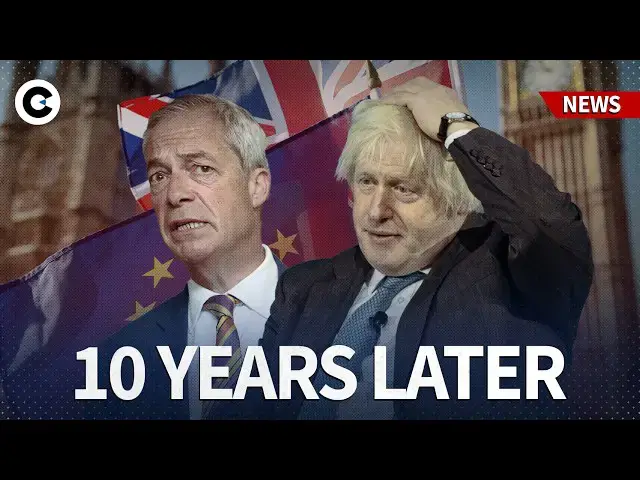
Ten years after the historic referendum, the economic reality of Brexit continues to challenge British infrastructure and business operations. In this segment from the Business as Usual podcast, the team sits down with Opinion Editor Alys Denby to break down the ongoing "friction" facing UK imports, exports, and small businesses.
We also explore an unexpected silver lining: how regulatory divergence from the EU might actually give the UK a massive competitive advantage in Big Tech and AI regulation.
Is the domestic cost of business friction too high to overcome, or can a tech carve-out save the UK economy from structural decline?
#Brexit #UKEconomy #BritishBusiness #AIRegulation #UKPolitics #CityAM
0:00 - The 10-Year Brexit Post-Mortem
1:12 - Why the Political Promises Unravelled
2:21 - The Two Conflicting Versions of Leaving
3:41 - The Hidden "Friction" Hitting UK Businesses
5:06 - Can AI & Tech Regulation Save the Economy?
Get more of City AM 👇
🌐 http://www.cityam.com
X(formerly Twitter): http://twitter.com/CityAM
Facebook: http://www.facebook.com/cityam
Instagram: http://www.instagram.com/city_am
LinkedIn: http://www.linkedin.com/company/cityam
Show More Show Less View Video Transcript
0:00
It is the 10th anniversary of the Brexit
0:02
referendum result.
0:04
>> This is an historic moment from which
0:06
there can be no turning back.
0:08
>> An exercise in democracy that tore
0:11
friends and families apart.
0:12
>> I will be advocating
0:14
vote leave.
0:15
>> Froze Parliament in a permanent state of
0:17
stalemate for years.
0:19
>> I think the people in this country have
0:20
had enough of experts with with help
0:22
from organizations
0:23
>> And according to some estimates has left
0:25
the UK billions of pounds poorer.
0:27
>> You all laughed at me.
0:30
What I have to say, you're not laughing
0:31
now, are you?
0:32
>> But is it better to have Brexited and
0:34
lost than to never have Brexited at all?
0:37
Joining us to answer that question is
0:39
our opinion editor Alice Denby.
0:41
>> Hello.
0:41
>> Alice, 10 years after we got that
0:44
shocking result, um what's changed?
0:49
>> Look, I'm looking back to how I felt on
0:52
that day. So, I was one of these I was
0:54
working Westminster at the time. I was
0:56
one of these extremely out of touch
0:58
bubble people who thought that
1:00
the EU represented all that was kind of
1:02
good and right and David Camerony
1:05
and good chaps and cooperation and
1:07
post-war peace settlement. But also that
1:10
had enormous economic benefits. Right?
1:11
It's a It's free trade partnership with
1:14
our closest neighbors. Um and I was so
1:18
shocked that day. I had clearly
1:20
completely lost touch with how much
1:23
anger and frustration there was out
1:24
there with the rest of the country. I
1:26
was clearly one of these people who was
1:27
totally in a Westminster bubble and I
1:29
got it wrong. Um so, now
1:32
10 years on, I mean it still doesn't
1:34
feel like this question is settled. And
1:36
I think the reason is because
1:39
it didn't become a referendum about a
1:41
sort of a boring policy question about a
1:44
trading relationship. People pulled so
1:45
much of their identity into it in the
1:47
way which I've just described. In a way
1:49
that never happened with say the AV
1:51
referendum.
1:52
>> And that was a boring technical
1:53
referendum.
1:54
>> That was That was one of the the system
1:56
which was like 2011, a few years before
1:58
no one really thought about it a huge
1:59
amount.
2:00
>> People just voted for the status quo
2:01
because they were so bored by it.
2:03
>> And and in a way I think the Brexiteers
2:05
underestimated the emotional attachment
2:07
a lot of Remainers had to what Europe
2:10
represented.
2:11
>> Cuz you hear you hear stories that Boris
2:12
Johnson tells now he had that one in the
2:14
in the recent BBC documentary where he
2:15
says that the the result only dawned on
2:17
him when he he left his own house that
2:19
morning and just had Remain campaigners
2:22
um screaming at him. He hadn't he hadn't
2:24
appreciated that for most people it
2:25
wasn't more of an academic question
2:27
about sovereignty, it was a real
2:29
question about openness to the world.
2:31
So it was one of those ones that maybe
2:33
people some people thought about as
2:36
economics, some people thought about it
2:37
as identity-based, some people thought
2:39
about it as about the nature of
2:42
Britain and its voting system and it's
2:44
not its voting system but it's so like
2:45
Britain and its
2:48
and its its legal framework. Do you do
2:50
you do you think
2:51
I just I want to pick you up on one
2:52
thing. You said that you got it wrong.
2:55
Did you get it wrong because you voted
2:56
for Remain? Cuz I think you just voted
2:58
the way that not quite the majority did.
3:01
And I think that does does that not sort
3:02
of
3:03
I don't know maybe speak to some of the
3:04
fact that
3:05
people have imbued it with this kind of
3:07
this nobility since of well people were
3:11
out of touch but actually you just you
3:12
just voted for the thing that actually
3:13
48% of people did vote for.
3:15
>> No, sorry. When I say I think I got it
3:16
wrong, I I probably ultimately still
3:18
think that had we uh voted for Remain
3:21
that would be better for the country.
3:22
What I got wrong was the sentiment in
3:24
the country. Um and look I I think that
3:27
the reason why it this is a question
3:29
that still feels so unresolved 10 years
3:31
later is that there were essentially two
3:33
different versions of Brexit and they
3:35
all got tied up with different kinds of
3:36
identity. So and it's also maps onto the
3:40
way that there were two different Leave
3:41
campaigns, right? So there was the sort
3:42
of Matthew Elliott Vote Leave, Dominic
3:44
Cummings the official campaign which was
3:46
much more about free trade and
3:48
sovereignty and those um
3:52
quite technical but policy arguments um
3:55
which I think make a lot of sense. And
3:56
then there was Was it leave.eu or
3:59
grassroots or whatever?
4:01
>> one because he was exiled from the
4:03
mainstream campaign.
4:03
>> wasn't allowed to be in the main
4:05
campaign. Um and that one was much more
4:08
identitarian, much more
4:09
anti-immigration, and much more
4:10
protectionist. And Nigel Farage is now
4:12
the kind of iconic image of that
4:14
campaign was him standing in front of
4:16
the picture of um
4:18
>> Breaking Point by
4:18
>> of a a vast queue of immigrants.
4:21
Um so I think the problem was that there
4:23
were so many conflicting messages um
4:27
and that it became so intensely
4:29
emotional that it was therefore
4:31
impossible to deliver
4:33
because nobody really knew what it
4:34
meant. It was a feeling rather than a
4:36
policy.
4:37
>> what I was going to say. I don't think
4:38
there were two different versions of
4:39
Brexit. I think there were 17.4 million
4:41
different versions of Brexit. There was
4:42
a Corbyn Brexit. There was, you know, a
4:45
Matthew Elliott Brexit. There was a
4:46
Farage Brexit. There was a Boris Brexit.
4:48
There was a Michael Gove Brexit. Like I
4:51
I genuinely think there were 17.4
4:53
million different versions of Brexit out
4:55
there, which is why 17.3999
4:59
million people were disappointed.
5:01
>> Yeah, well and exactly. And as you say,
5:02
because it became a question of identity
5:04
rather than just a question of a trading
5:06
relationship, people voted for intensely
5:08
personal reasons. Um so
5:12
uh look,
5:14
there is no counterfactual. Had we voted
5:16
to remain, I think our membership of the
5:17
EU would uh still be a question
5:20
particularly uh on the on the right.
5:22
>> think within 10 years there would have
5:23
been calls for another one.
5:25
>> Um but I suppose where I've arrived at
5:27
10 years later having been a sort of
5:28
quite soppy remainer
5:30
uh is that going back in now would be
5:32
the worst thing we could possibly do.
5:35
Um retreading
5:37
you know, if if politics was divided
5:39
then uh on these kind of identity fault
5:42
lines, how much worse is it now?
5:44
>> I think there's something to be said as
5:45
well for I mean I
5:48
was not old enough to vote in the
5:49
referendum, so I'm not going to say I'm
5:50
not going to say how I I'm not I'm not
5:52
I'm not I I I'm not I'm not going to
5:53
take a stance on
5:54
>> That's so depressing.
5:55
>> But I think I I have been struck by how
5:58
few of the promises have been met so far
6:01
in terms of our ability to forge free
6:02
trade deals. But I will say that having
6:05
been quite philosophically anti-Brexit,
6:08
if there is one thing which is really
6:10
shining through now as a bit of a
6:12
growing nascent advantage, it's in
6:15
tech and AI regulation.
6:17
>> Yeah.
6:17
>> And we are now much more than in 2020 or
6:19
2021 in a point where it's great not to
6:22
be too aligned with EU rules.
6:24
>> But take your take take that example and
6:26
take take an average maker field voter,
6:29
right? He's just elected Andy Burnham.
6:32
Uh, they are now having to fingerprint
6:34
at airports. Uh, if they run a small
6:37
business which they import-export,
6:38
there's there's added friction there in
6:40
terms of free movement of goods. Maybe
6:42
there aren't enough care workers in
6:44
their care home who might have come from
6:46
Eastern Europe previously. I
6:48
you know, we work in the city. We love a
6:50
bit of AI in King's Cross, you know,
6:52
everyone loves a Dishoom. But
6:54
those people who voted for Brexit up
6:56
there, um,
6:58
they're the ones that do don't really
7:00
benefit from the AI boom up there. And
7:03
And their lives have been made
7:04
measurably worse by this.
7:06
>> you're right. I think there's something
7:06
to be said that you you you could have
7:08
probably had the AI carve out as well
7:09
while while while being in the EU. And
7:11
yeah, I'm like basically like the the
7:12
friction on businesses is an
7:15
unforgivable part of policy. And like
7:17
it's I think for me unforgivable that no
7:19
part of the Theresa May or Boris Johnson
7:22
uh negotiating teams managed to sort out
7:23
that friction cuz it should have been
7:25
that should have been the number one
7:27
thing being discussed. It's so
7:28
important.
7:29
>> Look, I I again, I think this all goes
7:31
back to people, as I say, voting for
7:34
Brexit not on the basis that this was a
7:37
policy change,
7:38
but on the basis that they were angry
7:40
with their lives and they thought that
7:42
voting for some sort of change and
7:44
upheaval would make it better, and that
7:45
has plainly not materialized. I think a
7:48
major problem with it has been um
7:52
it is down to Boris Johnson. I think
7:54
people
7:55
really I think people thought that you
7:57
know, if there's one man who can
7:59
give the country who can deliver Brexit,
8:02
and who can give the country the kind of
8:03
hope and optimism and boosterism that
8:07
that people wanted, it could have been
8:09
him. And instead instead, what does he
8:10
do?
8:11
And again, I sorry, I think this all
8:12
comes down to the two different
8:13
versions. I I think he
8:17
won a lot of votes from the kind of
8:19
Farage-y
8:21
type of Brexiteer, and we got into
8:23
government thinking, "God, but I want to
8:24
be liked again like I like I was when I
8:26
was the mayor of London. I want to be
8:27
liberal London Boris, so I'm going to
8:30
massively open up
8:33
visa routes for foreign students,
8:35
because that's a sort of
8:37
London-y thing to do. And I'm going And
8:40
it's just like how he wanted to be
8:41
perceived, and I think he didn't know
8:43
what he
8:45
what he meant by Brexit.
8:46
>> Alice, I think what this has shown me is
8:48
that next time we talk about this we
8:49
need to actually book someone
8:51
>> [laughter]
8:51
>> at least of the three of us who backed
8:53
Brexit.
8:55
>> Well, I have to say you can you can keep
8:57
listening to this debate by tuning at
8:58
10:00 a.m. to LBC with James O'Brien,
9:01
and that's how you can keep [laughter]
9:03
>> No, but no, but what I'm saying is like
9:05
we should not we should not rerun this
9:07
debate. We should not go back in.
9:09
And now we're out, we should make the
9:10
best of it, and I think the best version
9:12
of it was the vote leave, the free
9:14
trade, the buccaneering out into the
9:16
world,
9:18
make deals with the with the entire
9:20
globe. That was the version that made
9:22
sense. That was the pro-growth version,
9:23
and that's what we should have gone for
9:24
instead of a kind of Boris-y mush.
9:26
>> I think that is the right note to end
9:28
on. Alice, thank you very much.
9:30
>> A pleasure to be here.
9:31
>> Happy Brexit anniversary to you.
9:37
>> Mhm.
News