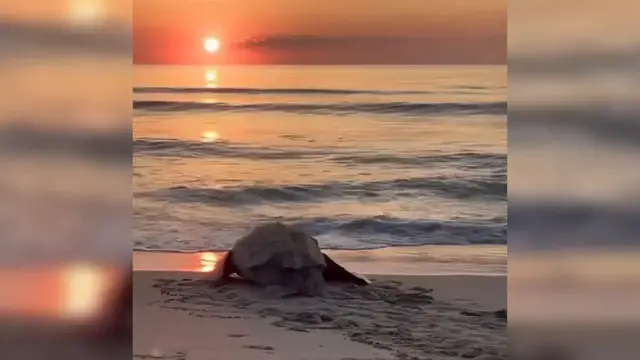

US: Rare leatherback sea turtle visits North Carolina beach for second time this season.
Aug 6, 2026
RESTRICTION: USERS MUST CREDIT “N.E.S.T. (NETWORK FOR ENDANGERED SEA TURTLES)” HANDOUT, MUST NOT OBSCURE LOGO —EDITORIAL USE ONLY— SHOTLIST: NORTH CAROLINA, US (RELEASED ON AUGUST 4, 2026) (N.E.S.T. (NETWORK FOR ENDANGERED SEA TURTLES) - RESTRICTED) 1. LEATHERBACK SEA TURTLE ON BEACH NORTH CAROLINA, US (RELEASED ON AUGUST 5, 2026) (N.E.S.T. (NETWORK FOR ENDANGERED SEA TURTLES) - RESTRICTED) 2. LEATHERBACK SEA TURTLE RETURNING TO ATLANTIC OCEAN NORTH CAROLINA, US (RELEASED ON AUGUST 4, 2026) (N.E.S.T. (NETWORK FOR ENDANGERED SEA TURTLES) - RESTRICTED) 3. STILL PHOTO OF LEATHERBACK NESTING SITE ON BEACH NORTH CAROLINA, US (RELEASED ON AUGUST 5, 2026) (N.E.S.T. (NETWORK FOR ENDANGERED SEA TURTLES) - RESTRICTED) 4. STILL PHOTO OF N.E.S.T. VOLUNTEERS SEARCHING FOR EGG CHAMBERNORTH CAROLINA, US - RELEASED ON AUGUST 4 - RESTRICTION: USERS MUST CREDIT “N.E.S.T. (NETWORK FOR ENDANGERED SEA TURTLES)” HANDOUT, MUST NOT OBSCURE LOGO —EDITORIAL USE ONLY—: A leatherback sea turtle, the world's largest living turtle species, emerged on a beach in Southern Shores before sunrise on Saturday, Aug. 1, drawing conservation volunteers to secure the area after the animal made its second coastal appearance of the season. Video released by the Network for Endangered Sea Turtles (N.E.S.T.) showed the massive turtle crawling across the beach at sunrise before returning to the Atlantic Ocean, leaving behind a wide nesting crawl in the sand. Volunteers searched the site for more than five hours but did not locate eggs. The conservation team subsequently classified the location as a potential nest site and will continue monitoring the area over the coming weeks. Leatherback turtles (Dermochelys coriacea) can grow up to 6.5 feet (2 meters) long and weigh more than 1,300 pounds (600 kilograms). Unlike other sea turtle species, leatherbacks possess a flexible, leathery skin-covered shell rather than a hard bony carapace. The species is listed as vulnerable by the International Union for Conservation of Nature (IUCN). Writing by Taha Mazi
Show More Show Less #news