Up next in 10

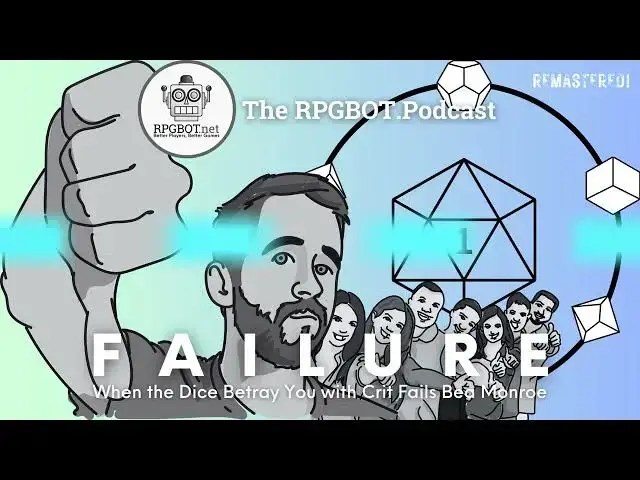
FAILURE (Remastered!) – When the Dice Betray You with Crit Fails Bea Monroe – RPGBOT.Podcast S4E26
Oct 1, 2025

Failure in tabletop RPGs: a topic that strikes fear into the hearts of many players and Dungeon Masters alike. But what if we told you that failure doesn't have to ruin your game? In this episode, we sit down with Bea Monroe of the Crit Fails podcast to discuss the ins and outs of failure in RPGs. Whether you're a DM struggling with how to handle player failures or a player looking to make failure more engaging, this post has you covered.
This episode originally aired on Mar 9, 2024, and we're currently working to upload our episode backlog. For the latest from the RPGBOT.Podcast, find us in your favorite podcatcher.
Full show notes for this episode are available on RPGBOT.net: https://rpgbot.net/failure-remastered-when-the-dice-betray-you-with-crit-fails-bea-monroe-rpgbot-podcast-s4e26/
Find us on Socials:
- 🦋 https://bsky.app/profile/rpgbot.bsky.social
- ⏰ https://www.tiktok.com/@rpgbotdotnet
Show More Show Less View Video Transcript
0:06
[Music]
0:11
[Music]
0:20
Welcome to the RPGBOT do podcast. I am Randall James, your unannounced announcer. And with me is Random.
0:27
Good evening. And Tyler. Hi everybody. And this week we have a special guest, Colobe. Hi everybody. Longtime listener, first
0:34
time caller, big fan of the show. Well, Colobby, will you tell us a little
0:39
bit about yourself? Yeah, I'm My name's Colby, a host of the Crit Fails Podcast or Critical Fails
0:45
Podcast. We are a comedy advice podcast. Basically, the opposite of this show. We
0:52
try not to profess any wisdom of any kind and answer people's questions from
0:58
the internet and have a good time and and make funny hahas. Nice. Nice. All right. So, speaking of failures, Tyler, what are we doing this
1:05
week? Well, we wanted to have Colby on today and we wanted to talk about failure in tabletop RPGs. We want to
1:11
talk about what role it plays in the game, why it's important, and how you can make failure more fun and
1:17
interesting. Okay, so not failure as in like us getting audio and visual setup this week.
1:23
No, not this time. Meta for those listening at home. This
1:28
was fun. But I feel like we all learned something about each other. So that's something. Next week on Isn't that what failure is all about? It's an
1:34
opportunity for growth. Yes. And boy, what a great way to segue.
1:40
Good lord, I want you around forever. So failure plays a really interesting
1:45
narrative role because in any tabletop role playing system that I've encountered at least, you're going to
1:51
have some element of randomness. And leaving 3.x aside, often that element of
1:56
randomness isn't enormously impactful about whether or not you're going to succeed at what you're trying. And what
2:02
that means is there's a really critical piece that the DM or GM or storyteller
2:10
needs to be aware of of how they're going to take the story depending on whether or not your role succeeds. Now,
2:16
things like combat, there's really only two ways, you know, it's pretty binary,
2:22
right? You know, am I going to succeed and and do the thing I'm trying to do or am I going to fail and not do the thing I'm trying to do? And story in combat is
2:29
not super dependent on the outcome. It's a fight. For something like a social
2:35
encounter where I'm trying to bluff a guard to say, "Ah, yes, I'm supposed to
2:41
be here. If you succeed at that, that's going to be a radically different storyline than if you fail at that." And
2:48
so exploring the narrative consequences of failure is something that is a real big personal passion for me. Well, and I
2:55
think before we go any further, Tyler, like let's nail it down. In D and D fifth edition, what is a success? What
3:02
is a failure? Dungeons and Dragons has historically used binary success and failure, which
3:08
means you either pass or fail when you do something. With very rare exception, you're rolling a d20, adding a number,
3:15
and trying to meet or beat a target number. Generally, if you meet or beat the target number, you're fine. or there
3:22
might be some mitigated consequence. If you roll below the target number, you suffer the full consequence. There are
3:28
some rare cases in fifth edition where if you fail by five or more, sometimes by 10 or more, something worse will
3:34
happen. Okay. Of course, I looked up examples before we recorded and forgot all of them. Perfect. That seems right.
3:40
There's a few poisons. If I recall, the Medusa's gaze is one of them.
3:45
Yes, I think D sleep poison is one of them as well. Yes. Off the top of my head, those are
3:52
two examples. Perfect. Colobby with the save. Thank you. Nice. Nice. And and and also there's of course cases where like even on failure,
3:58
something's still going to take half damage. Something like this as well. I I guess one thing I wanted to call out because this is something that I actually have to look up every time this
4:04
comes up. Rolling 20, like a natural 20 critical success, if you want to call it this, that only actually counts for
4:11
combat roles. And everywhere else to, you know, 20 is not a guaranteed success. One is not a guaranteed
4:17
failure. Right. By raw, that is true. Yeah. Okay. I I think a lot of people want want to honor
4:22
a NAT 20. And I know this isn't the episode about successes, but
4:28
but the inverse is true as well, right? Like you want to honor a NAT one even if
4:33
even if someone's bonus is really high and they should maybe pass that threshold. Sometimes it's good to make
4:39
the rogue fall in their face. And there's really interesting ways of incorporating, you know, what a natural
4:44
one failure mean. If you want to take a combat roll as an example, you know, if
4:50
you roll a two, you're going to miss. That's practically guaranteed. But if you roll a one, there's a lot of ways
4:57
that people have house ruled. There's whole real world items that people have made, critical fail decks and and all
5:03
this sort of thing. Honoring the the fail in ways that are interesting is
5:09
something that there's a lot of ways to do. And it's really about what strikes
5:14
your fancy as a GM and what you think is fun for the play. Oh, perfect. So, let's let's get into
5:20
this. So, I I think maybe the most exciting thing to talk about is, you know, failure during storytelling.
5:27
So, failure isn't always as simple as just something mechanical like you you
5:32
fail to pick a lock, you fail to pick a pocket, you fail to stab some guy with a pointy stick. One of the reasons
5:39
tabletop RPGs are interesting and fun to play is because there is a risk of
5:45
failure. If you are playing an RPG where you always succeed, there's no challenge
5:52
in the game and the game stops being fun pretty quickly. There's that old I want to say it was a Twilight Zone episode
5:58
about the gambler who could never lose. First he thought he was in heaven, eventually realized he was in hell cuz
6:04
there's no fun in gambling if you can never lose. The same principle carries over into tabletop RPG. The risk of
6:11
failure makes success more meaningful, but that's not to say that failure
6:17
itself isn't interesting. Failure isn't always necessarily a punishment. Sometimes it's just a complication.
6:23
There's there's a concept that kind of got big right when Apocalypse World and Power by the Apocalypse Games, right
6:30
when they came onto the scene. The concept is frequently referred to as fail forward. So the basic idea is the
6:37
players attempt to do something that has a chance of failure, but the story requires them to succeed for whatever
6:45
reason. So instead of the DM saying, "Okay, you have failed," the story is
6:50
halted until you come up with something else, the DM can allow the players to
6:56
fail forward, which means they they functionally succeed on that check, but
7:01
there's some complication. So, to go back to my example of picking a lock, let's say you're in a dungeon and you
7:07
have encountered a locked door. The rogue attempts to pick the lock. The rogue's pretty confident they'll pass
7:13
cuz picking locks, what else is rogue going to do? So, rogue picks a lock, rolls a failure, but the big bad evil
7:19
guys on the other side of that door. You must get through that door to continue the adventure. The DM decides to let the
7:26
party fail forward. And instead of simply saying, "Come up with something else or find another way through this
7:31
door," the DM says, "Okay." You pick the lock. As the door swings open, the
7:37
guards turn to meet you with weapons in hand. Maybe there weren't guards there originally. Maybe the guards were there
7:44
but were unaware of the party and they heard the rogue picking the lock. So using failure as a story device that
7:50
way, there's still a consequence for failure, but it doesn't have to stop your game.
7:55
Yeah. Let me ask you a question about that. So there's, like you said, one way to put it would be like, okay, you break
8:01
your lockpick or you break your tool set, the doors swing open and the guards are waiting. Then the player's left
8:07
wondering or maybe the player doesn't even think, oh go, of course, there were going to be guards there because in the real world, you know, we we don't live
8:13
in this like quantum world where maybe or maybe not there is a guard there until I observe it. That isn't how this
8:18
works. The guards were always there. But if if you say something like, you know, your clumsy attempt to pick the lock
8:24
reverberates through the castle and as you open the doors, guards come streaming in through like side doors and
8:29
the chamber or something, then they become very aware that, hey, your failure has directly led to consequences. I think there can be sort
8:36
of a weird dissonance sometimes if you do make a consequence that is not direct
8:42
like a consequence of the die roll that is not directly related to the thing that they were doing like guards showing
8:48
up but as a storytelling device it opens up so many avenues for you to think of
8:56
interesting consequences that don't stall out the progression of the characters because if you're stuck at
9:01
that door there's no way forward then you have to go back and get, I don't know, like a crowbar from town or
9:07
something, which could be a fun sub quest in itself. I think failing
9:13
forward, even though it requires a different lens to sort of view the
9:18
relationship between the DM and the players, or that there's like a static nature of the world, if that makes
9:24
sense, that the DM like has in their mind, you can just move the pieces around and say like, "Yeah, the guards
9:30
are there now. They didn't exist until this moment." And I think DMs do that all the time anyway. It's just being
9:36
open to that. Yeah, I think Kobe touched on that really well there. By far one of the
9:42
biggest skills necessary to run a game without your players feeling like you
9:47
are railroading them is improvisational skills. And this will come up in a later episode where we talk about first- time
9:54
DMing. But improvisation is really the heart behind fail forward. Trying to
10:01
plan for all of the things that could go wrong on your players is insanity and
10:08
you will never be able to plan everything well enough. Even if you just
10:14
do a little something like practice an improv game with people just to get a
10:20
feel for, okay, here is something that I can change on the fly. Now, if you are
10:25
someone who does struggle with that skill, you can try and map out a couple things. Be like, "Okay, where are things
10:32
that are common that people might try to do and fail, you know, like I had talked
10:38
about earlier, trying to persuade a guard. Like if you know guards are going to be patrolling somewhere and you know
10:43
that you have a player who is trained in deception, someone who is likely to try and make that role, you know, maybe try
10:49
and think of like, all right, here's one or two ways that this could go if they fail depending on what the rest of the
10:55
party is doing. here's one or two ways that I think I could take this narrative and particularly people who in different
11:03
ways I guess both people who are writing their own homebrew content and people who are playing a published module it
11:10
can be very hard to try and figure out what about this module can I change and it is a different type of hard to figure
11:15
out like I have barely written anything beyond this curtain how do I just pull
11:22
it in on the one hand that is very freeing to just say Yeah, that was
11:27
absolutely there the whole time. On the other hand, it can definitely be a strain on your already very tight
11:34
resources. I've recently watched a few actual play shows DM'd by Abria Lionar
11:43
who's been guest DM on Dimension 20 and Critical Role and she does this really
11:51
interesting technique of on a fail if she doesn't have like a specific
11:57
interesting idea of how to make that compelling she'll instead ask a player
12:04
not the player who failed but another player player at the table. What extra thing happens that makes this bad? And
12:11
that can be very fun as a device. I think I've gotten to play with it in a
12:17
few sessions because it makes the other player, the bad guy in this situation,
12:23
and they feel compelled to go maybe harder than you might have gone, be a little bit more evil to their to their
12:29
players. Yeah, that's interesting. I was about to ask you like I I can imagine it going both ways. like some some player
12:34
characters trying to come up with something funny or something like I want something amusing but also something
12:40
that isn't going to slow us down or isn't going to trip us up. But you're saying actually you're seeing PCs go the other direction of like like tarpit he's
12:47
in. It's great. It's, you know, sometimes I I think players want to
12:52
honor, and it's not the case for every game, but I think players want to honor when they're at given some measure of of
13:00
power over the narrative that that should mean something in the moment. Yeah. I So, this is great. And I think I
13:06
I I want to maybe keep going on the idea of failure, like this idea like actually
13:12
failure is an option. And I'm thinking about games that I've DM'd or games that I've participated in where the
13:18
situations we're talking about, like you persuade a guard, you're attempting to track something, you you attempt to pick
13:24
a lock. Like there's all these things that we do all the time. And I feel like it's really easy for a DM to roll for
13:29
me. And like I was looking for a 15, you gave me a 12. I think I'm just going to
13:36
let this go because it is hard to be creative. And and so I think how do we
13:41
regularly make failure an option both on the everyday roles while you're playing
13:47
the game as well as on the high stakes? So that can be really hard. Like you guys have all touched on, the improv
13:54
aspect can be very difficult, especially for new DMs. And if you don't have a
14:00
plan for when the party fails, a lot of times you're just left scrambling. That's just how it is. But really, you
14:07
shouldn't let that dissuade you as a DM or GM whenever you're running the game. Probably the best tip I've ever heard is
14:13
if you need a minute to come up with something, go to the bathroom. Yeah, it sounds very silly, but you know, you
14:20
need a minute or two. You're going to step away. You're going to come up with something clever, and you're going to come back ready to go.
14:25
But to be clear, you only get to use that what, two, three times an hour before people start questioning, I don't know, drink enough beer.
14:33
Completely different direction. Sorry. They're going to go. Oh, I was just going to say that they're going to go like, "Does Tyler have something
14:39
wrong with them? Is Do we need to consult a doctor?" No, no, no, no, no.
14:45
I don't drink that much beer. I want to be He wasn't even talking about the beer consumption. He was
14:50
talking about the bathroom, but you went to the beer. Oh, yeah. That's apparently that's where my mind was.
14:58
Yeah, I I have heard that piece of advice repeated in a few places on other podcasts. So yeah, that is a timehonored
15:05
tradition. If you need a minute, step away to the bathroom. That makes sense. You'll be fine. One thing that's
15:11
interesting, so you talked a moment ago about high stakes failure versus everyday failure. It's interesting when
15:17
those can be identical. Your everyday roles in combat can very well lead to
15:22
character death. So, I was recently in a game where due to a fabulously badly
15:30
ported first edition adventure into fifth edition, we got a TPK at level two. Everyone died. There was absolutely
15:37
zero chance for success. A boss walked through our party and murdered everyone.
15:42
You know, we we get about two players down and we say, "Oh, okay. This is clearly an end here. If you need to
15:49
break the narrative for a minute to just talk to your players, that's fine. People are going to understand, I did
15:55
not write for this particular instance of failure, guys. We have two options.
16:00
Either we can say, we're going to succeed here and I will figure out a consequence for this down the line, or
16:08
we're going to say, no, you failed and I need to just end the session now to
16:14
figure out what that failure means. While that is definitely not as narratively satisfying, if that is the
16:21
step you need to take, people will understand. And more importantly, if you can use that to go back and build a good
16:28
narrative, people will be very appreciative that you've managed to continue the story in a way that was not
16:33
previously expected. So, I mean, it's the situation you're talking about though. So, you you were
16:39
headed towards total party kill. Functionally, we had a TPK. We were a level one party and like a sixth level
16:46
barbarian just walked through and one-shot three people on sequential turns. And so we just said, "Okay,
16:53
great. What do we do now?" And the short answer was, "Run the rest of the dungeon
16:58
through Cobalt Fight Club. Cobalt Fight Club. You didn't use the encounter builder on rpgbot.net." I was not the DM
17:06
of this campaign. That's fair. That's fair. Cold Fight Club is a fine product and the person who built it did a
17:12
wonderful job. I thought that there was something interesting that you you pointed out there which was you do have the two
17:18
options which is just you go for the TPK in that situation or if you're the DM,
17:23
you pull the punches, but there was one little thing that you said in there which was find a consequence down the
17:29
line because if you don't do that, players won't like it either. They won't
17:34
like having survived if they knew they shouldn't have. I've had two TPKs that
17:40
were taken from me. And every time I'm furious about it. There's no
17:46
consequences that came out of that. And there's a lot of things that you can do. You can say, "Okay, everyone, it was
17:52
actually non-lethal damage. We're just going to pretend it was non-lethal damage." But you wake up in a prison
17:58
cell. That's one escape out of that. And then you can make a very brutal way to
18:04
get out of imprisonment. Or everyone did die and they wake up in hell and you're
18:09
running a hell game now. Oh, that's a good idea. It's really weird that the young red dragon put you in prison, but I don't
18:16
know if this is so dragon has started a new section to their horde. It's people.
18:22
So if I can I if I can pull a story from the ye olden days. So a story that Luke
18:27
Gyax has told from his childhood. Luke Gyax, famously the son of Gary Gyax,
18:33
co-creator of D and D, and Mel, I believe, the creator of Mel, the male
18:38
elf. So, Luke Gyax. Wait, what? Yes. So, I'm I'm the only uninitiated on
18:45
that, and I feel like you can't say elf, the male elf, and then keep going.
18:51
Have you ever used the spell Mel's acid arrow? No, I I have not. It's It's a It's a 5e spell. I'm sure
18:58
it's in every edition. That is Luke Gyax's character's like legacy in the
19:04
game basically. Thank you for that. Yes. So Luke Gyax is Yes. Luke Gyax is one of Gary's sons and helped Gary play
19:12
test a lot of things when he was a kid. His most famous character is Mel, the male elf named because he forgot to
19:19
write a name on the character sheet and had written M for male and elf for the
19:25
race and class. in that time. One of his famous stories is Gary play tested the
19:31
Tomb of Horrors with Luke playing a single character and Tomb of Horrors
19:36
notoriously lethal. So Luke walks into the first pit trap. Literally seconds
19:41
into the adventure, walks into a pit trap, falls 50 ft, manages to not die, can't find the secret door at the bottom
19:48
of the pit, which spoilers for a 40-year-old module. can't find the secret door at the bottom of the pit
19:53
trap, runs out of food and is basically stuck in the bottom of a hole for several days. And Gary, taking pity on
20:00
his own son, said, "Ah, yes, my wizard character Morton Kynan shows up
20:05
wondering where his friend Mel had been. Teleports to you, rescues you." I can't
20:10
remember if he was actually playing Mel at that point, but Luke says, "Yeah, after getting rescued that way after such a disappointing failure, I never
20:17
went back to the character." Col's point about a TPK being taken from the party
20:23
is really, really good advice. If death doesn't feel like a possibility, combat
20:29
stops being interesting. Failure in combat is real because your character can just die. And one interesting thing
20:36
I want to bring up about death. So death particularly in fifth edition Dungeons of the Dragons and and even earlier
20:43
editions of Dungeons of Dragon in Dungeons and Dragons Pathfinder at a certain level death stops feeling like a
20:49
punishment because at a certain level you have more money than you know what to do with. You can just throw diamond
20:56
dust willy-nilly, resurrect people. It's just a spell slot. And sure, there is an
21:01
in-game consequence of I'm going to spend a certain number of long rests feeling sucky. Even that isn't all that
21:09
punishing depending on the character. What do you do to maintain that high
21:15
state for failure when death stops being as interesting? There's some options.
21:20
Now, Mercer has a really interesting system where basically when you die, in
21:25
order to be brought back, the person casting the spell is making a role. And they're making a role that is basically
21:32
just a straight D20 modified by not any aspects of the character, but like how
21:39
do they perform the ritual to bring you back? So, I have had a character that was brought back through a a ritual
21:45
similar to this, and seeing it. It's a really cool piece of narrative because it lets the players interact in a way
21:52
that they hardly ever do, showing what do these players think is meaningful to
21:58
this character. We only had one death that was brought back like this in that game, but seeing how that was
22:04
adjudicated that way was really interesting the options that that opened up. And it also adds the element or the
22:12
possibility of perma death, which is a form of failure, which I think helps
22:17
make death feel meaningful in Dn D. There's another actual play DM, Brian
22:24
Murphy, who does Nad Pod, which is wonderful. If you haven't checked it out, you should check it out. Big fan of Nadpod.
22:30
The way that he runs it is he makes the players roll the death saves just flat.
22:37
And if they're able to get those three successes, then the character comes back. And if they don't, then they're
22:42
dead. You know, death saves are generally balanced in the favor of the character. So, there's a better than not
22:49
chance that they're going to come back. But boy, does that feel just extremely
22:54
stressful rolling those death saves to see if your character can be resurrected or not. Sure does. For anybody keeping score at
23:01
home, if you look at the math on 5e saves, there's a 55% chance that you'll
23:07
succeed on death saves. So, the odds really are slightly in your favor as long as no one is kicking you while
23:13
you're down. Yeah, I I suppose it technically is. I don't know if you've ever uh Yeah. seen any of us roll, but that's a whole
23:20
another See, this is why you got to keep a paladin around. Good. Yeah, just save us. Kobe, I I
23:26
liked I liked what you talked about having a consequence down the line, such as like waking up in prison. and this sort of thing. I'll ask the question, do
23:32
you do you want the consequence to be something faced by the characters or is it acceptable to allow the TPK and then
23:40
add that consequence back to the players coming back? Presumably, maybe it doesn't burn the whole world down, especially if it's a DPK early in a
23:46
campaign. It's like, you know, hey, your four new adventures, you've heard a rumor that four adventurers went, you
23:53
know, missing in the hills last week, and we we have a reward up to go find them. You know, something like this. How
23:58
do how do you think about that? Is it something that you think is better for the characters to face or better for the players to face?
24:03
I think if you're going to not kill your like if you're in a TPK situation and you're not going to kill them or or you
24:10
you you're faced with a big failure of anyway and you're not going to honor that necessarily, then you need to make
24:17
the players have to deal with a consequence of some kind to justify the
24:22
decision not to honor that failure. As far as a TPK goes, I think it's extremely fun to run a game set in the
24:31
same setting. You know, you already have your module or your homebrew world and see how that TPK affects what whatever
24:40
scenario is going on. If you have the red dragon and the red dragon wasn't defeated, then the red dragon has burned
24:48
the kingdom to the ground. and and you play characters in the wake of that, which is a totally different style of
24:56
campaign, but also quite interesting. I think Matt Mercer said had Oh, no. I I
25:01
this is like end spoilers for Well, I'll just say if the player characters had
25:07
not defeated the main antagonist at the end of campaign one, that main
25:13
antagonist would have basically been like a world dictator demigod. in their
25:18
next campaign, they would have picked up in a very dark version of the setting.
25:23
And I I've always thought that was super cool. And then you get to go on a quest to kill God. Yeah, exactly.
25:29
Yeah. But yeah, still still finding a way to keep killing that particular Godfresh cuz I knew him when he just
25:34
George down the street. Oh, nice. I don't want to beat on this one too much. What can we do if you're in a TPK
25:43
situation and for whatever reason switching to new characters in the aftermath isn't a possibility? Like what
25:50
can we do to keep the failure interesting there? So say you've been playing the same characters for 2 years,
25:56
you're like level 10, everyone's super attached and nobody wants to go down in a TPK. What do you do then? I So, one
26:03
thing that's interesting to me here is the TPK about to happen because the
26:08
players actively screwed up a terrible, you know, a series of unfortunate events
26:13
or because you as a DM have screwed up and misleled something cuz I think those are three different scenarios and I
26:19
think it does impact probably how you make this choice, right? If if you put them in that scenario, like you talked about the the poor translation from one
26:24
to five, that's totally on the DM and you probably want to find a way to save them, you know, to offer a way out. But
26:31
if you know the the wizard's like, "Hey, I have a great idea. I'm going in first this time. You know, let's mix it up."
26:39
Come on. Oh, no. Leroy Jenkins, the wizard. Exactly.
26:44
I think the thing about 5v I think a lot of DMs know this if they've run for a
26:50
long time is that it is almost always your fault if there's a TPK. It is so
26:57
hard. Like the game is not B. Like if you're running it the way that it's said to be run in the books, you're you're
27:04
running I think it's what four or five encounters per adventuring day. They're
27:09
all medium to hard difficulty. No one's dying in those unless you like throw
27:16
something very hard at them. I've run a Terrasque fight for level 13 players and
27:22
they came out fine. Just walked away with no scratches on them almost. It was
27:28
sad. That sounds like the Terrascan 5e. Most of the time these TPKs are your
27:34
fault unless they do something truly insane. Like they walk into the king's
27:39
palace where it's not meant to be an encounter. You just know that there's 500 guards there. Then it's on them.
27:46
Then they die and you punish them. One interesting thing I wanted to talk about as a way to practice this sort of
27:52
improvisational stuff and in particular practice it in a way that you do have a lot of narrative control over. One of
27:59
the vanishingly small number of good things to come out of fourth edition was the concept of skill challenges. If you
28:07
know that, for instance, and if players in my Strod game ever listen to this,
28:13
they're going to know that I just taking so many of these examples straight from that game. If you need to, for instance,
28:19
take a raft down a section of river and you know that this is a thing that your players are going to do because you do
28:26
the thing that video games do where you pretend to give them four options and then they all loop back to the same goal, which is here's a raft on a river.
28:33
You know that you're going to do this. You can say, "Okay, great. We're gonna get to a set of rapids and I'm gonna
28:39
take these skill challenge rules where I want to have my players succeed at a
28:48
skill check six times before they hit two failures. And I'm going to set some
28:54
DCs and I'm just going to build out what are the possible options for failures
29:00
before successes and successes before failures. And this is going to be a good way to both encourage players to figure
29:06
out how they can use their strengths to contribute to the moment and it's going to be a really good way for you to get
29:12
some narrative practice of, okay, I need to figure out what failure from this is
29:18
going to look like and I need to make it interesting in a way that even if they do fail, they're still going to feel
29:24
like it was fun to fail. Because this is one of the things that we haven't touched on a lot is that failure can be
29:30
interesting and fun. And in fact, there are times in which failure is more fun.
29:36
We we sort of talked about this with people not enjoying succeeding all the time. If someone does do something
29:43
completely wild, they roll a 19 on the die on a thing that you did not expect
29:49
them to succeed on, that can really detract from the story you were trying to tell. and things that I've seen, you
29:56
know, like, oh, I got a 20 on my skill check. I I succeeded in seducing this
30:01
guard that I said I was going to. No, you don't have to make it work like that. Honor the 20. Say, okay, you know,
30:09
maybe they are amused that you are trying to do this rather than creeped out. On the same token, on the failure
30:15
side, like we're talking about, if you are trying to do something that you are really good at and you do just roll low,
30:21
maybe you succeed and fail in a way that is interesting. Maybe you've you fail
30:28
because your armor broke as you were trying to do it and like, okay, well,
30:33
now I need to spend some downtime polishing this and gluing it back together, whatever. Don't be afraid of
30:38
failing them as long as you find a way to make that failure interesting. Perfect. And I think yeah, we we covered
30:44
a lot of interesting ideas for this, right? So, one, like what do the other player characters have to say? Do they have anything interesting? And then two,
30:52
this idea of failing forward, finding a way to advance the story to move them beyond, you know, like the the guard
30:57
takes pity on you as your armor is falling off before them and says like just just go through the door. It's fine. There is one other thing that I
31:05
don't think we've touched on, which is when to call for a role as a DM. Like
31:10
when are roles important? Because sometimes you know that the player
31:16
characters are going to fail at a thing. Sometimes you want that to be the case. The whatever situation is going on isn't
31:24
going to change that much with a die roll. I recall in my first in one of my
31:29
first games that I ever ran, I had to get them out of this like utopia valley
31:35
of Eden that they were in and the main NPC who was saying like time to leave.
31:41
One of my player characters was like, "Can I persuade them to not go and do the adventure? Can I persuade them to
31:48
stay here and not and not play the game?" And I was like, "Sure, roll persuasion check." And of course, it was
31:55
a NAT 20. Of course. And yeah, of course, in that situation, it would be a NAT 20. And I reflect back
32:01
on that a lot going like, I just shouldn't have asked for a role there. There was nothing that they could say
32:07
that would have gotten them to not go on the adventure. not get out of there. That NPC had their mind made up and
32:15
deciding when to call for a role and when not to I think is is important and I'm not sure exactly where to call that
32:22
in your brain. I do you guys have any thought? Yeah. So, one thing I'll end with one thing and then Tyler, one thing
32:28
that I have noticed, I have one particular DM I'm thinking of who will start to tell you the consequence or the
32:33
answer to the question that you've asked and like eight words into a sentence stop and say, "Wait, roll." And you're
32:39
like, "But you were already like we were halfway there. I thought we had it." I feel like I feel like that is that is a
32:44
a wonderful case where it's like, "You know what? It didn't mean that much to you. Just let me have this." But Tyler,
32:50
go ahead. That's actually a really awesome example, Randall. So, generally, you only want to roll when failure is both
32:58
possible and meaningful. Third edition had a concept of taking 20 on skill
33:04
checks, which we've discussed on previous episodes. If you're not threatened, if you have time and there's
33:09
no consequence for failure, you can just assume that you have rolled 20 by taking 20 times as long because there's no
33:16
reason why you wouldn't just keep doing it over and over again until you got it exactly right. That concept has kind of
33:23
gone away in both fourth and fifth edition of Dn D and in other more modern RPGs like Pathfinder second edition,
33:30
etc., etc. If there's no reason why the players would fail, don't bother making
33:36
them roll. If there's no consequence for failure, don't bother making them roll.
33:42
Generally, you want to make players roll when there is a disagreement about the
33:47
outcome or when there is a consequence for failure. I keep going back to the picking lock example. If the room on the
33:55
other side of the door is empty and you don't want to put anything in that room for whatever reason, maybe just part of
34:01
the story is that room is empty, you can just say you pick the lock easily. Done.
34:06
That's it. Dice don't need to come out. You don't need to come up with some clever reason to handle a natural one,
34:11
which the player will inevitably roll when it doesn't matter. But at the same time, if the player is trying to pick
34:18
that lock like in the middle of a fight, you might make them roll because if they
34:23
fail to pick that lock, it will cost them time because they might try again the next turn because they've decided
34:30
for whatever reason that getting through that door is important to them. Even if that room is empty and you as the DM
34:36
know that the fact that they're in a time-sensitive situation creates a cost
34:41
for failure and that's a good time when you stroll. Awesome. I think it comes down to stakes, right?
34:48
You just need there to be stakes for failure. Yeah. And sometimes if there's a the opposite
34:53
of that there's no way that they're going to fail. If there's no way that they're going to succeed, sometimes you might want to call for a role anyway to
35:00
see what degree of failure they have. I I can think of a number of situations where you might want to do that.
35:05
Yeah, that's really interesting. I mean, that that's one thing that Pathfinder Second Edition is a a good way of of
35:11
looking at this. You know, in Pathfinder Second Edition, you can succeed at a thing, you can fail at a thing. But if
35:17
you roll 10 higher or 10 lower, you critically succeed or critically fail. In most cases, there's a lot of fiddly
35:24
bits because that is an enormously thick rule book. They have a lot of writing
35:29
about what critical success and critical fail means for a lot of different actions. That's a really easy thing to
35:35
import into fifth edition if that's what you're running. And and in fact, there were actually some ways that that was
35:41
handled in previous editions of Dungeons and Dragons. In 3.5, there's an entry in disabled device that says if you're
35:47
trying to pick a lock and you succeed by five or more, you understand the workings of the lock. And so you
35:53
actually just you learn how it works and and you can now just use your tools to
35:59
basically act like a key and open it and close it at will. or or like if you succeeded by five or more when trying to
36:06
disable a trap, you could rather than just turn the trap off, you could slide
36:11
a shim in and just turn it off for your party to walk past it and then turn it
36:18
back on behind you. There's definitely precedence for that. And again, you know, like I talked about in the mounted
36:24
combat where fifth edition is really more a framework to provide the GM a
36:31
context of what they want to put in from themselves. If you want to put in this sort of like, all right, yeah, you you
36:37
rolled a stealth of 40. Great. What does that preposterous success get you? Or
36:44
you know, you rolled a insight of super high number. You're maybe not just going
36:50
to learn like he's nervous because he's lying to you. Maybe you're going to also
36:56
learn and you see his eyes flit to a painting on the wall and you learn, oh,
37:02
it's not just that he's nervous. It's that he's afraid of the Baron and that's why he doesn't want to answer. While I
37:09
don't think that it's reasonable to expect of yourself to know like all those off the top of your head, that's really where it gets back to, you know,
37:15
what can you improvise in the moment in order to serve the story. No. Awesome. I think so, so hearing hearing this,
37:21
right, it sounds like what we would really like is more than the binary success failure, but we want to introduce degrees because we think
37:27
ultimately that's probably going to have more value. I guess there's kind of one inverse of this that's interesting to me. situations where you have multiple
37:33
players attempting to do the same thing or attempting to understand the same thing where the meta itself is actually
37:39
giving up the game. So a good example is like any kind of deception role or or any inside role maybe insight's actually
37:45
a better example where we both roll one of us rolls spectacularly terribly the
37:50
other roles very well and it's it's kind of obvious that like whatever I tell you is either going to be on the poor role
37:56
it's not going to be useful. Go ahead. An interesting thing about that, the actual rule set, like the actual players
38:02
handbook calls out what to do about that. If there is a thing where you think that players are going to try and
38:09
meta like that, make the role for them. Just roll it behind the screen. Thought checks, knowledge checks, these sorts of
38:16
things. Is it less satisfying for the player to not roll it themselves
38:21
sometimes? However, while it may be less satisfying in the moment, if you can
38:27
turn that into good story, they're going to enjoy that. One interesting thing that I've seen about this, there's no
38:33
reason to say, "Ah, yes, you can't tell if he's lying." A low roll can absolutely indicate, like Tyler talked
38:40
about in the investigation, some random outside force, like you're in the middle of trying to discern whether or not he's
38:46
lying to you and a dog comes and jumps on him or something. completely break
38:51
the narrative if that's something that you're interested in. No, I I I like this a lot. Like I I I guess it feels like it'd be powerful.
38:57
So, how would we execute this? What we would do is we would say the player character says something like no, no,
39:03
no. You know, that isn't my dog that's attacking your leg right now. Instead of saying roll deception check, I would say
39:08
what's your what's your deception modifier? I roll behind the scene and then I take it from there. And so now
39:14
they don't know what success or failure was, but ultimately you can add those consequences. And eventually you if it
39:19
doesn't become clear as part of the story you could of course tell them what it actually was. You know after the session it's like by the way when this
39:25
happened we had this branch and you took the road far less traveled. Awesome. We should do an episode on lying to your
39:31
player. Nice. Just how to gaslight your players an episode.
39:37
[Laughter] Oject insight. There's something that always
39:44
challenges me when on a extremely low failure because if someone is lying and
39:51
they fail like with a nat one or or very low maybe they have a negative modifier
39:56
to their wisdom and they roll a minus three or something. Obviously you just
40:02
say like yeah you believe them like even if they're very clearly lying now run with that which it can be a very fun
40:08
prompt if what the person is saying is is wild. But if someone is telling the truth and they choose to roll an insight
40:15
check to see if that thing is true, what do you say to your players when they
40:21
roll low? Tell them, "No, this person is lying." It feels weird to me in that
40:27
specific scenario. I don't know if any of you guys have ever come up against that. Yeah, definitely. You do run into the
40:34
issue where some of your players think they're lying, some of your players think they're telling the truth. favorite trick that I've been meaning to
40:40
try for a long time and it hasn't come up. Give all of your players the results in secret and roll for all of them
40:46
individually and then make them fight it out. Just make make them do the RP. Oh, that sounds super fun.
40:52
Yeah. Although Although So, you're going to you're going to roll for them in secret so they don't actually know whether they failed or succeeded and
40:58
then you're looking for the conviction from the characters to argue that whatever you told them Yeah. That that's
41:04
interesting. That might start a insight cascade where all of the sudden they're inciting each other to see who's the
41:11
most confident in their opinion. That's also a good time to call on passive skills in fifth edition.
41:17
That's true. Passive skills do create a floor on certain skill checks. We we discussed
41:22
this last episode actually. Passive insight, passive perception, passive investigation. Was it last episode? I'm
41:29
getting a lot of shaking heads. It was episode one slash the second episode of
41:35
this podcast. That sounds right. It feels like just yesterday. Yes. The passive skills for certain for
41:42
certain skills create a floor on your skills. So you can't roll you can't roll
41:47
below 10 plus your modifier because it's just assumed that you have some base level competence. And while you might
41:53
get momentarily distracted, you're not completely blind because you rolled a one. Nice. And then to make another call to a
41:59
different episode of the podcast, I think if you do what you just did and you make them duke out that RP, that would be a great time DMs at home to
42:06
dole out some inspiration. Oh, that's a great idea. Absolutely. Nice. All right. Did we do
42:14
it? Yeah. Hey, so I actually have a question of the week this week. Nice. Nice. So, this is our first our
42:20
our first weekly question of the week. So, this comes from Count Garlic on
42:25
Twitter, who is a longtime follower and a wonderful, wonderful person. So, after hearing our episode about, well, the
42:33
first episode where we talked about passive skills, he sent me a message on Twitter and said, "Hey, so how do how do
42:40
passive skills interact with something like the fifth edition rogues?" I'm of
42:45
course forgetting the name of the skill with it right in front of me. Thank you. Reliable talent. So reliable talent and
42:51
a couple similar features create a floor on your rolls. So if you roll below a 10
42:56
or in some cases an eight, you're treated as having rolled that number. And how does that interact with passive
43:02
skills? Because if passive skills create a skill floor, why is reliable talent
43:08
important? So passive skills, in my opinion, and this is this isn't spelled out in the rules, so we're kind of going
43:14
beyond the official text here. Passive skills only work for something that you can do passively. So passive perception,
43:22
passive investigation, and passive insight are great examples because if someone's clearly lying to you, you
43:28
don't really need to give it a thought. It's like, yeah, okay, that person's clearly lying. If there's something sitting on a table in plain view, you
43:35
can just see it. Passive perception. You can occasionally pick up context clues just passively. So passive
43:40
investigation. things you can't do passively, like you can't pick a lock, you can't pick a pocket, you couldn't
43:48
research something in a library with passive arcana or something like that. So, reliable talents and similar
43:54
features come into play in situations and four skills where you can't use the skill passively.
44:00
Can you passively use acrobatics? Can you passively do backflips as you walk
44:06
down the street? I I would probably say no as a DM. one interesting thing that you just talked about. So, you talked about the those
44:12
three skills in particular. Um, obviously reliable talent is going to allow you to apply this sort of floor
44:18
two skills other than those three, but there could even be situations where you would want it to apply to those three
44:24
that passive doesn't. If you are making a very active search check for
44:29
something, maybe to go back to our investigation episode, you know, if someone's running away from you down a
44:35
crowded street, you could have that passive going like you talked about it then, Randall. But if you are having
44:44
like a contested thing because let's say your passive got you to the right alley
44:50
but now they are actively hiding from you somewhere in this alley. And in this
44:56
case you are very actively performing the I want to find this person action. And so that's a place where I think
45:03
reliable talent could kick in where maybe a passive wouldn't. And and I want to I'm going to advocate
45:08
for Kobe for a second. So, this idea of using acrobatics for athletics, like let's say I'm chasing somebody, my
45:14
passive perception failed me and so I missed that there was an oil slick that had been thrown down. But perhaps I, you
45:22
know, as I'm running, I I effectively get to I would have screwed some acrobatics up, but actually the check
45:27
was such that I successfully do like, you know, the slide through it and then the rest of the party falls down because
45:32
they don't have reliable talent. I could come on DM. Yeah, come on. If you can convince your DM. Yeah, sure.
45:40
Okay. But but one of us is unflapable. Okay.
45:45
Nice. Nice. Well, good. Thanks for the question. And I think keep forwarding questions. You can find Well, we're
45:50
going to hit Twitter handles in just a second, but yeah, I think is Twitter a great place to hit for for questions for the podcast?
45:56
Anywhere you can find me, Twitter. If you go to rpgbot.net/mpodcast,
46:02
that'll take you to the list of podcast episodes. And if you look at the comments below the podcast episodes,
46:08
that's also a great place to leave comments or comments and questions. Awesome. Awesome. And so if you come and
46:13
leave questions for us at any of those places, your question could be featured next week on the rpgbot.podcast.
46:20
One thing that is is literally eating at me at this moment. I want to point out the that episode was episode one, the
46:28
second episode. I'm sorry. I have maligned you. That's okay.
46:34
Random, you're forgiven. All right. Well, I'm Randall James. You can find me at amateurjack.com. Also on Twitter at
46:41
jackamate. I'm Tyler Camstra, author of rpgbot.net. You can find me online at rpgbot.net.
46:47
You can find me on Twitter at facebook.com/rpgb t-
46:55
facebook.com/rpgbot doot ne and patreon.com/rpgbot.
47:03
Uh, and I'm random. You won't generally find me much on social media. If you look in places where people play games,
47:08
you may find me as Harley Quinn or Harley Quinn, but most likely you will find me contributing to rpgbot.net and
47:13
here on this podcast. And Kobe, take a little more time. Tell us tell us where we can find you. Tell us about crit fails.
47:19
Yeah. So, you can find us on Spotify, Stitcher, Apple Podcasts, wherever you
47:24
find podcasts. We're listed under the name Critical Fails, though. We've tried
47:30
to do a rebranding torit fails because there's too many critical blanks out there for D and D shows. So on Twitter,
47:37
my handle is critfails. That's crit fails. And I post a lot of homebrew
47:45
stuff. And yeah, there there might be new fun things coming down the pipeline
47:50
like YouTube and various other projects. So if you want to keep up with me, that's that's the place to do it.
47:56
Twitter that you'll get all the information that you need. Awesome. Awesome. And I I think is
48:02
Critfields is going to have a special guest sometime soon. That's a thing. Yes. Yeah. I Tyler is coming on the
48:09
podcast as soon as we can schedule it. So awesome. Awesome. I'm I'm extremely excited about it.
48:15
Be there. RPGbot.fans. Yeah, definitely show up. Take a look at that. Take a listen. Awesome. So, I think next time we meet,
48:21
we're going to talk about skill feats. I think that's going to be very exciting. Please, please tell people that you like us if you like us on places where you
48:28
get your podcast. If you're listening to this podcast, I suppose that means you already found us, but please continue to find us. And we love ratings and
48:35
reviews. They're very exciting. All right. Anything else we need to hit? All right. I think that's the end of a
48:40
podcast.
48:45
[Music]
Games
Roleplaying Games
Roleplaying Games
Table Games