Up next in 10



Also known as the Great War, World War I was a horrific world conflict that lasted for roughly four years (1914-1918). You know a bit about WWI from history class: the assassination of Franz Ferdinand, "the War to End All Wars," Allied powers vs. Central powers, trench warfare, Europe forever changed, millions upon millions of lives lost. But do you really know how World War I changed the world?
Show More Show Less View Video Transcript
0:00
World War I, also known as the Great War and the War to End All Wars, was a horrific world
0:06
conflict that lasted from roughly 1914 to 1918. You probably know a bit about World War I from
0:13
history class, such as the assassination of Franz Ferdinand, the horrors of trench warfare
0:18
and the millions of lives lost. But did you know that World War I continues to influence the modern
0:24
world? Well, today we're going to take a look at the surprising ways World War I shaped the way
0:31
we live today. Okay, it may not have been the war to end all wars, but at least we got some good
0:37
stuff out of it. Soldiers on the front lines often visited brothels to escape the horrors of battle
0:45
As much as 5% of British and Empire soldiers suffered from venereal diseases
0:49
and the US Army discharged more than 10,000 men because of STDs
0:54
That is an estimated 7 million man days lost to extracurricular activities
1:01
The United Kingdom decided to do something about it in 1917 and began issuing condoms to their troops
1:07
Historian AJP Taylor credits this with making condoms popular in the UK
1:12
The US, on the other hand, was not quite as proactive. Bucking the conventional wisdom that an ounce of prevention is worth a pound of cure
1:19
Uncle Sam issued a prophylactic kit meant to treat certain STDs after contraction
1:24
It wasn't until World War II that the U.S. started distributing condoms to soldiers
1:29
But those weren't the only personal hygiene products popularized during the Great War
1:34
American company Kimberly Clark developed a superabsorptive cotton alternative called Cellucotton in 1914. Once the U.S. entered World War I in 1917, Kimberly Clark increased
1:46
production of the material for use as surgical dressing on the front line. Red Cross nurses
1:51
working on the battlefields, however, recognized another use for it, as maxi pads. When World War
1:57
I ended, Kimberly Clark, who knew a lucrative idea when they saw it, repurchased the surplus
2:02
celly cotton from the military and started producing Kotex cotton texture sanitary towels
2:07
in 1920. A century later, the global value of the feminine hygiene product market is roughly
2:12
$40 billion. Hopefully, those Red Cross nurses got at least a bench at Kimberly-Clark headquarters
2:18
named after them. The Germans developed artificial nitrates to create explosives shortly before World
2:23
War I because their natural nitrate source, Chilean guano deposits, better known as bat poop
2:29
was in short supply. This innovation was lethal during World War I. But ironically, it now helps
2:35
to sustain one-third of the Earth's population as ammonia nitrate fertilizer, converting atmospheric
2:41
nitrogen into ammonia, essentially out of thin air, using only high pressure and high temperatures
2:46
prolonged the conflict for years. This process, slightly tweaked, also happens to make an excellent fertilizer
2:53
Fritz Haber the German chemist who developed this process won the Nobel Prize in 1918 as a result Haber is also considered the father of chemical warfare for his pioneering work in weaponizing gas
3:04
a distinction for which they generally do not award prizes. Our modern world would be virtually
3:09
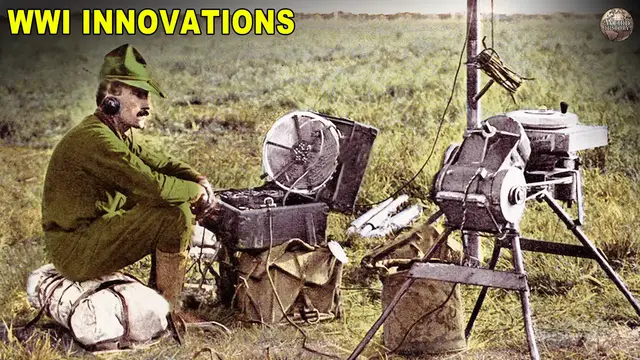
unrecognizable without smartphones. And modern smartphones, as well as wireless handsets, owe a lot to the technological innovations of World War I. However, back then
3:20
wireless did not necessarily mean portable. In 1916, wireless communication sets for airplanes
3:26
weighed 300 pounds. A smartphone the size of an NFL linebacker would make Pokemon Go slightly less
3:32
fun to play. Still, transmitter and receiver technology improved significantly during the
3:37
conflict, requiring far less power than before. Vegetarians have World War I and the creeping
3:43
effects of starvation to thank for soy sausages. Konrad Adenauer, the mayor of Cologne, Germany
3:49
and later the first German chancellor after World War II, made sausages out of soy to prevent the residents of his city from starving
3:56
during the British blockade of Germany. He called it Friedenswurst, or peace sausage
4:02
which is actually pretty good branding. Who wouldn't want a peace whopper with cheese? Oddly enough, Adenauer could only get the soy sausage patented in Britain
4:10
Germany wouldn't let him patent it because it was meatless. Does their evil know no bounds
4:15
Believe it or not, the wildly popular 21st century exercise routine known as Pilates was developed during World War I
4:23
The man behind the fitness craze known as Pilates, German boxer and bodybuilder Josef Hubertus Pilates
4:29
developed his method while in a British internment camp during the Great War
4:34
Joey Pilates, as we'd like to imagine he called himself, used springs and straps from the beds to do basic resistance-based training
4:41
which he later developed into the spring-based equipment used in Pilates today
4:45
After World War I, Pilates returned to Germany for a few years
4:49
and further developed his exercise regime before moving to New York in 1925
4:53
and opening up his first body contrology studio with his wife, Clara
4:57
The rest, as they say, is physical fitness history. World War I didn't just change technology
5:06
It also had a marked effect on the public's attitude toward romanticized depictions of war
5:11
due to the unprecedented devastation and loss of life. Jay Winter, a professor of history at Yale
5:16
argues that World War I is the conflict that discredited the concept of glory
5:21
and challenged the idea that it was noble to perish for one's country as an old lie
5:26
Winters claims that the propaganda literature and painting of war was cleaned away by artists and poets following World War I
5:32
because millions of men slaughtered deserved more than elevated prose. They deserved the unadulterated truth
5:39
Winters also notes that soldiers writing popular memoirs helped expose the realities of World War I to millions back home
5:46
It was an early precursor to the response many American citizens would have to the Vietnam War decades later, which
5:52
among many other things led directly to the Rambo franchise So in a way we have the Great War to thank for Rambo as well and to a lesser extent missing in action
6:03
Post-traumatic stress disorder, also known as PTSD, wasn't formally recognized by medicine until 1980
6:10
However, during World War I and its aftermath, doctors began to understand and diagnose
6:15
the psychological impacts of conflict in a new way, which laid the groundwork for our current understanding
6:20
Initially, some battlefield medics thought the physical impact of explosions caused the war neurosis, or shell shock, so many soldiers
6:28
were experiencing. But when tens of thousands of World War I-era soldiers kept experiencing these
6:33
symptoms in the safe confines of their homes, scientists and doctors began looking for deeper
6:38
answers. Thanks largely to the efforts of those doctors and scientists, we now have a better
6:42
understanding of PTSD and the emotional stressors that can cause it. Prior to World War I, the U.S
6:51
was primarily a debtor country. But World War I changed that in a big way
6:56
The US emerged from the Great War as net creditors, owed somewhere in the neighborhood of $10 billion
7:02
For the record, that's roughly equivalent to $190 billion today. That's not as much as Elon Musk's fortune
7:09
but it's still a lot of money. This shift in financial circumstances
7:12
later led to New York being considered the de facto financial capital of the world
7:17
a spot previously held by London. According to Hugh Rockoff, A professor at Rutgers University and a research associate at the National Bureau of Economic
7:25
Research, World War I taught the federal government how to play an important positive
7:29
role in the economy, a lesson to put to good use in the Great Depression. The United States wasn't the only entity to make bank on the Great War
7:37
Before World War I, British Petroleum was known as Anglo-Persian Oil Company, and at
7:42
the time, the company wasn't very successful. In fact, had Winston Churchill not decided to build faster warships that ran on oil instead
7:49
of coal, BP may have gone bankrupt. Instead, thanks largely to the World War I effort
7:54
the oil industry flourished. Oil became incredibly important to keeping a newly
7:58
mechanized style of warfare going, and protecting oil supplies became a large part of the strategy
8:03
of warfare. Fighting in the trenches led to many soldiers needing reconstructive facial surgery
8:11
using skin grafts. So-called broken faces even had a union to support them. The Union des
8:17
blessé de la face et de la tête, or the association of the wounded to the face and the head
8:23
That sounds like a pretty badass fight club. Advances made while working on the broken faces led to later revolutions in the fields of oral
8:31
maxillofacial, and plastic surgery. Have you ever wondered why surgeons almost always wear blue scrubs
8:37
It's not because they look cool on primetime melodramas, although they do look cool
8:41
The idea was actually the brainchild of French physician Pranel Leriche during World War I
8:47
LaRiche had the idea to differentiate aseptic clothes and sheets from potentially bacteria items while volunteering with the French army in August of 1914 The idea caught on and surgeons today still sport the blue scrubs although green scrubs also went into use in the 1960s
9:04
You need a little variety in the OR. LaRiche turned out to be even more right than he knew
9:09
Later scientists discovered that looking at blue or green refreshes a doctor's vision of red things
9:14
like the bloody innards of a patient in surgery. So bonus. Technology has always been an important part of waging war
9:25
Just ask Cobra Commander. But it was during World War I that much of the tech we think of as modern became essential
9:32
Submarines, aerial bombardment, armored tanks, toxic gas attacks, barbed wire. All of these things were either invented or revolutionized during the Great War
9:42
It was also the first time technology was such an overwhelmingly destructive force
9:47
with poison gas alone capable of wiping out thousands at a time
9:51
For example, the Germans had so-called Blue Cross shields containing diphenylchloroarcene, which made victims sneeze violently
9:59
Weaponized sneezing powder might sound like a Little League prank, but the stuff was reportedly horrible and could also induce headaches, salivation, and vomiting
10:08
If you saw 2014's The Imitation Game, then you know how crucial code-breaking can be in warfare
10:14
That movie was set in World War II, but the British first developed their knack for code
10:18
breaking during World War I, particularly with encrypted German radio transmissions. These advancements later led to now-famous intelligence-gathering operations such as
10:28
MI8, GCHQ, and the NSA in the U.S. The most famous bit of code breaking during World War I was the so-called Zimmermann telegram
10:38
German Foreign Minister Arthur Zimmermann received an encrypted telegram describing plans to attack US shipping lanes to the UK
10:45
The telegram also mentioned Germany's desire to ally with Mexico and have the Mexican army attack US territory
10:51
This decoded telegram led the US to declare war on Germany in April of 1917
10:57
The Great War marked the first time the modern flamethrower was used on the battlefield
11:02
easily one of the most bat-s*** terrifying weapons of 20th century warfare
11:06
The Germans used flamethrowers in more than 300 battles, flushing enemies out of trenches and either burning them
11:12
alive or scarring them for life. The Flamenwerfer design proved so effective that the British and
11:18
the French started implementing them. Their use was limited, however. The fuel only lasted about
11:22
two minutes, and the weapon's range was limited to 20 yards. World War I also saw the early stages
11:28
of aircraft carriers. British squadron commander Edwin Dunning became the first person to ever land
11:33
a plane on a moving ship. He landed on the HMS Furious, a 786-foot-long battlecruiser
11:39
on August 2, 1917. It was a triumphant moment, but it wouldn't last
11:45
Five days later, Dunning attempted another landing, but his engine choked and his plane crashed
11:49
off the starboard bow, killing him. Maybe things would have gone better had the HMS Furious had a sister ship, the HMS Fast
#People & Society