Up next in 10



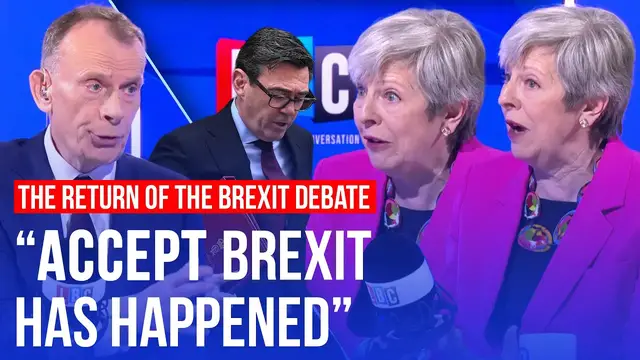
Theresa May has warned of "years of negotiations and uncertainty" if Andy Burnham tries to rejoin the EU.
The former Prime Minister told Tonight with Andrew Marr that attempting to reverse Brexit would undermine people's faith in democracy.
Last week, Burnham secured a "reset deal" with Brussels, focused on food and migration.
When probed by Marr on the PM's claim that the single thing he can do to get growth back most effectively is to reverse Brexit and rejoin the EU.
She answered: "What he's going to end up with is years of negotiation, years of uncertainty for business, businesses not wanting to invest in the UK because of that uncertainty, and government mired in those negotiations.
"More than any other former prime minister, I lived through a significant period of negotiation with the European Union. I saw what it did in Parliament, the rancour that came and of course there were deep divisions in our society and in our country.
She reiterated that she doesn't think "we should be bringing that back".
"I think we should be saying that we did Brexit, we voted for it, we did it. Let's actually look to the future and not try to recreate the past."
Listen to the full show on the all-new LBC App: https://app.af.lbc.co.uk/btnc/thenewlbcapp
#andrewmarr #ukpolitics #LBC
LBC is the home of live debate around news and current affairs in the UK.
Join in the conversation and listen at https://www.lbc.co.uk/
Sign up to LBC's weekly newsletter here: https://l-bc.co/signup
Show More Show Less View Video Transcript
0:00
Nobody knows what rejoining would mean
0:03
My message to Andy Burnham is very simple. It is actually, you know, let's accept that Brexit happened
0:11
We need to move on from that. What you need to be doing is saying
0:15
what can government do that is going to help business to create the wealth, create the growth
0:20
that will provide the jobs for young people, will ensure that they have a better future
0:24
I am particularly concerned about the evidence about young people's lack of trust in democracy
0:31
I mean, the speech I'm giving is part of a series that Westminster Abbey Institute has been doing
0:36
on the long story of democracy. And I think those of us who believe in democracy
0:41
who believe absolutely in the right of people, the necessity for people to be able to be free
0:46
to be able to decide who governs them. Actually, when you look at young people's views
0:51
we have real cause for concern. It's remarkable that we have to be having this conversation
0:56
after all this time. I mean, you cite many things, including the rise of AI
1:00
and the lack of economic growth in many Western countries as being behind it
1:05
But do you think this is a particular problem this autumn? Well, I think this has been growing
1:11
in terms of young people's attitudes. And I think, and we see it across the world
1:15
It's not just in the UK. We see it in the United States. We see it in parts of the European continent as well
1:21
I think that what lies behind this is a failure of governments to deliver for young people
1:26
I think that is significantly about economic growth. And I think as time goes on and as young people fail to see the opportunity to have a better life than their parents
1:38
obviously we have a particular issue in the UK with a number of young people who are not in education, employment or training
1:45
And those young people looking ahead, they want to see a brighter future
1:50
And it's important that government delivers the growth for them that will give that brighter future
1:55
I thought, looking ahead at the kinds of things you're saying, there are some areas where you actually rather agree with Andy Burnham
2:01
You agree about politicians having to offer some sense of optimism about the future
2:07
You agree with caveats about devolution. And you're very interested. You agree, I think, about bits of the ysis of what went wrong in the 20th century, late 20th century, with industrial Britain and lots of people feeling that they had been left behind, widening inequality and the rest of it
2:25
It is right that a lot of people have felt left behind, that the jobs that they had traditionally gone to were no longer there
2:35
But, of course, what we've seen throughout history is that what happens with times like the agricultural revolution, the industrial revolution, actually other jobs come along
2:44
But there's a lag. And that's one of the issues. But what I don't agree with Andy Burnham about is how growth can be developed, because growth is not about governments
2:55
In the sense, I used the phrase earlier, governments need to ensure this growth. But actually, it's the private sector that delivers growth
3:01
Government has to give the right environment for that growth for the private sector, for businesses to be able to provide jobs
3:08
And sadly, the Labour government has not done that. What they've done is put extra burdens on business
3:14
Things like the national insurance increase, which mean that businesses are going to improve
3:18
If you make it more expensive for a business to employ somebody, they're going to employ fewer people
3:23
Now, he would say the single thing I can do to get growth back most effectively is to reverse Brexit
3:30
But you don't agree. No, because actually, what if he goes full out for wanting to rejoin the European Union
3:37
What he going to end up with is years of negotiation years of uncertainty for business businesses not wanting to invest in the UK because of that uncertainty and government
3:49
mired in those negotiations. More than any other former prime minister, I lived through a significant period of negotiation
3:58
with the European Union. I saw what it did in Parliament, the rancour that came, the deep divisions we saw in Parliament
4:06
and, of course, there were deep divisions in our society and in our country
4:10
Now, I don't think we should be bringing that back. I think we should be saying that we did Brexit, we voted for it, we did it
4:17
Let's actually look to the future and not try to recreate the past
4:22
Would attempting to reverse Brexit undermine people's faith in democracy, in your view
4:27
Well, I think it would because people have to be able to trust that when they're asked an opinion
4:32
that actually the government, the people in charge, are going to listen to that
4:37
So people were asked, should we stay in the European Union or should we leave the European Union
4:42
And yes, the margin was close, but it was decisive. More than 50% of people said we should leave
4:48
And I think if we now say to them, well, in a sense, which is what I think the governments and Andy Burnham
4:53
are sort of thinking about doing, patting them on the head and said, well, you know you voted that way
4:58
Actually, that was the wrong answer. So let's have another go. Let's come back at it and see if you can come up with what we, the politicians, think is the right answer
5:07
And I think that would increase people's lack of trust and lack of faith in democracy
5:12
Do you think it would sort of corrode people's belief in the entire system
5:17
Well, I worry that every time there is something that increases people's lack of trust in democracy, it starts to erode the system
5:25
and this is why the polling evidence that young people, as they look at government's failure to deliver for them
5:32
are increasingly saying they don't want that democratic form of government. I mean, the other way of looking at this, I suppose, Mrs May
5:40
is that there has been a big change in public opinion on Brexit
5:44
I mean, quite large majorities now think it hasn't worked, it's been a mistake
5:48
and even if they voted for it, they didn't necessarily vote for the version
5:53
that eventually went through Parliament. Well, obviously, there's polls and polls tend to show different things on this. But what I would say is that nobody knows what the rejoining that Andy Burnham thinks has talked about negotiating would mean
6:10
and there's an important issue. It's not just about saying, well, we came out at this point
6:16
so we're going back in at the same point. Going back in would be at a price
6:21
What would people actually be willing to accept that price? But there's another important question which is
6:27
what is the EU that the UK in that circumstance would be looking to rejoin
6:33
Because the EU has changed and will change in the future. Now, you said a moment ago that you had more experience
6:40
of all of this than any other previous prime minister. And that for sure is right
6:44
I can remember sitting in the House of Commons late, night after night after night
6:48
watching the kind of wretched process of the original debates going around
6:52
What would this do, going back in, what would it do to Andy Burnham's administration
6:57
What would be your, as it were, candid and human advice to him as another prime minister
7:01
Well, I would say that what it would do is set up huge, increased divisions
7:09
and potentially, and I'm sure there will be people around the cabinet table today
7:13
some of whom will agree with him that we should be looking to rejoin and some of whom won't agree with him
7:18
Now I had a cabinet I deliberately put a cabinet together when I became prime minister in 2016 after the referendum vote which had both those who campaigned to remain and those who campaigned to leave
7:31
Because I thought it was important, the vote was quite close, it was important to reflect both those views
7:36
Because I wanted to do a Brexit that delivered Brexit, but did it recognising the concerns of the Remainers
7:42
But once you had gone, Boris Johnson effectively culled that cabinet. Now, I had David Lidington, who was in many ways your number two during a lot of that period, sitting in that chair last week
7:54
And he was very clear that people like him don't seem to be welcome in the Conservative Party any longer
8:01
Does that worry you? I would say that people like David are welcome in the Conservative Party today
8:06
And the Conservative Party, I believe Kemi is doing a very good job as leader
8:10
I think she's rebuilding the party. And what we're seeing is good people coming forward interested in being candidates for the Conservative Party
8:19
And that's a sign of people's feeling that the party is coming back
8:24
You are very clear that if we try to return to the EU, one of the things that will do is revive populism
8:33
What do you mean by populism? Well, by populism, I mean those who in politics today, and we see it in the UK, we see it in other countries as well
8:42
claim to be the ones with all the answers, the easy answers
8:46
I have to say there are no easy answers in government. Government, you have to work hard at government
8:51
and the issues you're dealing with are complex. But people who also try to create a sense of an us and them in society
8:58
and divide it between the real people who they claim to be the only voice of
9:03
and this elite that is in government. And you're concerned that this is partly about skin colour
9:10
and ethnicity and background as well these days? I'm afraid all too often what we see
9:16
when people are talking about the real people is that they're defining that in relation to ethnicity
9:22
or religion or culture or race. We need to unite our country and not divide it
9:29
And what the populists want to do is to divide. So, very straightforward question
9:34
Would you be alarmed or scared if reform won the next election
9:40
I would be alarmed. But I'm happy to say that I don't think reform will win the next election
9:46
But I'm sorry to harp on about this. If we try to return to the EU, does that give them the petrol, the rocket fuel that they require
9:54
Well, I think it gives an opportunity for those who campaigned for leave first time round
9:59
to come back and create, as we see they're trying to do, a campaign around that
10:06
That would only increase the divisions in our society. And my message to Andy Burnham is very simple
10:14
It is actually, you know, let's accept that Brexit happened. We need to move on from that
10:20
What you need to be doing is saying, what can government do that is going to help business to create the wealth
10:26
create the growth that will provide the jobs for young people, will ensure that they have a better future
10:31
Yeah. Now, today he is saying that he has got an agreement with the EU that helps a lot of people from food producers to young people wanting to move around to the car industry and so on
10:43
But it's unclear because the EU are also trying to negotiate a deal about the cost for EU students attending British universities
10:51
And it's very, very hard for outsiders to work out whether we have got a deal that's been agreed or whether we haven't got a deal that's been agreed
10:59
You listen to these things. You watch them all the time. What do you think? Well I don know any more than you do Andrew what the details of this deal are because we haven seen all those details All I would say is my experience is that the EU is usually very clear that nothing is agreed
11:15
until everything is agreed. So it's on balance likely that we don't actually have the agreement
11:19
we thought we did. Well, it's on balance likely that the EU still wants an extra element of this
11:25
which is the student tuition fees. And therefore, they're looking at this as a whole package
11:30
not as something that's been agreed. But I don't know because I don't know the details
11:35
All I can say is what my experience was. A lot of your ysis about democracy
11:41
is about the international situation and the pressures on countries the size of Britain's, as it were
11:47
When we first started conversing, I think it was the first bit of the Donald Trump experience
11:52
if I can put it like that. We've now had a lot more Donald Trump. And we're seeing Donald Trump today very close to Putin
11:57
and really not giving Ukraine the kind of backing it deserves. Now that you're out of office, can you give me your candid view about Donald Trump 2.0
12:07
Well, Donald Trump is an American president like no other. I think it is fair to say
12:13
That's fair to say, yes. But I think what worries me is when I see the pictures from China
12:18
of President Trump with President Putin and President Xi, this sets the example to the world of a world of spheres of influence
12:27
A world of the strong men, if you like, that some of that polling evidence suggests that young people today would like to see
12:35
But that's a world in which the individual freedoms of people can so easily be eroded
12:43
I believe in democracy because I believe in the freedom of the individual to be able to make these decisions and choose who governs them
12:50
And in terms of the freedom of British voters, we have there three pretty dictatorial figures, none of whom wish us particularly well at the moment
13:00
That is why so many people also say that it's a reason to go back towards the EU, that we are too small in this world of great big competing and aggressive interests by ourselves
13:10
Well, I think if we look at the history of the UK, the UK has always been able to, in the words of Douglas Hurd, who's said, been able to punch above its weight
13:21
And I think that's what I would like to see is the government actually asking the question about how we can come together in new ways with countries around the globe, not just looking at spending 10 years or more potentially negotiating with the European Union, creating rancour in Parliament, division in our society and actually to what end
13:43
Because what is the EU going to be like at the end of that process? And we can't. I think it's fair to say that when you were in Number 10, you were very conscious of the dignity of the office and the dignity of Number 10
13:55
So I wonder whether you had any thoughts about this current row about influencers parading up and down the steps and dancing around in Number 10 and then saying pretty rude things outside Number 10 as well
14:05
Well, I think what was said outside Number 10 was disgusting. But I don't have a problem with Number 10 inviting influence in to there
14:13
Number 10 has receptions, invites people from different backgrounds in and is in order to talk to them
14:22
And but what I do say is two sides of this. Number 10 has to itself be very clear about the people it's inviting in, do the due diligence
14:31
But also people going into number 10 should respect it. This is an important building because it is somewhere where and foreign leaders, you know
14:41
they do like going in through that black door. They understand the importance of the building
14:46
And so those who are invited into it, be they influencers or journalists or others
14:51
should all respect that
news