Up next in 10



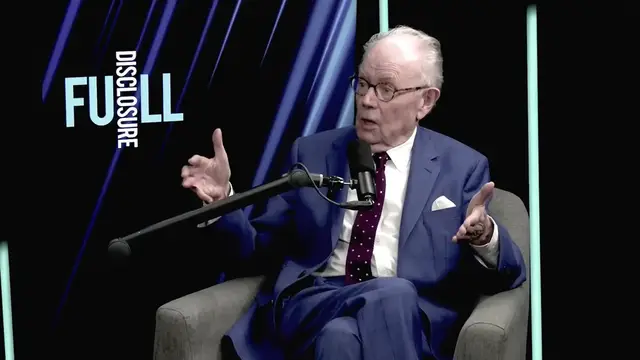
00:00:45 - The Whitehall family mythology 00:05:05 - Family secrets and childhood memories 00:11:53 - Love, marriage and the wonderful Hilary Whitehall 00:13:09 - Boarding school life and finding his place at Ampleforth 00:22:19 - “Why have you put bacon in your jewellry box?” 00:30:06 - Journalism, teaching and early career misadventures 00:48:16 - Becoming a theatrical agent 00:58:41 Jack Whitehall, fame and The Wittering Whitehall’s 01:00:13 Jack and Michael Whitehall’s father-son bond Before he became known to millions as Jack Whitehall’s gloriously dry and impeccably mannered father, Michael Whitehall had already lived several lives: socially ambitious schoolboy, drifting young journalist, unlikely prep schoolteacher, theatrical agent and producer to some of the biggest names in British entertainment. In this episode of Full Disclosure, James O’Brien sits down with Michael to uncover the family story behind the public persona- a mother determined to climb the social ladder, a childhood shaped by love, embarrassment and aspiration, and the “disputable” mythology that surrounded the Whitehall name. Listen to The Wittering Whitehall’s podcast on Global Player Find out more about Shark Infested Waters by Michael Whitehall at https://www.amazon.co.uk/Shark-Infested-Waters-Michael-Whitehall/dp/185725225X Listen to the full show on the all-new LBC App: https://app.af.lbc.co.uk/btnc/thenewlbcapp #jamesobrien #michaelwhitehall #jackwhitehall #thewitteringwhitehalls #LBC LBC is the home of live debate around news and current affairs in the UK. Join in the conversation and listen at https://www.lbc.co.uk/ Sign up to LBC’s weekly newsletter here: https://l-bc.co/signup
Show More Show Less View Video Transcript
0:00
This is a Global Player original podcast
0:05
It was an aspiration and then it was a demand. The Whitehall family mythology is disputable
0:11
It's really a love story. You're the father-son dynamic. I have been so lucky
0:16
And it was the real you. I like this. Jack had to hide in the van
0:22
Was she loving? She was always upset with me for making a fool of her in public
0:29
Can you believe that? He used to love getting into a frock and going off to a football match
0:35
My mother would have none of that. No, no, no. Hello and welcome to Full Disclosure, a podcast project conceived entirely to let me spend more time with interesting people than I would ever get on the radio show
0:52
I've been particularly looking forward to this one. Michael Whitehall, welcome. Thank you
0:57
Bon viveur. producer, talent agent, writer, prep school teacher. I had no idea how much you'd covered in your 20s
1:06
until I read your memoir, Shark Infested Waters, The Adventures of a Theatrical Agent
1:12
which is currently enjoying a reissue. But obviously one of the things I'm most interested in
1:17
is the fact, I was trying to work it out, I think you're the third guest on Full Disclosure
1:21
who went to the same school that I went to. Oh, Ampleforth
1:26
Yes. so William de Rimpel Rupert Everett and now you so we'll probably talk about that a little bit more
1:37
than is helpful I should say as you mentioned Rupert that I did leave
1:43
of my own accord when I left Hampleville and I gather he didn't
1:49
neither of us did you and William de Rimpel did so it's too old
1:52
it's too old but we'll begin at the very beginning because you paint a picture of your mum
2:00
and given that Patricia Hodge has written one of the introductions to the book, there is a touch of the Hyacinth bouquets to your mum
2:09
Very, absolutely very. I mean, the arguments that went on within the Whitehall family
2:18
before Ampleforth became a reality, because my mother said to my grandfather, who had all the money
2:29
which she had made in the rag trade, so we were a fairly, I think you could call us lower middle class, probably
2:39
My mother would have none of that. No, no, no. We were going to ample fall
2:44
She had aspirations. Oh, I mean, yes, it was an aspiration, and then it was a demand that that is where my mother..
2:54
The first time I saw my mother really shattered and shocked was when my grandfather said
3:03
I think we should send the boys, the boys being me and my brother Barry
3:08
I think we should send the boys to the whip gift in Croydon
3:14
And my mother... She sent Croydon? and back. There is no way
3:22
that Michael and Barry, my brother, are going to Crichton. No, no
3:27
Your dad had gone there after a term at Cranley, I think
3:31
Well, I'm not sure about that. Oh, okay. I'm not sure. This is an early discovery
3:36
in the book, isn't it? That the Whitehall family mythology is disputable
3:42
Yes. The family thing is a bit dodgy. Doesn't Totally add up
3:49
But what did add up was that my mother had these aspirations for us to be far grander than ever turned out to be
4:00
Where did they come from? My mother came from her parents. They moved around a bit, but let's say Glasgow. Okay. Okay
4:14
So the delusions or the ambitions of Granger, they weren't, not everybody had them from that back
4:23
Your mum had a particular. No, it was just her. She stood out alone
4:28
She went to the Glasgow School of Art. Right. That was where she started getting the aspirations
4:35
She went to a very minor school. Yes. And then she went, because she was a good artist
4:40
a good normal artist, not a high-end artist. And she then got aspirations and said, you know, the boys and all that
4:52
I mean, I could go through more detail of that period with my grandfather, for instance
5:00
her father, who was a cross-dresser. Yes. But this is established. This isn't disputed
5:07
No, no. This is Arthur. That is all Arthur. Yes. Arthur Kelland
5:12
And he used to love getting into a frock and going off to, you know, like a football match
5:20
Or the school run, I think. School run. Traumatically. Yes. For your mum
5:24
Yeah. You wouldn't want to be picked up by your dad in a frock. No. And that's what happened
5:29
So she carried quite a lot. She carried a lot. There was a mixture of sort of guilt
5:35
And I don't know. She was never very comfortable, Nora. She was always awkward
5:42
Yes. And she was always, particularly with me, because my brother was a very quiet person
5:49
very, very upset with me for making a fool of her in public
5:57
which is what I got all the time from her. But that's what she'd been defined by, I suppose
6:02
by embarrassment regarding Arthur. And so she thought that the more respectable she could become
6:08
perhaps the safer she would feel. Absolutely, absolutely. And then along came you
6:13
And then along came me, making a fool of her in public. My brother, Barry, he didn't make a fool of her in public
6:20
He was very quiet and normal, and I was completely out of control
6:26
Was she loving? Very, very loving. I was very close to her
6:33
My father died when I was quite young, and it was in the days when everybody was smoking
6:41
and my father smoked almost all day and all night and finally got emphysema and passed away sadly
6:54
still in his mid-late 50s. But those were the days when a lot of smoking took place
7:04
Everybody was smoking. I used to sit in the back of the car and my father would drive the car
7:10
with a cigarette in his mouth my mother would have the odd puff
7:14
and all the smoke would come into the back of the car
7:18
where I'd be sitting with Barry so I'm amazed that we never got emphysema
7:23
when we were about six or seven we didn what other memories do you have of your dad very sweet very kind but had the misfortune of having a brother who was my uncle cyril
7:40
who was a very sharp clever businessman and they were in the rag trade all of them were in the
7:47
It was all rag trade. Uncle Cyril was, Jack was, Jack's parents, Arthur and the other one, they were, it was all rag trade
8:01
And they were all making money out of ladies' coats and suits and furriers and all that kind of world, which, I mean, I wasn't, I thought it was all very peculiar, to be quite honest
8:16
but that's where the money came from was them and your dad did that as well for a bit
8:22
my dad did that but he kept getting the sack right, so he wasn't as good as Cyril
8:27
he wasn't very good at the rag trade then he worked for a bit for Marks and Spencers
8:31
and then he got the sack from that and then he worked
8:35
he was a partner in the John Lewis partnership got the sack from that
8:41
so he was he just sort of couldn't really cope Which wasn't really what Nora wanted, was it
8:48
No. I mean, I'm going to check things with you, because not only is the Whitehall family mythology disputed
8:54
but also the Internet archives from which we research things like this
8:58
are not exactly infallible either. But did she sometimes perhaps convey the idea that he was a retired naval officer
9:05
rather than working in John Lewis? She did. This was when we moved up a rung from living in Streatham and Penj
9:19
It's a great word. We then bought a house in, my father bought a house in Beckenham
9:25
This is Fox Grove Avenue. Exactly. And the thing about Beckenham is that it was in Kent
9:31
It was in Kent by yards rather than miles. But enough. It helped me a lot later on when I got to Ampleforth
9:41
Because I could say to these very, very posh boys at Ampleforth
9:47
who said to me, oh, Whitehall, where do you live? And I said, actually, I live in Kent
9:53
And they said, oh, I love Kent. Little did they know that you could get to Penj from our house
10:01
in about two, maybe three minutes. so but it was useful but the naval officer
10:11
thing came because my mother thought she'd gone up a rung by being at 43
10:17
Foxgrove Avenue, Beckenham and she wanted to show off a bit to the neighbours
10:22
and she got very friendly with a very posh man up the road and he said
10:29
to Nora, I took her off you know, it came completely out of the blue. He just
10:35
said to her, we never see very much of your husband. And
10:40
Nora said, oh, no, because he has to get up early in the morning, which he had
10:49
because he drove a van with furs in the back of the van
10:55
And Nora didn't want the van to appear in Fox Grove Avenue for the neighbour's
11:01
benefit. So So he had to get up early in the morning and get in the van and move it off and then go off back to work in a van
11:11
So she invented this thing that he was the reason we never see Mr. Whitehall is because he's a retired naval officer, but he still does a lot of work in the Navy
11:24
so he goes off for sometimes weeks on end. And sometimes Jack had to hide in the van
11:33
which wasn't allowed in Foxgrove Avenue, but it was allowed in the other bit of the road
11:40
which was called V Avenue. Got it. That was the slightly posher bit
11:45
And he would sit in that high-backed van, sometimes for hours on end
11:53
So he was indulgent of her eccentricities then? Completely. Which is a loving thing to do, I think
11:59
They loved each other to death. There's an awful lot of love in your life, Michael, isn't there
12:04
It occurred to me, I've had the pleasure of meeting Hilary, who people will know, of course, from the Whittering Whitehalls
12:09
and obviously with your children, most obviously, Jack, because you've made television programmes with him
12:15
But a lot of people who go to school like ours, and I'm similarly blessed to you
12:19
struggle with love and struggle with relationships. you've been very blessed in that department
12:24
Yes, I have. I mean, I've been very lucky. I mean, hugely lucky with Hillary, of course
12:31
And I mean, we've just had our wedding anniversary, literally, the day before yesterday
12:38
which I think is, was it 40 years? Something like that. And I've just had my 86th birthday
12:46
Good Lord, yes. Can you believe that? But this love obviously begins with your mum, doesn't it
12:54
This idea of you being a very, I think, a very secure child
12:59
despite some of the strangeness around you and some of your mum's peculiarities
13:03
It was always very warm, I sense. Yes, it was. So how much of a wrench was it then to go away to school
13:13
Did Barry go before or after you? Barry went before me. He was three years older than me
13:19
He went first. I followed him. It was one of those weird things also when you go to boarding school
13:28
well, not even boarding school, but that you don't speak to your younger brother
13:36
Brutal, actually. The younger brother wants to speak to his older brother
13:41
but the older brother does not speak to the younger brother because it's a bit weird
13:47
Yes. It's a bit weird. And I used to say to Barry..
13:51
Well, you don't exist if you're three years below somebody else. You said to make toast or something like that
13:56
Exactly. And I used to say to Barry, why do you never talk to me at school
14:05
I mean, we're a boarding school. We've gone off to a boarding school on a train
14:09
from King's Cross up to Bjork. And we've got off the thing
14:15
and I'm stuck up there for all these weeks and weeks and months sometimes
14:21
And Barry walks along the corridor and I'm all sort of, oh, Barry's here, and I'm sort of waving at him
14:28
and he walks straight past me. And I say, Barry, Barry. And then he says to me at the weekend
14:35
Michael, could you not do that stuff? I said, what stuff? Well, that's sort of waving at me
14:41
And I said, why? and he said, it's just very uncool for me
14:46
So would you mind not doing that? And I said, well, can we talk
14:49
Oh, definitely not talk. And so I never spoke to him. I would never ever speak to Barry during term time How old would you have been when you started at Gilling
15:06
You'd have been... Nine. Nine? Yes. So Barry was ahead of you by three years
15:16
and so you're sort of nine years old when you turn up there in short trousers. Yes
15:21
But you had a sense that you had a capacity for making friends, So, or were you lonely in those first time
15:28
I think I was a bit short of friends because most of the boys who were in my year were quite different from me in terms of they were quite sporty
15:44
Yes. And I have always been a complete non-starter in sport of any kind
15:51
Right. completely unable to do things that people would look at me with sorrow
15:57
but surely that cricket bat you see how you put it like that
16:04
when you're defending and I say I don't understand how I do that
16:09
it was the language of sport you couldn't speak so that would be quite a big deal
16:16
but I did see an opening and having seen this opening, I then achieved
16:22
it. What I saw was, okay I can't do the sport but I can do the camaraderie
16:31
by being there with in the cricket season I can be there with
16:40
the first 11 cricket team when we were away to some other school
16:46
because I could be scorer because the One thing I could do was handwriting
16:53
I was obsessed with having italic handwriting, which all the monks, as you all remember, wrote beautiful
17:02
So that I really concentrated on, and it worked, and I still have
17:08
I have to say, well, I say it myself, very good italic handwriting
17:13
So that got me off to all the cricket matches because I'm a scorer
17:20
I was the first 11 cricket team scorer. And that gets you on the minibus
17:28
metaphorically and physically. Exactly. It gets you on the minibus. And as a result of that
17:34
the teams of rugby players, which I obviously wouldn't know anywhere near the rugby pitch
17:42
but they did quite like Whitehall because he was always quite jokey and cheers, everyone
17:48
I then became the first 15 orange man. So my job would be, before the away match
18:00
the boys playing the rugby would all be getting ready with their kit and everything
18:05
and the bus would be there ready to take us to Sedbar
18:09
or one of those sort of very butch. Quakes Wakefield. Yes. Giggleswick
18:16
Giggleswick, yes. and so I would do I'd be in charge of the oranges
18:23
so the lady in the hags who used to call them which was very rude ladies
18:32
would come through and give me oranges I'd slice them up and have them all ready
18:39
and I'd put a cover over them and then I'd get on the bus
18:43
with the oranges and then I would josh with them on the bus
18:49
Then we'd get to Giggleswick and the match would start and then at half-time, whistle blows
18:57
and on I would come with the oranges. And everybody would go
19:02
oh, thanks, Whitehall. And then the man would blow the whistle and say
19:08
get that little off there. Off we're carrying on and blow the whistle again
19:13
and that's all I had to do, come on at half time with oranges
19:18
But I got the trip and I got a sort of camaraderie
19:23
and I just became this sort of weird character that was always there
19:29
Also a sort of facilitator, both as scorer and as the orange boy
19:37
If I was an amateur psychologist, there are possible early signs here of being an agent
19:42
because you want to be part of it, but you don't need to be prominent
19:47
or you don't need to be at the forefront. Yes, yes. Well, I haven't thought of that connection
19:54
but you are correct. But you weren't sitting there being all resentful
19:59
about not being the prop or not being the opening batsman. You were enjoying your role
20:05
Yes. And it was authentic. It was the real you because I'm not sensing that you were sort of
20:09
strapping on some sort of survival personality in order to avoid getting beaten up
20:13
You just thought, I think I'd have more fun if I was on that bus. So what can I do to get on it
20:17
And you did the thing that was open. It was the real you. I like this
20:22
And I never got bullied. No. I never got bullied. I had friends who got bullied
20:31
There was my best friend at Ampleforth. I mean, this is moving on from Gilling into Ampleforth
20:40
was Piers Paul Reid, the writer of many... Just for people who hate public school at this point
20:48
I have to say, well, I, of course, was at school with his son, Albert. Just to confirm all the clichés
20:54
Yes. And we became, you know, great friends, and actually we are still great friends
21:03
We see each other quite a lot. but we were the two
21:09
I mean Pears have said to me many a time when we see him
21:13
he says you know here we are the weeds having another dinner
21:19
together the weeds because we were two weeds I mean there was Whitehall
21:25
the sort of funny weed and then there was Pears the sort of intellectual
21:31
because his father of course and of course his father was very, very different to mine
21:37
I mean, there was no Jack Whitehall with his van. Vans full of furs
21:45
No, bags full of furs. A grand family. That was Sir Herbert Reid
21:49
Yes, of course. And all that. Well, I mean, class kicked in, didn't it
21:53
And again, you don't seem to have inherited any of your mother's discomfort. Because an earlier friend, I think your best friend at Gilling
22:00
was a chap called Rothwell. That's right. And there's a nice story about when you turned up at his house
22:06
and you were the first down for breakfast. And the gulf between what you were used to in Kent
22:13
and what happened when you went to stay with the Rothwells is pretty stark
22:19
Well, Rothwell was one of my best friends, and he was a very sweet boy but much posher than me um and his pre his parents lived in a manor house Moor Bath Manor in Devon
22:35
And he asked me to come in the holidays and spend a few days with him, with his parents
22:43
And I said, oh, that'd be lovely. Oh, my mother, of course, then went into complete panic, you know
22:49
Oh, my God, what do we... Oh, you must find out, I mean, will they be dressing for dinner
22:53
Because it's her dream and her nightmare at the same time, isn't it
22:57
Yes, of course. And I said, I don't know. I mean, they live in a manor house, don't they
23:03
And I said, well, yes, they do. And she said, oh, God, I don't think I've got anything you can wear
23:09
We'd better go into town and get some. You know, there's so much panic about this period
23:17
Anyway, I'm finally off to Rothwald's Moorbarth Manor, train and then into the manor and have the first, I get there on a Saturday, have the Saturday, no, I get there on the Friday night and then on the Saturday morning, we get up and we're going out and about
23:40
but the first thing to do is to have breakfast. So I come down to the dining room of the manor, Major Rothwell
23:51
I was a bit disappointed that he was a major. I thought, I would have thought more Colonel maybe
23:57
Yes, yeah, reasonable. But he was only a major. And I got down into the dining room ahead of everyone else
24:05
and I thought, well, there's no food here. I'll just have a cup of tea
24:11
So I had a cup of tea and a piece of toast
24:16
And I would have thought, I thought a house like this, they'd come and there'd be a cook or something
24:23
A woman would come in with, you know, eggs and bacons and mushrooms
24:28
and omelets and all that. But there was no sign of any of that
24:32
So I finished my toast and marmalade and tea, at which point the doors flung open
24:38
and in came Major Rothwell. Morning, old boy. How are you doing
24:44
And I said, oh, I'm doing fine. Yes, thank you very much. No, really lovely to be here
24:49
and you have a lovely house. And he said, well, yes, oh, we've been here. You know, my grandfather
24:54
the poor, great-grandfather. So not eating anything, I said, toast to my maid
25:01
And I said, yes, I'm absolutely fine. Oh, because it's all over here
25:06
And he walked over to the side table where these silver dishes were
25:10
which I thought were sort of ornaments. And he lifted them up, and one had egg in it
25:16
and the other bacon. And he started putting all this food in his plate
25:21
And he said, Are you sure you won't change your mind, old boy? And, of course, I was committed
25:26
I'd had the toast and marmalade. I couldn't go back there. So off he went, and I felt stupid
25:34
And I thought I must remember that. And hungry, and hungry. And they're stupid and hungry
25:40
And, I mean, lots of other things happened in that weekend, but, I mean, this isn't a movie of the week period
25:47
No, of course. Well, it could be. It could be almost. So, yes. So then the return visit occurred
25:56
and Rothwell came to stay with us in Beckenham. And, again, I mean, Nora was even more of a stay, you know
26:04
because you would have thought that Rothwell was going to be coming with, you know
26:09
A retinue. A retinue. People. Anyway, so Rothwell arrives and dissolved to a similar situation in the morning
26:23
Rothwell comes down for breakfast, and it's all gone fine so far
26:28
Nora's been sort of fussing around and hoping I didn't say the wrong thing
26:32
And Jack, I think, had been sort of banned from the house almost because he might be common and say the wrong thing
26:41
Anyway, Jack comes down and looks across and sees this table with these silver dishes
26:50
And he looks at Nora and says, Nora, why have you put bacon in your jewelry box
26:57
And she said, what do you mean? well that's the book that thing is what you normally
27:03
put all your jewellery and your necklaces and everything in oh Jack don't be ridiculous
27:09
but it's got bacon in it what about in here she's got fried eggs in there
27:15
and saying Rothfell will you have a fried egg or I could give you a poached
27:20
one if you would prefer anyway that was classic Nora but you didn't inherit any of this
27:26
I mean, you must have... What was your accent like when you arrived at Gilling
27:31
Would you know? I can't remember. No. I don't... Because it couldn't have been very posh
27:37
I wouldn't have thought so. But I think it was probably a bit more out and about
27:43
Yes. Like that, rather than... It certainly wasn't like all the Corbally Sturtons
27:49
and all those very hooray. Right. So you're conscious of class, obviously, from a..
27:55
but you're not chippy, I don't think. I think you... Is this correct that you kind of realised
28:02
that you would need... If you couldn't speak the language of sport, you could speak the language of urbanity and charm
28:09
and that would be helpful to you, and therefore you kind of, from Nora's point of view
28:17
you moved up a few rungs, just in terms of your conduct and your manner
28:22
Yes. Oh, yes, definitely. Definitely Conduct and Manor, I would have picked it up off
28:31
just sort of being in this place with all these posh... Yes
28:37
Well, actually, they weren't all posh, of course. Well, this is the thing you don't realise at the time
28:41
The group I also got very close to were the Yorkshire ones
28:46
Right, OK, more local. My other best friend, their parents lived in Pontefract
28:51
Yes. But they owned a mill just outside Pontefract. There were a couple of mill over
28:58
When you were there, the same. There were always quite a lot of rich Yorkshire
29:03
Yes. It wasn't just all Hamilton, Diarympals and Corbeley Sturtons. There were one or two hard castles
29:12
And there were probably quite a few Whitehalls and O'Briens, but we didn't really have a tribe of our own
29:18
Because I love what you say about exhibition weekend. which is a sort of prize giving
29:24
And that would be, again, your mother's worst nightmare and best dream come true, to be in that world
29:31
and yet to be constantly conscious of saying the wrong thing or slipping up in that world
29:41
I think it explains why you have found it so easy throughout your life
29:45
to sort of move effortlessly through social milieu, comfortable with anybody, really
29:51
which you'd have to be, wouldn't you as an agent? I mean, you've got toffs on your books
29:57
but you've also got horny-handed sons of the soil. Yes, I would say yes, I think that is the case
30:06
It's a gift. What were you good at? I mean, were you good in class? What lessons were you good at
30:10
English and history was what I did. And I was very interested in history
30:16
Problem was that I was more interested in kind of modern history
30:21
And they didn't tend to teach that very much. Lots of Charlemagne, not so much
30:25
No, I mean, it was all, I mean, one of my great friends is a man called Neil Stacey, who was an actor of some quality
30:39
But he was very bright and he got a PhD in medieval history and all that sort of stuff and was going to be a don at Magdalen and then decided that he wanted to be an actor
30:54
so he turned down the job of the don and decided to be an actor and remained consistently out of
31:02
work from that day to this but he remains my best friend but he doesn't do very much in the way of
31:11
acting um and uh this is history's English you gloss over in in um shark infested waters the
31:18
fact that you were the editor of the school newspaper or the editor is that correct yes i
31:23
was you thought you'd make more of that i do when i write my memoir i'll make a much bigger fuss
31:28
about the fact that i edited a magazine during that period of my life but so that spoke to your
31:33
english enthusiasms and your probably your ability to flit about the place it was it wasn't
31:39
the official okay so it wasn't the ample fourth news it wasn't the ample fourth journal no which
31:44
It was all very boring. That was the grown-up one. You know, yes, with endless pictures of monks and their histories and all that sort of stuff
31:53
Mine was more private eye. OK. I mean, not anything like as good as private eye
32:00
Sure, but mischievous. And it was called The Scholar, and it was sort of a little bit under the counter, kind of
32:09
Not with news, but slightly... Yeah, I get it. I mean, irreverent
32:18
Yes, exactly that. And when you left Ampleforth, that was your first professional path, was journalism
32:25
It was. So you decided not to go to university. I think you very self-effacingly say because Hull was the only one that accepted you
32:32
It was. Hull was the only one. How did Nora take this? Nora presumably had ambitions
32:36
She didn't think I should go to Hull anyway. The university or just Hull
32:41
No, she felt Hull wasn't right. She was ideally Oxford. She wasn't even that sure about Cambridge
32:50
Have you ever been to Cambridge, darling? And I said, no, I haven't
32:55
She said, it's not very nice. So no university at all? So there was no university at all because I couldn't go to Hull
33:03
So I then had to get a job and I got a job on the universe newspaper, the Catholic, which was a Catholic weekly newspaper
33:16
And I got that purely based on the fact that I've been to Amplefall
33:21
I was going to say that would be quite a calling card. Yes, there was nothing else
33:25
and the other thing that I got on the universe is that my main job
33:33
on the universe was as their film critic because you know they thought
33:39
the magazine ought to have a proper film critic and they thought my qualifications
33:47
look very right to get that job so I became the film critic
33:54
of the universe and this was a new thing because the universe hadn't had one before
34:00
and the editor of the universe was a very strange man who I think
34:06
had been he hadn't been a monk but he'd been something sort of religious
34:11
and then had turned away from religion and now edited the universe
34:17
which nobody bought and the sales were terrible anyway so I'm now the film critic of the universe
34:27
and I meet the film editor of the universe who's very similar to the editor of the universe
34:37
so I've got two almost identical people telling me what to do
34:42
and what I was to do was review in as much detail as possible
34:49
any film that had anything to do with the Catholic Church. And I said, right
34:59
And is that serious? And he said, what do you mean? Of course it's serious
35:02
Yes, you're reviewing films that, you know, maybe a religious film, you know
35:11
or anything that is to do with, because our magazine is read by a lot of people
35:18
you know religious people so tricky that will be your yes yes can you see that not working i could
35:27
see some problems on the horizon and so i've started reviewing well they were nearly all
35:33
foreign yes because i was reviewing italian the film because it had a priest in it yes yes um and
35:41
reviewing them in English and having seen them in Italian a language which I didn't speak
35:50
yeah but apart from that it was a match made in heaven it was a perfect I didn't last
35:56
very long on the universe where were you living now where did you
36:00
I'm now living move back home yes I'm still in Beckenham because there is a massive advancement
36:08
on the horizon isn't there but we don't want to get ahead of ourselves
36:13
So from the universe where your journalism career floundered relatively early, it feels as if you're trying on professions now for a while
36:23
You had a sort of degree of luxury of being able to without worrying about penury or anything like that
36:30
Or were you worried about that? No, no, the money was all right. And my grandfather was coughing up
36:36
And so that was all fine. and my mother and father were very generous
36:41
I mean, I wasn't making an income, but I was being looked after
36:44
Right, this is what I sensed, is that you could, so you're looking around for a job, and I think we don't need to get the chronology right
36:51
but I was surprised that you had a crack at being a prep school teacher because this was usually kind of traumatised soldiers
36:56
that are much older than you, or people treading water waiting to move on to something else
37:02
How did that happen? Well, what happened is, because I kept getting the sack
37:07
from, I won't go through all the other jobs I did where I got the sack, but between getting the sack
37:18
I needed another job. I couldn't just be sacked and then start again
37:23
and then be sacked again I needed something that I could do sort of fairly permanently not for my life but just to keep me off the streets
37:35
And somebody said, have you ever thought of prep schools? And I said, prep schools
37:41
Oh, because you'd be a wonderful prep school teacher. What sort of, what are your A-levels like
37:48
I said, I've got, actually, I've got two, English and history I got at the A level
37:59
And then university? I said, no, no, I never went to university
38:04
So you've just got English and history, and then that's it. Yeah, yeah, that's all right
38:10
You'll be absolutely fine. You'll be absolutely fine. Get in touch with Gabbitus and Thring in Sackville Street
38:19
and go and see a man, Mr. Harvey, and he'll set you up for life
38:26
It was like a sort of agency. Yes, it was an agency, an educational agency
38:32
And it was evil in war. It was decline and fall. Yes, absolutely
38:37
It was really, truly decline and fall. The man in the office in Sackville Street, this little office, gave me an interview and said
38:53
so what were your subjects at school? And I said, English and history
38:59
And he said, yes, I probably won't get you a proper job
39:05
Perhaps you'll be a bit more of a slightly wider name. What about French
39:10
and I said, I don't really speak French. He said, that shouldn't get in the way
39:17
That should not get in the way. You don't need to speak French to teach it
39:23
And then he ran through all of it. Then games, what about games
39:28
I said, well, I'm not, you know, games was never my name. Oranges
39:34
Yes, I could do oranges. Anyway, I got this job at a school called Belmont School
39:46
home of St Mary near Dorking. And I went there as head of English and head of history
39:55
and also deputy head of games. And the man who ran the school, who was called Frank Sharples
40:05
was a sort of weird, freaky-looking man with a sort of bristling moustache who was mad. Yes
40:14
And his forehead used to go up a little bit as a vein
40:19
And when he got annoyed, and all the boys would say, Schuppels, his forehead's up
40:25
And there it was, like, because he was so furious. There was an explosion coming
40:30
And the other thing at this prep school, and indeed, because I did go to a couple more afterwards
40:39
there was never a lack of canes or slippers or any sort of thing that you could hit children with on the bottom, in fact
40:52
But you'd been on the receiving end of that earlier. So there was that
40:57
I fortunately was very proud of the fact that I never actually resorted to it
41:02
because the people who did resort to it would then completely lose control
41:08
The whole thing was total chaos, whereas I was always quite strict
41:15
I can imagine that. People used to say, Mr. Whitel, he's strict but nice
41:21
That's the perfect combination. I quite like the nice bit. There are some photographs that survive from this era
41:28
which appear in the book. and I think it's fair to say
41:33
that even though you'd risen to the dizzy heights of deputy head of games you still don't look entirely comfortable
41:37
in the photographs containing athletes no you're standing in the background it's almost like you've been photoshopped into it
41:45
at one point where you just seem to be inhabiting a different photograph
41:49
from all the boys in their cross-country kit well Mr Sharples' veins came up
41:56
with his forehead when I got on the pitch once The first time I went on the pitch, and he said
42:02
Witesall, come and see me in my study. And I went and saw him. He said, we have parents here today
42:08
A match. And you came on, and you refereed the match. I mean, it's appalling
42:15
What were you doing? I said, what do you mean, what was I doing? What were you doing wearing suede shoes
42:22
And I said, well, I'm sorry, Mr. Sharples, but I don't have any football shoes
42:30
There's nothing wrong with me. I don't know, you look like a Nancy boy wearing those
42:36
I think they were even a suede boot, wasn't there? And I said, yes, that's what I thought
42:41
Boots, you know, right football, yeah. Were you having fun? I mean, you were having fun at all of these jobs
42:48
having fun at the universe, having fun at the prep schools. I sense that. Have you ever been a worrier
42:54
Have you ever been a kind of, like a fretter? I don't think so
43:00
No, I don't either. No, I don't think I've ever... I must have worried
43:05
Of course, but you weren't defined by worrying. I think I worried more a bit later on in the piece
43:10
when I have children and all that. Well, of course, but that's to be expected
43:14
I'm just thinking about a lot of people in their 20s are sort of plagued by fears about not finding a birth
43:21
or not having security. You seem to have been sort of quietly confident that you would eventually fall into something that you were supposed to do
43:28
Yes, I think I probably was. But I did meet one or two people in the prep school world who were warriors
43:37
There was a very charming man whose name I can't remember. Good looking, quite posh, smoked, but smoked only in the bath
43:50
OK. And so he would have baths all day long and smoke and drop ash everywhere
43:58
And he was terribly posh. And he took books. He was very what my mother would have called well read
44:06
And he'd take books into the bath and read them. And then he'd fall asleep
44:14
And the book would fall down into the bath, the cigarette. and he'd lie in the bath with his head on the top
44:23
And I just couldn't come to terms with this man. I mean, he was a young man
44:29
He was in his early 20s. And I said, what do you, what happens with you
44:37
I took him down to the pub at the end of the drive. And he said, I just worry all the time
44:43
He said, do you worry? And I said, no, I don't really
44:48
perhaps I should be is that why he spent so long in the bath and he said well I do to be honest that my place to go when I worry which is a lot I like to get into the bath have a cigarette and maybe read something
45:07
It's a safe place. It's a safe place. Yes, it's a safe place. And then he'd fall asleep
45:12
At least there's no danger of starting a fire, I suppose, if the bath is the only place where you smoke
45:18
One thing that did occur to me, and I'm thinking even more so now, is did you not think of what did you ever write during these periods because you mentioned that
45:27
you know the obvious parallels with decline and fall when you're in the um scholastic agency and
45:33
these stories that obviously you've told some of these stories you've told many times some of them
45:38
you tell in your book some of them sort of occur to you just in the moment did you never
45:43
and english was your skill and journalism was your first job were you never thinking about
45:49
writing books when you were i never looked no i never looked to the future i never thought but
45:55
even at the time you didn't want to write a novel or anything like that you didn't have not really i don't think i would have been no because that's what piers paul reed went on
46:04
to do relatively quickly and he wrote monk dawson didn't he shortly after shortly after
46:08
yeah one of my favorite books a very good book and he wrote some amazing books yes i mean really
46:15
But never there, never in the back, never kind of... No, it just never crossed my mind that that is what I ought to do
46:25
I've just basically never had any idea what I wanted to do
46:30
or what I ought to be doing. The other person I met teaching when I was teaching at that
46:39
not at the prep school that I talked about, but a subsequent one
46:44
was Michael Morpurgo. Michael Morpurgo was 19, I think. His wife was 18
46:55
They had a baby. And I was teaching. And we became very close friends during that period
47:05
And then I never saw him again for huge amounts of time
47:10
And now we see them a lot. Oh, lovely. And we're very close and I'm very, very fond of him
47:17
And he's written some lovely words. And he's written some lovely words. I don't know why, and I hope this doesn't sound inappropriate
47:24
but I'm thinking of Forrest Gump. You know how he appears in all of these moments in history
47:30
Yes, yes. Literally, you've encountered just about everybody in the last 50 years
47:36
Yes. It's a wonderful thing. Yes, I am a sort of Forrest Gump. I'm a kid
47:44
all the more notable then that you ended up being a theatrical agent and and and subsequently a
47:54
producer of of of television and and um and plays and films of i mean you know extraordinarily
48:01
successful so much so that after a brief stint at icm which is kind of one of the big big
48:08
international firms you you set up on your own i think in 1976 with julian belfrage
48:13
Belfrage, Belfrage Belfrage Julian Belfrage how quickly did you realise
48:25
that this was your calling well I'd always sort of fancied being
48:33
a performer an actor or something but never really to the extent that I would have
48:41
wanted to have spent any time not enough working on it not enough
48:46
not enough to turn down a Don ship at Oxford for example
48:50
but just quite fancied it so the world was attractive yes I just fancied
48:55
the idea and I didn't know any actors or I didn't know anybody famous
49:02
or anything but I just thought maybe there's something I could do
49:06
in that department and then by luck I got this job I read it in, I don't know where I heard about the job
49:18
Anyway, wherever I did. Working for a charity as a fundraiser. And I thought, oh, that's a bit me
49:30
And it was the National Association of Boys Clubs, which I'd never heard of
49:38
And they had a big office in Bedford Square, Grey's Inn. and they had a, as part of the NABC as it was called
49:49
they had a fundraising committee called the Keystone Cops and the Keystone Cops were a group, a totally unsuitable name for them
50:03
a very rich sort of some posh, some just rich and not posh
50:10
that raise money for the National Association of Boys Clubs in the days when the boys club thing was quite big, you know
50:24
But anyway, the main point of it is that all these people were on this committee
50:29
and I was the secretary and I had to audition with three or four other people
50:36
and we sat in this room, three other way than me. Next, the other two went in, people roaring with laughter
50:46
I thought, well, he's obviously got a job, and then he came out. Anyway, so I walked in
50:51
There were all these posh people. I mean, Richard Attenborough, Dickie Attenborough
50:57
sitting there as the chairman of the Keystone Cops. There was Robin Fox, who was Edward and James Fox's father
51:08
who was a theatrical agent and various other Patrick Litchfield who was a very famous fashion photographer
51:19
just for a quick aside you feature in the book there's a photograph of you
51:24
modelling a photograph by Litchfield but that's to encourage people to read the book
51:29
we don't need to go any further into how that came about so there's a glitterati assembled
51:34
in the Keystone Corps and Fox is the one that plays a role in what happens next
51:40
Yes, because then I got the job and did it for a couple of years
51:46
which was the longest I'd ever been anywhere. It was just under two years
51:53
And then the Keystone Cops closed because the various boring things just ran out of steam
52:02
And I had therefore run out of a job and Robin Fox, who was the boss
52:11
of the sort of number one theatre actor's agent, which at that time was called London International
52:21
and subsequently became ICM. And Robin said to me so what are your plans Michael And I said well I don really have any plans And he said would you be interested at all in this business
52:39
I think you might quite like it, being an agent and that sort of thing
52:43
I said, well, I could certainly give it a whirl, yes. So he said, well, when could you start then
52:50
And I said, well, I don't know when. And he said, would next Wednesday suit
52:56
I said, what? And I said, well, I don't think I could do Wednesday
53:02
I might be able to do the following week. I mean, there you are
53:07
I mean, I have been so lucky. Yes. And so, you know, two weeks later, I'm in this Swiss office in Mayfair
53:18
Beautiful, you know, and they've got Rolls Royces and chauffeurs. and all that. Well luck gets you through the door
53:25
it doesn't get your feet under the table does it? You have to establish
53:29
I presume relatively quickly that you had a facility for this. Yes
53:33
I mean I did have to but I looked after all their
53:39
clients and their client list was immaculate but particularly looked after the ones
53:47
that they had got slightly bored with because they were less famous than they'd been
53:53
when they took them on. So tact. So I was picking up the sort of Kenneth Moore
53:59
Right. But later than Reach for the Sky, I was getting Kenneth Moore
54:04
when he sort of slightly stopped being a movie star. Got it
54:08
And similar people like that. So that gave me a sort of start
54:15
And then I just stayed there for three or four years. Then I left
54:23
Laurie Evans took me to court, breach of contract and all that
54:29
Because you took some clients with you. Yeah, I took some clients with me. He pursued me
54:34
This is the man who, you know, spent the first four years that I was there
54:39
or the first three or four years, telling me how wonderful I was and how marvelous
54:45
and having me down to his huge mansion in the country and being all over me like a cheap suit for years
54:53
until I said, Lol, I've just come in and have a quick word
55:00
I've decided I'm going to move on and start my own business
55:05
He said, So now you were not trying things on. You'd found something that you wanted to do
55:14
And for people who don't know, who've discovered you somewhat later in your life
55:19
you go on to represent pretty much everybody at some point. Kenneth Moore comes across in the book as a particularly lovely man
55:26
He was. He's very enjoyed. But you're also, you don't pull any punches
55:30
when it comes to describing the people who were less than no one would expect you to, the people who were less than lovely
55:34
And then, I mean, just randomly, we're talking about people like Judi Dench, Edward Fox
55:41
Nigel Havers, Richard E. Grant, Richard Griffiths, there's some lovely stuff. and it's quite a lot of, for Withnail and I fans
55:47
you kind of have a connection to quite a lot of the people in that film
55:53
But you are essentially representing the sort of cream of British thespian talent
56:00
and you do so for decades. Yeah, well, I mean, I wouldn't say they were all the cream
56:07
But some of them were more top of the milk than the cream
56:12
Yes, yes. But yes, I did. And I certainly at that by then, I realized that I had found my niche
56:22
Except then what most agents do if they have a reasonably successful time, they then want to be making the thing rather than just representing the artist
56:33
so I then had the thought that it would be nice to also be a producer
56:40
but not to stop being an agent because in England you can do both
56:48
you can't in America you can't be a producer in America and an agent
56:54
by law I was going to say law I'm not sure America has any laws anymore
57:03
and so I sort of drifted more into the producing side
57:13
and produced quite a lot of relatively interesting sort of a lot of television
57:21
facilitating, putting things together and letting people do their thing sort of bringing on the oranges
57:27
while the first 15 strut their stuff and also of course getting 10% of the oranges as well now
57:36
Oh, indeed, 15. Well, of course, you always mention 10% in the book, but it is, of course
57:40
Those are the old days. And it's a lovely career and a lovely life
57:46
You've met Hillary. You've had three children. You could, by rights, by the time the sort of 2010
57:54
earlier then, comes around. You could publish Shark Infested Waters for the first time in 2007
57:59
so popular, and you've got a whole new audience now that they're reissuing it as we speak
58:04
full of stories, which you can discover for yourselves, people listening to this
58:09
full of stories about all sorts of people. David Bowie in a Berlin brothel
58:12
being a particular favourite of mine. Yes, that's one of my favourites
58:16
It's an incredible story. And Kenneth Moore comes out of that very well as well, doesn't he
58:20
Yes, he does. No, Kenny was great, darling. But then you have this extraordinary fourth act
58:27
I suppose, when your son Jack has become very, very successful, named, people have now discovered, for your father
58:35
And the idea of sticking you on screen together comes to life
58:41
Yeah, I mean, that was extraordinary, really, because I'd spent most of my life, not most of my life
58:50
but for many, many years, in company with famous people. Yes. You know, I remember an occasion when I was walking down Dover Street
59:00
and there were some builders on top of a building thing on scaffolds and everything
59:07
And I was with Sandy Gall, who was a newsreader, and Laurence Olivier and me, the three of us, walking along
59:17
And the people up, the builders up on the thing were shouting down
59:21
Hello, Sandy! How's the news then, mate? nobody was shouting hello Sir Lawrence Olivier
59:30
how's it like being the most famous actor in the world you know
59:35
Larry would be walking along there being you know just Larry nobody would know what he looked like
59:42
and there was Sandy and all Sandy did was read the news
59:46
yeah but instantly recognised such a strange alchemy isn't it and then suddenly
59:51
somewhat unexpectedly you would be recognized in the street. Yes. Because the show really worked
59:57
We're back to where we began, Michael. We're back to family life. which emanates off the screen when you and Jack are on the screen together
1:00:04
I mean, you have your skills, your charms and your wit and your comedy
1:00:11
but it's really a love story, the father-son dynamic. Yes, I mean, we were very, very close and still are
1:00:20
Of course. And Hilary, I mean, she's the star of the show
1:00:25
Yes. She really is. And it delivered... and me and Jack the triangle
1:00:30
and it means that you've had this sort of as I say you could have been going into
1:00:37
pipe and slippers territory you've had this extraordinary sort of third wind
1:00:41
which you've enjoyed enormously I sense I have, I've enjoyed every moment
1:00:46
of it and I'm still looking forward to more even though I'm getting pretty
1:00:51
near the, not the end of the road but just are going to have to grow up and take it easy
1:01:00
I don't know about that. The Wittering Whitehorse continues. Shark Infested Waters is being reissued
1:01:05
and I think there's plenty of life in you yet. Well, let's hope
1:01:11
Michael Whitehall, thank you. This has been a Global Player original production
#news