Up next in 10



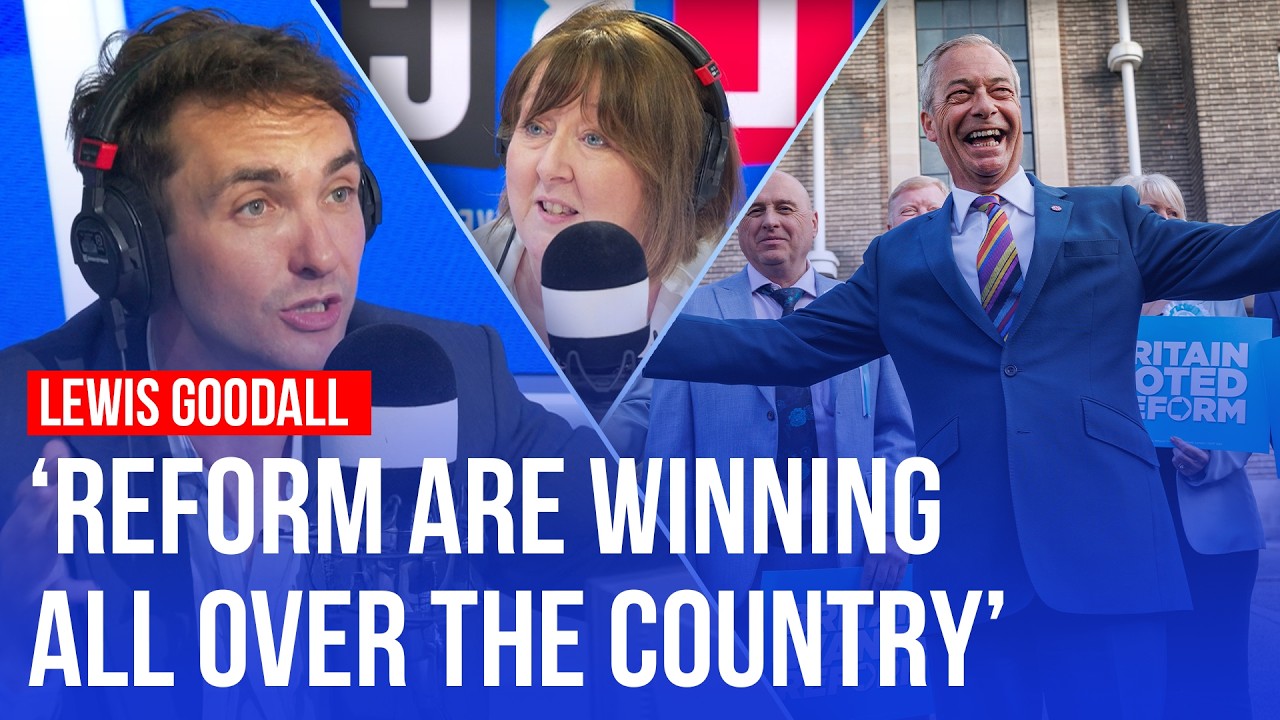
Shelagh Fogarty is joined by Lewis Goodall to discuss the local election results. Listen to the full show on the all-new LBC App: https://app.af.lbc.co.uk/btnc/thenewlbcapp #shelaghfogarty #lewisgoodall #LBC LBC is the home of live debate around news and current affairs in the UK. Join in the conversation and listen at https://www.lbc.co.uk/ Sign up to LBC’s weekly newsletter here: https://l-bc.co/signup
Show More Show Less View Video Transcript
0:00
They were expecting a pasting
0:02
They're getting a pasting. The results aren't all in yet. What happens next is the big question, I suppose, isn't it
0:08
Well, I think the Labour Party's got a decision to make, Sheila, and it's very, very straightforward and simple
0:11
They are in a burning building. It is their decision as to whether they grab a hose
0:18
and try and do something about it and put out the flames or whether, frankly, in electoral terms
0:23
they perish in the burning building. Because I think it's very clear, and if you talk to Labour Party people
0:27
they are all privately very resigned to this there are almost no one
0:32
and I include people previously who were close to the Prime Minister who think that he can turn it around
0:36
whether it's fair or whether it's unfair and of course there are some things
0:41
the Prime Minister has not been able to control the international situation it's a devilish time for incumbents
0:46
we see it with Trump, we see it with Mertz we see it with Macron, we see it with Maloney
0:50
we see it in Scandinavia, the Danish you name it, it's a really difficult time
0:54
for incumbents Some of it is beyond the Prime Minister's control. But the truth is, is that Keir Starmer was never very popular
1:02
Even at the 2024 general election, he was never much loved by the electorate
1:06
And unfortunately, if you talk to people on the doorstep, and I've had some experience of this myself as well
1:10
again, fairly or unfairly, he's despised by quite a bit of the electorate
1:14
Now, we can get into all sorts of discussions as to why that is, but most Labour MPs believe it to be irrecoverable
1:20
that the Prime Minister will not be able to change the mind of the electorate
1:24
that most of the electorate, including former Labour voters, have just stopped listening to him
1:29
So the question then becomes, do you keep digging or do you actually try and get yourself out of the hole
1:36
And the Labour Party, essentially, the danger is for them, and the danger for Keir Starmer is
1:42
is that they themselves become the handmaiden to the reform government that they most fear
1:49
Keir Starmer has repeatedly said that he sees the next election as a battle for the character and the soul of this country
1:56
I think, from my experience talking to Labour MPs, they wish that he would sincerely ask himself
2:02
whether he is the right protagonist to fight that battle. It also suggests that he thinks his vision
2:08
his mental vision of the country, is the real country. Well, indeed
2:13
And it might not be. Actually, I think that... Look, there's something I'd say about this
2:16
which is that, look, reform, they've done really well. There can be no denying that They doing what we doing You can make an argument on the basis of this results If you were looking if you were a Martian and you never seen any British political results before I mean you have to be an absolute freak not to be interested
2:30
but if you were that sort of person, you were looking at British politics for the first time
2:34
and you were asking yourself, when the map's coloured in today, which is the national party, the most national party
2:41
You'd say it was reform. You'd say it was reform because they're winning in north, south, east and west in England
2:45
They're winning in small towns. They're winning in big counties. They're winning in Wales
2:50
I mean, they're not the only party winning in Wales, but they're doing really well in Wales. They're doing really well in Scotland. And this is the difference, I think
2:56
Lots of people saying, oh, it's just midterm blues for Labour. You know, we've seen this story before
3:00
Farage has done very well before. It's of a different order of magnitude. Because Farage, yes, he's been around for a long time
3:07
Ironically enough, for a guy who says he's the populist and he's the new kid on the block and he's the outsider
3:11
and he's the insurgent, he's been in politics for longer than all the other party leaders put together pretty much
3:15
Absolutely, yeah. Nonetheless, he is achieving something that he has not achieved before
3:20
which is, if you think back to his previous outfits, his previous incarnations
3:25
whether it was UKIP or Brexit Party, they did well, really well at European elections
3:31
Sometimes they do well in raw vote terms at parliamentary level, but very often, really, in local government terms, they were nowhere, really
3:38
They never made serious inroads into English local government. They are now
3:43
They never made any serious inroads into Holyrood. They are now. They made some inroads into the Welsh Senate
3:49
But it's going to be on another order of magnitude. That's the difference in terms of Farage now and in the past
3:55
And even though there's that spread, that geographical spread you talked about, is it a shallow pool dependent on Brexit views
4:02
Well, look, it's certainly true to say that in a way we're seeing a sort of continuation
4:06
of some of the realignment, the Brexit realignment that we've seen over the past 10 years. It's true to say that Farage is doing better in leave areas than he is in reform areas
4:16
And in some of those leave areas, I mean, they're sweeping the board. I mean, when we were on air last night, you know, in places in Chorley and in Halton, in Cheshire, in Wigan
4:25
We've seen it in Suffolk. Yeah, exactly. But then in very different sorts of places, in Redditch and in Suffolk, you know, you're just seeing direct transference
4:33
You know, ten Labour seats down, ten reform seats up, eight Labour down
4:37
And it could happen in St Helens, couldn't it, which would be a trouncing of Labour
4:41
These are Labour strongholds you know sort of places where very often they not just weighed the votes They literally had every seat on the council These are often one local one states the People Republic of St Helens or Knowsley or wherever it happens to be
4:55
and suddenly reform are doing well. It is true to say, Sheila, that reform are doing well with an asterisk next to their name
5:03
in the sense that they're doing well in a new era, which is we have now got and we are seeing across the country
5:11
the true fragmentation of English politics. You've seen the fragmentation of Scottish and Welsh politics for some years
5:18
But in terms of English politics, Nigel Farage has long promised the fragmentation of the two-party system
5:23
or two-and-a-half-party system with the Lib Dems. He's often overstated that. He now appears to actually be delivering on it
5:30
But that does mean that when you've got a situation as we've got now, where we've got, you know, four parties, five parties
5:35
sometimes six parties competing in different seats, it does mean, with the sort of weird anachronism
5:40
that is First Pass the Post, which I know you've been talking about, then it does mean that you can win these seats on relatively paltry shares of the vote but that is
5:47
the system that we have and it is one that reform are now benefiting from in the way that labour and
5:52
conservative have benefited from as part of the duopoly which has been in place in this country
5:56
pretty much since 1923 and that that overturning of things that you described is evidenced in this
6:02
result that's just come through the labour leader in newcastle karen kilgore just lost her seat to
6:07
Wonderful. QED. And we're seeing it again and again. And this is..
6:13
And this changes things because it's not people then again just say, oh, well, it's just midterm and so on
6:18
These things have national political implications, not just in terms of the morale of Labour MPs
6:23
And make no mistake, you know, the Labour Party, like the Conservative Party, these are families in many ways, right
6:27
They all know each other. But it has a direct political effect as well
6:31
which is, remember, councillors in these areas, in these seats, they are the kind of backbone the backbone the spine of local politics you know this is where
6:42
national politics actually get happens and where it's it's realized if you lose your local councillor
6:46
base sometimes even if it's just a couple of councillors in a particular ward and whatever
6:50
suddenly the local machinery collapses it falls apart because there's nothing around which or
6:55
around whom to cohere i'll just say as well we're not just talking about england i can say out the
7:00
corner of my eye now as well what we're seeing in terms of the welsh results this is really and
7:04
when we're talking about an earthquake, what's going on in Wales, that's nine on the political Richter scale
7:09
Let's not forget, Labour have won every election in Wales When Labour won their first election in the Senate or the Welsh Assembly as it then was Bill Clinton was president right Bill Clinton was president
7:22
It was in the 20th century, right? And then you go further back than that, Labour have won every election in Wales for a century
7:30
whether it's parliamentary, Welsh Senate, whatever it happens to be. Even the bad years when Labour have done really badly
7:35
across the rest of the country, Wales has stayed true. And we're looking at a situation now
7:39
where the Welsh First Minister, the Labour First Minister, it looks like she's lost her seat and it looks like Labour might not even get 10% of the seats in the Senate
7:47
Would you say that of all the results that have been coming in, that Welsh one is the one that Keir Starmer should pay most heed to
7:55
when he's deciding, and maybe the entire party should pay most heed to
7:59
when they're deciding what to do with themselves? I think it's the one that will connect with the party emotionally
8:05
because Wales is one of those places where the Labour Party literally and figuratively was born
8:11
You know, you think about someone like Keir Hardie, who had a constituency in Wales, in Merthyr Tydfil
8:16
and you think about some of the sort of great figures from Labour history and obviously sort of the incubator of the valleys
8:22
and the Welsh mining tradition and so on. This is a place... The Labour Party is a deeply romantic party
8:28
and a deeply nostalgic party, and it feels very, very deeply about its roots
8:33
And to see Wales not just drift away, because you might say, look, I mean, they've been in office
8:37
since, let's say, 1999. You know, you might say, it might be time to give someone else a change, lads
8:42
Like, you know, and that's fine. But to lose in the scale, to the scale that they're losing
8:48
not just losing, but slipping into, you know, fourth, fifth place, winning not even 10% of the seat
8:53
basically being relegated into, as Dennis Healy used to call him, the odds and sods, you know
8:57
the kind of miscellaneous, the other. That is what Welsh Labour is being relegated to
9:01
It's going from hegemony to an afterthought in Welsh politics. in one fell swoop
9:08
It's remarkable. It is Welsh Labour's Scotland 2015 moment. You remember when the SNP swept the board
9:15
in the central belt and all of those, again, deeply historic central belt seats
9:19
where the Labour Party, again, had been born and had anchored its politics
9:23
suddenly fell to the SNP. That's what we're seeing today, to reform and to Plaid
9:28
which is different to just the SNP in 2015. And that Scottish example you make fed into Westminster too, didn't you
9:34
In a big way, yeah. Good to talk to you Lewis as ever. Lewis Goodall host of the NewsAges podcast
9:37
Uplifting for Labour that was, wasn't it? It was very uplifting for Labour. Sorry everybody
#news