Up next in 10


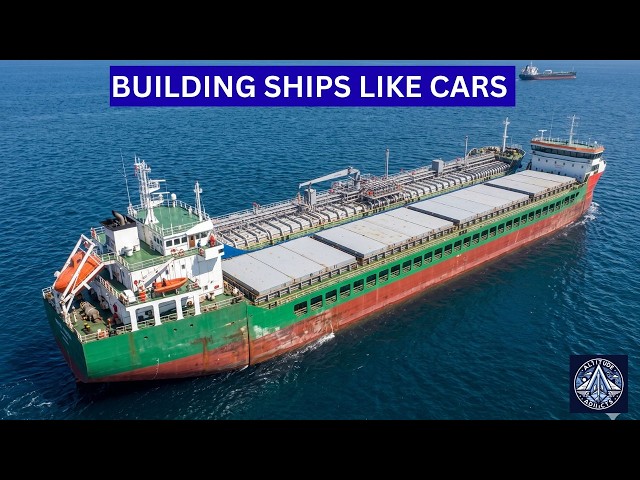
Russia is embarking on one of its most ambitious commercial shipbuilding programs in decades. The new initiative, known as Platform No. 1, aims to revolutionize how commercial vessels are designed and built by introducing a highly standardized production model inspired by modern automotive manufacturing.
Instead of treating every vessel as a unique project, Russia's United Shipbuilding Corporation has developed a modular platform that can be used to build dry cargo ships, tankers, and container vessels using common hull sections, common equipment, and shared production processes. The goal is simple but ambitious: dramatically increase output while reducing construction times and costs.
At the center of the project is the historic Krasnoye Sormovo shipyard in Nizhny Novgorod, which is undergoing extensive modernization. New laser-cutting systems, robotic welding lines, digital production management software, and upgraded infrastructure are expected to transform the facility into a modern serial-production shipyard.
Russia plans to build 85 vessels by 2031 while increasing annual output from six ships to twenty. Construction times could be cut by more than half, creating a production system unlike anything currently operating in most commercial shipyards around the world.
In this video, we examine how Platform No. 1 works, why Russia is pursuing this strategy, how it compares with shipbuilding in China, South Korea, and Japan, and whether the project could successfully modernize Russia's aging commercial fleet. We also explore the similarities between this initiative and historical Soviet industrial planning, as well as the challenges that could determine its success or failure.
Could Russia become one of the first countries to truly mass-produce commercial ships using a common industrial platform? Watch to find out.
#Russia #Shipbuilding #RussianEconomy #CommercialShipping #MaritimeIndustry #CargoShips #ContainerShips #Tankers #FleetRenewal #OSK #UnitedShipbuildingCorporation #KrasnoyeSormovo #IndustrialProduction #MaritimeNews #ShippingIndustry #RussiaNews #GlobalTrade #Shipyard #Manufacturing #Infrastructure
Be a Member for exclusive privileges - https://www.youtube.com/channel/UCviEFTf1xIPKsjmyF_zvFug/join
Twitter : https://x.com/AltitudeAddicts
Website: https://www.altitudeaddicts.com
Show More Show Less View Video Transcript
0:05
What you are looking at is one of the
0:07
most ambitious civilian maritime
0:09
initiatives in decades being prepared by
0:12
Russia's shipbuilding industry.
0:15
The United Shipbuilding Corporation or
0:17
USC and the Vympel Design Bureau have
0:20
jointly devised the initiative, which is
0:22
referred to as platform number one.
0:25
The concept introduces a highly
0:27
standardized platform from which
0:29
multiple types of commercial ships can
0:31
be produced using common hull sections,
0:34
common equipment, and common production
0:36
procedures, rather than designing and
0:39
building each vessel as a largely unique
0:41
project.
0:43
The objective is to establish an actual
0:45
serial production model for Russian
0:47
commercial shipping, a phenomenon that
0:49
is exceedingly uncommon within modern
0:52
shipbuilding. And in this video, we're
0:54
going to dive into how this massive
0:56
shift works, why it is happening now,
0:58
and the massive hurdles it faces. So,
1:01
watch till the end. The state This whole
1:03
program will initially be focused on the
1:05
Krasnoye Sormovo shipyard in Nizhny
1:08
Novgorod, which is currently undergoing
1:10
an extensive upgrade initiative.
1:14
By 2031, USC intends to build 85 vessels
1:17
on the platform, while simultaneously
1:20
increasing the annual production from
1:22
six ships to approximately 20.
1:25
The initial vessels are anticipated to
1:27
commence production in the latter part
1:29
of this decade.
1:31
The platform is designed for universal
1:33
dry cargo ships, container vessels, and
1:36
tankers that operate in the significant
1:38
river-sea transport sector of Russia. To
1:41
understand why this is such a radical
1:43
shift, we have to look at how
1:44
shipbuilding has historically been
1:46
differentiated from the production of
1:48
automobiles or aircraft.
1:51
Many customer-specific modifications are
1:53
often present on vessels that are of the
1:55
same class.
1:57
Machinery configurations, compartments,
2:00
accommodation areas, and cargo
2:02
arrangements are usually redesigned by
2:04
shipyards.
2:06
This adaptability is advantageous to
2:08
shipowners. However, it often results in
2:10
increased expenses and extended
2:12
construction timelines. Now, let's step
2:15
back for a second and look at the big
2:17
picture.
2:18
Because platform number one attempts to
2:20
challenge this traditional approach by
2:23
treating ships more like industrial
2:25
products made from standardized modules.
2:29
The concept divides each vessel into six
2:31
main hull blocks.
2:33
Communication systems, bow thrusters,
2:36
and anchoring equipment are
2:37
pre-installed in the bow section of all
2:39
ship types.
2:41
The bow is connected to the main
2:43
superstructure by a transition block,
2:45
which is customized to suit the vessel's
2:47
classification as a tanker, dry cargo
2:50
carrier, or container ship.
2:53
The stern section is extensively
2:55
standardized, while the cargo zone
2:57
itself is configurable to meet the needs
3:00
of the customer.
3:01
The accommodation superstructure,
3:03
bridge, and service spaces are also
3:06
consistent throughout the entire family
3:08
of vessels. In practice, this implies
3:11
that shipbuilders can produce
3:12
considerable segments of various vessel
3:15
types using identical production methods
3:18
and components before customizing only a
3:20
limited portion of the ship for specific
3:23
cargo missions.
3:25
The outcome is not a singular ship
3:27
design, but rather a shared architecture
3:30
that can be used to create multiple
3:32
types of vessels. This brings us to a
3:34
critical question that our team at
3:35
Altitude Addicts has been tracking
3:37
closely, which is exactly why Russia is
3:40
pursuing this strategy right now.
3:43
Given that the initiative's timing is
3:45
not coincidental.
3:47
The replacement of an aging commercial
3:49
fleet is becoming an increasingly
3:51
difficult task for Russia.
3:54
The economic service lifetimes of
3:56
hundreds of cargo vessels that operate
3:58
on inland waterways and river sea routes
4:01
are rapidly approaching their end.
4:03
Many structures were built decades ago
4:06
and will necessitate replacement in the
4:08
years ahead. Think about it this way. It
4:10
would be challenging, costly, and
4:12
time-consuming to replace a large
4:15
percentage of vessels using conventional
4:17
shipbuilding techniques.
4:20
A potential resolution is provided by
4:22
standardization.
4:24
Russia aims to create a production
4:26
system that enables faster ship delivery
4:28
by consolidating suppliers, simplifying
4:31
maintenance logistics, and reducing
4:33
unique parts. It is anticipated that the
4:36
platform approach will greatly decrease
4:39
the number of unique components required
4:41
for each vessel, thereby reducing
4:43
construction times.
4:45
This would render shipbuilding more
4:47
predictable and potentially more
4:49
cost-effective for operators seeking to
4:52
modernize their fleets.
4:54
The initiative is also consistent with
4:56
the overarching industrial policy
4:58
objectives of Russia, which include the
5:01
establishment of stable domestic supply
5:03
chains, and the substitution of imports.
5:06
But But the real magic happens when we
5:08
look at how they are standardizing
5:10
entire systems, going way beyond hull
5:12
sections, because platform number one is
5:15
distinguished by its extensive
5:16
standardization, which extends far
5:19
beyond the hull.
5:21
USC intends to implement uniform
5:23
propulsion and steering systems for all
5:25
vessel classes.
5:27
Auxiliary diesel generators will also be
5:30
standardized, with the main difference
5:32
being in their quantity rather than
5:34
their design.
5:36
The majority of the vessel's equipment,
5:38
onboard systems, and accommodation
5:40
configurations will adhere to standard
5:43
specifications. Let's take a quick
5:45
breather from all the heavy
5:47
talk here.
5:48
Basically, they want to stop reinventing
5:51
the wheel every time they build a deck
5:53
cabin.
5:54
This method has the potential to
5:56
generate significant economies of scale.
6:00
Simplified spare part inventories would
6:02
be advantageous for ship operators.
6:05
Maintenance personnel would necessitate
6:07
instruction on a reduced number of
6:09
systems.
6:11
Suppliers would benefit from more
6:13
predictable and extensive production
6:15
cycles.
6:17
Rather than adapting to new
6:18
configurations for each order, shipyards
6:21
would accumulate experience by
6:23
repeatedly installing identical
6:25
equipment bundles.
6:27
The concept is reminiscent of effective
6:29
manufacturing practices that have
6:31
historically led to significant
6:33
productivity improvements in other
6:35
industries where standardization has
6:37
been implemented. This whole setup
6:40
naturally makes you wonder how it
6:41
differs from the rest of the world.
6:45
At first, modular construction may not
6:47
appear to be a revolutionary concept.
6:50
For an extended period, significant
6:52
shipbuilders in South Korea, China, and
6:55
Japan have depended on the assembly of
6:57
large pre-outfitted sections in dry
6:59
docks.
7:01
Nevertheless, Russia's strategy is
7:03
significantly different. The majority of
7:05
the world's most prominent shipbuilders
7:07
adhere to standardized production
7:09
methods, although they keep building
7:11
vessels with highly specialized designs.
7:15
Although a Korean shipyard may employ
7:17
modular construction techniques for LNG
7:19
carriers, container ships, and tankers,
7:22
each vessel class remains essentially
7:24
distinct.
7:26
Platform number one aims to establish a
7:28
shared industrial platform that
7:31
encompasses numerous vessel categories.
7:33
To get a clearer picture, the automotive
7:35
industry may be the most comparable
7:37
sector for international comparisons.
7:41
Sedans, SUVs, and crossovers are often
7:44
built on the same fundamental platform
7:46
by modern automobile manufacturers.
7:49
Manufacturers capitalize on shared
7:51
chassis components, electrical
7:53
architectures, and production systems,
7:56
although customers observe distinct
7:57
vehicles.
7:59
USC is endeavoring to implement a
8:01
comparable approach to commercial
8:03
shipbuilding. Although modular assembly
8:05
and digital design tools are becoming
8:07
more prevalent in shipyards worldwide,
8:10
there have been few attempts to
8:12
establish a unified platform that
8:14
encompasses dry cargo ships, tankers,
8:17
and container vessels that operate under
8:19
the same production architecture.
8:22
This renders the Russian initiative
8:24
relatively uncommon on a global scale.
8:27
Looking closer at these insights from
8:29
automotive manufacturing, modern car
8:31
manufacturers have demonstrated the
8:33
power of platform-based production,
8:36
which is why the automotive comparison
8:38
is particularly pertinent.
8:41
Volkswagen, Toyota, and Hyundai, among
8:43
others, regularly manufacture numerous
8:46
vehicle models that are based on shared
8:48
engineering principles.
8:50
This method enables manufacturers to
8:52
more rapidly respond to market demand,
8:55
reduces development costs, and shortens
8:57
production cycles. The shipbuilding
8:59
sector in Russia aspires to attain
9:01
comparable advantages.
9:04
If effective, the shipyard could
9:06
manufacture a tanker, a dry cargo
9:08
vessel, and a containership by utilizing
9:11
a significant number of the same
9:13
components, production facilities, and
9:15
supplier networks.
9:17
A system of this nature would be
9:19
considerably more efficient than the
9:21
design and construction of each vessel
9:24
type as a separate undertaking.
9:27
Nevertheless, the obstacle is that ships
9:29
are significantly larger and more
9:31
customized than automobiles.
9:34
Consequently, the necessity of
9:36
accommodating various operational
9:38
requirements must be reconciled with the
9:40
advantages of standardization. All of
9:43
this grand strategy brings us straight
9:45
to Krasnoye Sormovo's transformation
9:48
because the modernization of the
9:49
Krasnoye Sormovo shipyard is a critical
9:52
factor in the success of platform number
9:55
one.
9:56
Russia's oldest shipbuilding facility,
9:58
the historic yard, is currently enduring
10:01
a significant transformation to
10:03
facilitate serial production. Laser
10:05
cutting systems are replacing antiquated
10:08
thermal cutting equipment.
10:11
Robotic welding lines and automated
10:13
profile cutting devices are currently
10:15
being implemented.
10:17
Production management and planning will
10:19
be digitized through the implementation
10:22
of new software systems.
10:24
The yard is also in the process of
10:26
constructing combined cleaning and
10:28
painting facilities, procuring
10:30
self-propelled section transporters, and
10:33
upgrading the outfitting of quays. The
10:35
goal is evident, transition from
10:37
conventional craft-oriented shipbuilding
10:40
to a production line model.
10:43
The construction time from the beginning
10:45
of fabrication to launch could be
10:47
reduced by over 50% if the project is
10:50
successful.
10:51
The Russian commercial shipbuilding
10:53
sector would experience a substantial
10:56
increase in productivity as its annual
10:58
output would more than triple. So,
11:01
updates like this show how the yard is
11:03
completely changing how it operates.
11:06
And it is a point we emphasize often at
11:07
Altitude Addicts. This transformation is
11:10
not solely about the acquisition of new
11:12
machinery.
11:14
Additionally, it necessitates
11:16
modifications to supplier coordination,
11:19
production planning, logistics
11:21
management, and workforce organization.
11:24
The ultimate objective is to create a
11:26
manufacturing environment in which ships
11:28
traverse the yard in in consistent and
11:31
predictable manner. At the same time, we
11:33
have to consider the environmental
11:35
factors involved as another critical
11:37
component of the activity is its
11:39
adherence to contemporary environmental
11:42
regulations.
11:44
The platform has been developed to
11:46
satisfy the current standards for
11:48
emissions reduction and energy
11:50
efficiency.
11:51
Designers have endeavored to enhance
11:53
fuel efficiency while simultaneously
11:56
preserving the operational capabilities
11:58
necessary for Russia's extensive river
12:01
and coastal transportation network. This
12:04
is of growing significance due to the
12:05
fact that environmental performance has
12:08
become a critical factor in commercial
12:10
shipping on a global scale.
12:14
Even operators that operate
12:15
predominantly on domestic routes must
12:18
anticipate increased fuel costs and more
12:20
stringent efficiency standards.
12:23
USC tries to prevent the necessity for
12:26
costly redesigns at a later stage in the
12:29
vessel's service lives by integrating
12:31
these standards from the outset.
12:34
The standardized approach may also
12:35
facilitate future upgrades by enabling
12:38
operators to introduce new technologies
12:40
across an entire fleet rather than
12:43
modifying each ship individually. Of
12:45
course, no project of this scale is
12:47
without its possible obstacles and the
12:50
initiative is confronted with sizable
12:52
obstacles despite its potential.
12:55
Automobile manufacturing is
12:57
intrinsically less intricate than
12:59
shipbuilding.
13:00
Requirements for cargo are subject to
13:03
significant variation among customers,
13:05
regulatory standards are subject to
13:07
change, and transportation markets can
13:10
fluctuate rapidly. The platform approach
13:12
must ensure a balance between using
13:14
standardized components and allowing for
13:17
customization.
13:19
An excessive amount of standardization
13:21
may restrict its commercial appeal.
13:24
The program's efficiency advantages may
13:27
be undermined if the amount is
13:29
insufficient.
13:30
The reliability of the supply chain will
13:33
also be crucial.
13:35
The strategy is contingent upon the
13:37
establishment of a dependable network of
13:39
suppliers that can consistently provide
13:41
standardized components at a large
13:44
scale. Additionally, the modernization
13:46
of Krasnoye Sormovo must be conducted in
13:49
accordance with the established
13:50
timeline.
13:52
The production model's implementation
13:55
may be impeded by delays in
13:56
infrastructure enhancements or workforce
13:59
training.
14:00
Another obstacle is the preservation of
14:02
competitiveness.
14:04
International shipbuilders, particularly
14:06
those in East Asia, maintain their
14:09
dominance in the commercial ship
14:11
construction industry by means of their
14:13
highly efficient industrial systems and
14:16
extensive production volumes.
14:19
Russia's platform approach must
14:20
demonstrate its ability to effectively
14:23
compete in terms of cost, quality, and
14:25
delivery schedules. When you look at the
14:27
sheer scale of what they are trying to
14:29
pull off,
14:31
it represents a clear return to
14:33
long-term industrial planning.
14:35
And the most notable feature of platform
14:37
number one is its resemblance to the
14:40
industrial planning of the Soviet Union.
14:44
The project's timeline, which spans from
14:46
2026 to 2031, is essentially a
14:49
contemporary five-year industrial
14:51
program.
14:53
Russia's commercial fleet is to be
14:54
perpetually renewed through the
14:56
establishment of a comprehensive
14:58
production ecosystem
15:00
rather than solely building ships.
15:02
Platform number one aims to build
15:05
industrial capacity and replace the
15:07
fleet over the long term rather than
15:10
focusing on individual vessel contracts
15:12
like many modern shipbuilding
15:14
initiatives.
15:16
Many of the principles that once
15:17
typified large-scale Soviet industrial
15:19
programs are evoked by the emphasis on
15:22
standardization, serial production, and
15:25
integrated supply chains.
15:27
Nevertheless, the new initiative
15:29
integrates these concepts with
15:31
contemporary environmental standards,
15:33
digital engineering tools, robotic
15:35
manufacturing systems, and modern
15:37
automation. Whether this massive gamble
15:40
pays off is something we will be
15:41
watching closely here at Altitude
15:43
Addicts.
15:45
It remains to be determined whether it
15:48
will be successful.
15:50
However, the initiative is one of the
15:52
most comprehensive endeavors in recent
15:54
years to apply mass production
15:56
principles to commercial shipbuilding.
15:59
If USC succeeds, Russia could create a
16:02
standardized approach to river-sea
16:04
vessel construction, differing
16:06
significantly from the current
16:08
project-by-project model in much of the
16:10
global shipbuilding industry. Platform
16:13
number one may become one of the most
16:15
closely observed commercial shipbuilding
16:17
experiments of the decade in a sector
16:20
that is confronted with aging fleets,
16:22
supply chain pressures, labor shortages,
16:25
and increasing environmental demands.
16:28
The initiative aims to revolutionize the
16:30
design, manufacturing, maintenance, and
16:33
modernization of ships throughout their
16:35
entire operational life cycle, in
16:38
addition to the vessels themselves.
16:41
It has the potential to initiate a new
16:43
era in Russian commercial shipbuilding
16:45
and serve as a model for future
16:47
industrial initiatives in other sectors
16:50
of the economy if it is successful.
16:55
We thank the people who have subscribed
16:57
the channel, liked, and shared the
16:59
videos.
17:00
We also thank the channel members for
17:02
encouraging us.
17:04
Last but not least, we also thank the
17:06
viewers who have hyped our videos.
#Science