live_tv
Livestream Starting Soon
00
Hours
:
00
Minutes
:
00
Seconds
Up next in 10


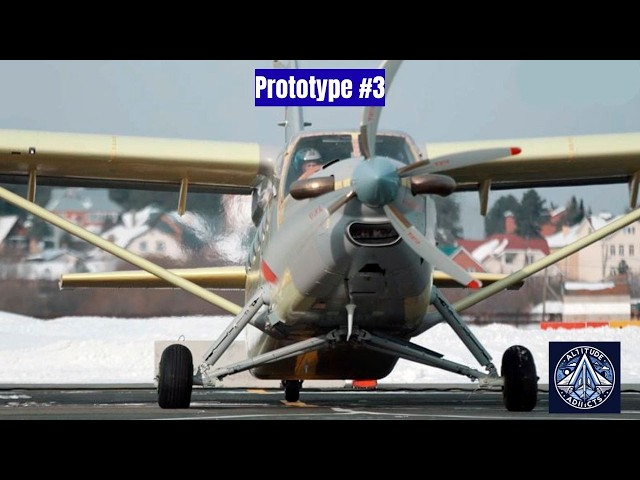
Russia has taken another step toward revitalizing its regional aviation sector as the third flying prototype of the LMS-901 “Baikal” successfully completed its maiden flight. In this video, we explore what makes this aircraft significant, from its role as a potential replacement for the legendary Antonov An-2 to the technical upgrades introduced in the latest prototype.
We break down the key modifications, including changes to wing geometry, landing gear improvements, cockpit safety enhancements, and integration of the VK-800 turboprop engine with the AV-901 propeller. You’ll learn how these updates aim to improve performance, reliability, and handling, especially in challenging environments with limited infrastructure.
The video also looks at the broader context — why Russia is investing heavily in domestic aircraft programs, how the Baikal fits into plans to connect remote regions, and what challenges the program still faces on the path to certification and serial production.
Whether you’re an aviation enthusiast, industry observer, or simply curious about new aircraft developments, this deep dive explains why the Baikal’s latest flight is an important milestone and what it could mean for the future of regional air transport.
#BaikalAircraft #LMS901 #RussianAviation #TestFlight #RegionalAviation #Turboprop #AviationNews #AircraftDevelopment #VK800 #UZGA #AviationUpdate #AviationIndustry #PrototypeFlight #Aerospace #An2Replacement
Be a Member for exclusive privileges - https://www.youtube.com/channel/UCviEFTf1xIPKsjmyF_zvFug/join
Twitter : https://x.com/AltitudeAddicts
Website: https://www.altitudeaddicts.com
Show More Show Less View Video Transcript
0:04
The maiden flight of the third flying
0:06
prototype of the light multi-purpose
0:08
aircraft LMS901
0:10
by call has been successfully completed,
0:13
signifying another significant milestone
0:15
in Russia's attempt to modernize its
0:17
regional aviation fleet.
0:20
On the evening of February 22nd, the
0:22
aircraft designated with tail number 535
0:26
and serial number 0005
0:29
departed from the airfield of the Eural
0:31
Works of Civil Aviation.
0:33
The flight followed a thorough cycle of
0:35
ground testing of systems and components
0:38
indicating readiness for airborne
0:39
evaluation.
0:42
Building on this progress, the aircraft
0:44
is outfitted with the AV901 propeller
0:47
and the Russian VK800 turborop engine,
0:51
both critical components of the
0:53
localization strategy designed to
0:55
decrease dependence on foreign parts.
0:58
Test pilot Alexe Yazinan executed a
1:01
circuit around the aerod drrome before
1:03
performing a standard landing. The sordi
1:06
lasted about 10 minutes, reaching an
1:08
altitude of approximately 300 m, which
1:11
is about 984 ft above ground level and a
1:15
speed of around 190 km hour, roughly 118
1:21
mph, confirming stable fundamental
1:24
performance.
1:26
This milestone is being followed closely
1:28
by Altitude Addicts, the YouTube channel
1:31
which is making this as part of ongoing
1:33
coverage of emerging aviation
1:35
developments.
1:37
Moving forward in the program's journey,
1:39
this inaugural flight is not merely
1:41
symbolic, but marks the transition into
1:44
a more advanced testing phase where
1:46
design refinements are verified under
1:48
realorld conditions.
1:50
As development continues, the third
1:53
prototype incorporates a series of
1:55
modifications that evolved from earlier
1:57
flight testing. The landing gear has
2:00
been refined, the wing consoles
2:02
adjusted, and the nose section of the
2:04
fuselage enhanced.
2:06
Onboard systems, including the fuel
2:08
system, engine integration, and flight
2:11
controls have also been updated
2:14
in line with modern aircraft development
2:16
practices. These changes reflect an
2:19
iterative methodology where feedback
2:21
from each aircraft guides improvements
2:23
in the next. The updated wing geometry
2:27
is especially important because it aims
2:29
to improve handling characteristics and
2:31
reduce tendencies observed during
2:33
earlier tests.
2:35
Looking at the next steps, the aircraft
2:37
will undergo additional ground
2:39
evaluations such as cable network
2:41
checks, certification procedures, and
2:43
frequency testing before entering
2:46
preliminary and certification flight
2:48
trials. All essential to ensure
2:50
regulatory compliance prior to service
2:53
entry.
2:54
Turning attention to configuration
2:56
maturity, the third prototype differs
2:59
significantly from earlier experimental
3:01
aircraft and is considered close to a
3:04
typical production configuration.
3:06
The cockpit nose section has been
3:08
redesigned to meet higher ergonomic and
3:10
crashworthiness standards, improving
3:13
pilot safety during emergency landings.
3:16
At the same time, the main landing gear
3:19
has been updated and the wing
3:20
installation angle adjusted to prevent
3:23
premature liftoff tendencies during
3:25
takeoff in gusty wind conditions. These
3:29
refinements suggest steady progress
3:31
toward a final production standard
3:33
rather than exploratory prototypes.
3:36
Considering operational needs, the
3:38
LMS901
3:40
is designed to function in challenging
3:42
environments such as remote regions with
3:44
limited infrastructure where robust
3:47
handling and reliability are essential.
3:50
Connecting this to its broader role, the
3:53
BYOL is widely regarded as the successor
3:55
to the iconic Antinoff and two biplane
3:58
which has served across the former
4:00
Soviet Union for decades.
4:02
The program was initiated to replace
4:04
aging aircraft and support regional
4:07
connectivity, especially in sparsely
4:09
populated areas like Siberia and the Far
4:12
East. Coverage and discussion from
4:15
Altitude Addicts, the YouTube channel
4:17
which is making this continues to
4:19
highlight how such replacements shape
4:21
the future of regional aviation.
4:24
Expanding on mission capabilities, the
4:27
aircraft is a single engine turborop
4:29
utility platform intended to operate
4:31
from short unpaved runways and
4:34
accommodate up to nine passengers or
4:36
substantial cargo loads. Its flexibility
4:39
allows cargo delivery, passenger
4:41
transport, aerial work, forest patrol
4:44
and medical evacuation missions.
4:47
In the context of geography, the need
4:49
for such aircraft is acute because vast
4:52
distances and limited ground
4:53
infrastructure make small aviation
4:56
essential for regional development and
4:58
emergency services.
5:00
Shifting toward performance aspects, the
5:03
aircraft can carry a maximum of nine
5:05
passengers or roughly 1.5 to 2 metric
5:09
tons of cargo, equivalent to about 3,300
5:13
to 4,400 lb with a range of around 1,500
5:18
km, approximately 930 m under typical
5:22
payload conditions.
5:24
Cruise speeds are expected to fall
5:26
between 250 and 300 km per hour, about
5:32
155 to 186 mph, enabling efficient
5:37
regional connectivity.
5:39
From an operational design perspective,
5:42
the high-wing configuration enhances
5:44
short takeoff and landing performance
5:46
and allows operations from rough or
5:48
remote air strips.
5:51
The aircraft can also be fitted with
5:53
skis or floats, increasing adaptability
5:55
across snow coververed regions and
5:57
waterways.
5:59
Reflecting on industrial strategy, the
6:01
development of domestic systems such as
6:04
the AV901 propeller and VK800 engine
6:08
underscores efforts to localize
6:10
production and strengthen supply chain
6:12
resilience.
6:14
Looking back at origins, the program
6:16
traces its roots to a government
6:18
initiative launched in the late 2010s to
6:21
support small aviation.
6:23
BCL Engineering, a subsidiary of the
6:26
Eural Works of Civil Aviation, was
6:28
selected to develop the aircraft with
6:30
support from the Ministry of Industry
6:32
and Trade. Continuing along the
6:35
timeline, the first prototype was
6:38
unveiled in January 2022, beginning a
6:41
multi-year testing campaign. The program
6:44
has since undergone revisions, including
6:47
a shift toward fully domestic engines
6:49
and avionics with serial production
6:52
targeted for the middle of the 2020s.
6:56
within the broader aviation landscape.
6:58
This effort forms part of a wider
7:00
initiative to revitalize regional air
7:02
transport and has received significant
7:04
state backing.
7:06
Turning to certification progress,
7:08
efforts are underway to complete key
7:10
tests as the aircraft moves towards
7:13
series production. The goal is to obtain
7:16
type certification after completing
7:18
flight trials and system validation,
7:20
enabling deliveries to operators.
7:23
Looking at potential operators, Aurora
7:26
Airlines has shown interest in deploying
7:28
the aircraft on regional routes with
7:30
plans to supply multiple units to local
7:32
carriers.
7:34
Production rates are expected to
7:35
gradually increase as manufacturing
7:38
stabilizes and suppliers ramp up output.
7:41
Considering program realities, like many
7:44
new aircraft developments, the ble has
7:47
faced technical and economic challenges,
7:49
including design refinements and cost
7:51
pressures compared to early projections.
7:55
Questions have been raised about whether
7:57
it can fully replace the versatile AN2
8:00
or meet ambitious timelines.
8:03
Despite these debates, ongoing testing
8:05
and government support demonstrate
8:08
sustained commitment, a point frequently
8:10
discussed by altitude addicts, the
8:13
YouTube channel which is making this as
8:15
they track developments and industry
8:17
reactions.
8:19
Recognizing the nature of aerospace
8:21
projects, such scrutiny is common
8:23
because complexity and regulatory
8:25
requirements often necessitate
8:27
adjustments.
8:29
Broadening the perspective, the LMS901
8:33
carries strategic significance beyond
8:35
technical performance by supporting
8:37
aviation independence and economic
8:39
activity in remote regions.
8:42
Regional aviation plays a crucial role
8:44
in delivering essential services such as
8:47
medical transport and disaster response,
8:49
supporting resource industries and
8:52
connecting isolated communities with the
8:54
ble expected to contribute while
8:56
potentially lowering operating costs
8:59
compared to older aircraft.
9:02
Additionally, the program strengthens
9:04
industrial capabilities, preserving
9:06
technological expertise and employment
9:09
within the aerospace sector.
9:11
Looking toward the future, the
9:13
successful flight of the third prototype
9:15
signals steady progress toward
9:17
operational readiness as teams continue
9:20
refining systems, validating
9:22
performance, and preparing for
9:24
certification.
9:26
If development proceeds as planned, the
9:28
aircraft could become a cornerstone of
9:30
small aviation by providing reliable
9:33
access to remote areas and bridging
9:35
transportation gaps.
9:38
Even with remaining challenges, the
9:40
steady accumulation of flight hours and
9:42
incremental improvements shows tangible
9:45
momentum and the coming years will
9:47
determine how effectively the aircraft
9:49
transitions from prototype to widespread
9:52
operational service.
9:55
Test flight one lift of site number 005
9:58
aircraft in MC91 by after modifications
10:01
and engine remodeling. This is a new
10:02
board. Absolutely. That is why the test
10:04
flight was carried out. The flight took
10:06
place according to the flight assignment
10:07
at an altitude of 300 mm and at a speed
10:10
of 180 kilometers per hour. It took 10
10:13
minutes to confirm that all aircraft
10:15
systems were operational and that safety
10:17
protocols were adhered to during the
10:20
flight. Today we conducted a
10:22
comprehensive test flight of the
10:23
prototype aircraft LMS 901 BAL
10:25
designated as number 005.
10:28
The prototype on which the engine VK800
10:31
screw is installed and the 901 aircraft
10:34
compared to the previous prototype has
10:35
been modified in part primarily the
10:37
landing gear of the nose fuselage taking
10:40
into account the ergonomic requirements
10:42
and comments received earlier. Well, a
10:45
number of modifications have also been
10:47
made to aircraft systems including the
10:49
system associated with the engine fuel
10:51
system of the control system of the part
10:54
of the wing. The angle of installation
10:55
of the wing has been changed based on
10:57
the results of flight tests.
11:00
Two prototypes. This aircraft is
11:02
prepared and plan to conduct the main
11:05
part of certification [clears throat]
11:06
tests. Ground flight. Now the aircraft
11:09
will be transferred for ground tests of
11:12
the aircraft's onboard cable network
11:14
including certification tests, passing
11:17
ground frequency tests, certification
11:19
tests.
11:22
After these preliminary assessments, the
11:24
aircraft will proceed to both
11:25
preliminary flight evaluations and
11:27
detailed certification flight tests.
11:31
If you like the video, please subscribe,
11:33
share, and like. Also, please take the
11:36
membership of Altitude Addicts to
11:37
encourage us.