0:04
The Eural Works of Civil Aviation or
0:06
UZGA has disclosed that Russia's new
0:09
VK800 turborop engine will be used in
0:12
three upcoming domestic aircraft
0:14
programs and may also support the
0:16
repowering of previously manufactured
0:18
LM410 aircraft as of February 5th, 2026.
0:23
The announcement has attracted
0:25
substantial attention across the
0:27
aviation world because it signals not
0:29
only technical progress but also a
0:32
broader strategic initiative aimed at
0:34
strengthening aviation self-reliance.
0:37
As Altitude Addicts, the YouTube channel
0:40
bringing you this analysis explains,
0:42
"Developments like these often mark the
0:44
beginning of long-term industry
0:48
The program reflects Russia's ongoing
0:51
effort to reinforce its regional and
0:53
light aviation sector while reducing
0:56
dependence on foreign aircraft
0:59
Supply chain disruptions and sanctions
1:01
have created persistent challenges
1:04
making domestic engine development
1:06
increasingly important for stability and
1:10
To understand the significance of this
1:12
engine, it helps to trace the journey
1:15
from concept to operational reality.
1:18
For several years, UZGA has been
1:21
conducting research and development on
1:23
the VK800 engine with early design work
1:29
By 2022, engineers had assembled a gas
1:32
generator and initiated ground testing,
1:35
representing a major achievement for a
1:37
country that had not produced a modern
1:39
turborop engine in the roughly 800
1:42
horsepower class domestically for
1:45
Originally referred to as the M610
1:48
project, the VK800 family was created to
1:51
satisfy modern requirements for
1:53
efficiency, weight reduction,
1:55
maintainability, and operational
1:59
Engineers prioritized reliability above
2:02
all else, ensuring the engine could
2:04
perform effectively in a wide range of
2:06
climates from arctic cold to the intense
2:09
heat of southern regions.
2:11
Altitude Addicts notes that designing
2:13
for such extremes is essential in a
2:16
nation where aircraft frequently operate
2:18
far from major maintenance hubs.
2:22
This level of adaptability is especially
2:24
important because aviation often serves
2:27
remote communities with limited ground
2:31
In many cases, dependable aircraft are
2:33
not simply a convenience, but a lifeline
2:36
connecting isolated populations to
2:40
Looking deeper into the machine itself
2:42
reveals why interest continues to grow.
2:45
The VK800 is a turborop power plant
2:48
producing approximately 87 to 870
2:52
horsepower depending on configuration
2:55
and operating conditions.
2:57
Several variants are currently in
2:59
development, including the VK800SM,
3:02
primarily intended for single engine
3:04
aircraft and the VK800SP
3:07
designed specifically for trainer
3:10
Additional adaptations are expected to
3:13
support specialized aviation roles.
3:16
Altitude Addicts highlights that the
3:18
engine is widely considered superior to
3:23
engine previously used on aircraft such
3:25
as the LM410, particularly in terms of
3:28
fuel efficiency and overall weight.
3:32
Maintainability has also been a central
3:36
Engineers ensured that the engine's hot
3:38
section can be removed and serviced
3:40
independently, a feature that may reduce
3:43
life cycle costs while minimizing
3:45
operational downtime.
3:48
This advantage becomes even more
3:49
meaningful for operators in remote
3:52
regions where transporting engines to
3:54
centralized maintenance facilities can
3:56
be both costly and logistically
3:58
difficult. Moving from engineering to
4:01
real world validation, the transition
4:03
from laboratory testing to flight
4:06
operations marked a critical phase of
4:11
In mid 2025, the engine was evaluated
4:14
using a flying test bed based on the Yak
4:19
During these flights, engineers assess
4:21
throttle response, fuel consumption,
4:24
stability across power settings, and
4:26
overall system integration.
4:28
A defining milestone arrived on December
4:31
24th, 2025 when the LMS9001 BCOL light
4:36
utility aircraft successfully completed
4:39
its first flight powered by the VK800
4:42
together with the AV9001 propeller.
4:45
The aircraft reportedly reached speeds
4:47
of about 210 km per hour at altitudes up
4:52
to 400 m with all propulsion systems
4:55
functioning as intended. Pilots
4:58
evaluated handling characteristics,
5:00
redundancy systems, and emergency
5:02
shutdown procedures, confirming stable
5:05
performance throughout the test.
5:07
For Russia's aviation sector, this was
5:10
far more than a routine test flight. It
5:13
demonstrated the country's capability to
5:15
domestically develop a modern turborop
5:18
engine and integrate it into next
5:20
generation aircraft platforms. As
5:23
Altitude Addicts explains, moments like
5:25
these often signal a shift from
5:27
technological dependence toward
5:29
industrial confidence.
5:32
Viewing the development through the lens
5:34
of the sanctions era further clarifies
5:36
its strategic value. In recent years,
5:40
access to foreign engines and aviation
5:42
components has become increasingly
5:44
complicated, creating obstacles for
5:47
numerous aircraft programs.
5:49
Historically, many regional and light
5:52
aircraft depended on imported propulsion
5:54
systems, leaving operators vulnerable to
5:57
geopolitical uncertainty.
5:59
The VK800 therefore represents not just
6:02
a technical accomplishment, but a
6:04
strategic asset. Domestic engine
6:07
production can stabilize the
6:09
manufacturing pipeline while potentially
6:12
positioning national aircraft for export
6:14
markets seeking alternatives to western
6:18
Equally important is the engine's
6:20
ability to operate in harsh environments
6:23
where diversion airports may be hundreds
6:25
of kilometers away and emergency
6:28
infrastructure is limited. Reliability
6:31
in such conditions can significantly
6:33
enhance both operational safety and
6:38
One of the most fascinating aspects of
6:40
the announcement is the possibility of
6:42
re-engineing existing LM410 aircraft.
6:46
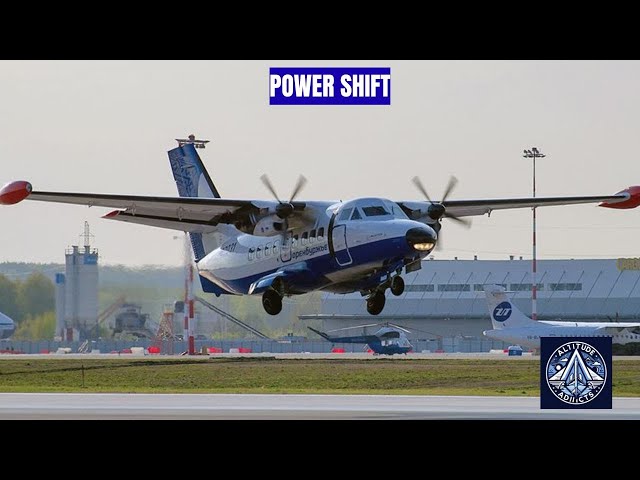
The LM410 has a long and distinguished
6:49
history, having been developed in
6:50
Czechoslovakia and introduced into
6:53
production during the 1970s before
6:55
becoming a cornerstone of regional
6:57
aviation across the Soviet Union.
7:00
During the 1980s, production exceeded 80
7:04
aircraft per year with the USSR serving
7:06
as the primary customer. The aircraft
7:09
earned the nickname flying minibus
7:11
because it connected remote settlements
7:13
through dense local air networks.
7:17
In the 2010s, USGA manufactured the
7:20
LM410 in cooperation with the Czech
7:23
company aircraft industries.
7:25
Both firms were owned by the same
7:27
Russian parent corporation, the Euro
7:30
Mining and Metallergical Company, until
7:32
2022 when the Czech business was sold to
7:35
European owners due to sanctions related
7:38
operational constraints.
7:41
Approximately 130 aircraft were produced
7:43
during this cooperative era in the UVP20
7:47
and L410 NG variants across facilities
7:50
in the Czech Republic and Russia.
7:54
By 2025, open registry data indicated
7:57
that roughly 60 aircraft remained in
8:00
service with the Russian aerospace
8:02
forces, while at least 30 additional
8:04
planes were operated by airlines and
8:09
Replacing older engines with the VK800
8:12
could extend the operational life of
8:14
these aircraft while improving
8:16
efficiency, making the proposal
8:18
particularly attractive on the surface.
8:21
However, Altitude Addicts cautions that
8:24
the scale of such modernization will
8:26
likely remain limited despite its
8:30
Not every aircraft justifies the cost of
8:32
re-engineing since economic feasibility
8:34
depends heavily on airframe age,
8:37
structural condition, and remaining
8:39
service life. Retrofitting also demands
8:42
extensive certification work,
8:44
engineering modifications and
8:46
operational testing, all of which can be
8:48
timeconuming and expensive.
8:51
Production priorities are therefore
8:53
expected to favor newly built aircraft
8:56
designed specifically around the VK800
8:58
rather than legacy platforms.
9:02
Even with encouraging test results,
9:04
several important questions remain,
9:06
particularly regarding the pace of
9:10
Transitioning from prototypes to high
9:12
volume manufacturing requires a mature
9:15
supply chain, skilled personnel, and a
9:18
comprehensive maintenance ecosystem.
9:21
Certification must also validate safety,
9:23
durability, and performance across a
9:25
wide spectrum of operational scenarios.
9:29
Authorities and industry leaders have
9:31
suggested that major certification
9:33
milestones could be achieved between
9:35
2026 and 2027. Although complex
9:39
aerospace programs frequently encounter
9:42
schedule adjustments,
9:44
still the overall momentum suggests
9:48
Stepping back to view the broader
9:50
picture reveals that the VK800 is more
9:53
than just a new engine. It symbolizes a
9:56
wider transformation underway within
9:58
Russia's civil aviation sector. If
10:01
production scales successfully and
10:03
certification proceeds without major
10:06
setbacks, the engine could become
10:08
foundational technology supporting pilot
10:10
training aircraft, regional passenger
10:13
transports, and utility planes serving
10:15
isolated communities.
10:18
Its introduction signals a deliberate
10:20
move toward technological independence,
10:22
a strategy likely to influence the
10:24
aviation landscape for decades.
10:27
The potential re-engineing of the LM410
10:30
further highlights the engine's
10:32
flexibility, even if upgrades ultimately
10:34
occur on a modest scale.
10:37
In many ways, the VK800 program
10:40
demonstrates how necessity can
10:42
accelerate innovation.
10:44
By investing in domestic propulsion
10:46
technology, Russia aims to secure the
10:49
long-term resilience of its aviation
10:51
network and ensure that aircraft
10:53
continue connecting vast territories
10:56
regardless of external pressures.
10:58
Whether powering brand new platforms
11:00
like the BYOL or extending the lifespan
11:03
of proven workh horses such as the
11:07
the VK800 appears ready to play a
11:10
central role in the next chapter of
11:11
regional aviation. And Altitude Addicts
11:14
will be following every development
11:20
If you like the video, please subscribe,
11:22
share, and like. Also, please take the
11:25
membership of Altitude Addicts to