0:06
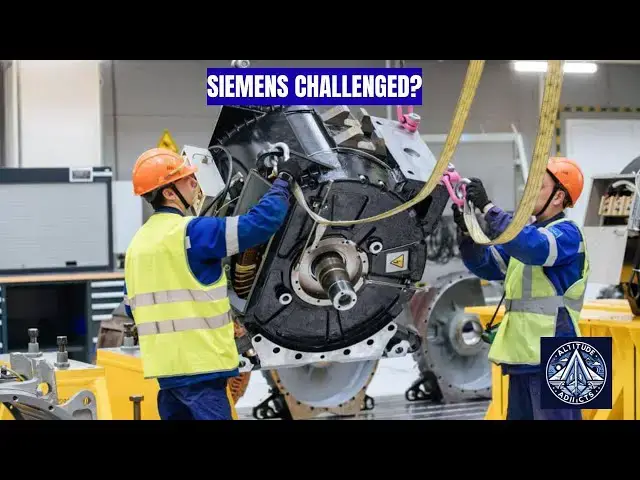
In mid January 20126, Russia announced
0:10
the successful completion of bench tests
0:12
for a new traction asynchronous electric
0:14
motor intended for next generation
0:16
high-speed trains. The motor designated
0:20
650 represents a major achievement in
0:23
the development of domestic rolling
0:27
It also marks an important step toward
0:29
technological independence in the field
0:31
of highspeed rail transport.
0:34
This project demonstrates that Russia is
0:37
now capable of independently designing
0:40
and producing one of the most critical
0:42
components of a modern high-speed train.
0:45
The traction system is the heart of any
0:48
electric train. Reaching a standard
0:51
comparable to the world's leading
0:53
manufacturers is therefore a significant
0:57
The TAD 650 traction motor was developed
1:00
by Russian Electric Motors, a company
1:03
based in Chelabinsk and integrated into
1:05
the industrial structure of Transn.
1:08
The primary goal of the program was to
1:11
create a fully domestically produced
1:13
traction motor suitable for high-speed
1:16
passenger trains operating at speeds of
1:18
up to 360 km per hour.
1:22
According to bench test results
1:24
completed in early January 2026,
1:28
developers confirmed that the motor's
1:30
efficiency and energy performance are
1:33
comparable to leading international
1:35
counterparts currently used in highspeed
1:37
rail systems worldwide.
1:39
This confirmation represents a key
1:41
milestone in the project's development.
1:44
Altitude Addicts learns that the
1:46
importance of this achievement lies in
1:48
the role of the traction motor itself.
1:52
Its performance directly affects
1:53
acceleration, cruising capability,
1:55
energy efficiency, reliability, and
1:58
overall operating costs. As a result,
2:01
the quality of the motor has a decisive
2:03
influence on the effectiveness of the
2:05
entire train. Each high-speed train set
2:09
equipped with the TAD 650 will use 16
2:12
traction motors. The configuration
2:15
provides for powered bogeies in four
2:17
cars. These are the first, third, sixth,
2:20
and eighth vehicles, each fitted with
2:22
two powered bogeies. The remaining cars
2:25
use non-powered wheel sets.
2:28
Despite its high output, the TAD 650
2:31
remains compact and relatively
2:33
lightweight by highspeed rail standards.
2:36
The motor weighs approximately 750 kg
2:40
and delivers a power output of 650 kW.
2:45
Its efficiency is close to 96% a figure
2:48
that is especially important for
2:50
high-speed operations where weight and
2:53
energy consumption are critical factors.
2:56
The motor was developed specifically for
2:59
next generation high-speed trains with a
3:01
target operating speed of 360 km per
3:06
This places future Russian rolling stock
3:09
in the same performance category as the
3:11
fastest European and Asian high-speed
3:13
trains currently in service.
3:16
For comparison, each traction motor used
3:19
on Russia's existing flagship high-speed
3:21
train, the Seaman's Valaro Russ,
3:23
commonly known as Sapsson, produces
3:26
around 510 kW. The higher output of the
3:29
TAD 650 allows designers to achieve
3:32
greater overall traction power while
3:34
maintaining flexibility in train design.
3:38
The TAD 650 uses a three-phase
3:40
asynchronous design with a squirrel cage
3:43
rotor. This configuration is widely
3:46
recognized in high-speed rail
3:47
applications for its durability, stable
3:50
performance, and long service life.
3:53
These characteristics make it well
3:55
suited for demanding operational
3:59
A defining feature of the TAD 650
4:01
program is its complete localization
4:04
within Russia. All major components and
4:07
materials are produced domestically as
4:10
part of a broader national import
4:12
substitution strategy.
4:14
The first prototype of the motor was
4:16
manufactured in 2024.
4:19
Acceptance and qualification testing
4:22
continued throughout 2025.
4:25
By early 2026, the motor had reached
4:28
readiness for serial production with
4:31
manufacturing capacity being expanded at
4:33
the Chelabinsk facility.
4:36
The compressed development timeline
4:38
highlights both the urgency of the
4:40
program and the level of industrial
4:42
mobilization involved
4:45
under conditions of sanctions and
4:46
restricted access to foreign technology.
4:49
The ability to produce such a complex
4:51
component domestically carries major
4:56
Altitude addicts learned that the
4:58
development of the TAD 650 is closely
5:01
linked to Russia's broader plans for
5:03
high-speed rail expansion.
5:06
The flagship project is the Moscow to
5:08
St. Petersburg highspeed railway. This
5:12
line is expected to reduce travel time
5:14
between the two cities to approximately
5:16
2 hours and 15 minutes.
5:19
Test runs of the new rolling stock are
5:25
Commercial service is expected to begin
5:30
This railway is one of the largest
5:32
infrastructure projects in modern
5:34
Russian transport history and is
5:36
expected to deliver significant economic
5:41
A domestically produced traction motor
5:43
is essential for such a project. It
5:46
ensures long-term maintainability,
5:49
secure supply chains and independence
5:51
from foreign manufacturers.
5:53
These factors are critical for sustained
5:56
high-speed rail operations.
5:58
The most direct comparison for the TAD
6:01
650 is the traction system used in the
6:04
Seaman's Velaro family of trains. This
6:07
includes the Aaro Russ units currently
6:12
While the Aaro platform is wellproven
6:14
and reliable, its individual traction
6:16
motors generally have lower power
6:19
ratings than the TAD 650.
6:21
This suggests that the Russian motor
6:23
offers higher power density per unit.
6:27
Such a characteristic is advantageous
6:29
for achieving higher speeds and improved
6:33
Western manufacturers are increasingly
6:36
shifting toward permanent magnet
6:38
synchronous motors. These designs offer
6:41
higher power density and potentially
6:43
greater efficiency than asynchronous
6:45
motors. They are expected to appear in
6:48
future European high-speed trains,
6:50
including Seaman's upcoming Velaro Novo
6:55
Even so, asynchronous motors remain
6:57
highly valued for their robustness and
6:59
ease of maintenance. Their predictable
7:02
behavior and long service life make them
7:04
a practical choice for current
7:06
operational needs. In this context, the
7:10
TAD 650 remains a competitive and
7:14
Altitude Addicts feels that the
7:16
successful development of the TAD 650
7:19
demonstrates Russia's capability to
7:22
independently design and manufacture
7:24
high technology components for advanced
7:28
Until recently, Russian high-speed rail
7:31
depended heavily on foreign suppliers,
7:34
especially for traction equipment.
7:36
With the introduction of the TAD 650,
7:39
Russia lays the foundation for fully
7:41
domestic high-speed train platforms.
7:45
This reduces dependence on external
7:47
suppliers and strengthens resilience
7:49
against geopolitical risks.
7:52
In the longer term, such technological
7:54
progress may also open export
7:58
This is particularly relevant for
8:00
countries seeking alternatives to
8:02
western or Chinese rolling stock
8:06
Despite the success achieved so far,
8:08
challenges remain. Integrating the motor
8:11
into a complete traction and control
8:14
system capable of sustained operation
8:16
above 300 kilometers per hour requires
8:19
extensive realworld testing.
8:22
Competition in the highspeed rail sector
8:25
also remains intense.
8:27
Companies such as Seammens, Alam, and
8:29
CRC continue to advance power
8:31
electronics, digital control
8:33
technologies, and energy efficiency
8:37
Nevertheless, the TAD 650 provides a
8:40
solid starting point. It confirms that
8:42
Russia has restored critical expertise
8:45
in propulsion motor design and
8:49
These skills are essential for long-term
8:51
success in highspeed rail development.
8:54
The TAD 650 traction motor marks a
8:57
significant milestone in Russian rail
8:59
engineering. As the country's first
9:02
serial traction motor specifically
9:04
designed for high-speed trains, it meets
9:07
international standards for power,
9:09
efficiency, and operational performance.
9:13
More than a technical success, the TAD
9:15
650 represents a strategic shift toward
9:18
greater self-sufficiency in advanced
9:20
transport technologies.
9:22
It provides the technological backbone
9:25
for Russia's future highspeed rail
9:27
network. At the same time, it signals
9:30
the country's intention to compete in
9:32
one of the most demanding fields of
9:35
modern transportation engineering.
9:40
If you like the video, please subscribe,
9:42
share, and like. Also, please take the
9:45
membership of Altitude Addicts to